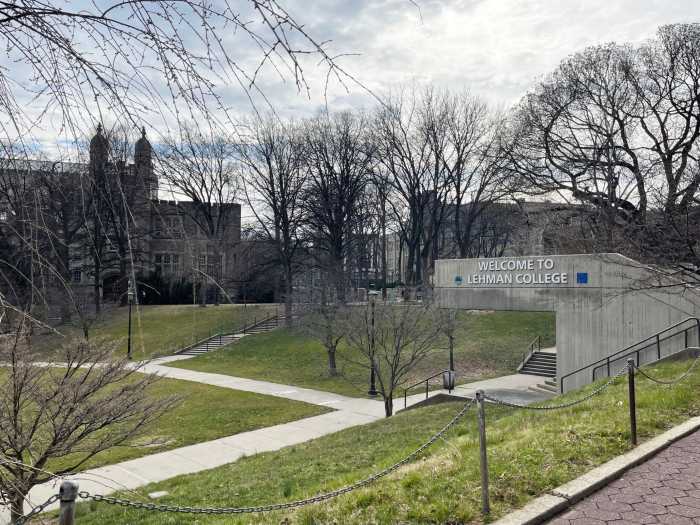




Business leaders and elected officials in New York applauded the Supreme Court’s ruling Friday that struck down President Trump’s tariffs.
In a 6-3 decision, the court ruled that Trump acted unconstitutionally in imposing tariffs on nations around the world last year without seeking or receiving Congressional approval. The president had argued that he had the authority to impose tariffs under the International Emergency Economic Powers Act of 1977, a claim New York and 11 other states contested in court last year.
“These illegal tariffs caused immense economic chaos, raising costs for families and businesses throughout our country,” said New York Attorney General Letitia James on Friday. The case was one of many legal challenges her office has made against Trump administration policies since last year, even as Trump’s Justice Department sought to prosecute her in apparent retaliation — and failed.
“The Supreme Court has agreed that this administration has no authority to impose massive new taxes on a whim,” James added. “This is a critical victory for the rule of law and our economy, and I will keep fighting to protect New Yorkers from destructive policies that make life less affordable.”
Writing for the majority, Chief Justice John Roberts said the president lacked a “clear congressional authorization to justify his extraordinary assertion of the power to impose tariffs.” The IEEPA did not include such authorization, Roberts declared.
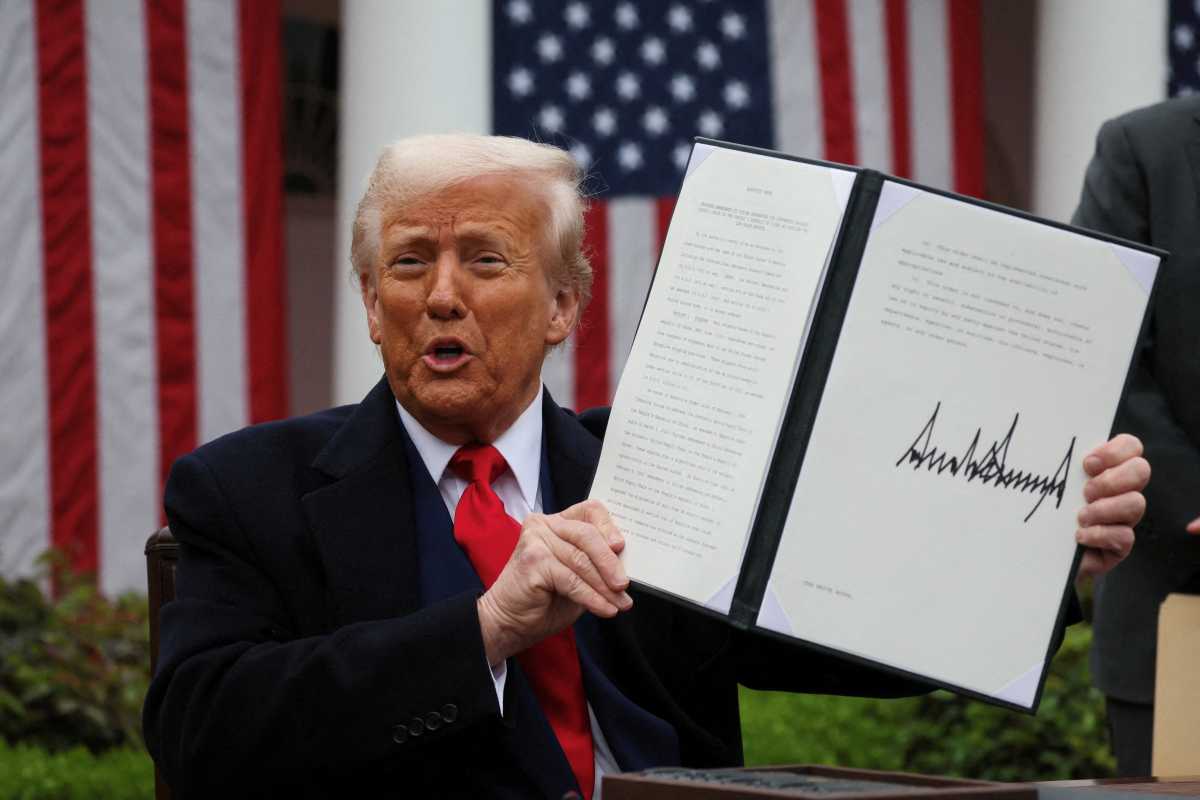
The ruling means that the federal government must find a way to refund tariffs collected from importers. Estimates from the Penn-Wharton Budget Model put that number at more than $175 billion, according to Reuters.
But Trump didn’t seem to care about what the Supreme Court had to say.
After railing against the court’s decision at a press conference Friday, calling it “deeply disappointing,” he announced he would issue 10% global tariffs via executive order — but, by law, they would expire after 150 days without congressional authorization.
During his first term, Trump appointed two of the six justices in Friday’s majority ruling: Amy Coney-Barrett and Neil Gorsuch.
Whether the Trump administration would seek approval from the Republican-controlled Congress to keep existing tariffs or impose new ones remains unclear.
‘Enough’ with tariffs, Jeffries says
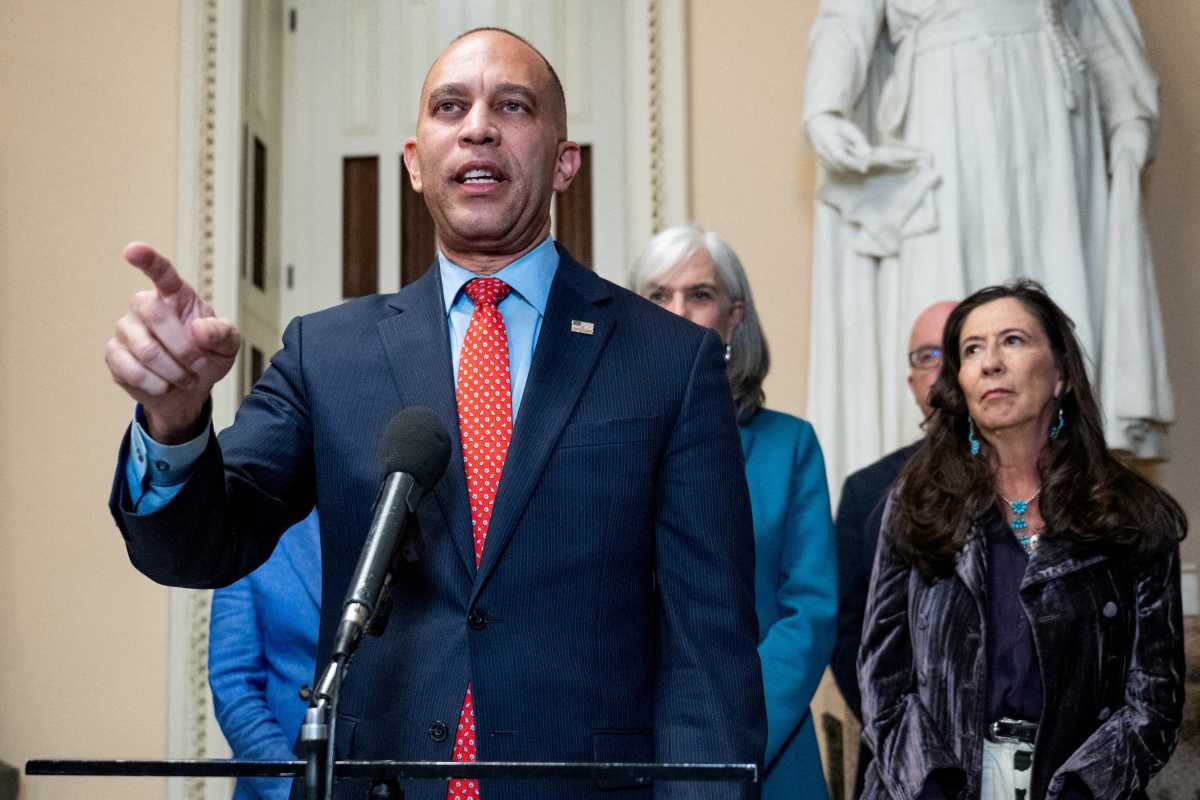
House Democratic Leader and U.S. Rep. Hakeem Jeffries of Brooklyn, however, minced no words in saying that Trump “must refrain from any further unilateral action on tariffs.”
“Donald Trump’s my-way-or-the-highway approach to economic policy has been a complete and total failure,” Jeffries said. “Enough.”
Senate Minority Leader and New York U.S. Sen. Chuck Schumer added that the SCOTUS ruling was “a win for the wallets of every American consumer.”
“We’ve said from day one: a president cannot ignore Congress and unilaterally slap tariffs on Americans. That overreach failed. Now, Trump should end this reckless trade war for good and finally give families and small businesses the relief they deserve,” Schumer said.
Gov. Kathy Hochul said the Supreme Court’s “clear” decision affirmed, in her view, that the tariffs served as “an unlawful backdoor tax on hardworking families, farmers and small businesses, raising prices on everything from groceries to building materials.”
“We stood up to these reckless policies because New Yorkers were paying the price, and today the Court agreed,” Hochul said Friday. “My administration will keep fighting to protect New Yorkers and make sure Washington helps — not hurts — the people we serve.”
Jessica Walter, president and CEO of the Manhattan Chamber of Commerce, said the Trump tariffs proved costly and confusing for myriad retailers, manufacturers, and small business owners who had “been forced to navigate a minefield of fast-changing trade rules” that made it “nearly impossible to plan inventory, manage contracts or price products predictably.”
“Let’s be clear: while the United States must confront unfair trade practices, blunt enforcement measures often do more harm than good here at home,” Walter said. “The costs and instability caused by these tariffs forced too many Manhattan businesses to freeze hiring and investment, pass costs on to consumers, or—in the worst cases—close their doors entirely.”
She urged federal lawmakers “to respect the finality of this ruling and resist the temptation to immediately reimplement these levies through alternative legal channels.”
Importers and consumers pay the tariffs

Unlike taxes, tariffs are imposed when an importer brings goods into the country. Basically, any company that imports goods first pays the tariff at customs.
But once those goods have passed through the ports of entry, you, the consumer, cover the importers’ tariff costs through higher prices for the imported goods you’re buying. When the tariff goes up, so does the price of the items you buy.
In short, according to New York U.S. Sen. Kirsten Gillibrand, the tariffs are a hidden tax on the average American that has already cost families thousands of dollars. The Tax Foundation, a Washington think tank, recently released a report finding that, on average, American families lost $1,000 per household due to higher tariffs and would lose up to $1,300 more this year.
“Families in New York have already seen their costs go up by $4,200 because of the Trump Tariff Tax and can’t afford any more financial strain,” Gillibrand said. “I urge President Trump to respect this ruling, reimburse our small businesses for these illegal taxes, end these harmful tariffs immediately, and focus on lowering the cost of living for American families.”
With reporting by Barbara Russo-Lennon