


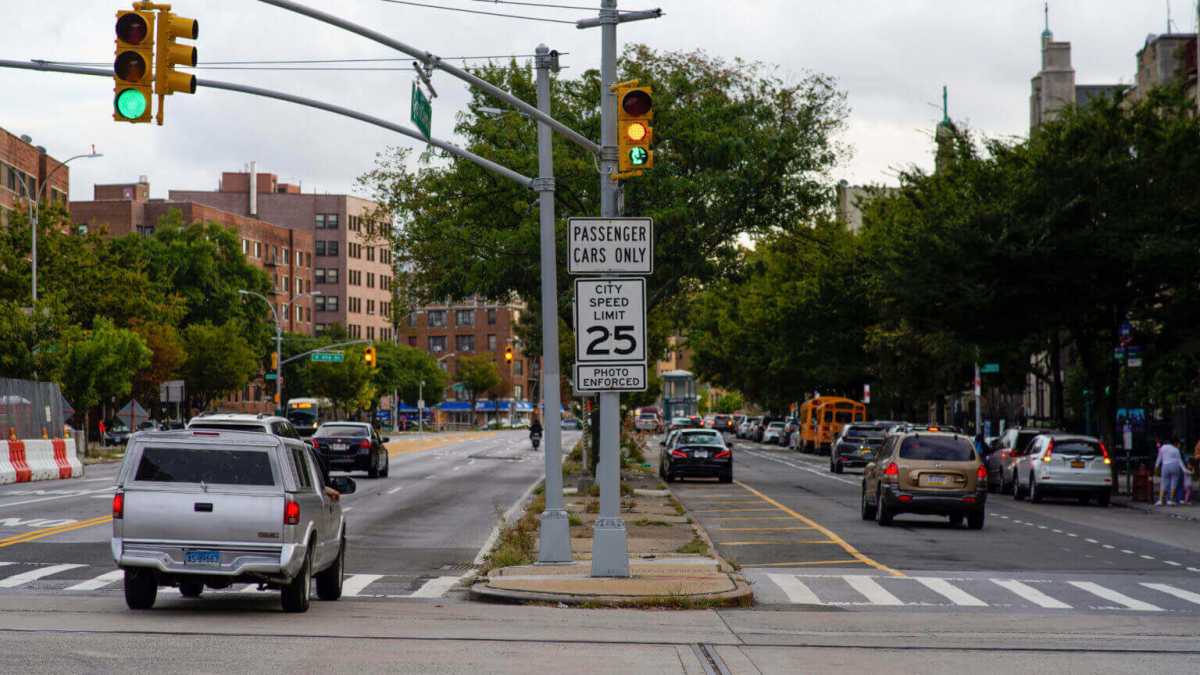
A Manhattan appellate court found that the city’s speed camera program is legally sound in a decision that caps off an eight-year legal battle that sought to potentially invalidate millions of automatically issued tickets.
A group of speeding ticket recipients argued that speed camera summons violate state traffic law on a technicality. Part of the citation on the tickets, called a “notice of liability,” fails to include a “technician’s certificate,” which they argue, must be signed by a specialist employed by the city.
The Appellate Division, First Department justices rejected the argument that a notice of liability must include a technician certificate to be valid.
“This argument is unavailing,” the court wrote in its decision. “Neither the statute nor any other relevant law appears to further define the contents or form of the ‘certificate charging the liability.’”
The justices decided that the city has the discretion to determine the form of a notice of liability. A technician certificate can serve as evidence during a hearing but does not need to be attached to the initial notice sent to the driver, they found.
The case was originally filed in federal court in 2018 before being dismissed in part for jurisdictional reasons and refiled in state court in 2020. The four petitioners had tried to initiate a class action lawsuit on behalf of “hundreds-of-thousands, if not millions, of individuals who paid for patently invalid and legally insufficient” speeding camera tickets.
On top of its decision about the technical aspects of the summons process, the court found that two of the petitioners weren’t eligible to dispute their 2017 tickets that were the basis for the suit because they had pleaded guilty, paid the fine and waived their rights to a legal challenge.
The court also dismissed claims that the speed camera program violates due process, concluding that the speed camera system provides the opportunity to challenge the violation at a hearing, which is enough notice and opportunity to be heard to satisfy the U.S. constitution.
The decision ultimately shut down the class action certification, and also barred further private claims for fraud or misrepresentation. The petitioners’ attorney did not respond about whether they could appeal.