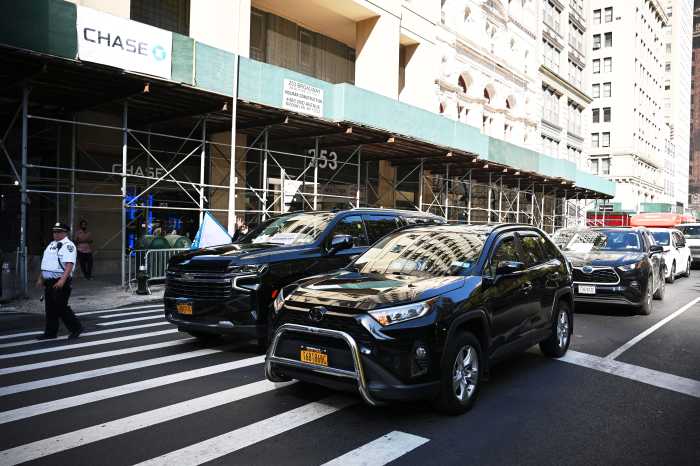



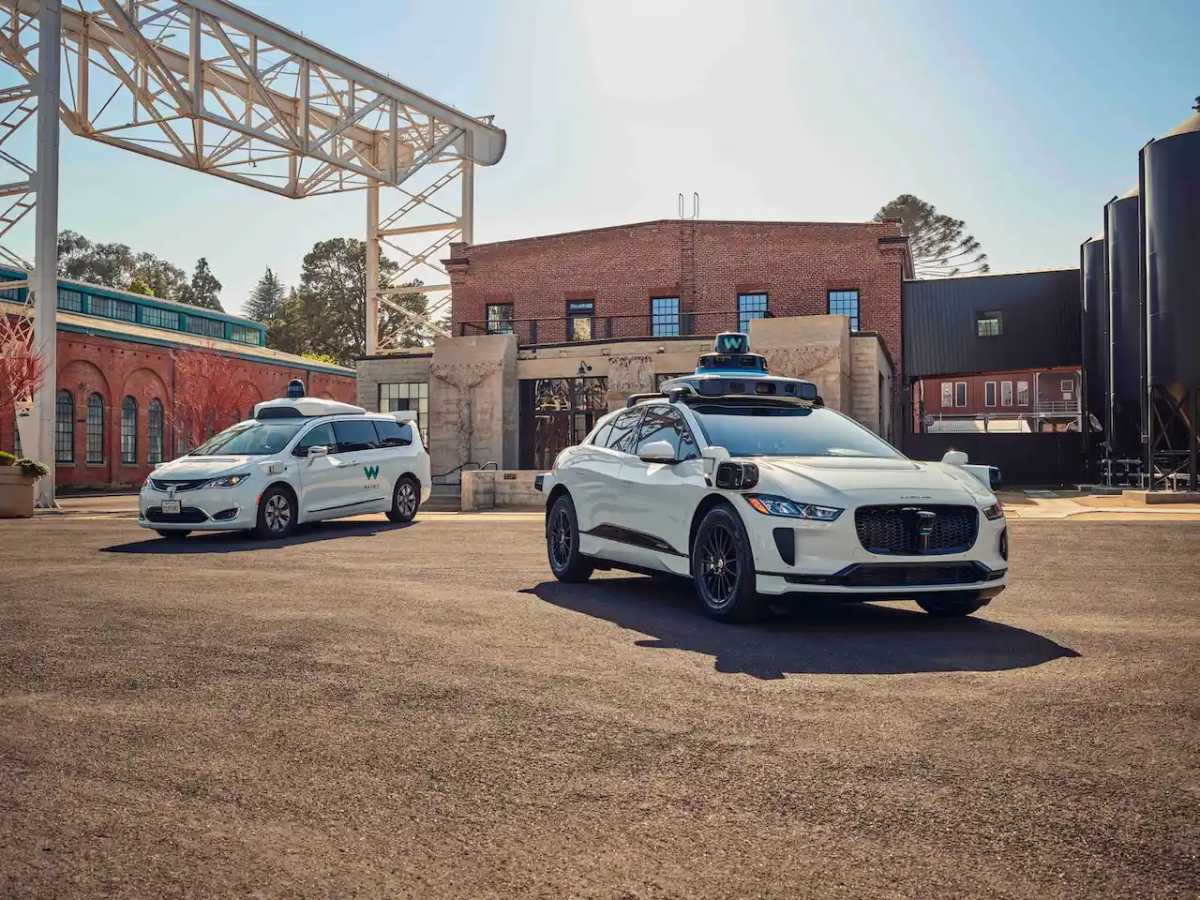
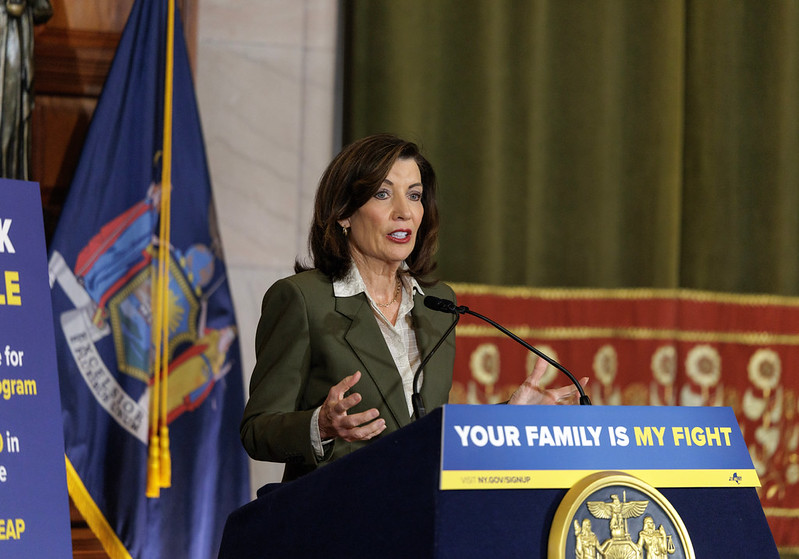
Gov. Kathy Hochul reversed course on her State of the State proposal to establish a pilot program testing for-hire self-driving cars in municipalities outside of New York City, her office confirmed on Thursday.
Hochul’s shift in gears on her proposal to test Waymo self-driving cars on upstate streets came after to strong backlash from for-hire vehicle driver groups and safe streets advocates. The change was made official in her 30-day amendments to her state budget proposal.
“Based on conversations with stakeholders, including in the legislature, it was clear that the support was not there to advance this proposal,” Hochul spokesperson Sean Butler said in a statement. He added that it was too soon to say whether she would pursue the proposal again.
The governor’s about-face also follows a survey conducted by Siena Research Institute, on behalf of the Black Car Fund, a nonprofit driver group, which found that nearly 60% of upstate residents were against piloting self-driving cars in their backyards.
More than a majority of poll respondents said they opposed the testing of driverless robotic cars — also known as autonomous vehicles (AVs) — over safety fears, especially during inclement weather. They also aired concerns that AVs will put for-hire-vehicle drivers out of their jobs.
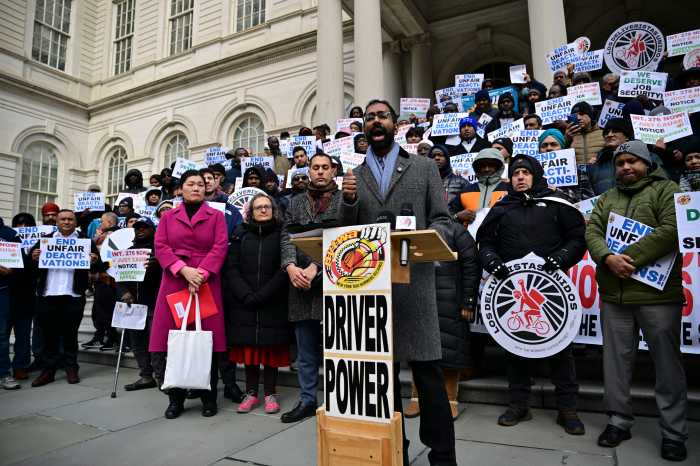
For-hire-vehicle driver advocates were quick to applaud Hochul’s move to pull the legislation.
Ira Goldstein, executive director of the Black Car Fund, in a statement, thanked Hochul for “removing this proposal from her proposed state budget and for listening to the concerns of drivers, small businesses, and communities across New York.”
“Opening the door to commercial driverless vehicles anywhere in the state would have marked a significant policy shift with serious implications for working drivers and community safety,” he added.
In her own statement, New York Taxi Workers Alliance Executive Director Bhairavi Desai said the proposal was “highly unpopular” — appearing to refer to the Black Car Fund’s poll. She also called for a moratorium on autonomous vehicles until the city and state conduct a “comprehensive study” of their use.
“Instead of kowtowing to trillionaire fantasies of maximizing profits by replacing workers with robots, redesigning public streets for corporate greed, and compromising our environment, government should hold these corporations accountable, create family-supporting jobs, end income inequality, regulate for accessible and fuel-efficient vehicles, and improve working conditions for drivers,” Desai said.
However, not everyone was a fan of the governor’s move.
Adam Kovacevich, founder and CEO of the tech industry trade group Chamber for Progress, said Hochul’s change of mind on the matter deprives New York of the same purported benefits that AVs have brought to other states.
He also cited the group’s own survey data, collected last May, that found the majority of New York residents support testing and expanding access to self-driving cars.
“Autonomous vehicles are already driving down accident rates and improving pedestrian safety in Arizona, California, and Texas. It’s disappointing that Governor Hochul is withdrawing her proposal, because New Yorkers deserve the same proven protections,” Kovacevich said in a statement. “Most New Yorkers are also on board with autonomous vehicles, which makes it even more puzzling that state leaders aren’t racing to deliver safer streets.”