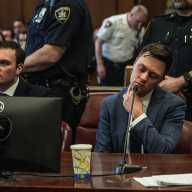



On Luigi Mangione’s sixth day in court for evidentiary proceedings, defense attorneys sharpened their legal attacks against submission of a handgun and other items found in a warrantless search of their client’s backpack by local police in Pennsylvania.
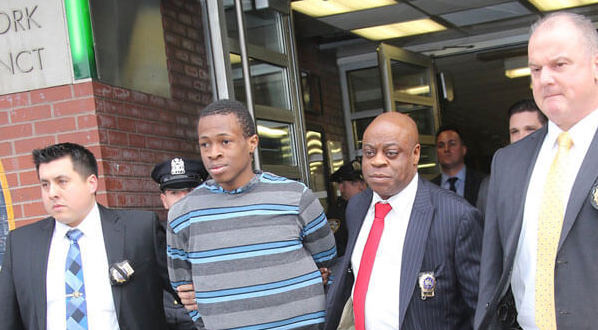
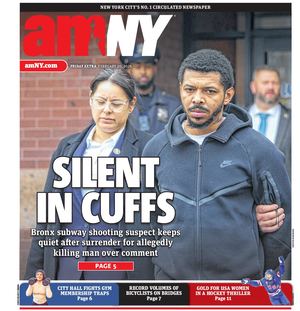
Mangione was arrested on Dec. 9, 2024, in Altoona, Pennsylvania, in the midst of a massive manhunt for the person who gunned down UnitedHealthcare CEO Brian Thompson outside of a Midtown Manhattan hotel five days prior.
Since Dec. 1, prosecutors and defense attorneys have scrutinized key pieces of evidence against Mangione in a multiday hearing before Acting Manhattan Supreme Court Justice Gregory Carro — including a backpack that Mangione had in his possession when officers approached and arrested him in the dining room of a McDonald’s in Altoona. Defense attorneys argue the bag was improperly searched.
Altoona police conducted an initial search of Mangione’s bag at the restaurant, in which they found an ammunition magazine and a red notebook that prosecutors are calling a “manifesto,” a characterization that defense attorneys deny.
In a subsequent search of the backpack at Altoona police headquarters, officers found a handgun and a silencer.
On Thursday, attorneys grilled Altoona police Lt. William Hanelly, the ranking police officer at the scene of Mangione’s arrest. Under questioning from defense attorney Karen Agnifilo, Hanelly defended the warrantless search of the backpack, pushing back against the attorney’s argument that a warrant was required under Pennsylvania law.
Hanelly said the search was “incident to arrest,” a Fourth Amendment exception that allows police officers to search around the immediate surroundings of a person under arrest for weapons or to prevent escape.
“We didn’t need a search warrant,” Hanelly said, because “at the moment of detainment, the backpack is under his feet.”
At another point in his testimony, Hanelly said that, throughout his 14 years as a police officer, he had searched hundreds of bags during arrests and he had never had to ask for a warrant to do so.
As for officers conducting searches of Mangione’s backpack on two separate occasions, Hanelly explained that he gave the order to move the search to the police department’s station house in an effort to preserve potential evidence.
“I told them to repack the bag and send it to the station so there would be less chance of DNA cross-contamination,” Hanelly said.
Hanelly was part of a group of 14 Altoona police officers who amassed at the McDonald’s on the morning of Mangione’s arrest — about half of the officers who were on duty at the time patrolling the city of roughly 44,000.
Also among the officers who arrived at the scene — to which they had been called in response to a 911 call from a McDonald’s customer — was Detective Sgt. John Burns, who also took the stand in Manhattan on Thursday to answer questions about the handling of the suspect’s backpack.
“At the time and place of his arrest was he in possession of his backpack?” defense attorney Jacob Kaplan asked.
“It didn’t magically appear,” Burns replied. “He brought it there.”
Testimony continues Friday and is expected to run through next week.