

Access to the legal profession is access to justice, and today, that access is in jeopardy.
Imagine a future where there are fewer lawyers representing people facing eviction during a housing affordability crisis, fewer lawyers rushing to a courtroom to represent immigrant families facing an uncertain legal process, or criminal matters languishing for years with fewer prosectors and public defenders available to handle cases.
That future became more likely in July when a major federal financial aid change placed graduate and professional education at immediate risk. The One Big Beautiful Bill Act (OBBBA) fundamentally restructures how graduate students can finance their education. For nearly two decades, the federal Grad PLUS Loan Program offered a straightforward guarantee: any student admitted to a graduate or professional program — so long as they had no “adverse credit”— could borrow up to the full cost of attendance (that is tuition, fees, health care, and living expenses, which add up quickly) on the front end, coupled with programs including income-based repayment and Public Service Loan Forgiveness (PSLF) on the back end.
OBBBA eliminates Grad PLUS on July 1, 2026. Law students — along with medical, dental, veterinary, and other professional students — will be capped at $50,000 per year in federal unsubsidized loans, with a $200,000 lifetime limit. Graduate students in other fields — including nursing, which was excluded from the definition of “professional program” — will be capped at just $20,500 annually. Students who need to borrow beyond those caps will have to access the private loan market where loans will be more restricted and more expensive, with no income-based repayment protections or public-service forgiveness options. Unless New York State acts, the impact will fall on thousands of prospective students seeking loans to study, and ultimately practice, law, medicine, and many other fields essential to promoting a fair and just society, and maintaining the competitiveness of the New York economy.
Law school attendance is a significant investment for any student, and the return on that investment over a 40-year career can be extraordinary for both students and the public. While law schools, and all of higher education, must work to find new ways to address the often high cost of tuition, including through new need- and merit-based aid strategies to assist students, new partnerships with state government that ensure students can borrow up to their total cost of attendance will nonetheless be an essential element to preserving educational access. Because there is virtually no possibility of federal reconsideration any time soon, and graduate education functions on an admissions cycle that cannot wait for long-term political solutions, New York State must provide a meaningful remedy in its fiscal year 2027 state budget. That means solutions must be developed now.
Scope of impact
Across New York, roughly 32,000 graduate and professional students currently depend on Grad PLUS to finance their degrees. According to analyses undertaken for the Commission on Independent Colleges and Universities in New York (CICU), the umbrella group representing New York higher education, Grad PLUS’s elimination could trigger enrollment declines of 15 to 30 percent across many graduate and professional fields. First-generation, working-adult, and underrepresented students will face the steepest barriers because many rely on Grad PLUS loans to cover their costs. OBBBA will replace a federally regulated, widely accessible lending system with a private-sector patchwork in which students’ access to graduate school depends on credit score, family income, and the ability to secure a co-signer.
The consequences for law schools and the legal profession are profound. In New York, where 15 ABA-accredited law schools educate thousands of future lawyers each year, the new caps threaten to widen the justice gap. Students from first-generation and low-income backgrounds, rural communities, and historically underrepresented groups will struggle most to secure private financing. Without income-based repayment and PSLF attached to their entire loan portfolio, many will be unable to afford careers in government, prosecution, indigent defense, or civil legal services — the fields that most directly serve the public good. As the deans of New York’s law schools have warned, OBBBA introduces “a new wealth-based barrier to entry to the legal profession that reverses decades of progress.”
This is counter to the priorities that governments at the city and state levels have set in recent years, where leaders have recognized the essential role lawyers play in ensuring more New Yorkers are protected and represented. Gov. Kathy Hochul and the state legislature in the last budget included $64.2 million for immigrant legal services, and Mayor-elect Zohran Mamdani announced his intention to hire hundreds more attorneys into New York City government jobs to fill long-vacant critical legal positions and to protect the city’s interests at the federal level. And, in 2017, New York City enacted a Right to Counsel law to guarantee representation on housing court for low-income New Yorkers.
According to the study undertaken for CICU, about 60% of current Grad PLUS borrowers will not qualify for private loans at all. And interest rates for those who do qualify could be substantially greater than current Grad PLUS rates, which are about 8%. This has the potential of placing financial burdens on students with no or weak credit histories, or who come from families with limited resources and the inability to co-sign loans.
Why New York State must act — and fast
The legal services pipelines our schools have built are at risk. The elimination of Grad PLUS means fewer lawyers from low-income backgrounds, fewer first-generation professionals, fewer students of color, and fewer graduates pursuing public-service careers. This ever-widening justice gap will greatly exacerbate the “legal desert” problem that is already particularly acute in rural counties in upstate New York. On top of this, experts project that New York alone could lose more than 40,000 students statewide by 2030 due to federal loan changes, costing the state $240 million annually in lost economic activity.
Fortunately, state-based solutions are not untested concepts. Pennsylvania, Connecticut, and Massachusetts already operate state-backed or state-supported student loan programs that provide stable, predictable financing alternatives to the private market. These programs — often funded through bond issuances, revolving funds, or quasi-public authorities — offer models that New York can adapt. By taking steps now to retain and invest in these students and their potential, New York can prevent an exodus of our homegrown talent and the social and economic benefits they produce for our state from going to these neighboring states for their graduate and professional degrees. The urgency of the disruption demands state intervention.
A call to action: protect access — and the public good
Graduate and professional education, particularly law school, is a public good. It produces the public-service professionals — lawyers, teachers, social workers, scientists, and more — who sustain our civic life.
Lawyers serve as guardians of our constitutional system, defenders of individual rights, and professionals who hold governments and institutions accountable. Without diverse, broadly accessible pathways into the profession, our justice system becomes less effective, less representative, and less legitimate. Thus, coordinated action at the state level, can preserve access, stability, and opportunity for the next generation of learners and leaders.
CICU has offered a self-sustaining proposal for a statewide graduate-lending program. Under this model, the state would provide direct loans for graduate and professional students, offering fewer restrictions and more reasonable interest rates with income-based repayment protections. This approach would stabilize enrollment for 20,000 to 25,000 students without imposing long-term budget burdens, as the program would be ultimately repaid by borrowers.
State-backed loan programs are proven and may be the only current way to preserve access to advanced education and sustain the workforce pipelines that communities and our state’s economy rely upon.
The stakes are high and the timeline is short. New York must act now.
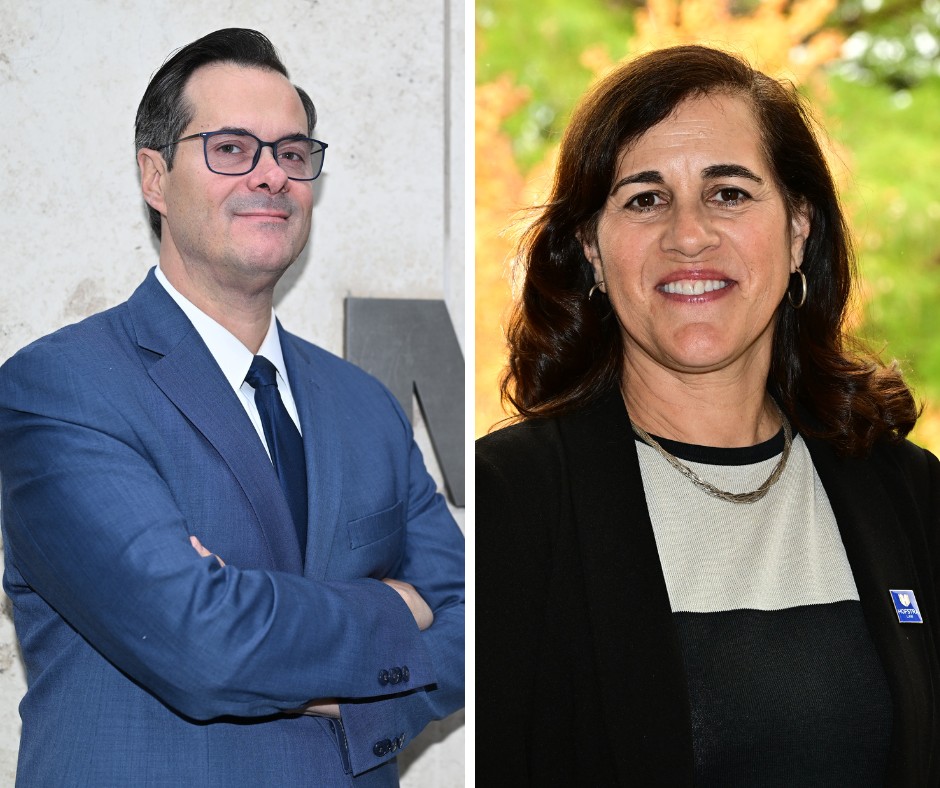
Anthony W. Crowell is dean and president, professor of law, and Director of the Center for New York City and State Law, at New York Law School. He is a member of the executive committees of CICU and the Association of American Law Schools.
Jenny Roberts is dean and professor of law at the Maurice A. Deane School of Law at Hofstra University. She is a member of the New York City Bar Association’s Council on the Profession.