


MTA Chair and CEO Janno Lieber said on Wednesday that the agency had issued an ultimatum to the Trump administration, demanding the release of nearly $60 million in reimbursements for the East Harlem extension of the Second Avenue Subway by March 6, or face legal action.
The MTA boss, during the agency board’s monthly meeting on Feb. 25, said it sent the warning letter to the U.S. Department of Transportation and Federal Transit Administration through its outside counsel at the behest of Gov. Kathy Hochul.
The missive, penned by Attorney Roberta Kaplan of the firm Kaplan Martin LLP, said the funding freeze has already imperalled the project and placed a strain on the MTA by requiring it to plug the hole of $58.6 million in frozen federal funds with money from other projects.
“DOT’s refusal to comply with its payment obligations has jeopardized the Project and placed the MTA in an impossible position, requiring it to plug the gap by diverting critical transportation infrastructure funding from other priorities,” the letter reads. “Unless all past due reimbursements are paid by March 6, 2026, the MTA will have no choice but to seek expedited judicial relief.”
Lieber said that while the Second Avenue Subway has been in a better cash-flow situation than the Gateway Tunnel rail project — which just resumed work after having to pause construction earlier this month, due to its own funding freeze — there is a vital contract for station excavation that the agency will not be able to approve without the federal funds. The funding was approved by Congress and committed under former President Joe Biden’s administration.
The Trump administration finally released the Gateway funds last week, after it was compelled to do so by a Manhattan federal judge who ruled in response to a suit brought by New York and New Jersey Attorneys General Letitia James and Jennifer Davenport.
“It’s no secret that Second Avenue Subway has not been receiving funding reimbursements from the federal government for quite some time,” Lieber said. “We can’t chance an impact to the project’s schedule and budget by letting the federal situation drag on and on. So we have sent the letter to the feds, just putting them on notice, that honestly, time’s up.”
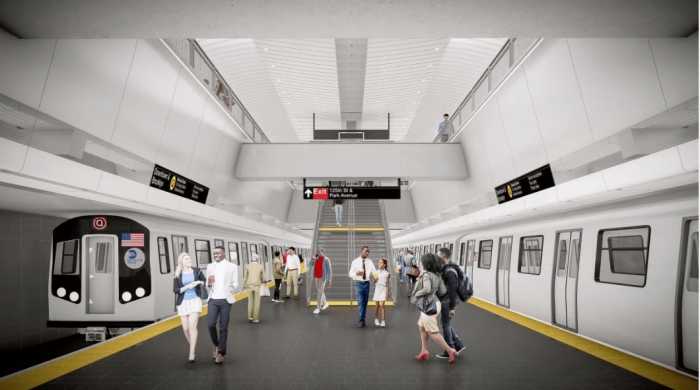
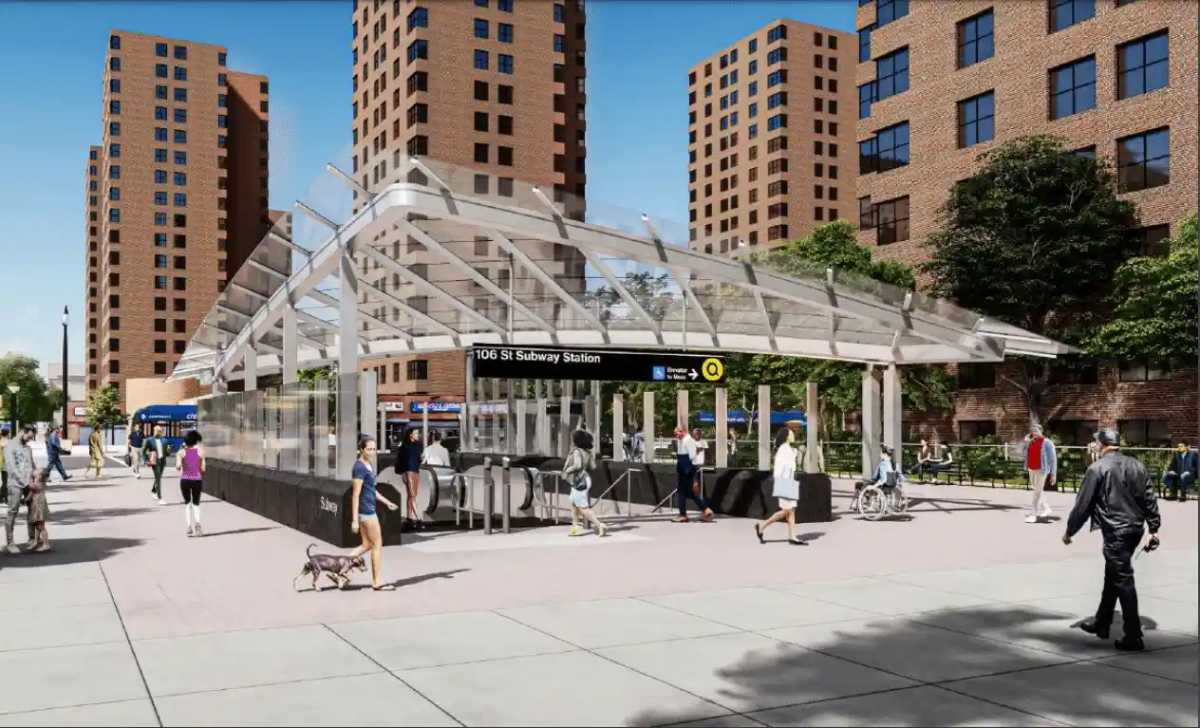
The $6.9 billion project will add three new stations along the Q line at 106th St, 116th St, and 125th St. The contract that Lieber said will be impacted by the feds continuing to withhold the funds is for excavating new stations at 106th St and 125th St.
The letter says that if the MTA is not able to award that contract over the next month, it will cause a ripple effect that will jeopardize the project.
“Unless funding is resumed immediately, MTA will be forced to delay final authorization of major contract awards necessary to progress the Project, creating a “domino effect” of cascading delays and inflated costs,” the letter reads.
Lieber said the MTA continued to submit reimbursement requests for the $58.6 million it is owed even after the feds froze the funding near the beginning of the last government shutdown in October. Both he and the letter charged that in January, the feds shut the MTA out of their online reimbursement portal, so the agency is owed even more than the $60 million it has formally requested.
“After they told us to stop submitting invoices and we didn’t, they actually shut down our access to the portal that is used for this process,” Lieber said. “So we have more money even beyond the $60 million that’s really justified to be spent, to be reimbursed.”
Similar to the Gateway project, the Trump administration said it froze the funds to review the MTA’s compliance with its recently revised rules for contracting with minority- and women-owned businesses. Lieber has repeatedly said that the MTA has answered the feds’ questions about its Disadvantaged Business Enterprise (DBE) program and shown how it will align with the new rules.
“We submitted all that paperwork, in I think the last exchange was December,” Lieber said. “We had no further feedback on it.”
Lieber said the White House has contradicted its own reasoning by issuing recent statements that it is holding the funding hostage amid Congressional negotiations.
The White House did not immediately respond to a request for comment.