


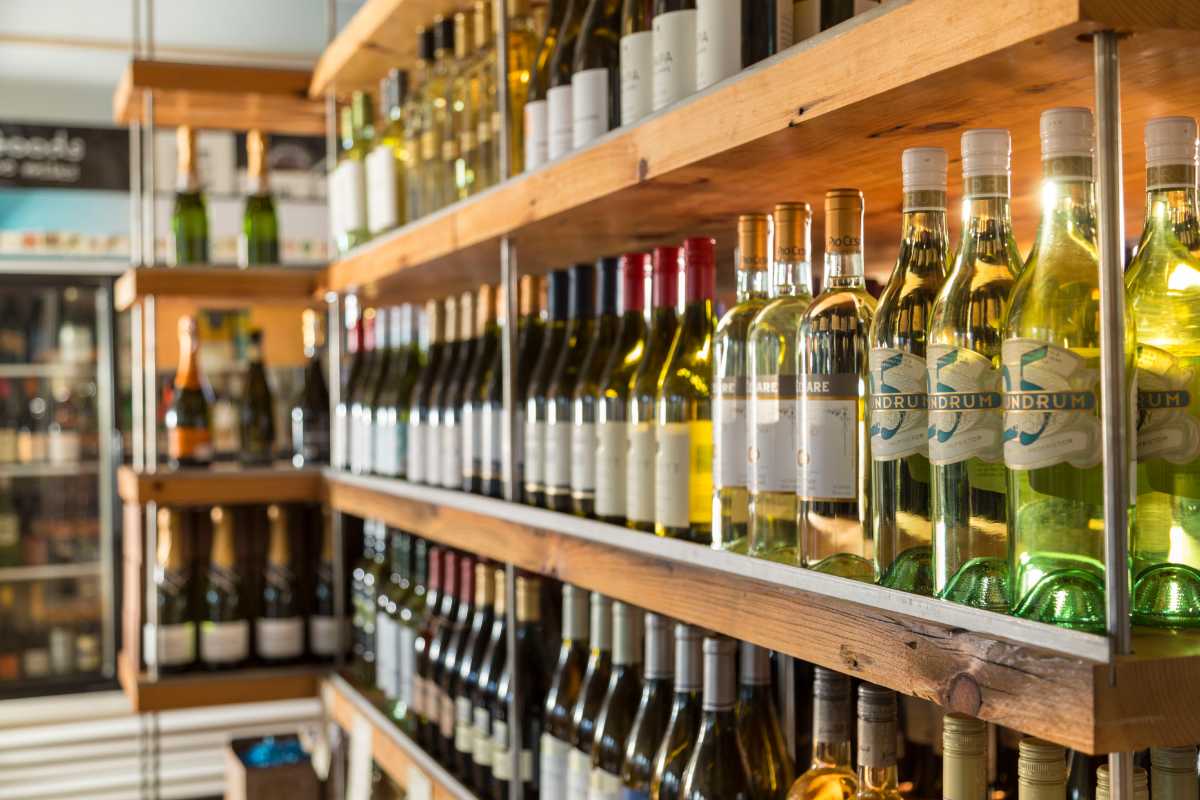
Lawmakers reintroduced legislation this year that would allow supermarkets in New York state to sell wine — a move that pits small business owners against retail giants throughout the city and state.
Bill S1279A/A1328A introduced by state Sen. Liz Krueger (Upper East Side, Midtown) and Assembly Member Pamela Hunter (Syracuse) would amend the alcoholic beverage control law to establish grocery store wine licenses. The lawmakers have positioned the bill as a consumer convenience measure and revenue generator that modernizes what they have called an “outdated” system surrounding liquor laws.
Size matters when it comes to the legislation. The licenses would only be available to full-service grocery stores that are more than 4,000 square feet and “primarily engaged in the sale of food,” according to the bill’s text. Specifically, 65% of the stores’ sales would have to come from food-related products.
The license would only apply to supermarkets that already have a beer license.
“For years, New York has invested heavily in its wine industry, yet it remains difficult to find New York wines on store shelves,” Hunter told amNewYork. “The bill I sponsor with Senator Krueger would expand the market, providing an opportunity for great New York wineries to flourish and significantly increase consumer choice.”
The Assembly member said the proposal has “overwhelming” public support.
“It’s time for the state to act and update its outdated [state liquor authority] laws,” she added.
Like most wines, the proposed legislation itself is vintage. The current version of the bill was introduced in 2023. Previous attempts to allow the sale of wine in grocery stores were made in 2008-2009 under then-Governor David Paterson.
Lawmakers have historically cited the bill as a “win-win-win” for small businesses, consumers and local vineyards and wineries. Most recently, the bill’s language was amended last year to place restrictions on new wine licenses within 500 feet of an establishment that already has a liquor license.
Legislators also made amendments that would allow liquor stores to sell “mixers” such as water, soda or juice.
Wine is ‘not just another grocery item’
Despite the updates, opposition to the bill remains strong, especially among wine and liquor store owners.
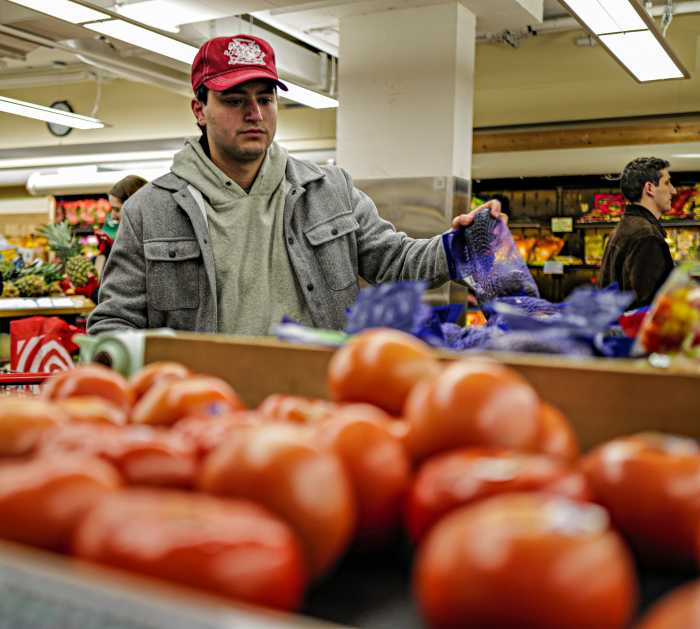
Adam Goldstein, owner of Brooklyn Wine Co. in Park Slope, said he is against the bill, in large part because of how it is being framed. Supporters portray wine as an everyday grocery item, when in reality it is a tightly regulated product intended for adults, he explained.
“I’m a parent. The way that this keeps getting framed by people looking to pass it is that this is another great product that should be in grocery stores,” he said. “The fact of the matter is that this is not just another grocery item. It’s not toothpaste. It’s a regulated adult product.”
He compared the ramifications of the bill to the legalization of recreational marijuana in New York in 2021.
“There’s an oversaturation that happens. Even look at cannabis,” the shop owner explained. “Being a parent, what is one of the issues, the unintended consequences, of its legalization? Oversaturation. It’s everywhere. The enforcement is weak.”
Although supermarkets can sell beer, Goldstein said it would be more challenging for someone underage to buy wine from a local wine shop than from a grocery store.
“Our staff are trained to verify age, refuse illegal sales, to be fully compliant, because it’s the only product we sell,” he said. “Imagine how wine and liquor would be in a supermarket.”
Though he supports updated Prohibition-era liquor laws, Goldstein questioned what would happen when grocery stores potentially begin to remove necessary home goods for alcoholic beverages.
“What happens at that point when they start getting rid of some of the necessary items that people actually need? If you’re talking about the smaller markets that would have access to it, the shelf space is finite. Once alcohol moves in, essential food products move out,” he said.
Cyndi Leonard, an owner of Colonial Wine and Spirits in Orchard Park, located upstate in Erie County, highlighted the bill’s adverse economic effects in a WKBW Buffalo news article.
“It’s not just, oh yeah, it’s really easy to go in and grab a bottle of wine,” she said. “It’s how many people will lose their jobs, from distributors, drivers, warehouse people, the wineries themselves, they’re going to have to work a lot harder.”
Is there a consumer demand for supermarket wine?
Meanwhile, Nelson Eusebio, director of government relations for the National Supermarket Association, explained the benefits of selling wine in grocery stores, including consumer demand and a strong fiscal impact.
“This is a bill that can benefit the supermarket industry, especially the independent supermarkets that are made up mostly of men and women minority owners who tend to their stores every day,” he said. “They’re not absentee owners.”
Eusebio said that it is shocking that New York does not already sell wine in supermarkets, given that it is one of the country’s strongest wine-producing states.
“There is a big demand for this,” he said. “As we have more people traveling to the Finger Lakes and the East Shore of Long Island, tasting these wines, they ask themselves why we don’t have these wines in our local supermarkets.’”
He added that the bill would generate new sales and excise tax revenue without raising taxes on New Yorkers.
However, Eusebio noted that he understands why small wine shop owners would have concerns about competition if the bill were to pass. He explained that wine and liquor stores did not close in other states where supermarket wine became legal.
“The National Supermarket Association has a Florida chapter with over 150 member supermarkets that sell wine and said they have not seen any liquor stores close,” he said.”If anything, there are more liquor stores around then ever.”
He explained the “two different customers” theory: one customer prioritizes convenience, opting to buy wine at a supermarket, while the other one might be more of a wine enthusiast who prefers the selection and experience of a specialized liquor store.
Meanwhile, Goldstein underscored his position on keeping wine off supermarket shelves.
“This isn’t just another grocery item,” he said. The environment where wine is sold directly affects safety, accountability and community.”
S1279A/A1328A is currently in the Assembly and Senate committees. It must pass through the legislative process before the governor can consider signing it into law.