


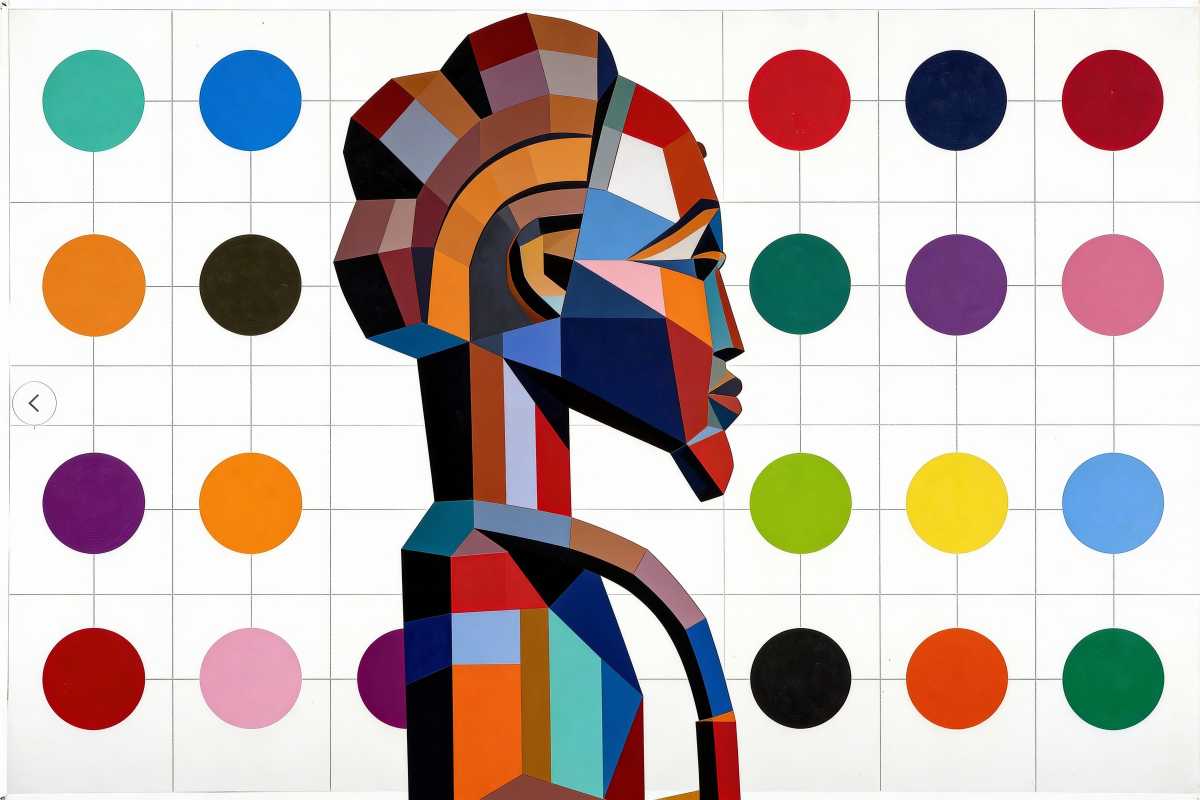
The embellished masks of Milandou Badila, known professionally as King Paris, resist the passivity of image; they assert presence, subtly shifting spatial awareness. What emerges is less an object than an encounter — a reminder that radiance, in its most enduring cultural applications, has long communicated authority, sanctity, and social meaning.
Not surprisingly, such luminosity belongs to a visual continuum far older than the contemporary art market. Across West Africa, reflective surfaces and material brilliance have conveyed spiritual resonance and communal significance: Yoruba beadwork worn by rulers and ceremonial figures refracts light as a sign of stature and safeguarding; polished metals and mirrored elements are believed to deflect harm while intensifying presence.
Indigo cloth, produced for centuries in Mali and Nigeria, encodes lineage and status within deep blue strata, while the bronze heads of Ife embody divine kingship with a composure that remains strikingly modern. Within this lineage, light is not indulgence. It is meaning made visible.
Surface, in these traditions, has never been superficial. It has served as a vessel and declaration, storing cosmology, governance, and social order within material form.
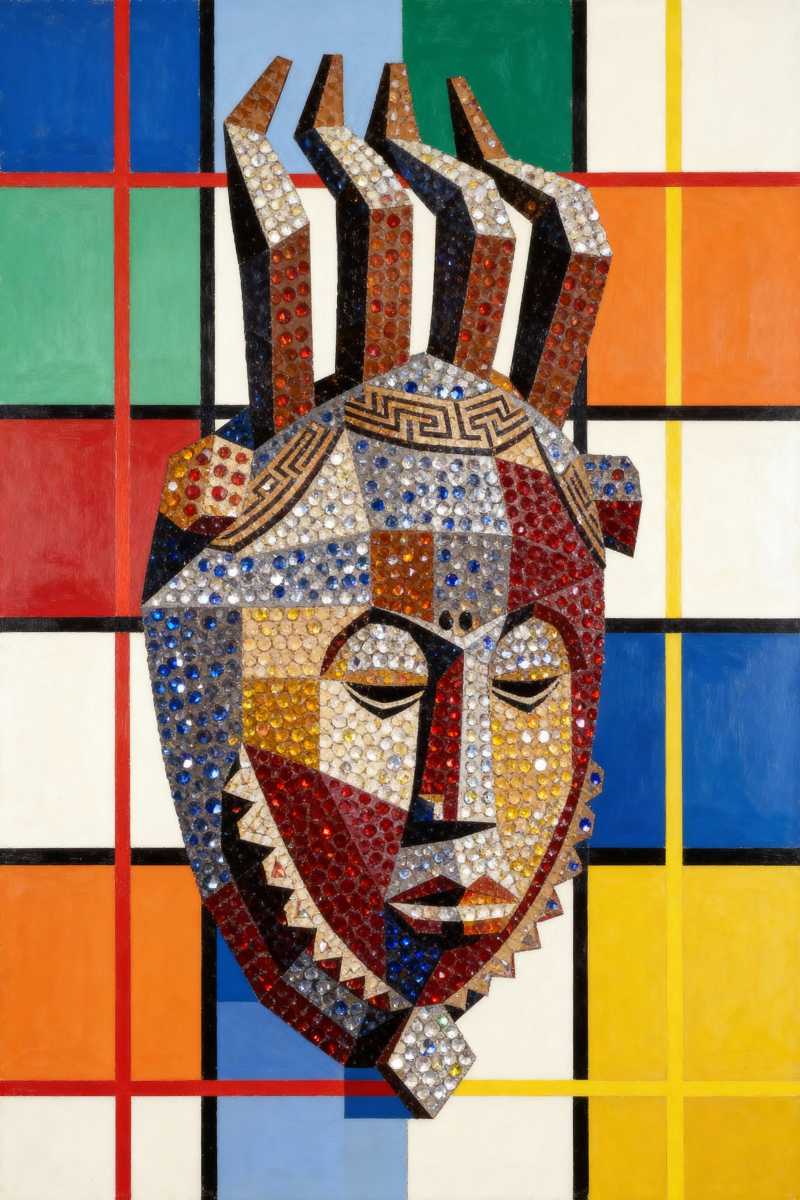
Without question, masking traditions across Africa functioned as activated presences rather than static forms. Among the Dan, masks became animate through rhythm and performance; among the Pende, they marked transformation and social passage; within Kuba court culture, pattern and material brilliance articulated hierarchy and royal legitimacy. Movement completed the object, and communal witnessing completed its meaning. Colonial extraction disrupted these ecosystems, recasting sacred technologies as ethnographic specimens even as European modernists absorbed their formal innovations. Context receded, cosmology dimmed, and agency softened into aesthetic abstraction.
Inarguably, contemporary reinterpretations of the mask operate within this historical tension — between object and presence, heritage and market, ritual function and aesthetic consumption.
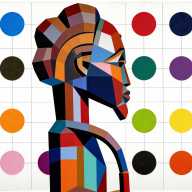
Working from mask imagery, the artist applies pigment, oil pastel, and crystalline embellishment to transform printed surfaces into refractive fields responsive to light and proximity. Swarovski crystals disperse illumination across the composition, softening the boundary between image and object while activating movement through reflection. The work shifts as the viewer shifts, echoing — however distantly — the participatory dimension central to ceremonial masking traditions.
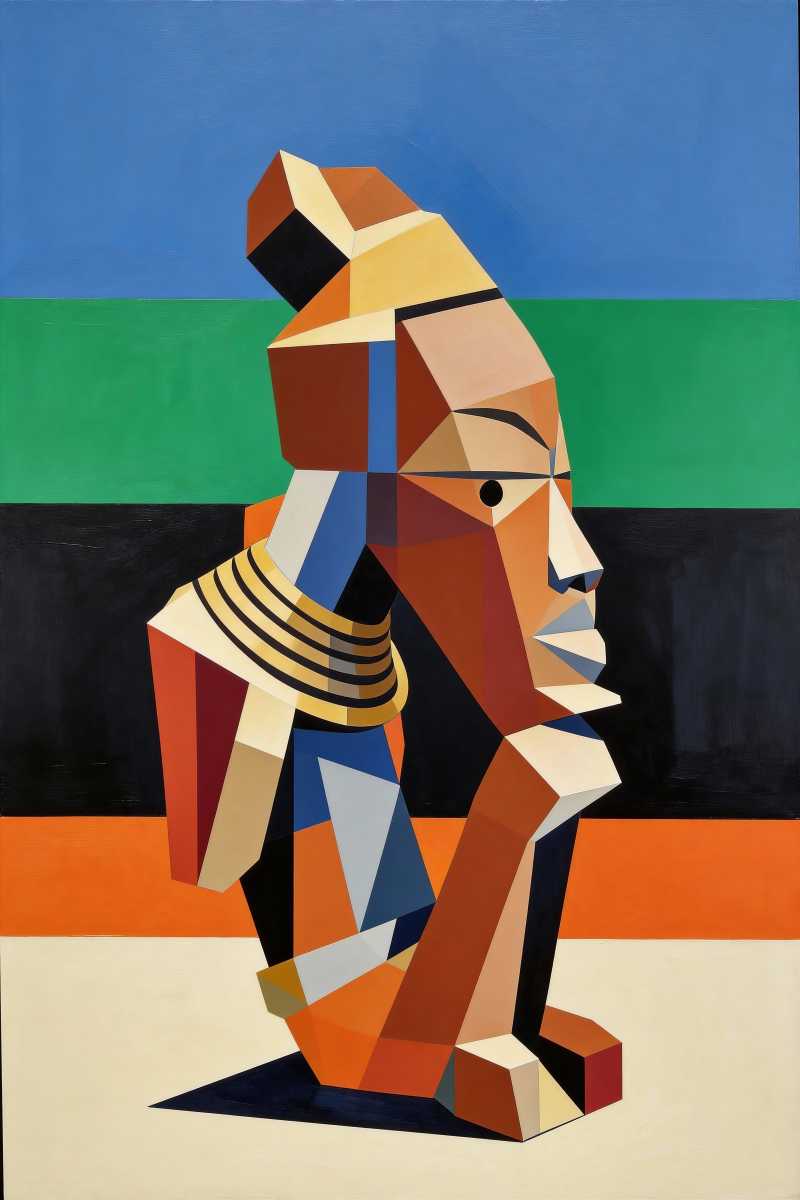
Here, radiance functions less as decoration than as structure. Reflective surfaces have historically amplified presence while deflecting harm; brilliance has signaled safeguarding and prestige. In a contemporary context attuned to material refinement and sensory engagement, such luminosity acquires renewed visual currency.
It is therefore no coincidence that renewed interest in luminous surface and hybrid form unfolds within a broader cultural landscape shaped by fairs and exhibitions — environments where visual language, market appetite, and cultural authorship converge. In New York, the Harlem Fine Arts Show, long championed by its founder Richard Pelzer, continues its mission of expanding visibility for artists of the African diaspora while cultivating collector engagement and institutional dialogue. Opening this weekend at Glasshouse, the fair serves as both cultural gathering and marketplace, where lineage and contemporary practice meet.
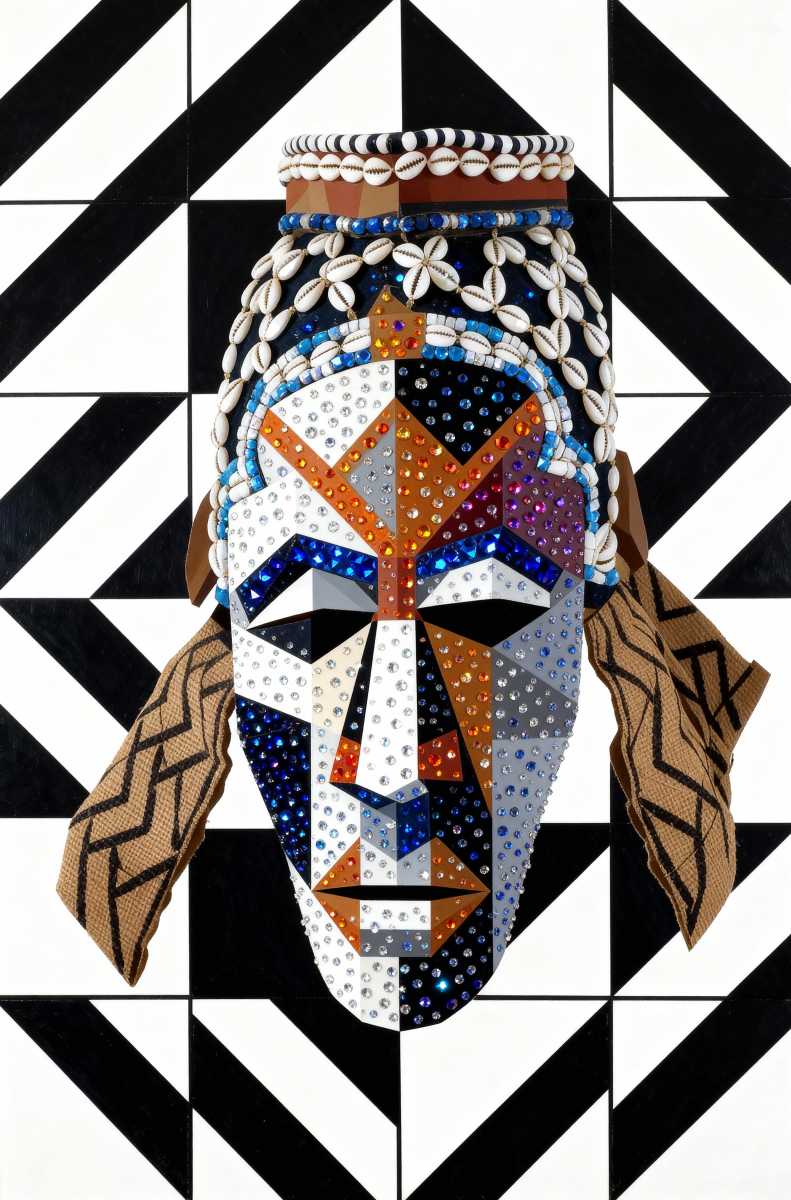
Works by King Paris will be on view in conjunction with the fair, situating these embellished forms within a larger conversation about reinterpretation and circulation. Opening night has evolved into a convergence point where collectors, curators, and cultural stewards gather to encounter work that expands the canon while remaining in dialogue with tradition.
In March, DTR Modern Galleries will present the artist in collaboration with his studio, offering collectors a more focused opportunity to engage with these works within a commercial context. Such presentations reflect a broader appetite for objects that exist between fine art, collectible design, and luxury surface. Their appeal lies not only in material refinement but in the layered cultural references they carry. Luxury, at its most compelling, is defined not by excess but by depth — by the convergence of narrative, material intelligence, and historical continuity.
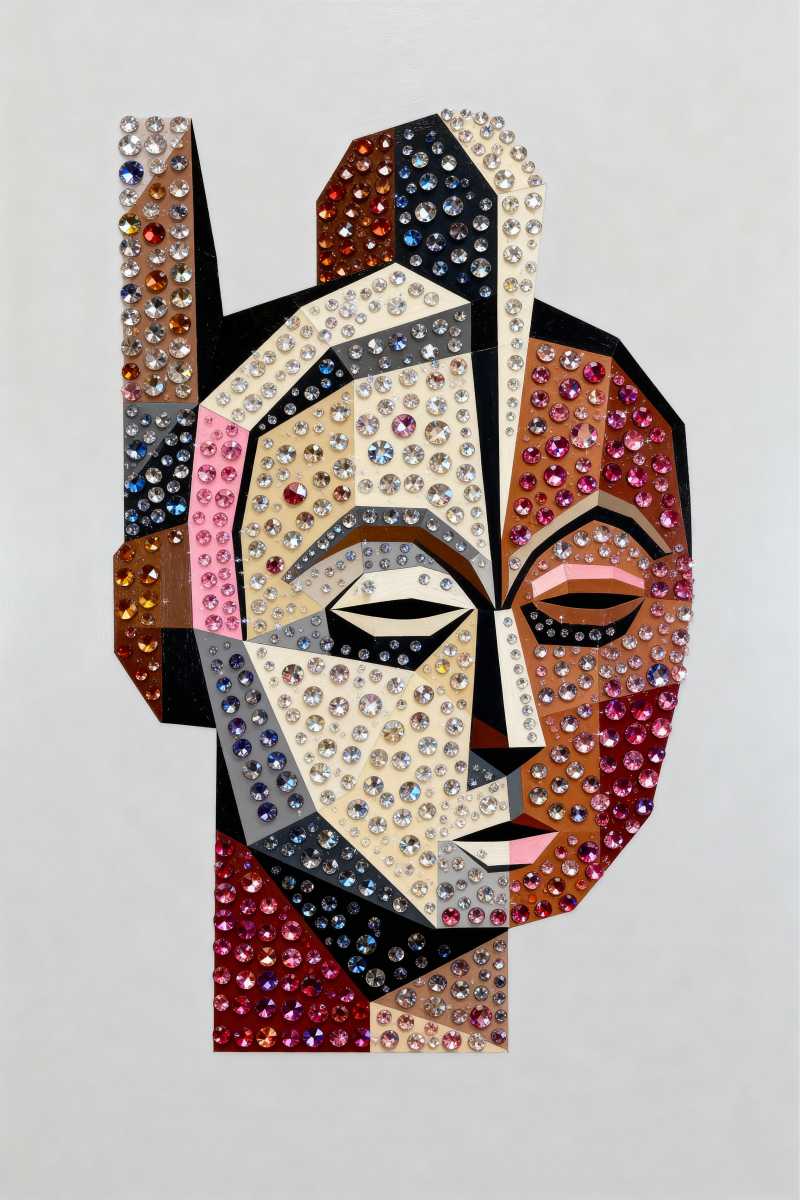
To stand before these works is to encounter continuity rather than distance. Light refracts through crystal and pigment; memory lingers in form; presence expands through reflective surface and embodied perception. The mask, once confined to vitrines and footnotes, continues to circulate within contemporary visual culture — altered, reframed, and newly contextualized.
In this circulation, Africa emerges not as a static origin but as an enduring intellectual engine whose visual philosophies continue to shape the present.
Check out the Harlem Fine Arts Show this weekend at The Glasshouse NYC, 660 12th Ave. For more information, visit hfas.org.
For more information on DTR Modern’s March exhibit, visit dtrmodern.com.