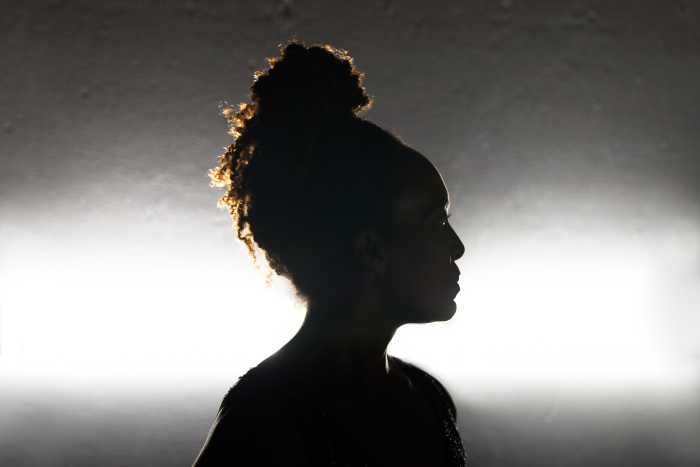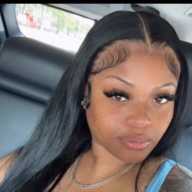


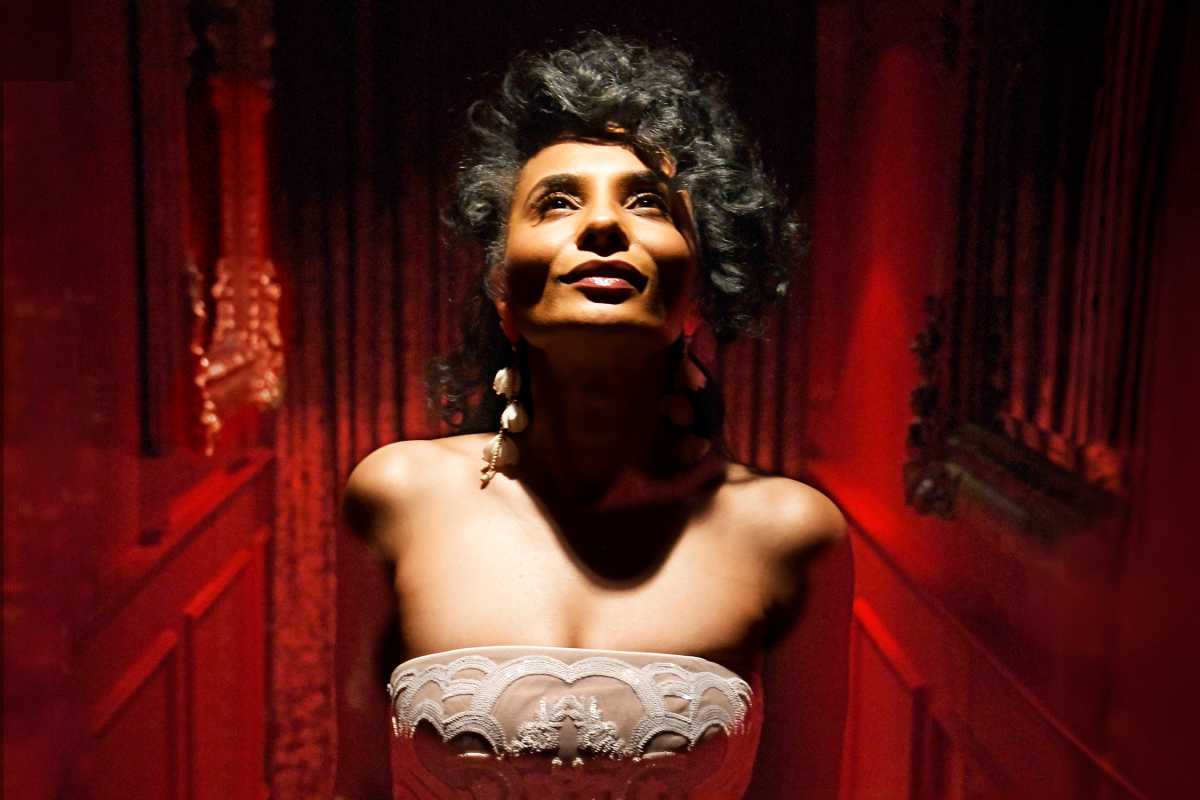
Ana Hoffman calls herself The BLCK Madonna, but it’s not for the reason you think.
A jazz singer who grew up in Texas and Ghana, Hoffman loves the world of jazz standards. While she listened to that other Madonna growing up, she was looking even further back when she chose her moniker.
“I wanted to claim authorship of the original meaning of Madonna,” she explains. “It has nothing to do with religion or the pop artist. In Italian, Madonna means my lady, it’s a term used when you want to express reverence towards a woman who carries herself with dignity, authority, and respect. And there was something very powerful, as a woman shaped by blackness, to claim that name felt very empowering.”
“I also wanted to extend it as an invitation for other women to claim their own authority,” Hoffman continues. “And I discovered that there’s over 300 black Madonnas painted in churches all over Europe.”
Hoffman grew up with music and found it had a purpose in her life, though possibly one unique to her. Her first musical memory is belting out “A Whole New World” from Aladdin — but singing, she says, “was never a performative thing.”
“It was never for anyone but myself,” she recalls. “Growing up as a kid, I would sing, but it was just out of enjoyment and play. I would sing to things when I lost them! I had this thing where I would lose something, but every time I would sing to it, I would find it.”
Years later, while in college, Hoffman began thinking of pursuing a musical career.
“I was gonna be a pharmacy major, like my parents. I think I was going for the safe route of security,” she says. “I was sitting in a chemistry class one day, and I was just like, what am I doing – I hate science! I needed a way to get out of it and the choir at my school at the time was offering scholarships. But the catch was that there were two choirs and you had to participate in both. One of them was traditional classical, and the other was jazz. So I pivoted, joined the choirs and I was exposed to all of these jazz standards. And I fell in love with the music.”
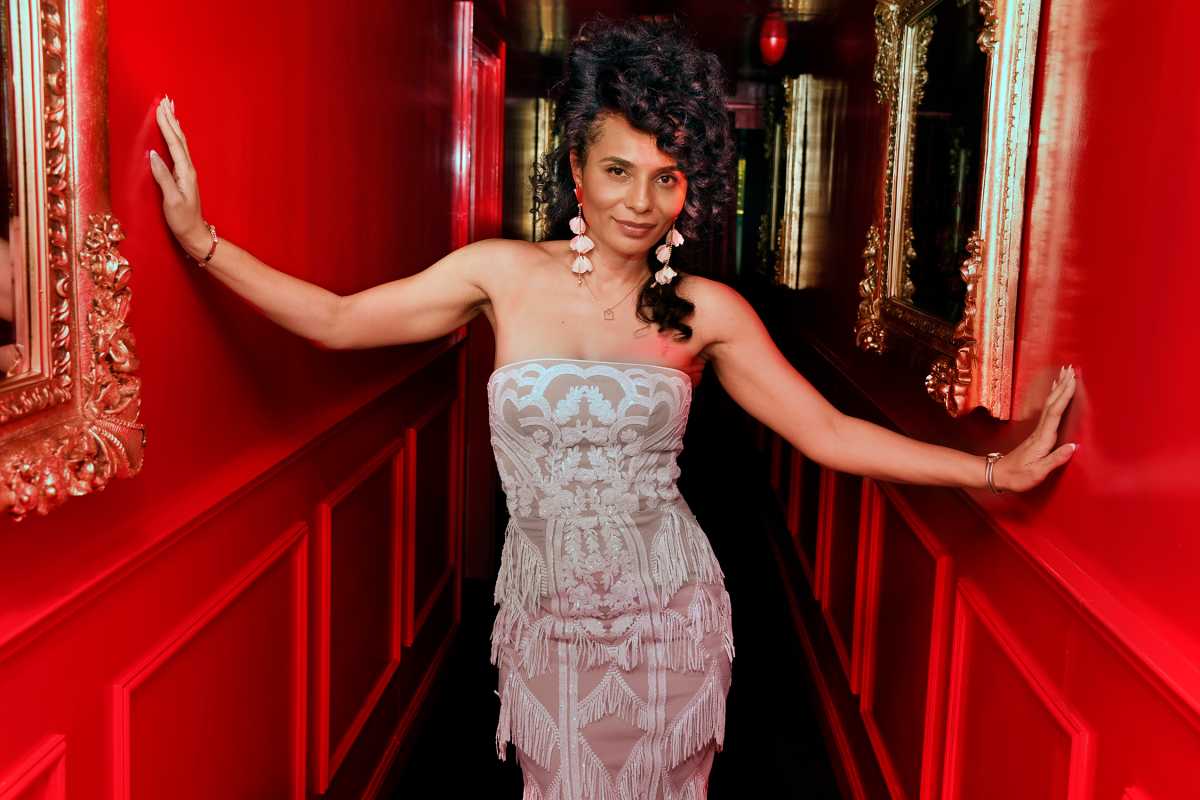
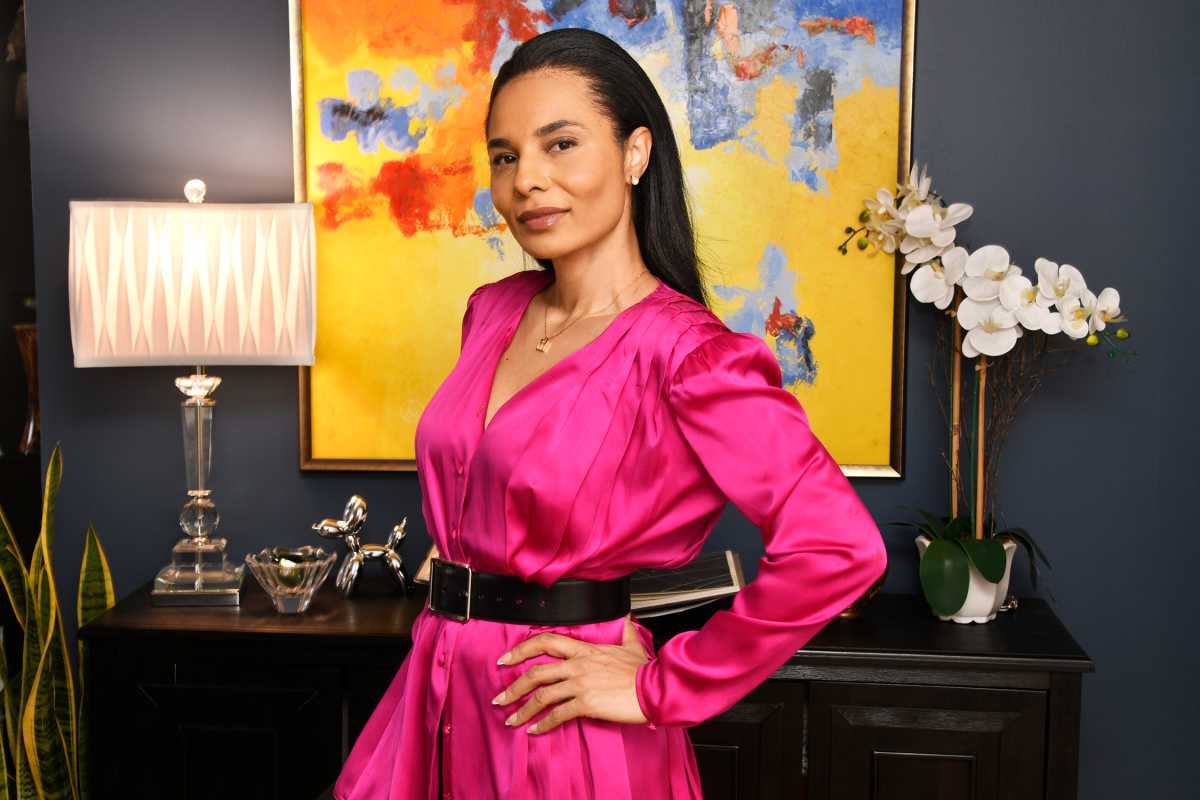
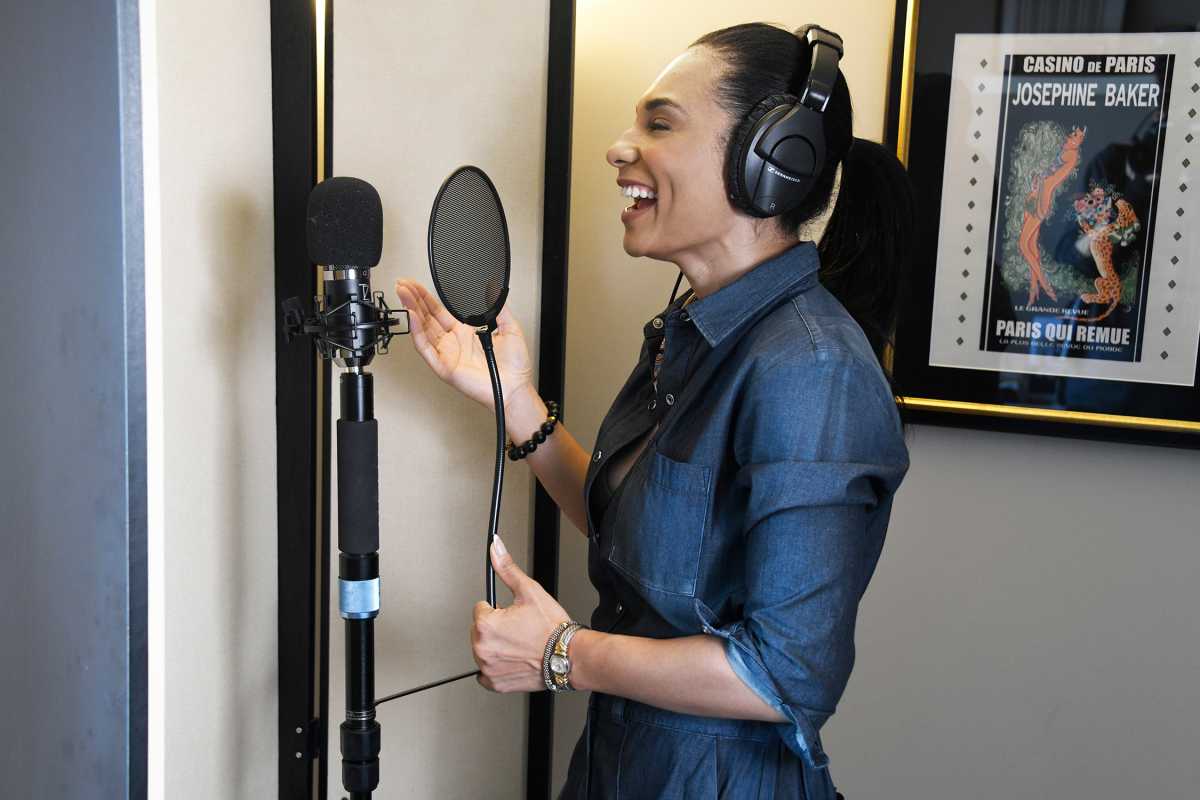
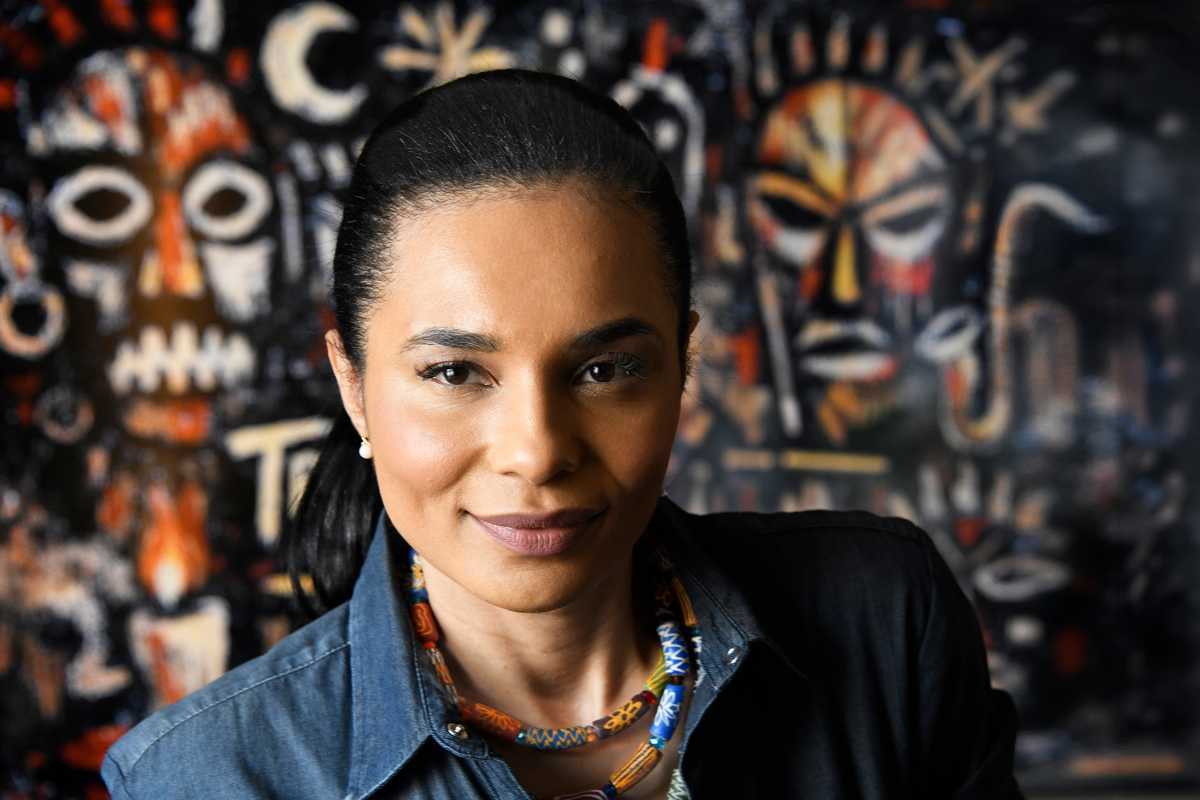
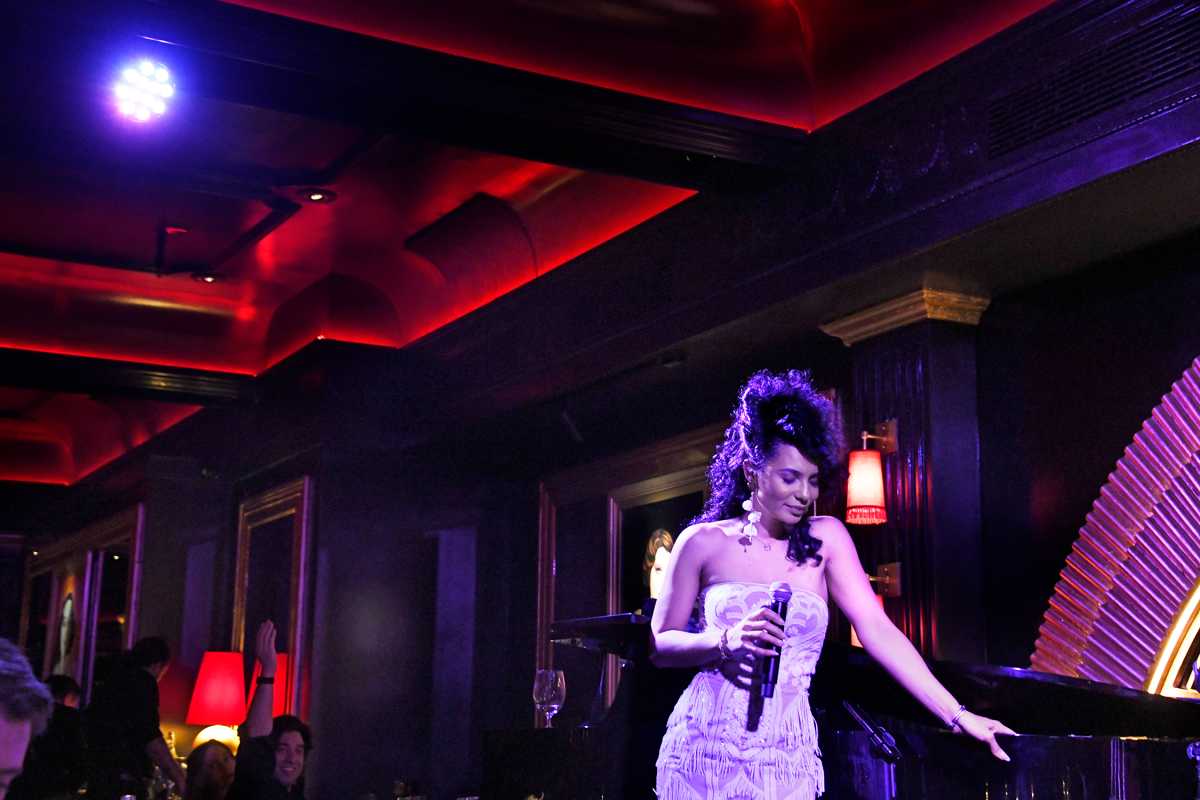
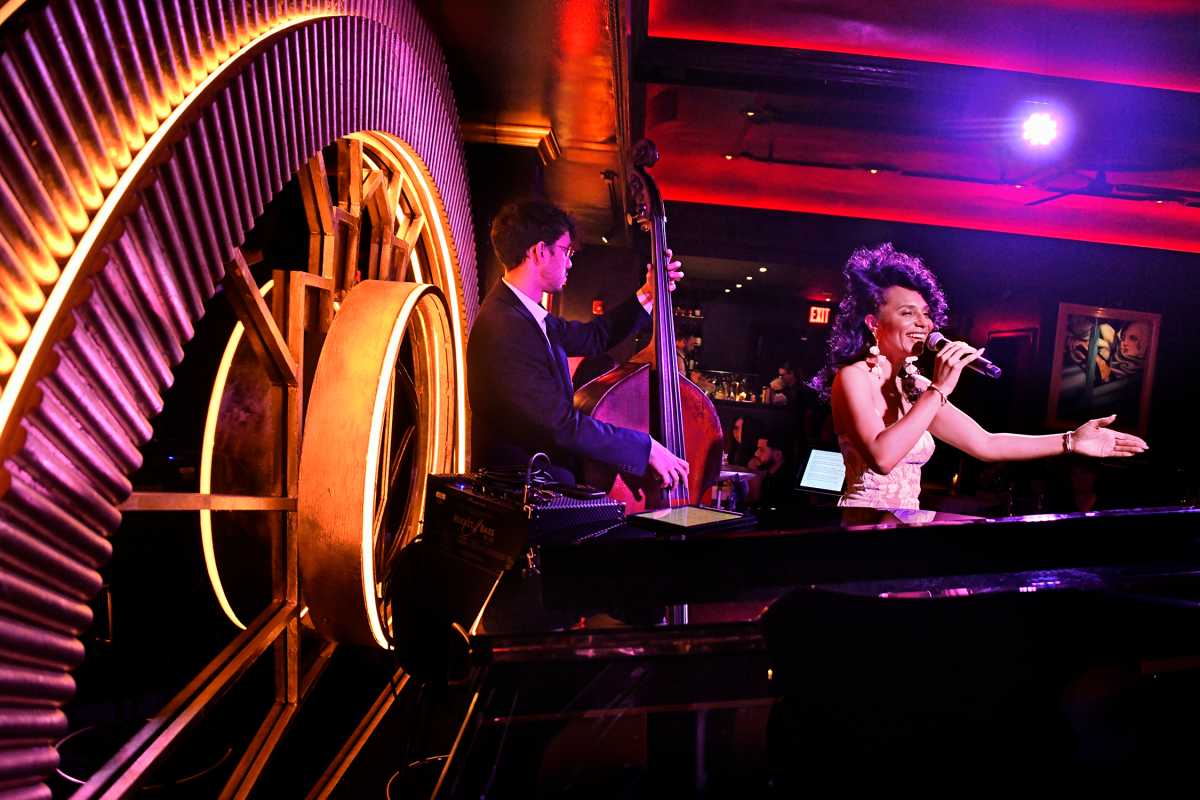
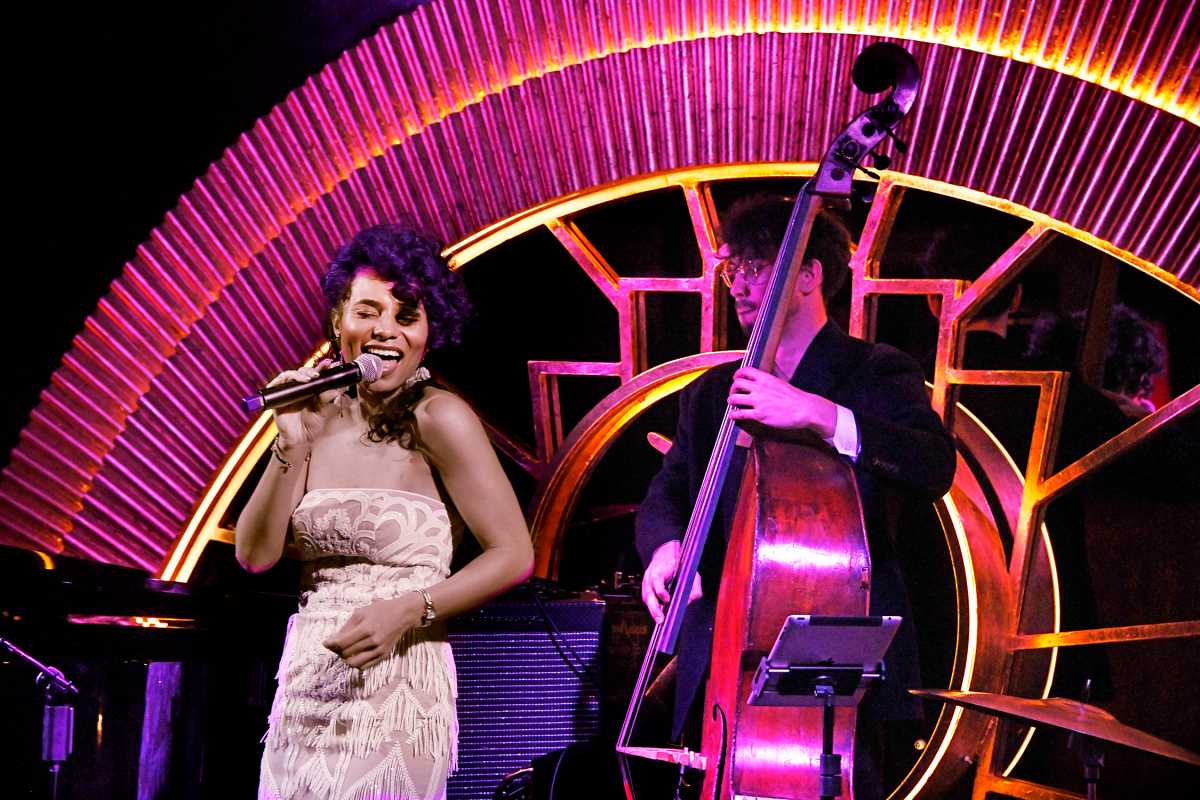
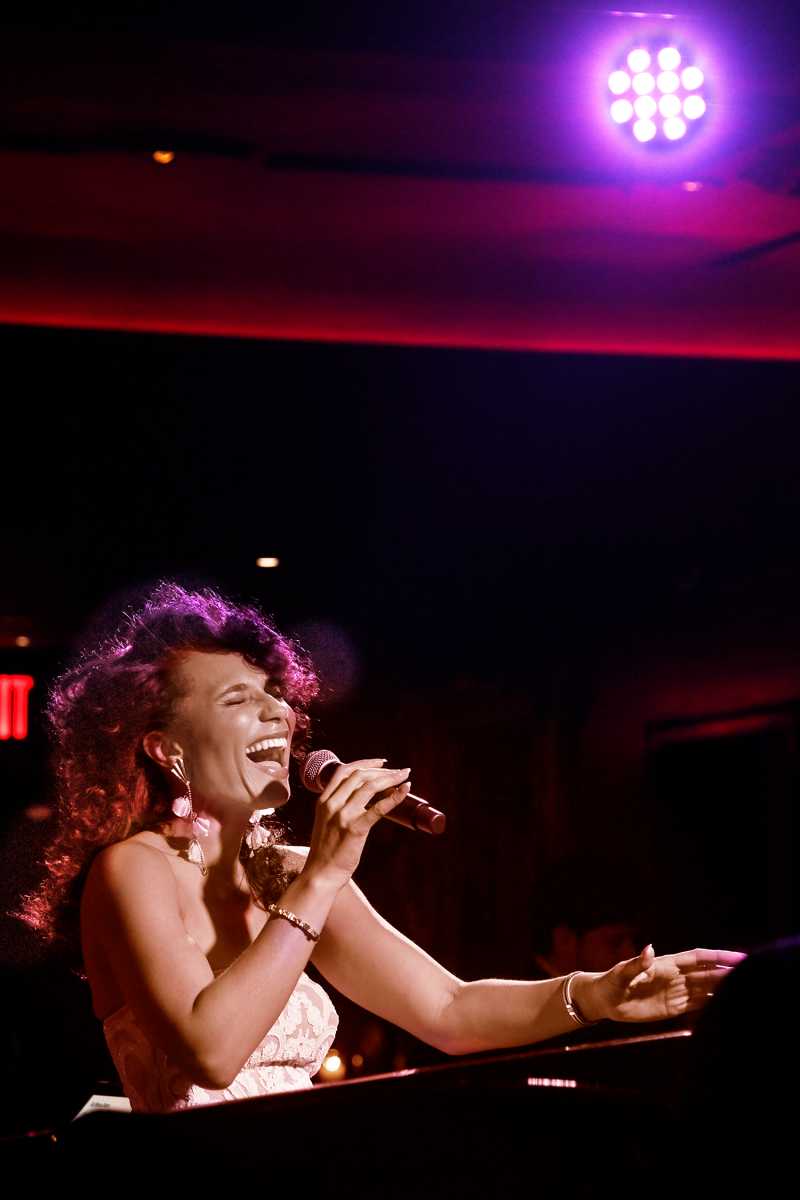
Her love of music is evident from the minute she begins her set with the classic “Summertime” at Drai’s Supper Club in the Meatpacking District, where she frequently performs.
Running through a show that found her putting her spin on tunes from Mongo Santamaria’s “Afro-Blue” to Bill Withers’ “Lovely Day,” Hoffman spent ample time listening to her very talented musicians and drawing inspiration from them as well.
On a recent Saturday, the band included Liya Grigorian (piano), Jerome Gillespie (drums) and Rafael Enciso (upright bass). Enciso also co-produced her new album, which will be released soon.
“I’m an empath,” Hoffman explains. “I’m very sensitive to people and energy and the atmosphere in the room. I think that singing is a way for me to give shape to those things that I feel.”
The room at Drai’s fits her perfectly, as it gives her the chance to do what she loves in a relaxed and sophisticated setting.
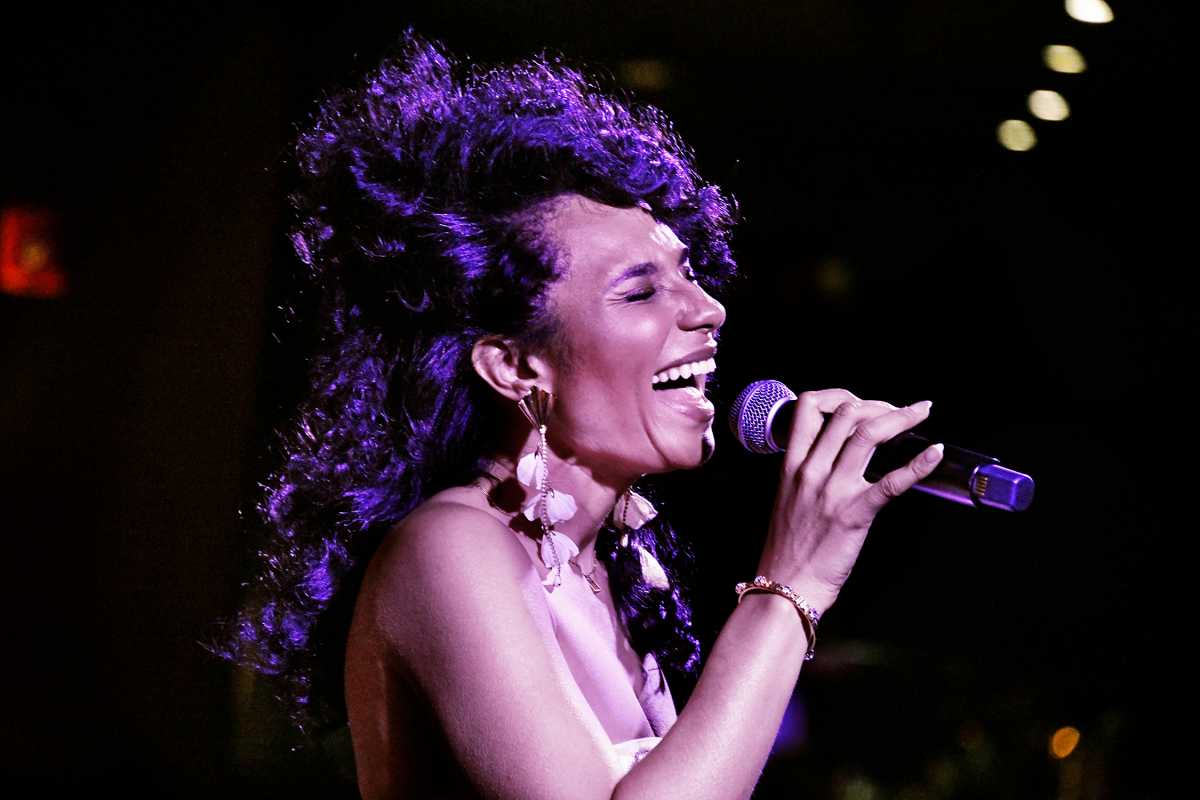
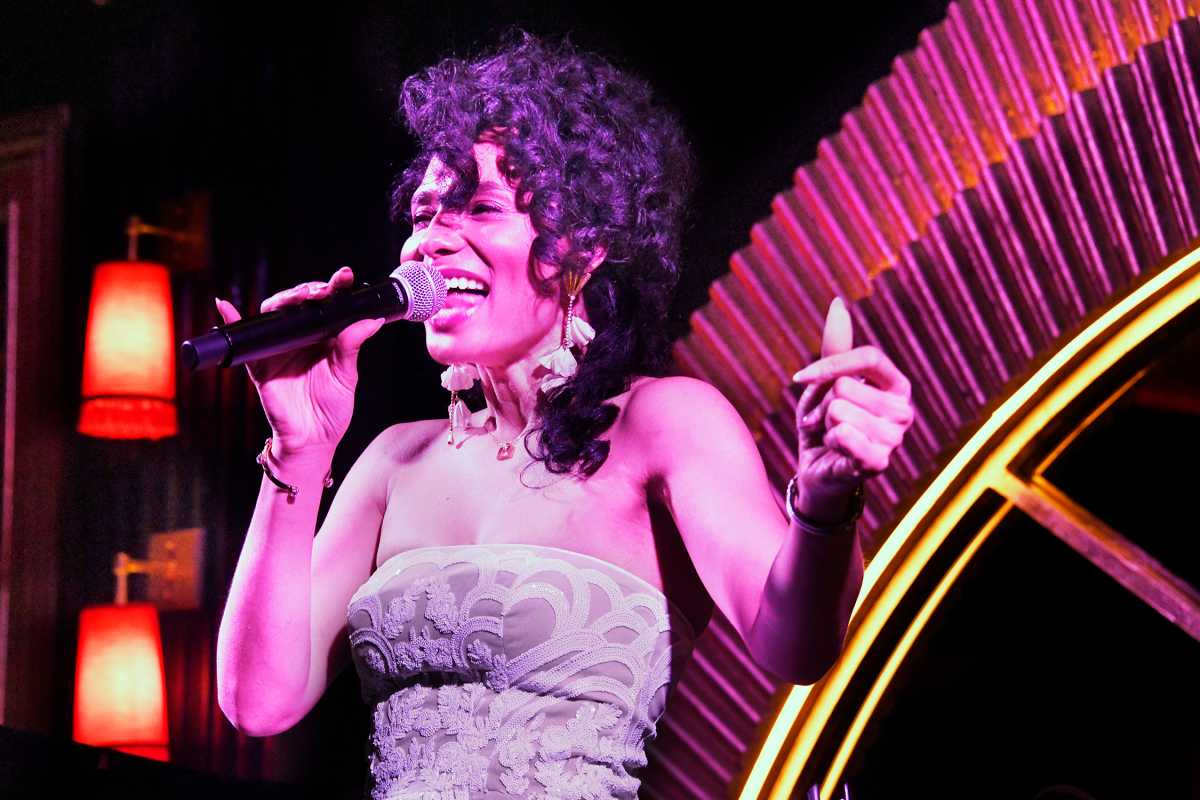
“Drai’s is an elegant room, and she brings a real presence to the stage,” says James Francis, co-producer of the album. “She brings style, elegance and a quiet mystique to the stage, but when she begins to sing, there’s real authority in the voice.”
That voice was not only nurtured in the choir but also in musical theater, where she once thought her future lay.
She put in some serious time in a touring production of “Dreamgirls” (as the Diana Ross character, where she made her debut at the Apollo Theater) and the role of Josephine Baker in “Harmony,” which required her to do a backflip off the piano.
“I thought I was gonna die! Thank God I didn’t lose a leg,” she muses. “But, you know, it really helped build my chops and my confidence in that way that I can sing through anything. I have performed in thunderstorms in an outdoor theater. I’ve performed during earthquakes. I’ve performed with set pieces falling down. I’ve performed with costumes falling off, shoes coming off, but the show must go on. There’s no, do it again, there’s no effect on your voice, it’s all you. So that really helped me just build my instrument as a performer. But I’m happy that now I just have to stand and sing!”
Her song choices go beyond the surface, as she notes in the instance of “My Funny Valentine.”
“It’s my interpretation for the little girl in me,” she explains. “When I was about 6 years old when I realized my blackness. I remember touching my white friend’s hair; it was soft and silky. My hair was rough, and I couldn’t get my fingers through it. I remember thinking, ‘Oh, it’s fine. I’ll go home and I’ll wash it, and it’ll be just like her hair.’ And I have this memory of being in the bathtub, and getting a white bar of Ivory soap and washing my hair, thinking it’s going to make it silky and straight. Essentially, I was trying to erase my blackness. The more I scrubbed, the harder my hair got and and I finally realized, I can’t change this. I can’t have what she has. I can’t be who she is. I think that was the first time that I recognized my blackness, and I had to reconcile with the fact that there’s some things you can’t change. You cannot change your identity, who you are.”
“It’s funny, they say life is lived forwards, but it’s understood backwards,” she adds. “And especially since I’ve made this album that’s really made me stop and just look at the journey from where I started”.
So, we have the BLCK Madonna, spelled that way for a reason.
“When you remove the A, it creates space. It makes you stop and look again, to think, to try and read between the lines, and that ultimately is what leads into the album and what it’s all about. Ana and the BLCK Madonna are two sides of the same coin. As an artist, I think it’s important to be authentic and be honest, because we’re vessels for people to see themselves, so that we can have more empathy and just more love and more understanding.”
Upcoming shows, including the album release show on April 11 at Baretto in Midtown East ( resy.com/cities/new-york-ny/