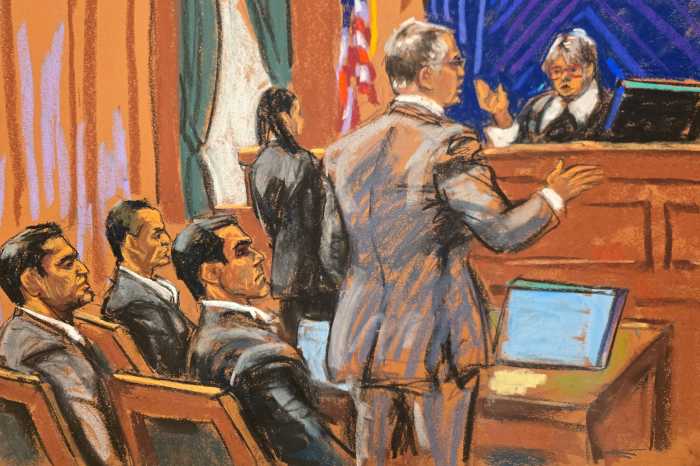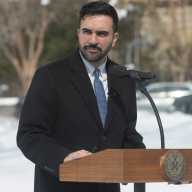




Manhattan District Attorney Alvin Bragg took a public speaking engagement at New York Law School Wednesday morning to outline three of his second-term priorities — two familiar, one high-tech: guns, shoplifting and crypto.
Bragg targeted the blockchain currency in his presentation, raising grave concerns over its role in facilitating illicit payments for other types of crime in the city.
“I don’t wanna alarm anyone, but… we need systemic accountability on steroids here. In fact, I actually want you to be a little scared,” Bragg said to the audience.
The overarching theme of Bragg’s talk was that his office is taking a “systemic” approach to prosecution that goes beyond holding individual bad actors accountable.
For guns, Bragg said that meant cracking down on the so-called iron pipeline, or the path that gun smugglers use to illegally move guns throughout the U.S. He also has advocated for legislation to criminalize the manufacture of 3D-printed ghost guns. For shoplifting, it means focusing on operations that go after “fencing networks” that resell stolen merchandise to consumers.
Crypto enforcement, Bragg said, is what’s needed to root out other forms of criminal activity. Lack of regulation of crypto financial markets leads to billions of dollars of crypto pouring into a manifold of criminal enterprises, he said.
In 2024, around $51 billion in crypto transferred to known criminal addresses or people affiliated with criminal actions, according to Chainalysis a blockchain analysis firm
“It’s the infrastructure that allows the other crime to happen. So getting our arms around this is key for systemic accountability,” Bragg said.
Bragg noted that cryptocurrency is a “perfect way to launder money” because there’s nothing akin to the regulations in traditional banking that require crypto companies to file suspicious activity reports about their customer base.
To ramp up his crypto enforcement, Bragg said he has started to work with members of the Legislature on new tools. He wants a bill that would require crypto companies in New York to abide by the same “know your customer” standards as banks, and other legislation that would create criminal penalties for people who are transferring crypto to other forms of currency without a license.
“We need unambiguous authority to do more of it, and to do it in a more streamlined way. Eighteen other states have done this,” Bragg said. “We are the center of capitalism, and so doing it here is important.”
Following his presentation, a civil litigator in the audience who has taken on crypto scam cases that often target the life savings of elderly New Yorkers asked Bragg what type of solution the DAs office could offer people like her clients.
“We spend a lot of time trying to help people get stolen crypto back. It’s very hard,” Bragg said, before promoting a new piece of legislation by state Senator Zellnor Myrie that would crack down on white collar crimes by increasing penalties, broadening definitions for fraud, including crypto scams.
“Giving my office the tools is very important,” Bragg said.