


A federal judge on Wednesday sharply questioned Trump administration lawyers on their legal arguments for killing the city’s congestion pricing program — specifically the idea that the president, through his transportation secretary, has the power to void a contract approved by the previous administration.
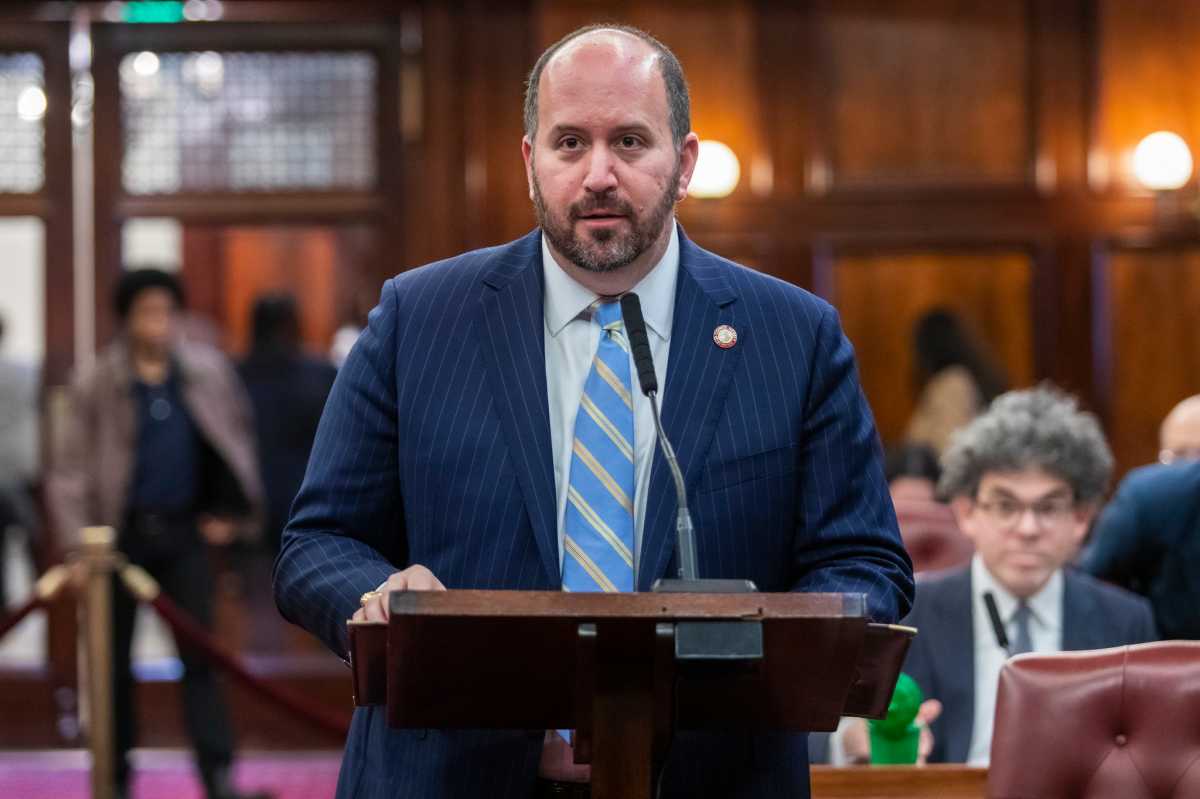
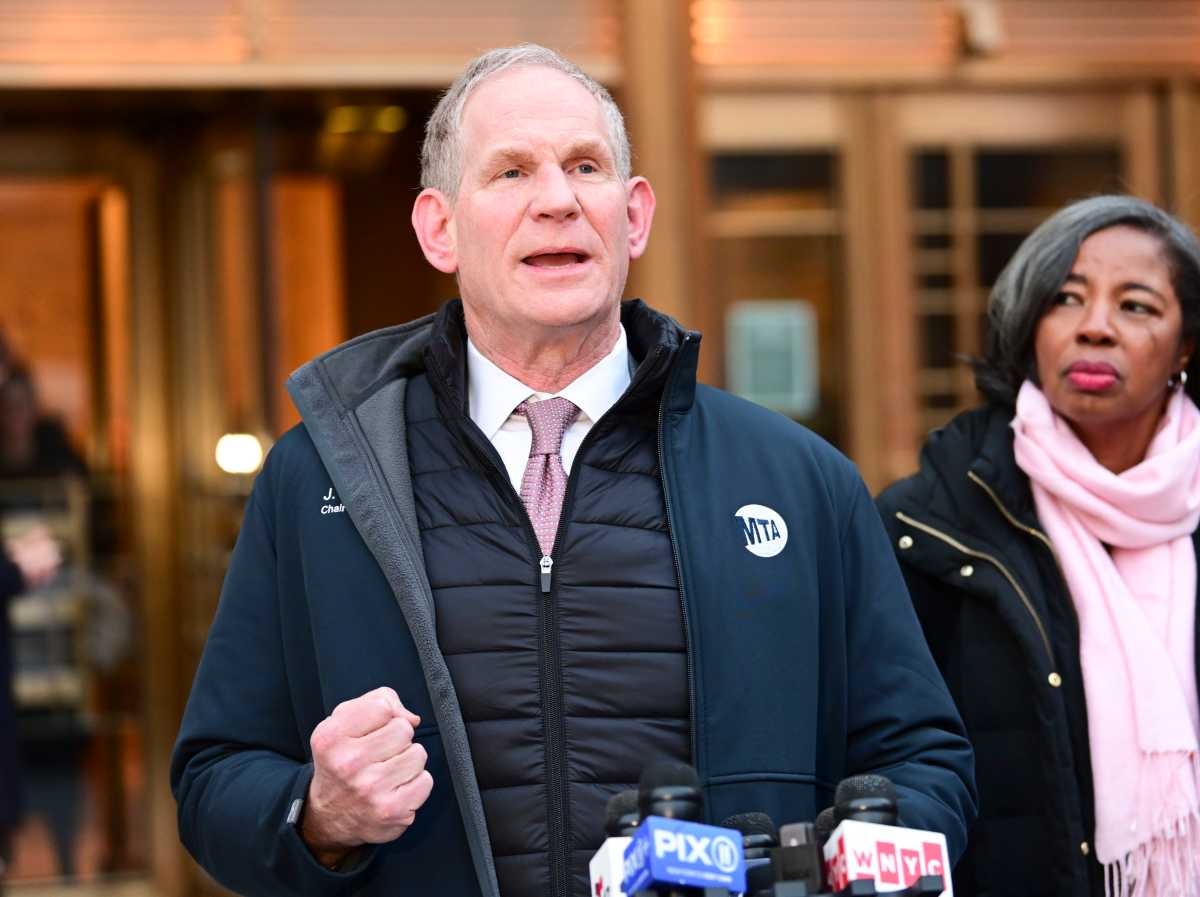
Following the hearing, MTA Chair Janno Lieber reiterated in a press conference outside a Manhattan federal courthouse that Trump and U.S. Transportation Secretary Sean Duffy are claiming the authority of a monarchy in their move to void the congestion pricing contract inked under former President Joe Biden’s administration.
“The government’s position is they can rescind any agreement, any approval at any time, if the president or the secretary of transportation wants, and that is scary,” Lieber said. “That is a scary position. It means that the government’s commitments will be worthless. And who knows how you ever do a contract again to build anything in the United States if that’s really what they’re talking about.”
While the U.S. District Judge Lewis Liman did not issue a ruling on Wednesday, Lieber said he is “optimistic” the judge will rule in favor of the MTA and New York State.
“I’m really looking forward to a decision on the merits that will end this case, and I’m optimistic in part because we have a perfect track record in the court so far,” Lieber said.

Lieber claimed the hearing as yet another win for the MTA and the state. Last May, Liman blocked the Trump administration from making retaliatory cuts to state funding, issuing a preliminary injunction against Duffy’s ultimatum: Stop the tolls or funding may be held back.
The $9 base toll to drive into Manhattan south of 60th Street during peak hours came before the court again on Jan. 28 as Liman, whom the USDOT has asked to rule quickly, weighed motions for summary judgment on each side.
The MTA brought the suit last February, within hours of the USDOT pulling federal approval for congestion pricing.
Whose court is it anyway?
The USDOT has argued that the suit belongs in federal claims court, not in the U.S. District Court, because it concerns a contract. At the same time, federal attorneys say the U.S. transportation secretary under Biden didn’t have the authority to create the pilot program in the first place.
Liman pointed out the inconsistency between those two stances during Wednesday’s hearing.
“How can you take the position that they’re simultaneously suing on a contract and take the position that there is no contract because it’s void?” the judge asked.
Attorney Eric Hamilton, who argued for USDOT, said the agency pushed to scrap congestion pricing for a number of reasons, including shifting administration priorities.
Those were “separate and apart from the legal defects in the pricing program,” he argued.
Liman pressed him on whether his argument would mean that USDOT has the authority to terminate any agreement it enters at will, even ordinary measures like fixing roads. On rebuttal, Hamilton confirmed that the contract terms posted on the department’s website would also apply to those agreements.
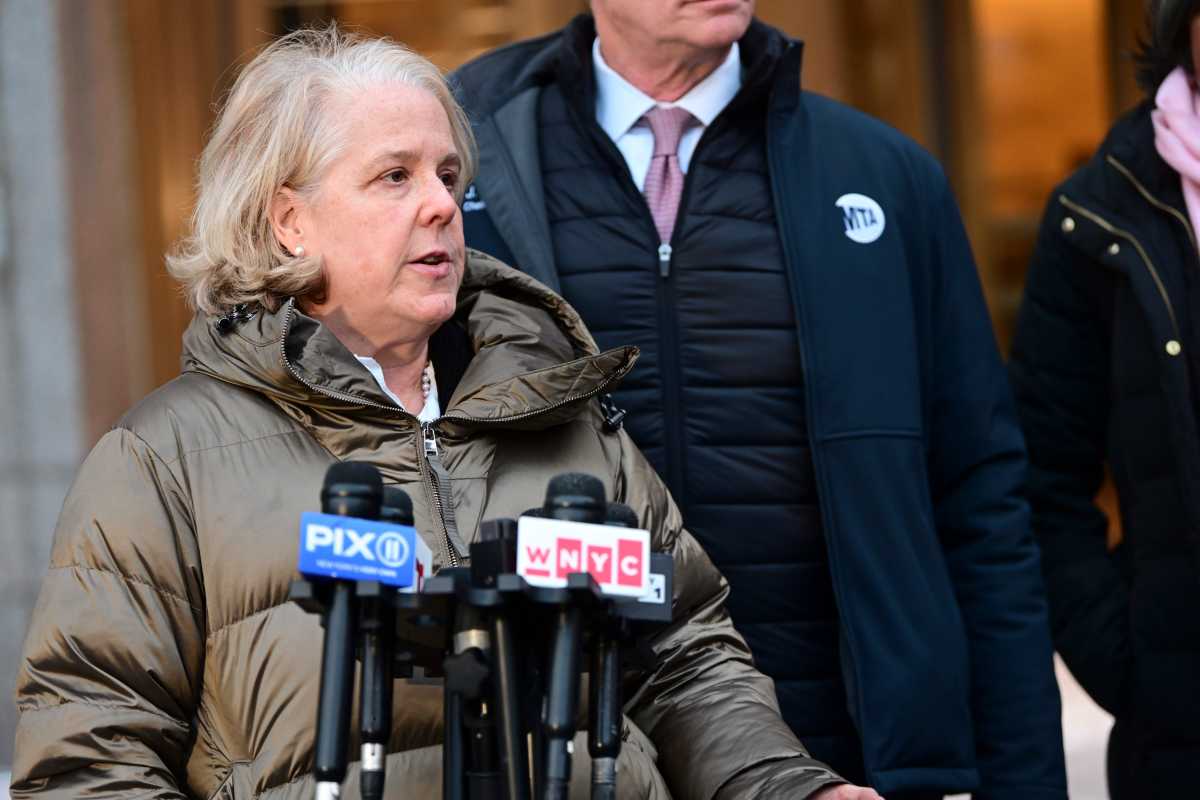
Robbie Kaplan of the firm Kaplan Martin LLP argued on behalf of the MTA and the state. She pointed out that Trump had posted on his platform Truth Social, along with a Time Magazine cover that showed him wearing a bejeweled crown, “CONGESTION PRICING IS DEAD. Manhattan, and all of New York, is SAVED. “LONG LIVE THE KING!”
The notion that USDOT could cancel an agreement due to the “personal whim” of a “former New Yorker” president counters the democratic process, Kaplan suggested; we have “President Trump, not King Donald,” she said.
Liman also questioned whether the administration would comply with an order should he grant the MTA the permanent injunction it’s seeking.
‘The cameras are staying on’
U.S. Transportation Secretary Sean Duffy has ordered Gov. Kathy Hochul to shut the program down several times through a series of threatening letters since terminating its federal approval. But the state’s top executive has repeatedly defied those demands.
“The cameras are staying on,” has become one of Hochul’s go-to catchphrases in defending the program.
Hochul and the MTA both hailed the program as a sweeping success on its Jan. 5 one-year anniversary. Lieber highlighted its benefits once again following the hearing, noting that it is working as intended and thus does not need to be studied any further, as the feds have argued.
“We know that this program has delivered everything that was promised and that was analyzed and projected, less congestion, faster travel, better air quality, safer streets, all of the promises that were looked at in the original analysis by DOT have actually come through,” Lieber said.
They reported that 27 million, or 11%, fewer vehicles entered Manhattan’s Central Business District (CBD), the zone below 60th Street where the toll kicks in, in congestion pricing’s first year — roughly 73,000 fewer vehicles each day.
Additionally, they revealed that the reduction in CBD traffic brought other benefits, such as a 4% increase in car speeds on weekdays, a 2.3% increase in bus speeds, a 22% drop in air pollution, and 17% fewer noise complaints to the city’s 311 hotline within the zone.
They said congestion pricing was also projected to net over $550 million in its first year — money needed for the MTA to secure $15 billion in bonds to pay for improvements across the city’s aging transit system.
The MTA has already been putting the revenue it has raised so far from congestion pricing toward funding capital projects. In December, the agency’s board approved $1.75 billion in contracts for congestion pricing-funded projects, including signal modernization on the A/C lines in Brooklyn and Queens and new elevator installations at five subway stations.