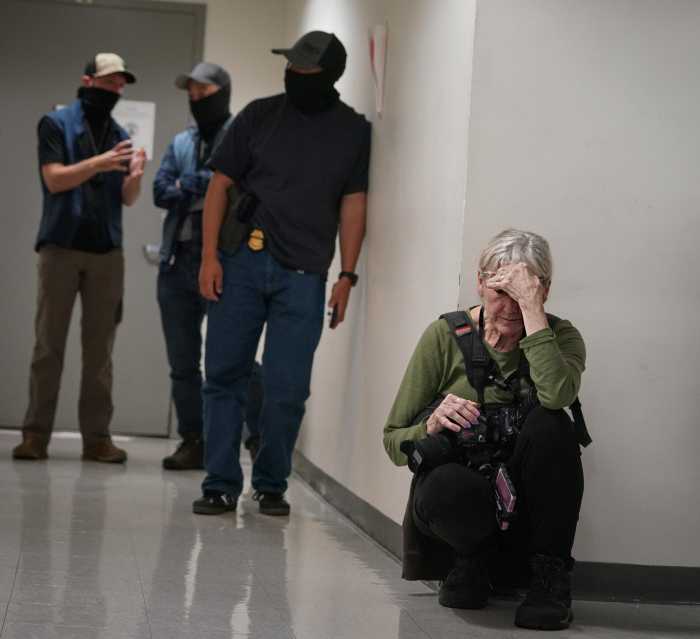



A New York City Department of Correction officer forged the signature of a person incarcerated on Rikers Island to prevent him from meeting with his defense counsel, according to testimony provided at a Wednesday New York City Council hearing where attorneys said they are subject to hostile treatment by officers.
Attorneys from the Legal Aid Society, New York County Defender Services, Neighborhood Defender Services and The Bronx Defenders said getting to meet with a client in a timely manner at Rikers Island frequently felt like “sheer luck” because of hours-long wait times and officers fabricating detainee refusals to meet with their attorneys.
Julia Tedesco, an attorney with the New York County Defender Services, said she was told her client refused to meet with her at a scheduled Nov. 12 televisit and was provided with a refusal slip apparently bearing the client’s signature. When she went to visit her client in person on Rikers Island on Nov. 20, officers told her he refused again. She found it suspicious, questioned officers further on the matter and was told about half an hour later that her client was “no longer refusing” to meet.
“When we spoke, he told me unequivocally that he never refused a visit that morning, so there was no refusal,” Tedesco said of her client. “He also said that he never signed a refusal slip on Nov. 12. I compared that signature to the documents he signed in front of me on Nov. 20. They did not match. A correction officer forged my client’s signature.”
Tedesco said officers lying about clients refusing to meet with her and other attorneys violated their constitutional rights.
“Pretrial detention is dehumanizing. We know this, and the persistent denial of counsel access through fabricated refusals is a direct violation of the Sixth Amendment right to counsel,” Tedesco said. “This is not a clerical error or misunderstanding. It is a deliberate obstruction when Rikers staff fabricate refusals. They do not merely inconvenience attorneys. They silence crimes and sever one of the few lifelines available to people to take pretrial. They prohibit clients’ opportunity to meaningfully participate in their own defense.”
When asked about this situation, a DOC representative said the department is exploring options to improve visitors’ experiences.
“The Department is both reviewing visit operations and implementing improvements to upgrade the process and experience for all who visit our facilities,” the DOC said in an emailed statement. “We have made numerous improvements to our visitor experience in recent years, including through partnerships with nonprofit organizations to provide opportunities to connect with loved ones both on and off Rikers Island. We know there is more work to do, and it remains a priority for our staff to get it done.”
Tedesco’s experience with DOC officers fabricating client refusals is not an isolated incident, Tahanee Dunn, an attorney with The Bronx Defenders attested.
“Recently, I had a client whose case was in a hearing and trial posture. Thus, visiting him was essential,” Dunn said. “His legal team and I went on three consecutive occasions and were told he refused our visit…When we spoke to him later, he assured us that he had not refused. Rather, no one had come to his housing area to notify him of the visit.”
Dunn said this happened to her on “many” visits, sometimes cutting her and her team off from their clients for over a month.
“I receive dozens and dozens of complaints from our staff and our clients every month [about this,” she said. “It is appalling.”
The fabricated refusals are just part of a hostile culture attorneys experience when trying to meet and speak with clients detained on the island to develop cases, criminal defenders testified.
Elizabeth Bender, senior policy counsel with the Neighborhood Defender Services of Harlem, said a DOC officer threatened one of her colleagues who was attempting to conduct a client meeting.
“As [an officer] saw her approaching, he said, ‘Oh, it’s you. I have a chloroform-soaked rag behind my desk just for you,’” Bender said of her colleague’s recent experience at Rikers. “There is no circumstance under which a comment like that is acceptable, but everyone…who has spent time visiting Rikers Island will know that it is emblematic of a system that’s designed to make it as unpleasant, difficult and time-consuming as possible to visit our clients and provide them with the legal representation that they deserve.”
Bender said the DOC’s claims that attorneys could schedule client meetings online to bypass long waits and that legal visits should always start within 45 minutes of an attorney registering at the jail were “a joke.”
She and others said that the long waits and a lack of privacy during client meetings prevented attorneys from seeing as many clients as they otherwise could, making it difficult to listen to vulnerable client stories and build the best case possible.
“Almost all of the visit areas force us to shout at our clients through plexiglas,” Bender said. “There are [officers] and sometimes other detained people very nearby who can see and probably hear everything that we are talking about in these immensely vulnerable conversations.”
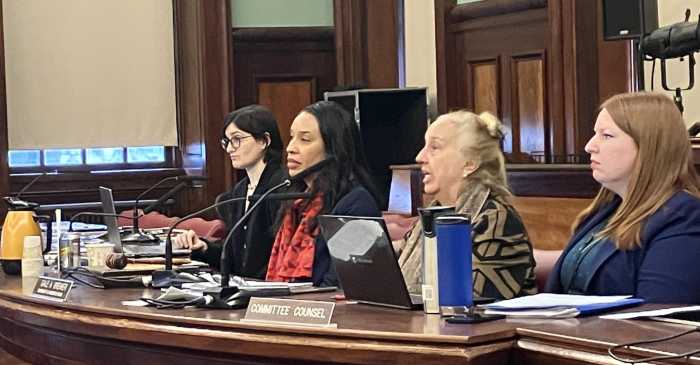
The attorneys’ testimony came in a hearing on visitation for both families and attorneys at Rikers held by the City Council Committee on Criminal Justice and Oversight and Investigations. A recently published investigation by the committee found many family members trying to visit their incarcerated loved ones on the island face similar issues of long wait times, potentially fabricated refusals and “rude” behavior from officers.
DOC representatives, who left before the attorneys provided council members their testimony, told the committee they were working on improving the visiting experience.
Commissioner Lynelle Maginley-Liddie said the department agreed current wait times were too long, was working to ensure officers treated visitors respectfully, was expanding programs that supported young children and families during the visiting process, is moving to increase televisits, improve signage and form a new 13-person team specifically committed to facilitating and improving the visiting experience.
Advocates, including Tanya Krupat, the vice president of policy and advocacy with the Osborne Association, said the news of a team focused on improving the visiting experience made them “hopeful,” though there was a great deal of work to be done.
“I am very excited to work with this new group of people,” Krupat said. “I really hope that they approach this collaboratively…and in a solutions-oriented way. We all want to improve the visiting process…It improves the correctional environment and improves outcomes. This is not an ‘us’ and ‘them’ issue. This is an ‘all of us’ issue.”