


The New York City Council on Thursday voted to override 17 vetoes that former Mayor Eric Adams issued on his last day of office, Dec. 31, 2025.
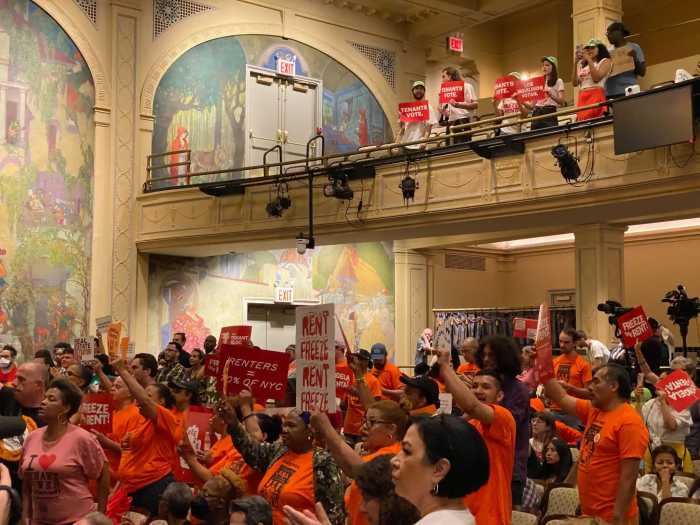
The lawmakers reinstated a broad package of legislation, passed with supermajority, veto-proof support in late 2025, addressing issues such as housing affordability, worker protections, street vending reform, government accountability and survivor justice. Three additional vetoes were not overridden and will stand, after failing to reach the two-thirds threshold required under the City Charter on Thursday.
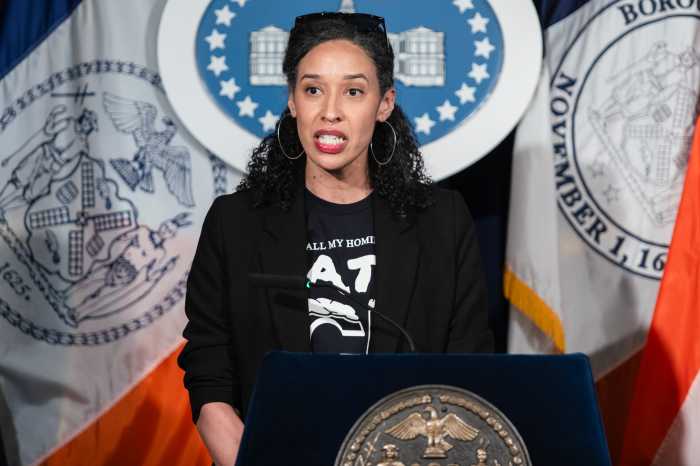
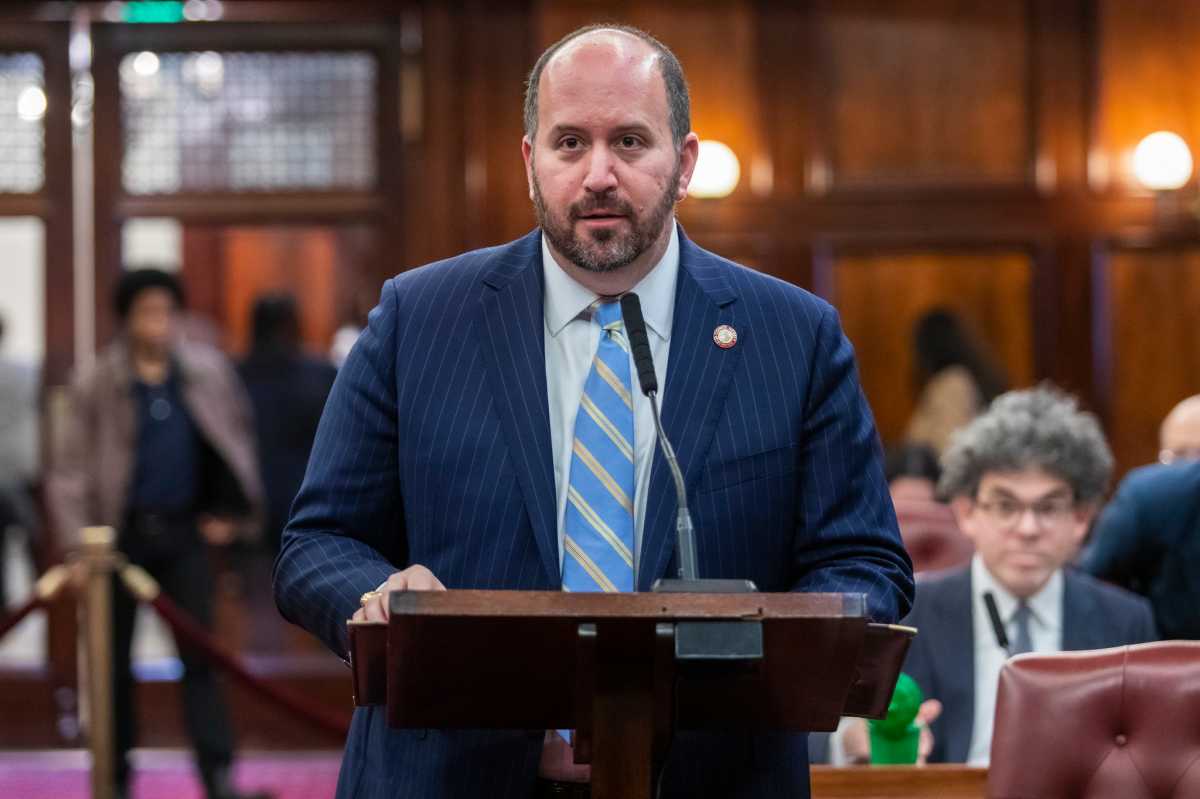
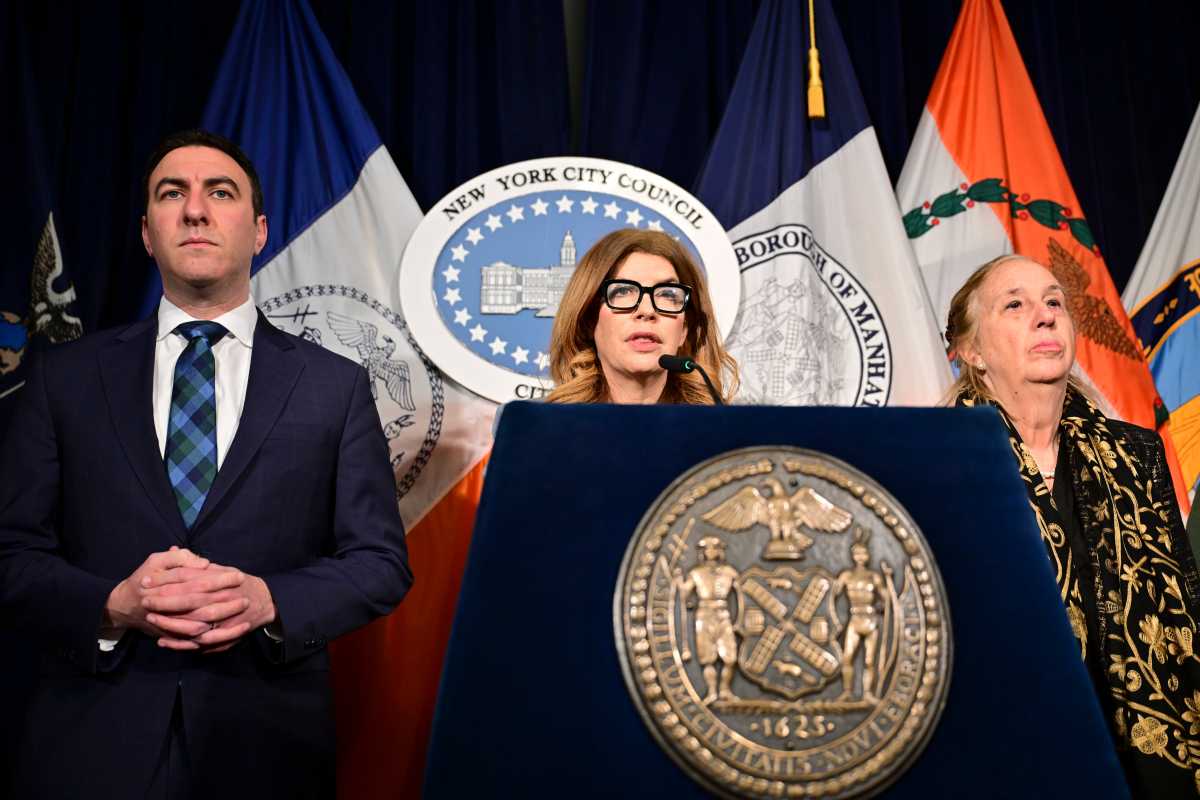
Speaker Julie Menin said the vote marked a historically significant assertion of the Council’s authority, noting that lawmakers overturned more mayoral vetoes in a single day than they had over the past decade combined.
Menin said the overridden bills reflected legislation that had broad support across the Council. “These overrides reflect legislation that has been debated, thoroughly, refined, carefully and supported by a clear super majority of elected representatives from across the city,” she said. “When the council acts with that level of consensus, we have an obligation to follow through.”
The revived legislation includes bills expanding access to affordable housing and homeownership, reforming the city’s decades-old street-vending system, providing new due-process protections for app-based drivers, strengthening pay and benefits for security guards, reforming city procurement practices, and restoring a legal framework that allows survivors of gender-motivated violence to pursue civil claims.
During Thursday’s Stated meeting, all 17 veto overrides passed with at least the two-thirds, though Intro 431-B (street vending reform expanding licenses), Intro 570-B (establishing a city land bank for tax-delinquent properties), Intro 1420-A (requiring lien purchasers to attempt transferring liens to the land bank), and Intro 1251-A (ensuring additional vendor license applications are issued as authorized) received the narrowest margins of support.
Menin said the Council did not attempt to override every veto that failed to meet the two-thirds threshold, but that there could still be a path forward for the bills that were not revived.
“Overrides require a super majority, and when that threshold was not met, the council is respecting the process, because that is how responsible governance works,” she said.
Among those measures that will not become law is the Community Opportunity to Purchase Act, or COPA, which would have given nonprofit housing groups the right of first refusal to buy distressed apartment buildings.
Lawmakers also declined to override vetoes of a bill requiring a minimum share of newly built, city-financed affordable housing to include two- and three-bedroom units, and legislation granting the Civilian Complaint Review Board direct access to NYPD body-camera footage rather than requiring the agency to obtain it through the department.
Street vending reform
Several of the veto overrides centered on street vending, an issue shaped for decades by restrictive license caps and uneven enforcement.
Public Advocate Jumaane Williams said his legislation creating a Division of Street Vendor Assistance within the Department of Small Business Services had been vetoed “without any real justification.”
“Street vendors are New York City’s smallest businesses and provide some of the most affordable options for New Yorkers facing an increasingly unaffordable city,” Williams said. “This will give street vendors access to many of the same tools afforded to other small businesses.”
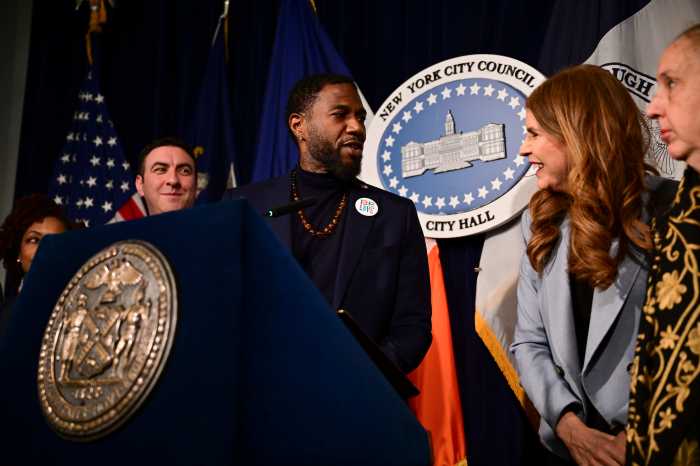
Council Member Pierina Sanchez (D-Bronx), who sponsored the main vending reform bill, said the package is designed to bring existing vendors into compliance rather than expand vending activity.
“Seventy percent of street vendors who are vending food are unlicensed,” Sanchez said. “We are talking about bringing those vendors, existing vendors, into compliance. We’re not talking about more vending.”
Sanchez said the legislation replaces “decades of dysfunction” by pairing expanded access to licenses with stronger enforcement, education and oversight.
Worker protections
The Council also overrode Adams’ veto of legislation preventing high-volume for-hire vehicle services such as Uber and Lyft from deactivating drivers without just cause.
Council Member Shekar Krishnan (D-Queens) described the override as a national milestone for app-based workers.
“Today, we are righting that wrong and overturning his anti-immigrant, anti-worker veto,” Krishnan said. “My legislation to end the unfair firings of Uber and Lyft drivers is the largest due process protection for these workers in the nation.”
Krishnan said drivers can currently lose access to work without warning or explanation.
“They can look down at their phone and see they’ve been deactivated or fired from the app with no notice or no process whatsoever,” he said. “But that changes.”
The Council also revived the Aland Etienne Safety and Security Act, which requires certain security guard employers to provide minimum wage, paid vacation time and supplemental benefits. Menin said the bill honors Etienne, a security guard killed while on duty.
“He was a hero,” Menin said. “And this bill honors that fact, and it honors the fact that our security guards are on the front lines doing such important work.”
Survivor justice and housing; procurement reform
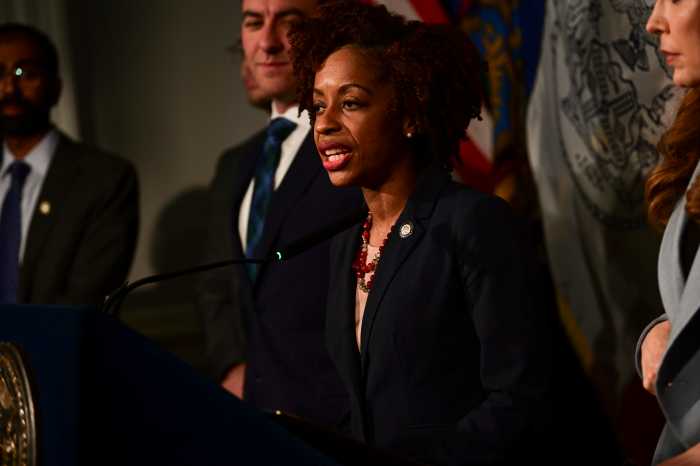
Council Member Selvena Brooks-Powers (D-Queens) said the override of her bill amending the Gender-Motivated Violence Act restores clarity after court rulings threatened survivor lawsuits.
“Survivors cannot afford ambiguity in the law,” Brooks-Powers said. “And they certainly cannot afford silence when their rights are threatened.”
Housing-related overrides also included legislation establishing a city land bank to manage tax-delinquent properties and reforms requiring cooperative boards to follow clear timelines when reviewing apartment sale applications.
Council Member Gale Brewer (D-Manhattan) said the land bank legislation replaces a private tax-lien system with a public, nonprofit approach.
“This land bank bill replaces New York’s private sector-driven high bidder tax lien sales with a public, focused, nonprofit approach,” Brewer said.
The Council also revived procurement reform legislation requiring city contractors to identify and disclose conflicts of interest and misconduct.
Council Member Julie Won said the bill was drafted in response to repeated contracting scandals.
“When this bill is enacted, with the override of this veto, it applies to contracts that are valued at $100,000 or more,” Won said, adding that contractors would be required to certify compliance and report conflicts during the life of a contract.