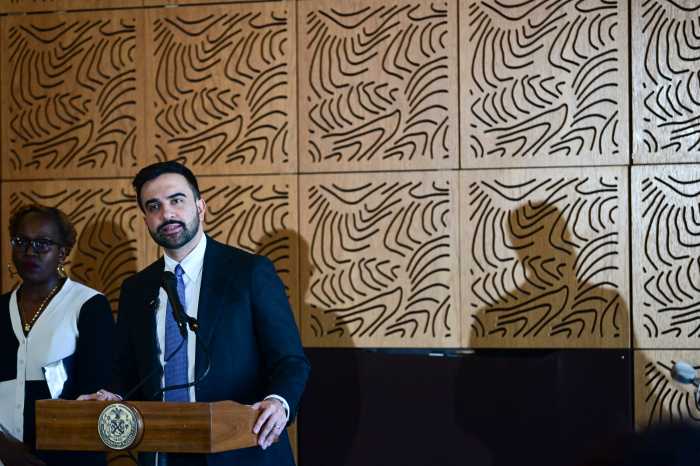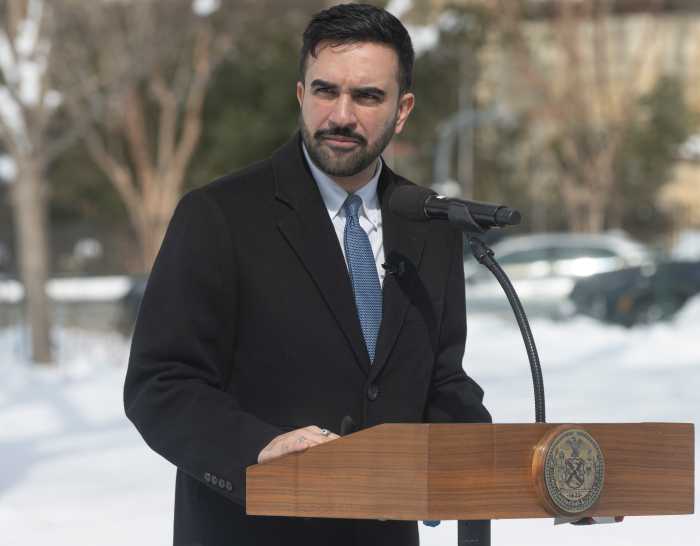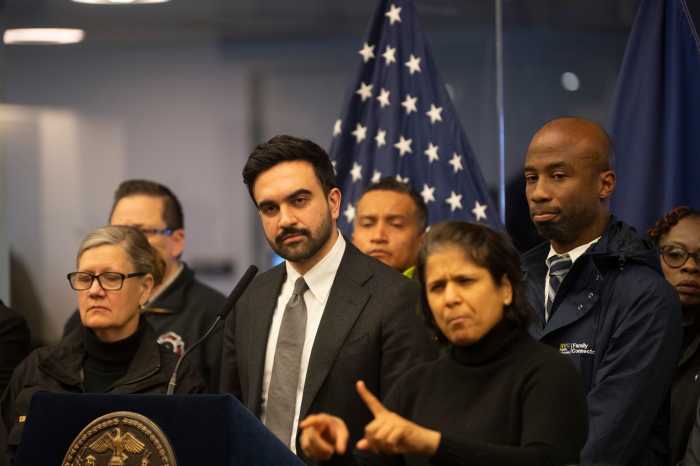



Tuesday, March 2, marked the 62nd day of Zohran Mamdani’s term as mayor. amNewYork is following Mamdani around his first 100 days in office as we closely track his progress on fulfilling campaign promises, appointing key leaders to government posts, and managing the city’s finances. Here’s a summary of what the mayor did today.
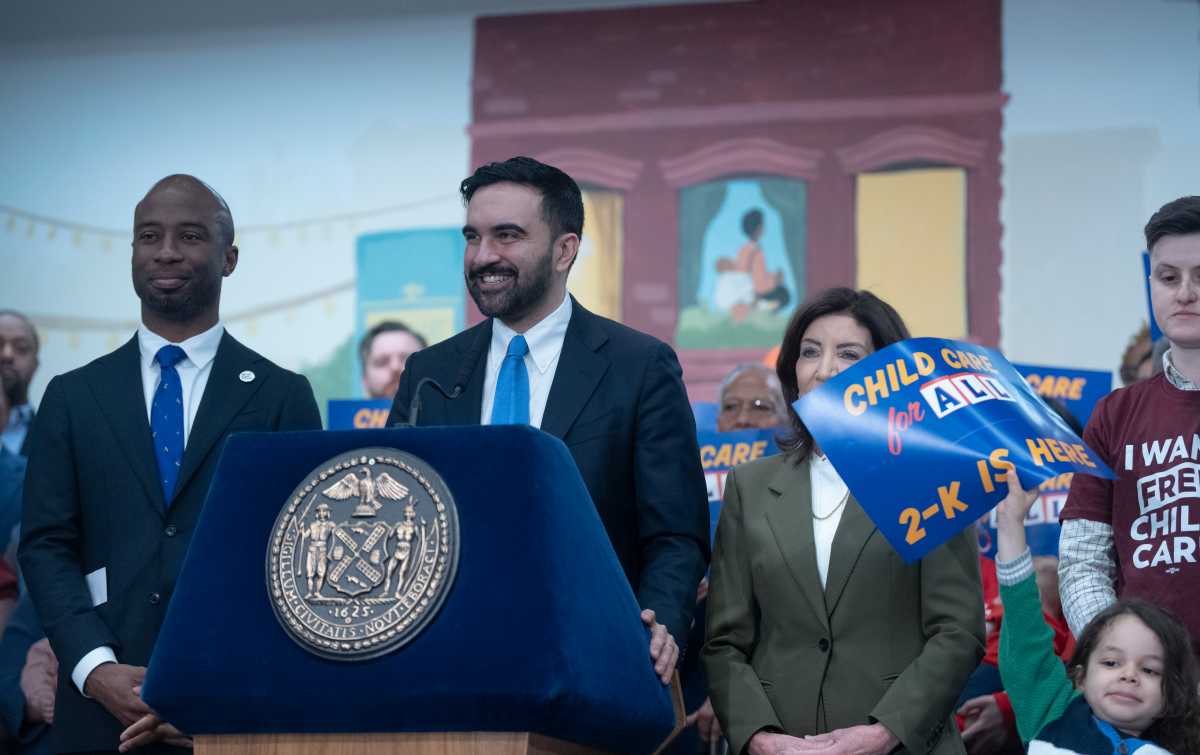
Two thousand New York City toddlers will receive free full-day child care this fall under the first phase of Mayor Zohran Mamdani’s 2K rollout, with seats concentrated in neighborhoods he says have the greatest economic need and child care gaps.
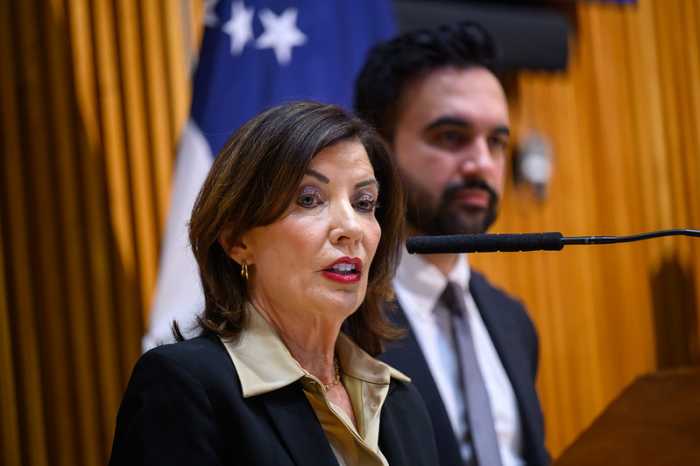
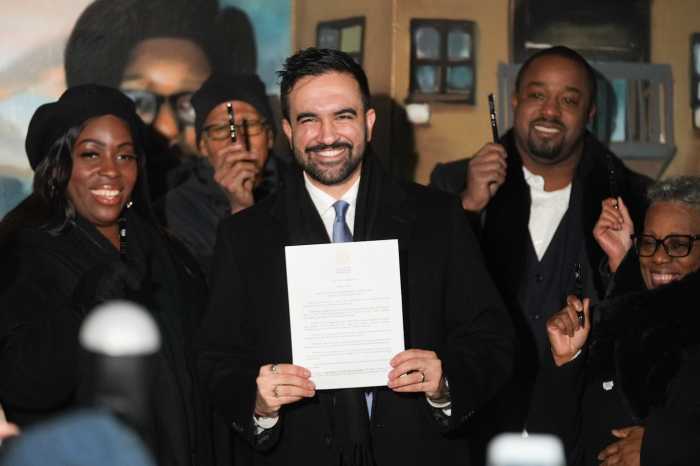
The expansion, announced Tuesday alongside Gov. Kathy Hochul, will bring more than 2,000 free seats to four school districts across Upper Manhattan, the Bronx, Brooklyn, and Queens.
The first communities include School District 6 in New York City, which serves Washington Heights, Inwood, Hamilton Heights, and parts of Manhattanville in northern Manhattan. They also include School District 10 in the Bronx, encompassing Fordham, Belmont, Norwood, Marble Hill, Morris Heights, Riverdale, Spuyten Duyvil, and Van Cortlandt Village, as well as portions of Kingsbridge, Kingsbridge Heights, Bedford Park, Mount Hope, Claremont-Bathgate, and East Tremont.
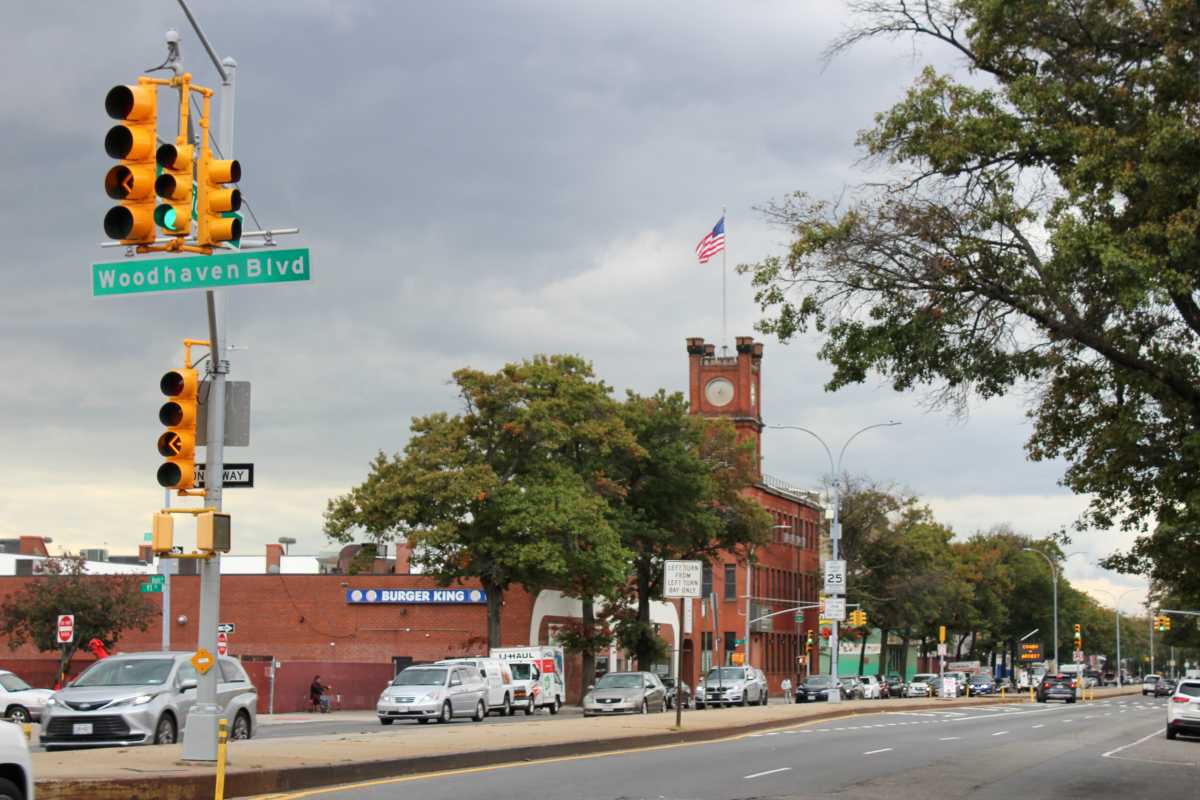
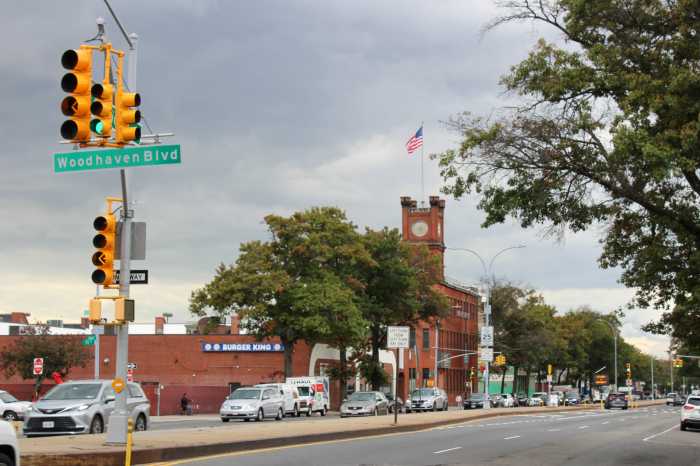
In Brooklyn, School Districts 18 and 23 cover Canarsie, Rugby–Remsen Village, Brownsville, and Ocean Hill, as well as parts of East Flatbush–Farragut and Prospect Lefferts Gardens–Wingate. Finally, School District 27 in Queens serves Ozone Park, South Ozone Park, Richmond Hill, Woodhaven, Howard Beach, and the Rockaways, as well as sections of Lindenwood and Springfield Gardens North.
All that is required to apply is that parents live within that school district, regardless of their income, occupation, or immigration status, Mamdani said. The application process will open “sometime in early summer,” he added.
The mayor said the phase one districts were selected based on economic need, projected demand, existing access gaps, provider capacity, and readiness to launch quickly.
“We are able to deliver 2,000 seats in this first year thanks to partnering with existing child care providers. These determinations were made in part on a reflection of which neighborhoods had those providers ready to go before the end of this year, and also as a reflection of economic need,” Mamdani said, adding that the same determinations will be made as they expand to 12,000 seats for phase 2 next year.
The new “2-Care” program, first announced on the eighth day of the Mamdani administration, is designed to expand citywide within four years as part of a broader push toward universal child care from six weeks to five years old.
By the end of the fourth-year program, the Mayor said that “every single two-year-old in the city of New York” will be able to secure a free seat in their district.
In the coming days, the city said it will begin planning efforts with child care centers and family child care providers in the four selected areas, with additional details on participating providers expected in the weeks ahead.
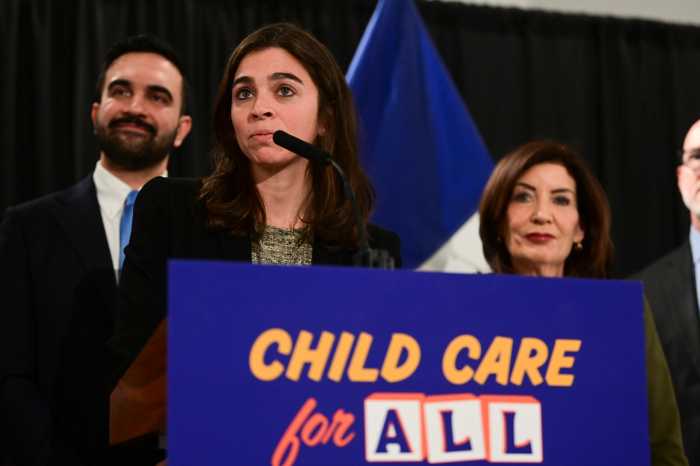
Mamdani acknowledged that demand may exceed supply in this early phase. When asked how seats would be allocated if more families apply than available spots, Emmy Liss, executive director of the Mayor’s Office of Child Care and Early Childhood Education said: “When we roll out the application process in the next couple of months, we’ll outline the process by which families will be able to apply and how we’ll work through that, similar to the way we approach 3k pre K admissions”.
Liss told a City Council hearing on Monday that key operational systems, from permitting data to workforce planning, are still being built as the push for universal childcare expands.
On Tuesday, Liss said that the city is committed to moving “as quickly as we can,” to meet the urgency that working families feel, but that they also want to make sure they’re building a system that can endure with “deep partnership with child care providers, both centers and home-based providers in the communities.”
The rollout is backed by more than $1.2 billion in state funding for early childhood education in New York City, including $73 million to fund the first round of 2K seats. That investment is expected to grow to $425 million next year, per officials.
Since unveiling his preliminary budget last month, Mayor Mamdani has continued his push for the state to raise taxes on the wealthiest and most profitable corporations to help plug current deficits and fund future programs. Gov. Hochul, facing re-election this year, has long stated that she intends to back neither measure, and reiterated that on Tuesday.
When asked whether new taxes would be needed to sustain the program, Hochul said the state can fund it with existing revenue. “We’ve done such a good job managing our budget that we’re able to provide this new program … with current revenues,” she said. “We anticipate the same next year and going forward, because it’s a priority of mine, and as long as I’m Governor, it’s going to continue being a priority of mine. So we’re not backing off from our commitment.”
Transparency: Encrypted apps and following Trump’s lead
At Tuesday’s press conference, Mamdani said he does not conduct city business on the encrypted messaging app Signal, responding to questions prompted by a Politico report examining his use of the platform.
“I use Signal for personal and campaign purposes,” Mamdani told reporters. “I do not conduct city government business on Signal as a matter of practice.”
Signal allows users to send encrypted messages and set conversations to automatically delete, features that have drawn scrutiny when used by government officials subject to public records laws.
Mamdani said he is committed to complying with New York’s Freedom of Information Law and uses “city appropriate channels” for official communications. He added that he has instructed his staff to follow the same practices and adhere to applicable rules governing recordkeeping.
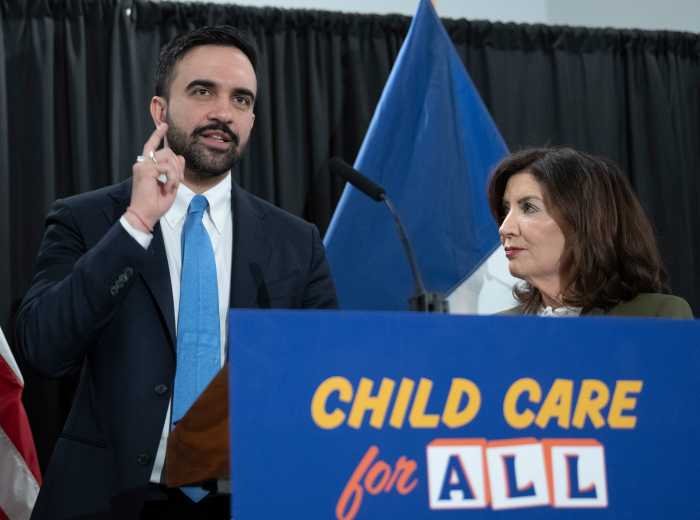
Reporters also pressed the mayor about his recent White House meeting with President Donald Trump that was not listed on the public schedule in advance, and whether New Yorkers had a right to know he had left the state.
The mayor said the decision not to publicize the meeting beforehand was made by the White House, and that his administration followed suit. Senior members of his administration were aware of the trip, he said, and the meeting was disclosed publicly after it concluded.
“When it came to the meeting with the president at the White House, we followed the White House’s lead,” Mamdani said. “As soon as the meeting concluded, we shared that information publicly.”
He added that when he is out of state, the city’s first deputy mayor serves as acting mayor in accordance with standard procedure and that he remained available to respond to emergencies during the day trip to Washington.