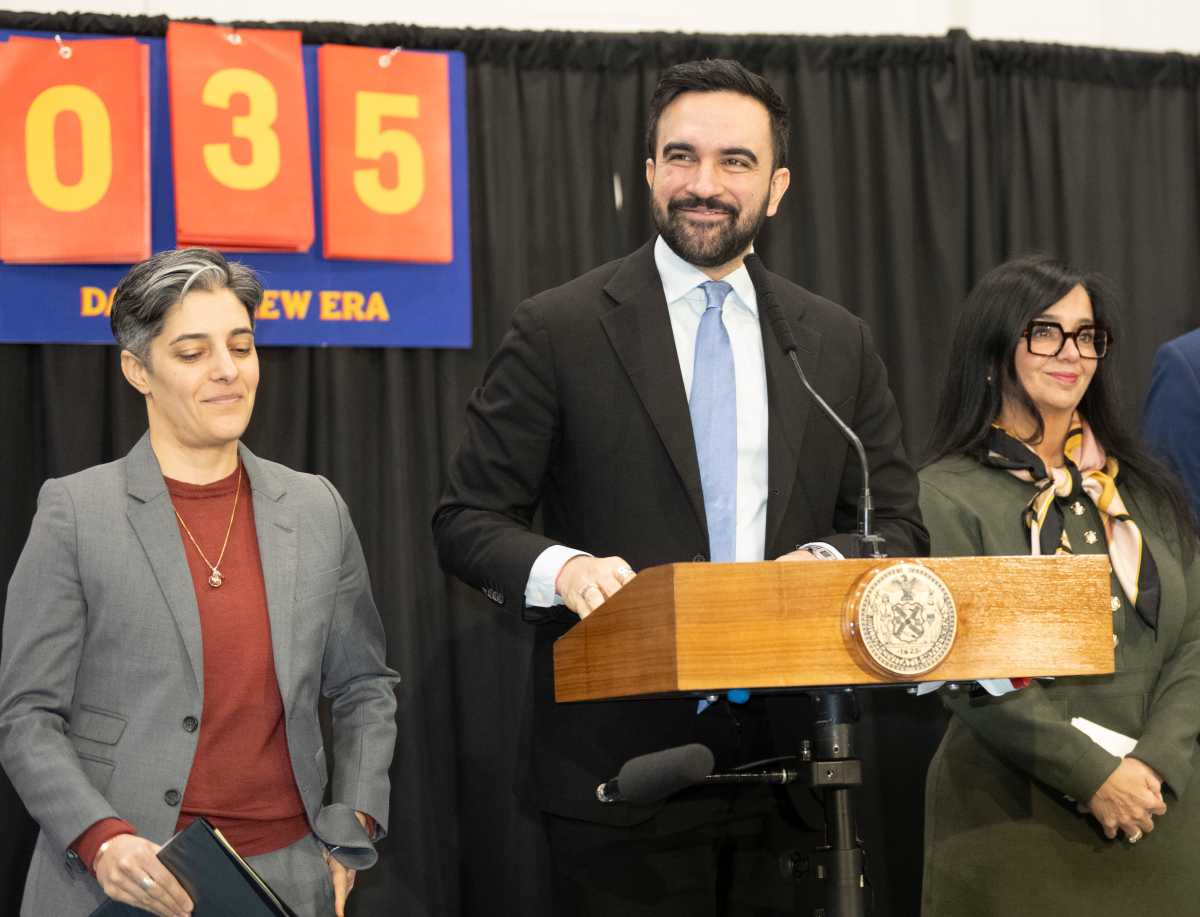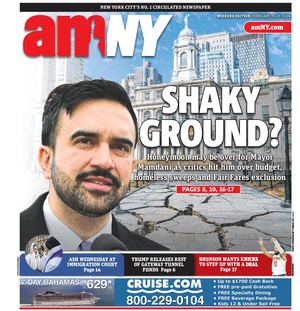




In his social media-driven campaign, Mayor Zohran Mamdani promised to remake city government. Fifty days in as of Thursday, he has made some early inroads — but now he finds himself dealing with the part of the job every New York mayor knows: a multibillion-dollar budget gap, hard calls on homelessness, and a push for more funding from Albany.
Mamdani was sworn in just after midnight on New Year’s Day, becoming the first Muslim and first South Asian mayor in New York City’s history and promising to pursue an aggressive economic program to make the city more affordable. He brought in a large influx of left-wing colleagues, including many alums of the de Blasio administration. Some quickly became subjects of controversy for past offensive posts, including one staffer whose comments were deemed antisemitic.
Mamdani, however, retained Police Commissioner Jessica Tisch, former Mayor Eric Adams’ last top cop, who oversaw a record-setting crime drop last year that the new mayor hopes to continue throughout 2026.
During his first two weeks, the new mayor issued executive orders targeting costs faced by small businesses and began what his administration described as an enforcement “blitz” against companies accused of exploiting workers. One order required city agencies to inventory fines and fees imposed on small businesses, while another mandated the appointment of “chief savings officers” to identify waste and streamline services as he confronted a multibillion-dollar budget gap.
At the same time, Mamdani took steps on public services and infrastructure, complete several stalled bus and bike projects, and reaffirm the city’s sanctuary policies amid federal pressure over immigration enforcement.
But then came the hard reality of a massive budget gap.
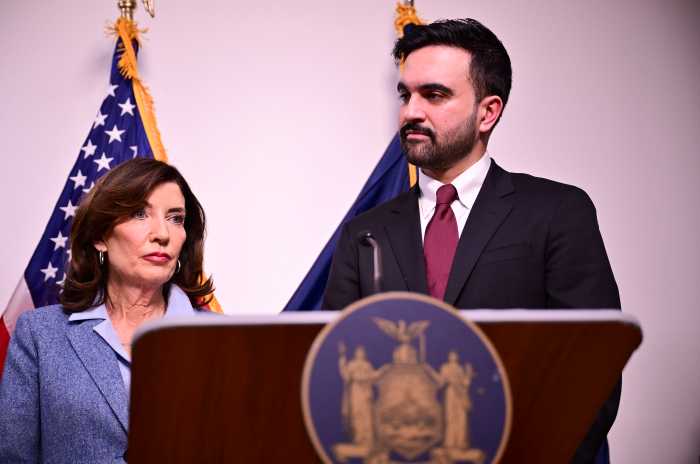
Savings measures and positive Wall Street bonus projections lowered the deficit from $12 billion to $7 billion. A $1.5 billion boost in aid from Albany, courtesy of Gov. Kathy Hochul, shrunk the gap even further — to $5.4 billion.
In the closing stretch of his first 50 days, Mamdani unveiled a $127 billion preliminary budget — $9 billion more than the current budget. To close the existing deficit, he proposed two paths: win approval from Albany for higher taxes on high-income earners and corporations, or — if that fails — rely on city-controlled tools, including a 9.5% property tax increase and the use of reserves. He characterized the property tax hike as a “last resort.”
But neither path looks likely to happen. Gov. Kathy Hochul has adamantly opposed any new taxes as she seeks re-election this year. City Council Speaker Julie Menin also said new property taxes are a nonstarter.
Mamdani has yet to reveal what the city would do without a property tax or wealthy tax increase.

A silver lining in a brutal preliminary budget?
The proposal drew immediate backlash from across the city’s political spectrum. Yet Andrew Rein, president of the Citizens Budget Commission, said the more important development on Tuesday may have been something less headline-grabbing: transparency.
“One of the things he did yesterday, and I don’t think it should get short shrift, was he basically fixed the under-budgeting that was rampant over the last four years,” Rein told amNY on Wednesday.
Rein was referring to recurring costs — including housing vouchers, police overtime and shelter services — that he said had not been fully reflected in prior financial plans. By fully accounting for the expected spending on existing programs, Rein said, the administration made clear the size of the fiscal problem.
Still, Rein rejected the mayor’s framing of the budget debate as a choice between raising income taxes or raising property taxes.
“My initial thought was, it’s not A or B — the best choice is C,” Rein said. “The best choice is S for savings and E for efficiency.”
Mamdani’s preliminary budget, though $9 billion larger, indicates roughly $1 billion in savings initiatives, supported by his chief savings officers across city agencies. Rein called that a “first step,” but said it should be far more ambitious.
Rein argued that no one has systematically dug into city agencies “in a very long time” to identify unproductive programs and inefficiencies. He pointed to the growth of city spending over the past decade and said stronger management — including better use of technology and eliminating unnecessary bureaucracy — could both improve services and stabilize finances.
“This is not just a budget strategy. It has to be a management strategy,” Rein said.
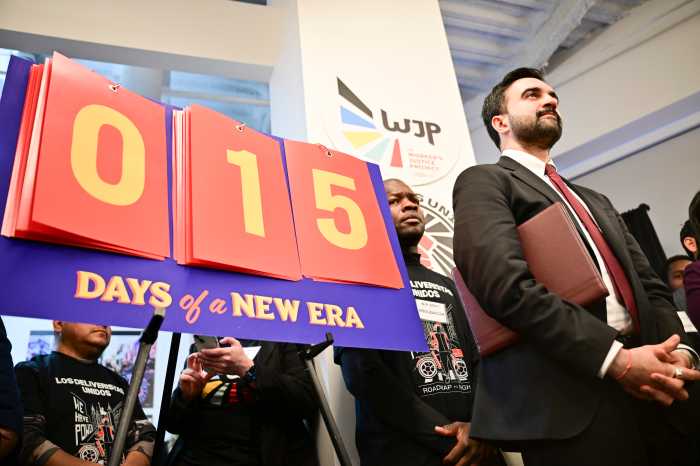
For Rein, the current moment, just 50 days in, presents a test that connects directly to Mamdani’s governing philosophy. If the mayor believes deeply in the power of government to improve people’s lives, he said, then effective management becomes central.
“As committed as he is to government improving people’s lives, who better than someone with that deep commitment to actually manage the government well?” Rein said of the Democratic Socialist mayor.
Rein also cautioned against turning to tax increases – both on properties and the city’s rich and corporations – too quickly, arguing that higher taxes could make the city less attractive to wealthy residents and businesses, who contribute significantly to the tax base and job growth. Instead, he said, the administration should exhaust efficiency measures before asking New Yorkers “to dig deeper into their pockets.”
At the same time, Rein pointed to early cooperation between Mamdani and Hochul as a positive sign, noting the state’s assistance in helping close part of the city’s budget gap and joint efforts on priorities such as child care.
There are policy differences — particularly on taxes, where Hochul has said she will not raise them — and Rein said he expects her to hold that position. But he described the early partnership as “good news for New Yorkers.”
Housing: Rent freeze momentum, systemic strain, and the difficulty of supply
If Mayor Mamdani’s first 50 days have been marked by fiscal reckoning, they have also been defined by a sharp pivot in City Hall toward tenant protections and housing affordability — even as structural constraints put limits on what can be achieved quickly.
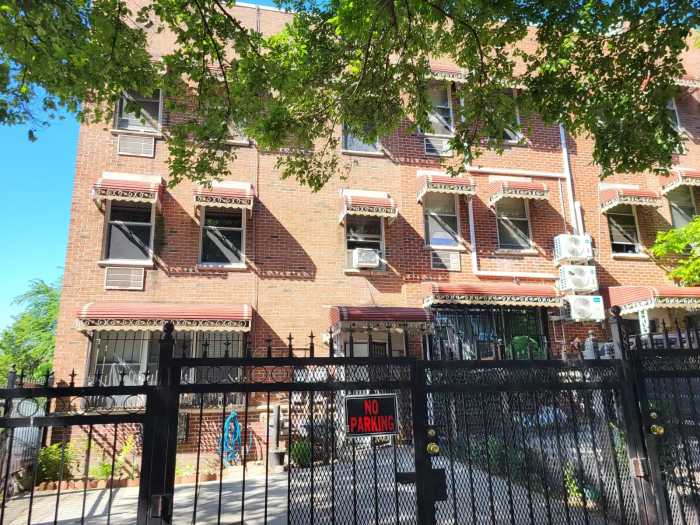
A signature plank of Mamdani’s campaign was a rent freeze for the city’s nearly one million rent-stabilized apartments — roughly 28% of the city’s housing stock. On day 49, the administration moved a step closer to that goal by appointing a new majority to the city’s nine-member Rent Guidelines Board — the independent panel that determines permissible rent changes.
With six seats now filled by his selections, the mayor is positioned ahead of the board’s June vote on rent adjustments for leases beginning Oct. 1, 2026. Tenant advocates quickly hailed the move as progress toward a freeze and have pledged a large turnout at upcoming hearings, urging a 0% adjustment. Landlord groups, however, warn that a freeze could worsen fiscal distress for rent-regulated buildings, increase rents for other tenants, and have raised legal concerns about political influence on an independent board.
For Professor David Reiss, a Cornell University housing expert and former chair of the Rent Guidelines Board, the mayor’s housing orientation so far is unmistakably pro-tenant, but it also underscores deeper challenges.
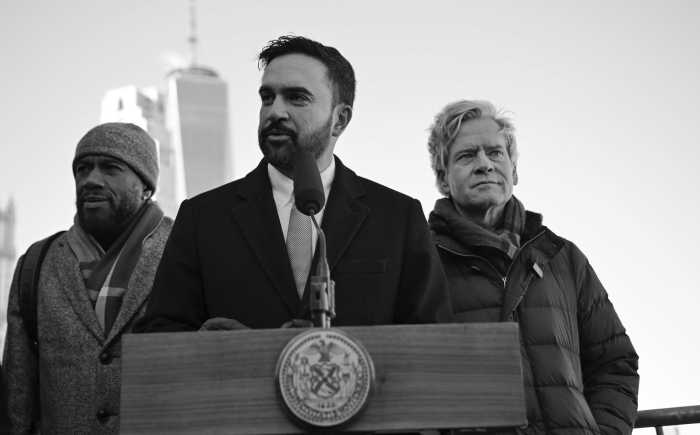
“He’s clearly pro-tenant,” Reiss said, noting Mamdani’s rhetoric, appointments, and actions such as launching his rental rip-off hearings and the revival of the Mayor’s office to protect tenants. But he cautioned that short-term policies aimed at controlling tenants’ costs must also account for the long-term viability of the housing stock.
“Are you pro-tenants five years, 10 years, 15 years down the line?” Reiss asked, pointing to the risk that buildings with constrained revenue might struggle to cover unavoidable expenses like property tax, insurance, and mortgage payments without meaningful engagement.
Reiss traced much of this pressure to state rent restrictions, which eliminated several mechanisms that previously allowed landlords to raise rents between tenancies. Under current conditions, he said, the annual RGB adjustments are often the only permissible rent increases, which, in recent years, have been modest in the view of landlord groups.
If rents are capped or frozen, his view is that the city will have very few tools to ensure financial stability without subsidies or cost reductions — whether direct (financial support) or indirect (tax relief or reduced operating costs).
“You have very few tools,” he said. “They usually involve somehow reducing costs directly or indirectly, or increasing income by subsidizing,” Reiss said that any meaningful approach will have to consider how the city allocates limited funds, especially in the face of a budget gap that has already pushed the administration to consider rainy day funds and reserve drawdowns elsewhere.
That tension between immediate affordability and long-range health of the housing stock frames much of the current policy conversation. Reiss said the rent freeze itself — assuming it survives legal and procedural hurdles — would represent a significant political success if delivered, given that it was a core campaign pledge. But he stressed that a broader housing strategy must also ensure that rent-regulated buildings can cover ongoing costs without descending into default or neglect.
“Success for the Mamdani administration,” Reiss said, “is to thread the needle between his expressed statement of reducing rent increases or rent freeze on the one hand, but ensuring that the housing stock has enough income to support itself — not just for this year, but for three years, five years, seven years down the line.”
Homelessness: Compassion, policy reversal, and an unfinished strategy
If housing policy in Mamdani’s first 50 days reflects an effort to shift power toward tenants within existing constraints, homelessness policy has exposed the tension between early campaign commitments and the fiscal and political realities of governing.
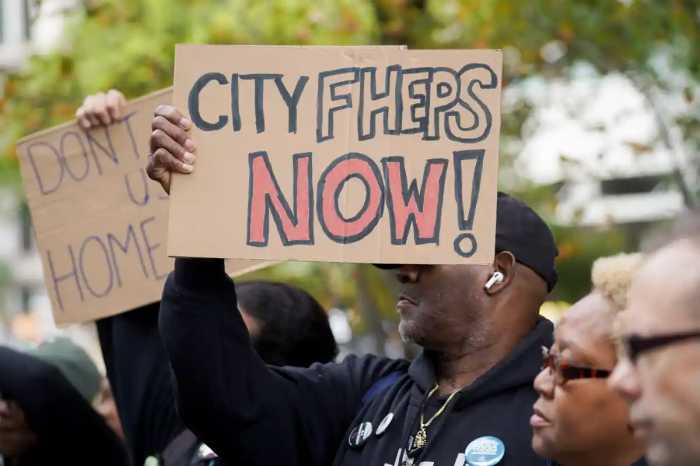
For Dave Giffen, executive director of the Coalition for the Homeless, the opening days of the Mamdani administration brought genuine optimism. He pointed to the mayor’s pledge to halt the city’s legal challenge to expanding CityFHEPS vouchers and to end homeless encampment sweeps — moves that aligned closely with long-standing demands from advocates.
“I was elated,” Giffen said of those early signals.
Fifty days in, however, Giffen said that optimism has been tempered by policy reversals and by what he described as the absence of a clear, comprehensive strategy to address what he repeatedly referred to as “mass homelessness” in New York City.
He said that the strategy is not yet evident in the administration’s preliminary budget or in its public plans, and he cited limited communication with advocates, including regarding a legally required plan to bring the city back into compliance with the right-to-shelter mandate.
Those concerns intensified following the administration’s decision to restart encampment sweeps on Wednesday, albeit under a revised framework led by the Department of Homeless Services rather than the NYPD. Giffen acknowledged that shifting away from police-led enforcement marks an improvement over the prior administration, which he characterized as relying on criminalization and displacement.
Still, he said the move underscores what he views as a missing middle: a credible pathway from street homelessness to permanent housing.
“There is nobody in New York that thinks it’s a good outcome to have lots of people sleeping outside in encampments,” Giffen said. “But the approach should be about offering people what they actually need and have been asking for — a pathway into permanent housing — and, in the meantime, alternatives to congregate shelters.”
Giffen contrasted the restart of sweeps with the administration’s response to the recent cold-weather emergency, which he described as more compassionate and more effective than past approaches. The city reported that 18 people died in that emergency.
During that period, the city expanded outreach, deployed hundreds of workers, and made greater use of safe haven and single-room shelter options — settings that Giffen said many unhoused New Yorkers view as offering greater dignity, safety, and privacy.
He also argued that the pause on encampment sweeps before the cold snap helped outreach workers build trust with people living on the streets.
“When city workers show up and throw away all of the belongings of somebody who’s surviving out on the streets, that creates a real feeling of distrust,” he said, adding that outreach was more effective when people did not fear enforcement.
On funding, Giffen was blunt about the administration’s decision not to expand CityFHEPS at this stage, calling the voucher program the city’s most effective tool for reducing homelessness — and warning that without expansion, there is no alternative plan capable of meaningfully reducing the crisis in the near term.
That critique was echoed by Win, one of the city’s largest providers of services to homeless families. In a statement responding to the preliminary budget, Win President and CEO Christine C. Quinn said the administration’s proposed $1.64 billion allocation for CityFHEPS covers current usage but falls short of funding expansions passed by the City Council in 2023.
“While committing $1.64 billion for CityFHEPS is appropriate and appreciated for current levels of implementation,” Quinn said, “this figure fails to cover critical CityFHEPS expansions during the worst affordability crisis in modern history.”
Win recently released a report estimating that fully implementing CityFHEPS expansions could save the city up to $635 million in shelter costs over five years. Quinn warned that without those expansions, investments elsewhere — including in child care, which the organization praised — risk being undermined.
Both Giffen and Quinn emphasized that the Mamdani administration still has an opportunity to change course — but only if it meaningfully includes advocates, service providers, and people with lived experience of homelessness in shaping policy.
“This is no longer just a political campaign,” Giffen said. “This is governing one of the biggest and most complex cities on the planet.”