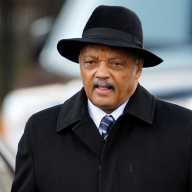



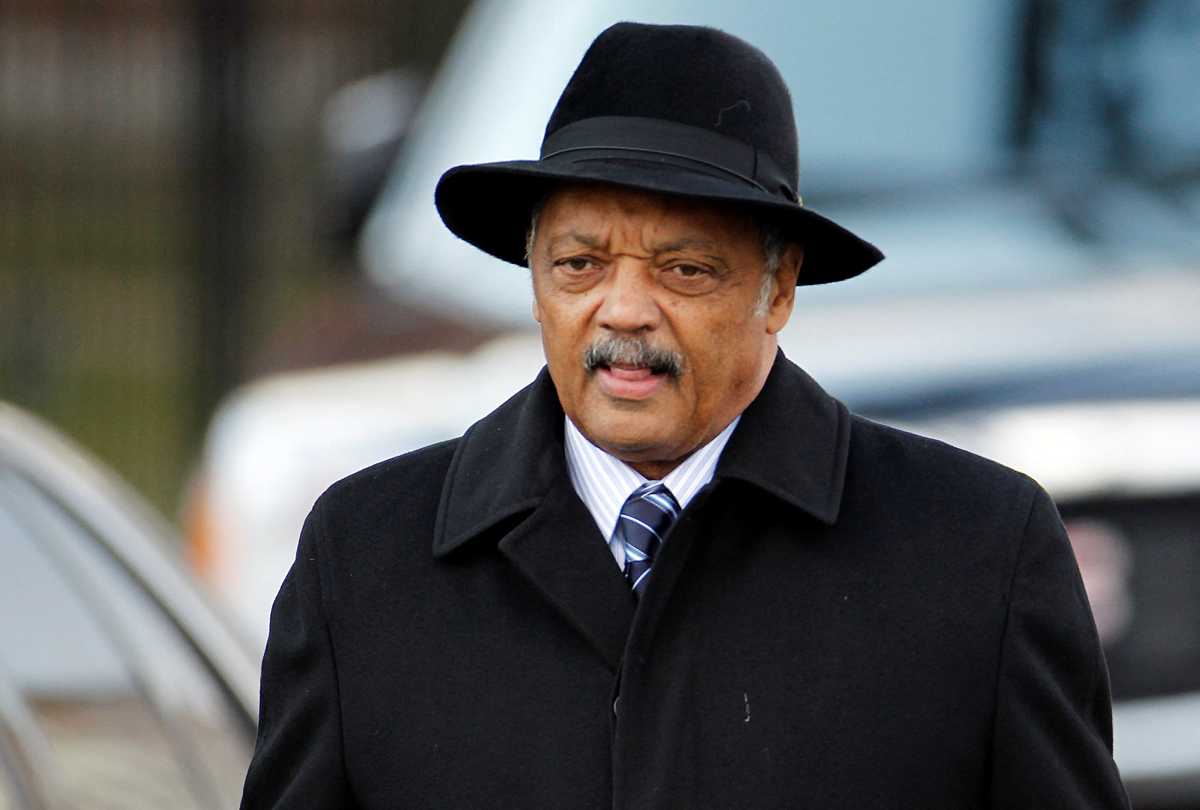
New Yorkers are mourning the loss of Rev. Jesse Jackson, a civil rights icon, influential Baptist minister and one of the strongest American voices for racial and economic justice, who died on Tuesday at the age of 84.
Jackson’s family said in an official statement that he died peacefully on Feb. 17, surrounded by loved ones.
“Our father was a servant leader, not only to our family, but to the oppressed, the voiceless and the overlooked around the world,” the statement read. “We shared him with the world, and in return, the world became part of our extended family.”
While his cause of death was not immediately available, he was admitted to a hospital in November and battled Parkinson’s disease, according to reports.
Born in Greenville, SC, on Oct. 8, 1941, Jackson led a life that maintained a commitment to justice and human rights. To many Americans, he appeared to pick up the peaceful fight for equality that Rev. Dr. Martin Luther King Jr. led before he was assassinated on April 4, 1968, in Memphis, TN.
Jackson witnessed the assassination of King, etched infamously in history, as he was staying at the same motel, the Lorraine Motel, when the fatal shooting of his mentor occurred.
Jackson amplified marginalized voices throughout his career, becoming a leading civil rights activist in the 1980s and 1990s, leading and participating in demonstrations in NYC and across the country. He also ran for U.S. President multiple times. He came close to securing the Democratic nominee in 1988, but lost to Michael Dukakis, then-governor of Massachusetts.
He started the Rainbow PUSH Coalition in 1996, where he and his team provided scholarships, facilitated hirings of minority workers, and saved the homes of thousands of families who face foreclosure.
But Jackson’s civil rights activism was not without scandal. During his first presidential bid in 1984, he referred to Jewish people as “hymies” and called New York City “hymietown” during a media interview. He later apologized at a synagogue, saying, “however innocent and unintended, it was wrong” to use the slur.
New Yorkers react to the death of Jesse Jackson
Fellow civil rights leader Rev. Al Sharpton, known for his outspoken style, called Jackson his mentor.
“I just prayed with his family by phone. He was a consequential and transformative leader who changed this nation and the world,” Sharpton said in a statement. “He shaped public policy and changed laws. He kept the dream alive and taught young children from broken homes, like me, that we don’t have broken spirits.”
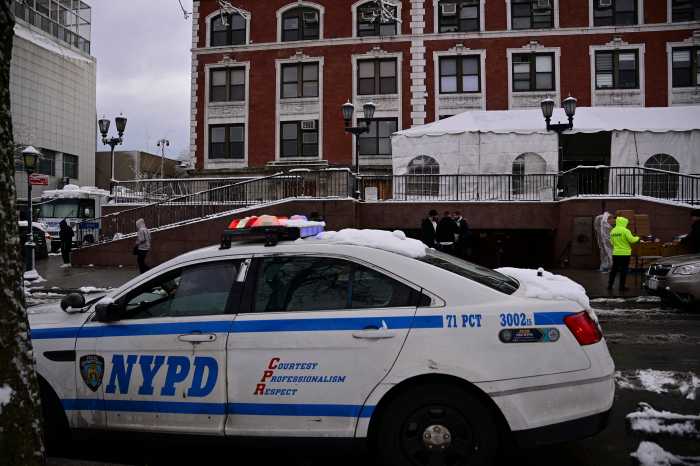
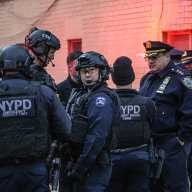
Reverend Jackson was a fixture at countless demonstrations across NYC throughout the 1980s and 1990s. While he sometimes clashed with police over civil disobedience, he was known for maintaining civility and peace with many officers, bridging the divide between community organizing and law enforcement.
Retired NYPD Lieutenant Gerard Lennon recalled arresting Jackson during a 1999 demonstration in front of One Police Plaza, where hundreds of protestors blocked the building’s entrance in protest of the police shooting of unarmed African immigrant Amadou Diallo that same year.
After arresting Jackson for obstructing the entrance, Lennon said Jackson was a “gentleman” during the entire process.
“I was introduced to him at about 9:30 a.m. He told me he wanted to be arrested at about 10 a.m. At that exact time, he nodded to me, walked over to the front entrance of 1PP, and lay down,” Lennon recalled about the incident.
The lieutenant said he then calmly walked over to Jackson to place him under arrest.
“I told Mr. Jackson he was under arrest for blocking the entrance. He stood up, said ‘thank you’ to me, and placed his hands behind his back to be handcuffed,” Lennon said.
Officers, led by Lennon, brought the reverend to Harlem’s 25th Precinct to be processed. Jackson received a summons, though he was not yet ready to leave the stationhouse.
“As we walked together to the front door, the reverend asked if I would pray with him. We joined hands, invited other officers into our circle — about six of us — and together we said a prayer,” Lennon said. “He said, ‘God bless you,’ and then left.”
Though One Police Plaza is in Lower Manhattan, Lennon said he was directed to bring Jackson uptown to avoid media attention.
New York politicians react
Other New Yorkers in the political scene shared their thoughts about Jackson, starting with Gov. Kathy Hochul, who said his life was “defined by courage and conviction.”
NYS Senate Majority Leader Andrea Stewart-Cousins said in a statement that the civil rights leader brought together “people of every background, faith, and ideology in a powerful movement” for equality and opportunity.
“His voice helped shape generations of leaders and inspired countless Americans to believe that change is possible,” she said. “We honor his legacy by continuing the work — advancing justice, protecting voting rights, expanding opportunity, and ensuring that every community is seen, heard, and valued.”
House Minority Leader Hakeem Jeffries of Brooklyn described Jackson as a “legendary voice for the voiceless” who championed civil rights.
“For decades, while laboring in the vineyards of the community, he inspired us to keep hope alive in the struggle for liberty and justice for all,” Jeffries said. “ We are thankful for the incredible service of Rev. Jesse Jackson to the nation and his profound sacrifice as the people’s champion.”
Jackson leaves behind his wife, Jacqueline; their children, Santita, Jesse Jr., Jonathan, Yusef, and another daughter named Ashley Jackson; and grandchildren.
Jackson’s family said public observances will be held in Chicago.