


NYPD specialized units are teaching patrol cops how to perform cold-water rescues as temperatures continue to plummet in the Big Apple and the risk of fatal falls into icy rivers and ponds rises.
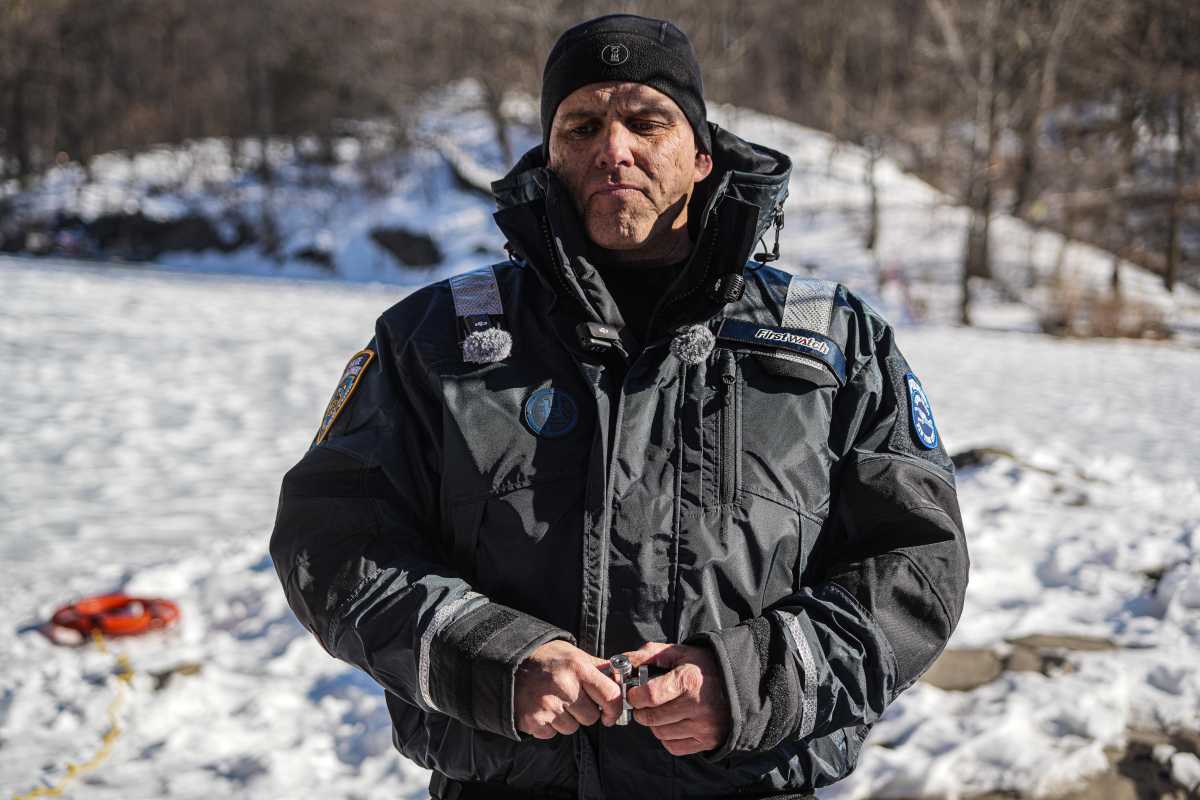
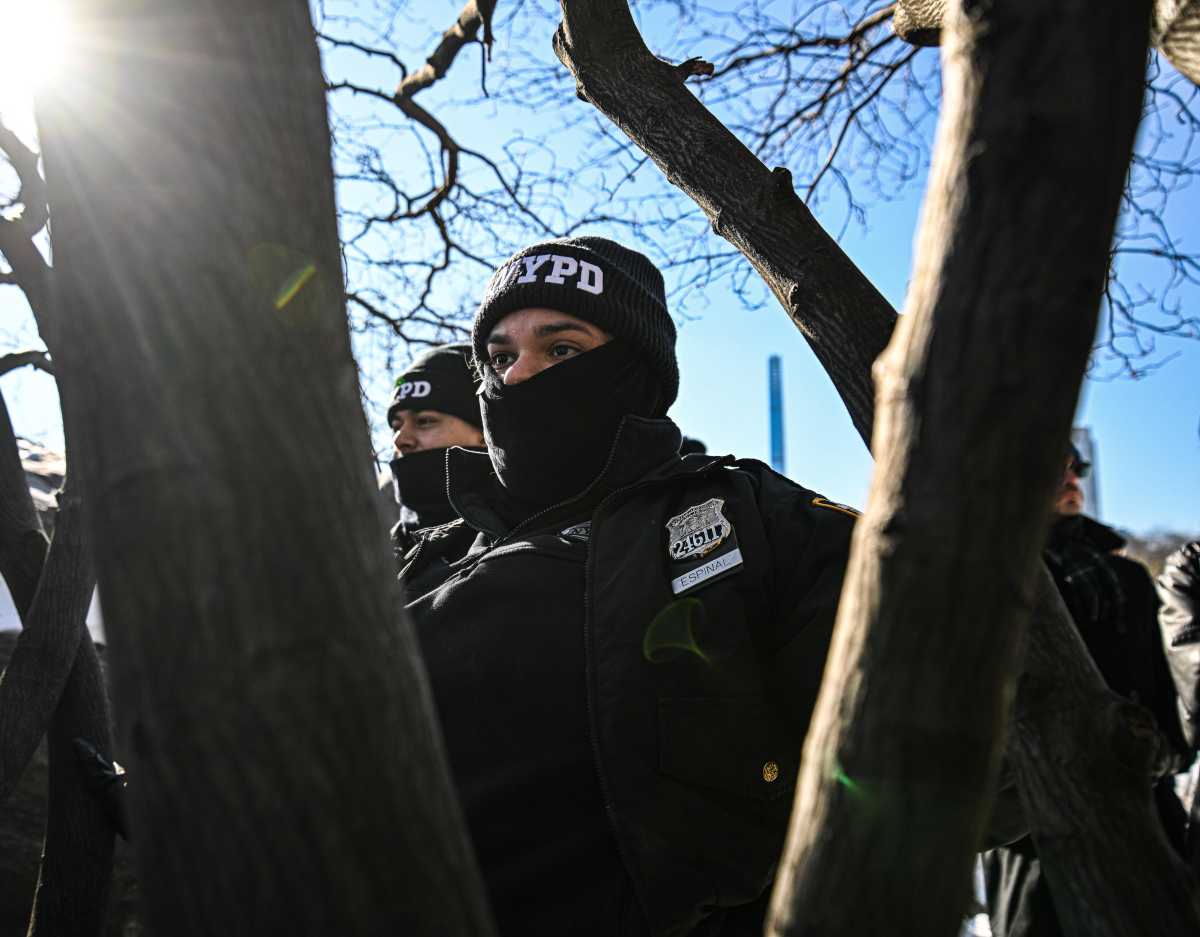
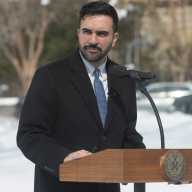
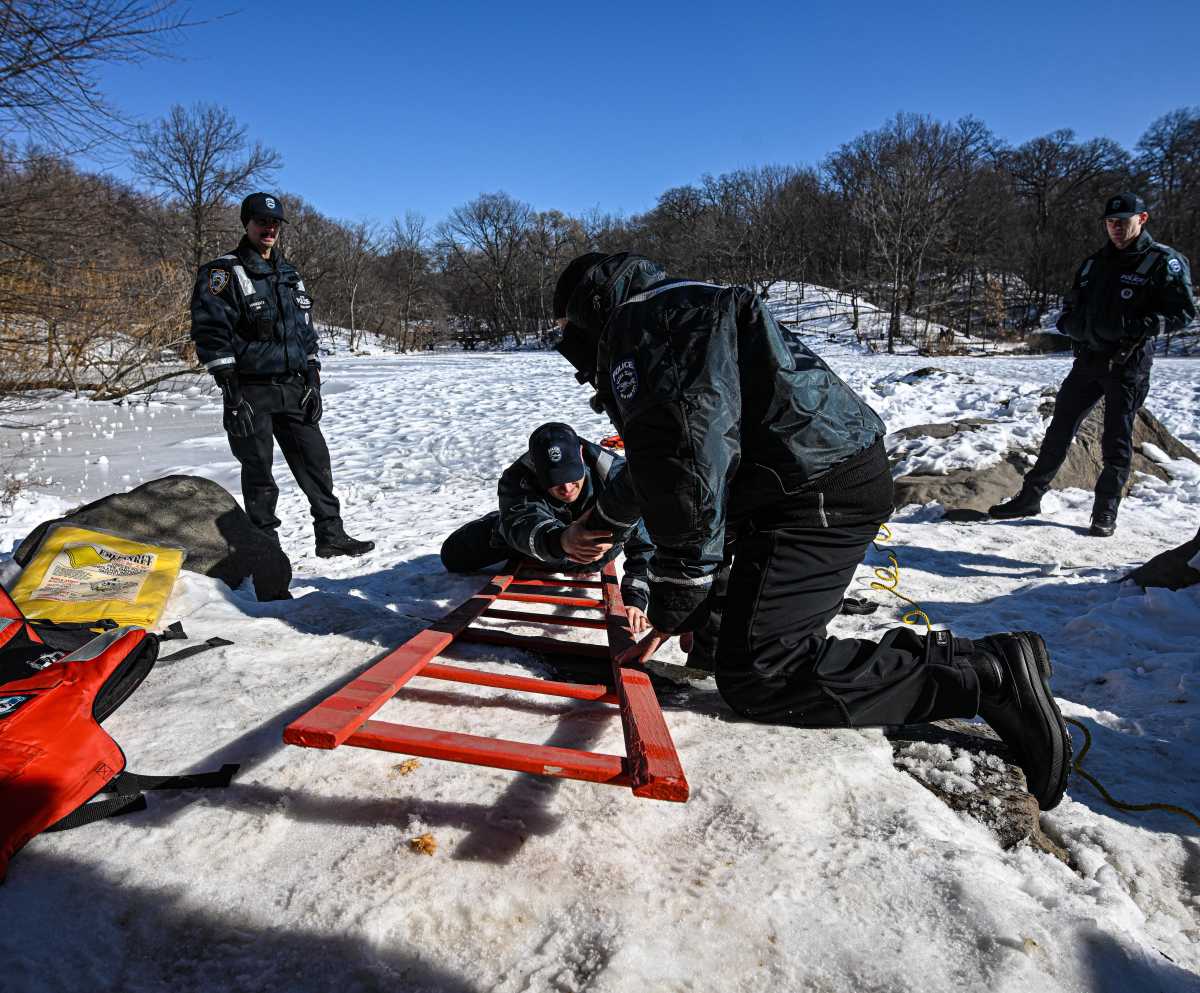
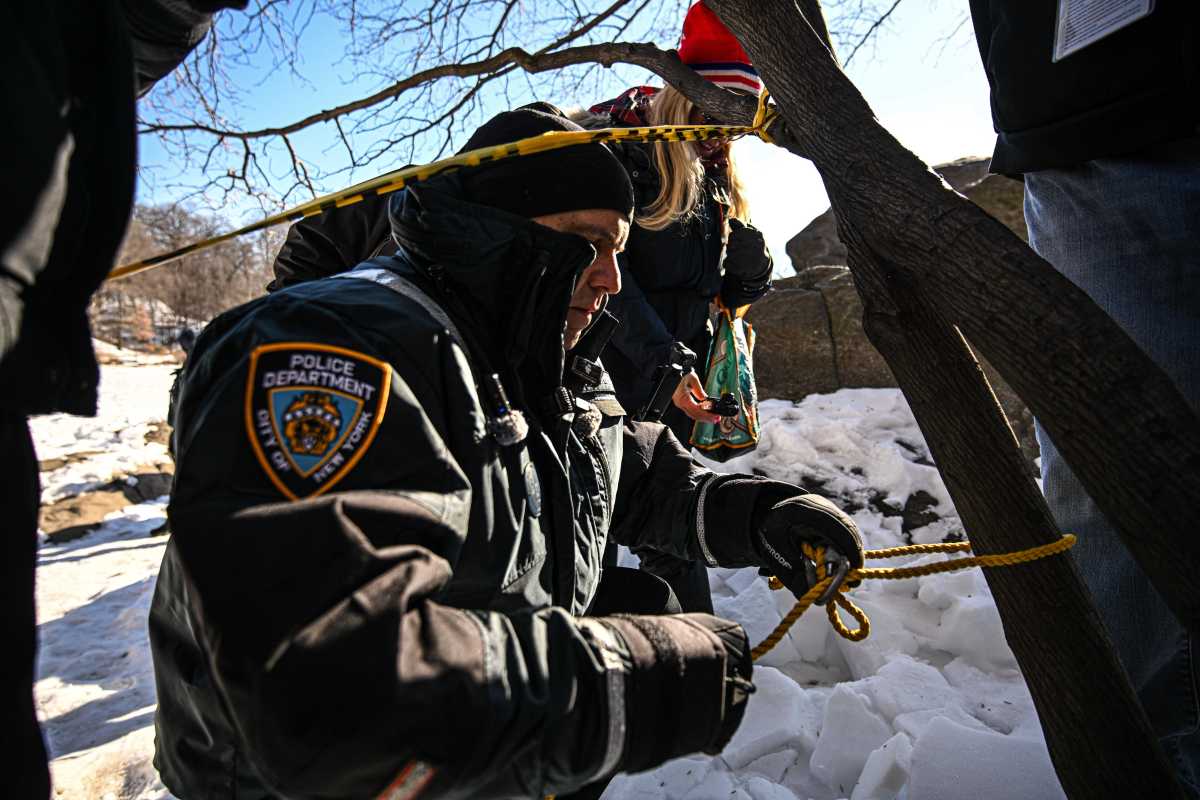
Detective Robert Rodriguez of the NYPD Harbor Unit presided over the lesson off 77th Street in Central Park on Thursday, attended by patrol cops and even members of the Auxiliary Unit.
Standing on the edge of a frozen Turtle Pond in the iconic greenspace, Rodriguez looked to inform the cops exactly what they should do if someone fell through the ice and became submerged in the freezing water.
“You guys are not just to radio to Scuba here, get EMS here, get ESU here. You’re more than that; you want to gather as much information as you can, and then you want to communicate that information. You want to extend yourself,” Rodriguez said to the gathered officers huddled on the icy snow. “Set up a staging area. Stage the area, disseminate information, and yes, use some equipment at your disposal.”
Rodriguez himself is a foremost expert in water rescue. In 2009, he participated in the historic rescue of U.S. Airways Flight 1549, which made an emergency landing on the Hudson River after a double-engine failure, known as the Miracle on the Hudson.
In the aftermath, Rodriguez scuba-dived from a helicopter, maneuvered himself through the plane’s wing exit, and helped save a woman who had gone into hypothermic shock to the point she could no longer lift her arms.
According to the detective, this is one of the most common issues encountered during a cold-water rescue. During the winter season, bodies of water become so cold that a person can only last 5 to 10 minutes before going into hypothermia.
“You’re talking about metabolic slowdown at an extensive rate. Again, I’m not a scientist or a doctor, but as a basic life support first responder, I am an EMT, I know that your muscles work well in good ambient, warm temperatures, and anytime you are out on a cold day, you start to get stiff. Your muscles atrophy a little bit because your body is constricting,” Rodriguez said. “When you are in extreme conditions, like below 32 degrees, and you don’t have any kind of gear on to be in the water, you just have minutes.”
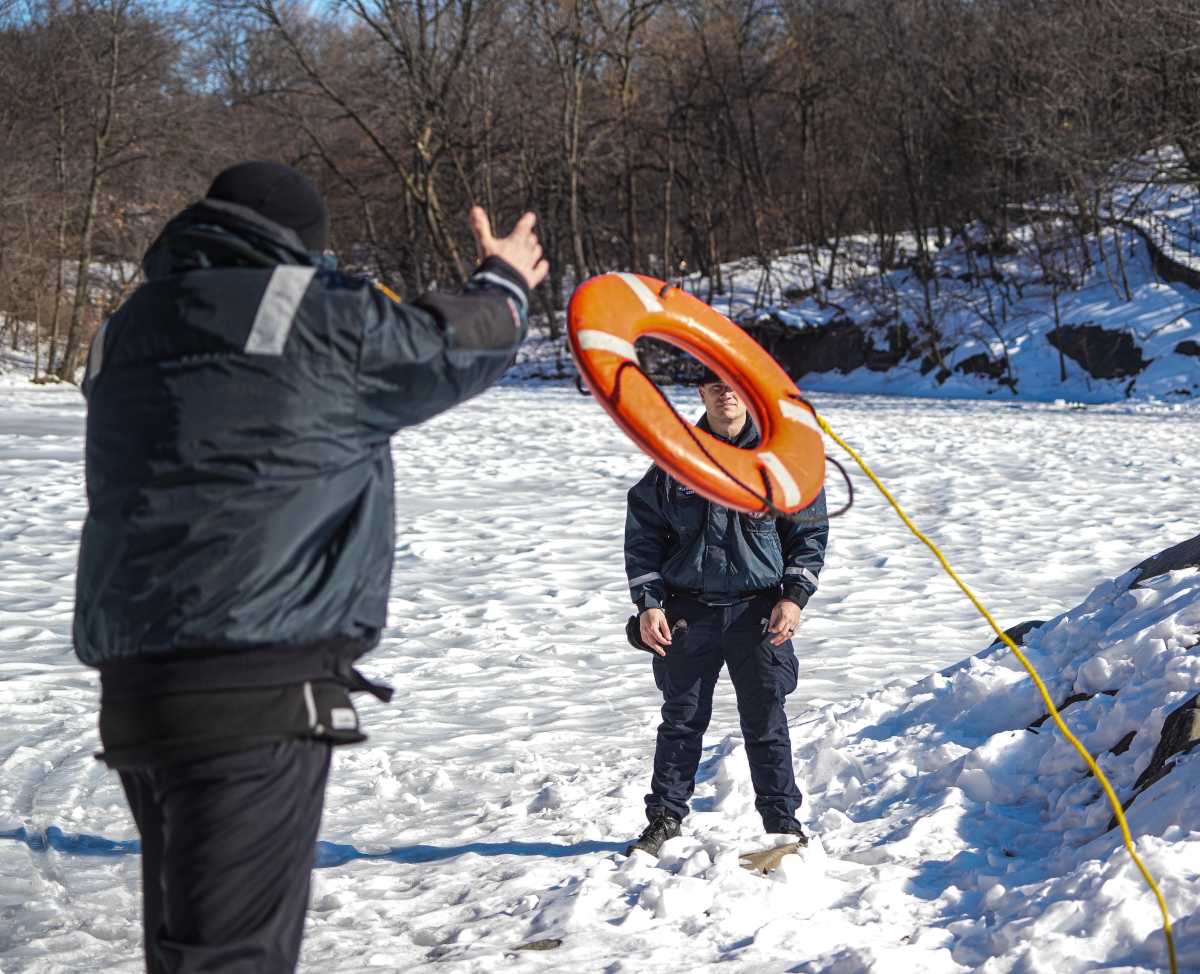
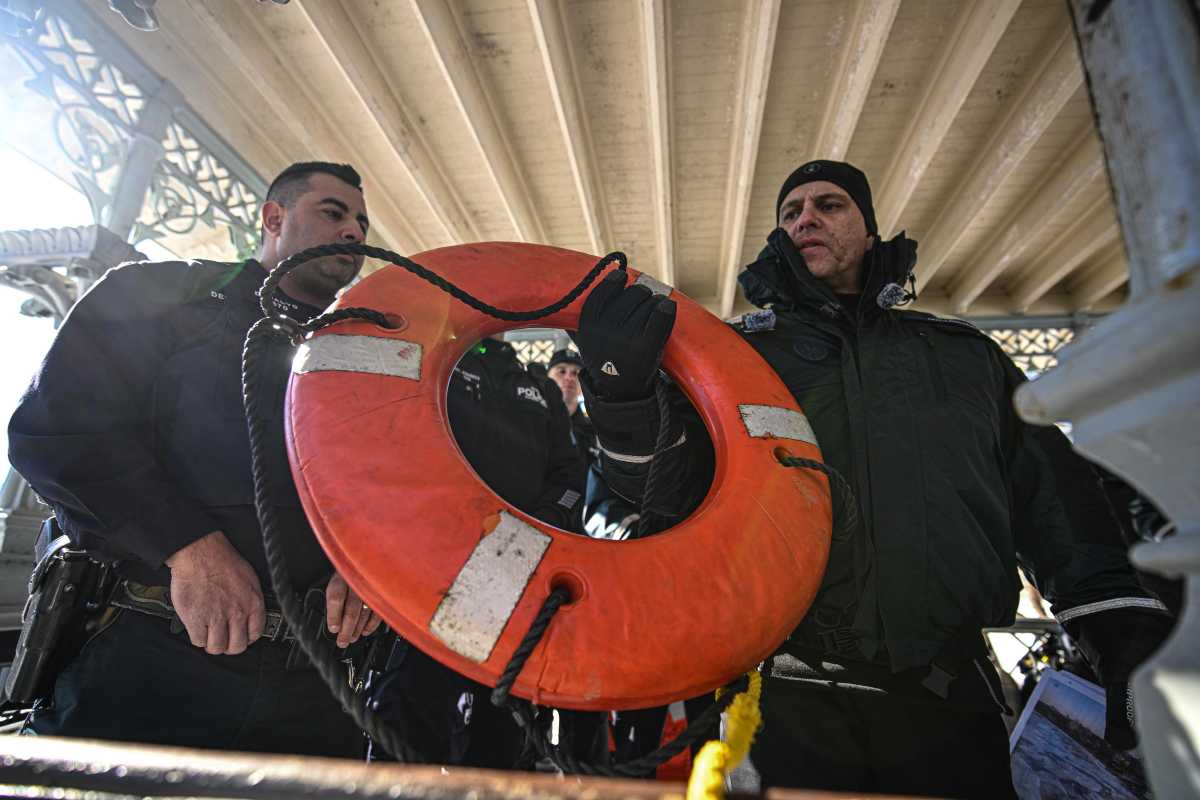
Gathering around Rodriguez, he informed the cops of the immediate measures to take in the event of a person falling through the ice. He stated that responding officers should have rescue rings and flotation vests in the back of their police vehicles.
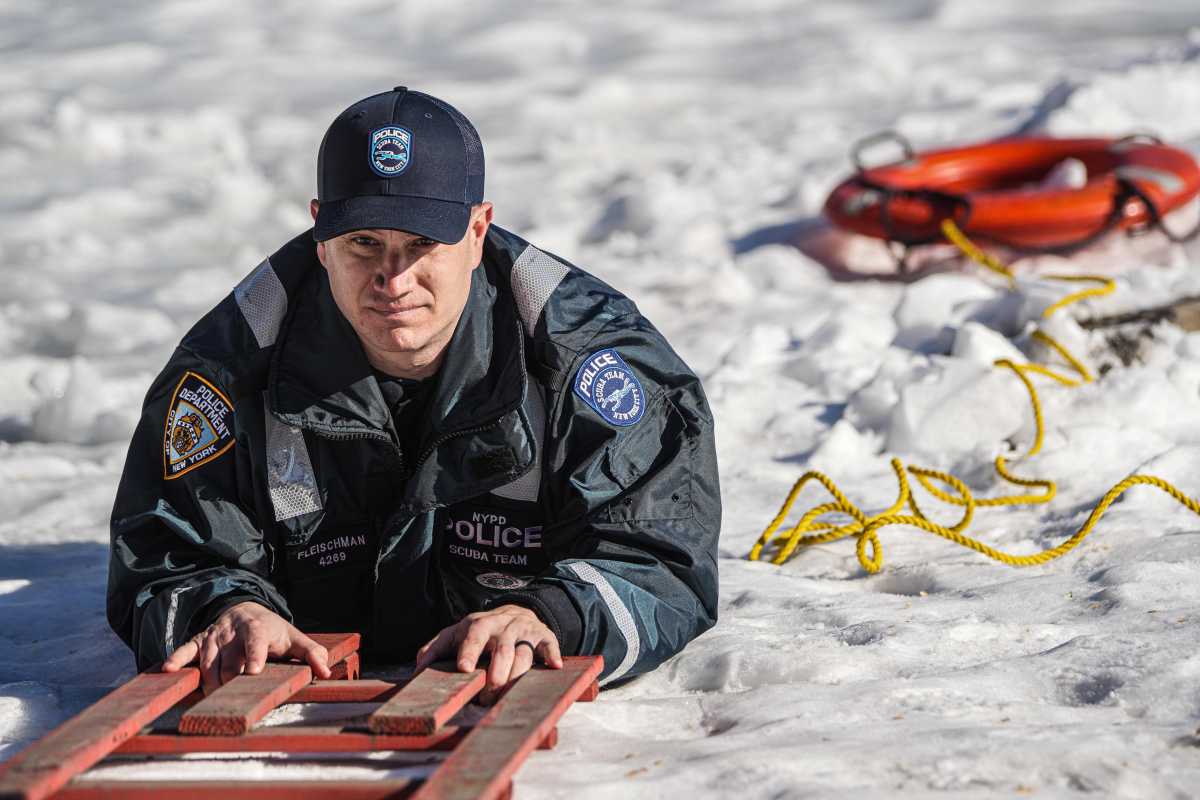
He also pointed to special red ladders positioned throughout the park. He stated that these are not intended for climbing, but instead to evenly distribute weight so the ice does not give way.
Rodriguez also demonstrated a line launcher, a high-powered gun-like tool that can shoot a rescue rope over long distances to reach a person beyond normal range.
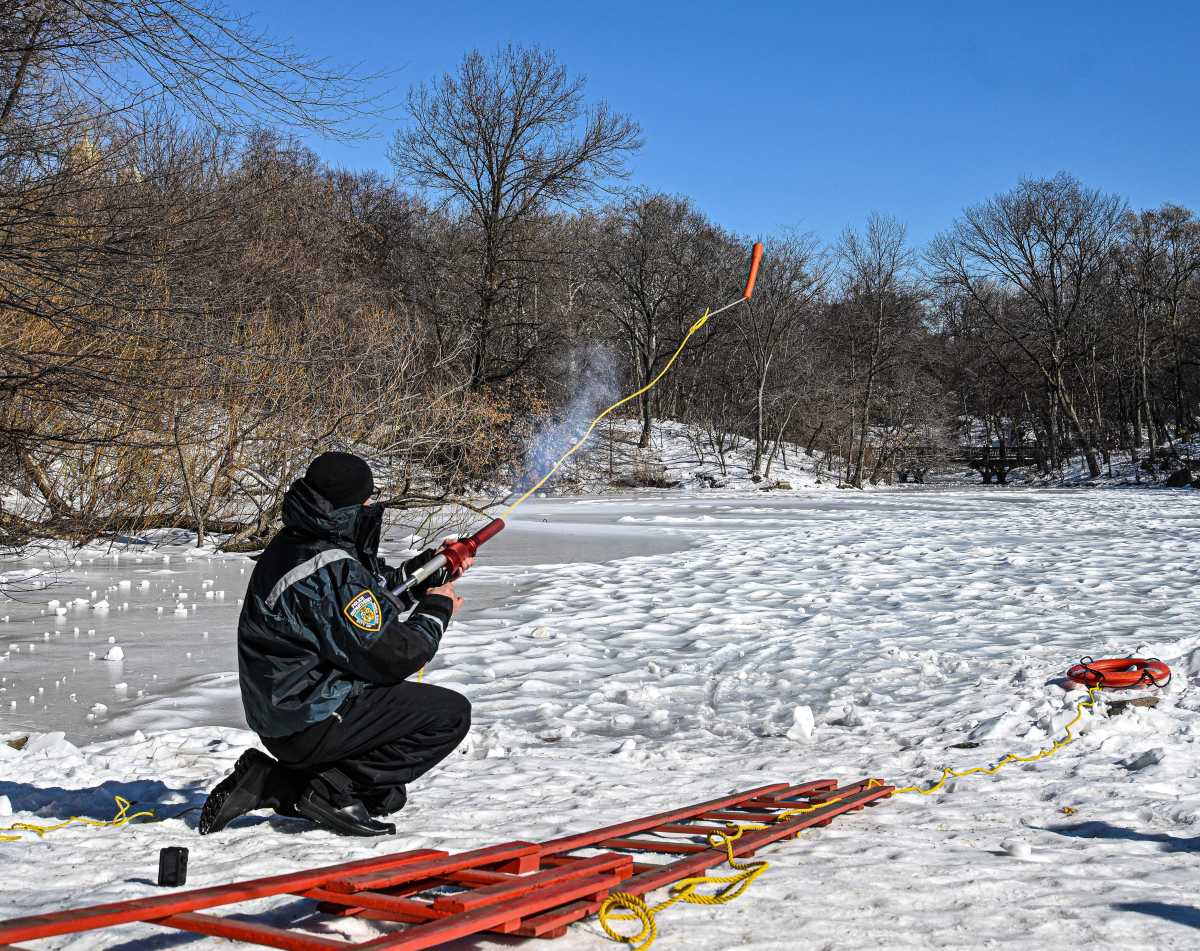
Rodriguez said he believed the training was a great success and would help save lives.
“Central Park is a great place to go and do it, because we have these closed bodies of water, and we have a lot of personnel that are in the area that can attend,” Rodriguez said.