

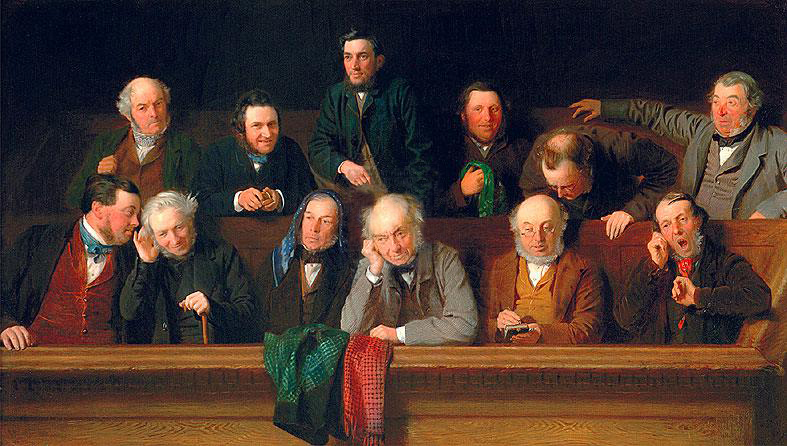
In the American imagination, the criminal justice system is a theater of wood-paneled courtrooms, impassioned closing arguments, and the dramatic wait for a jury’s verdict. But today, the reality of the system has shifted into the shadows of office hallways and digital backrooms. The federal criminal trial is no longer the climax of justice; it is an endangered species.
They say lady justice is blind, for her blindfold represents objectivity, the ability to allocate justice without the fright of bribe, without the influence of money, wealth, power and identity. But many today feel like the system has failed them, as has a client who was recently in our office and who stated that he took a plea as opposed to going to trial because he was confident that he would not get true justice in this system. This is a major problem. Many believe that the criminal justice system discriminates on the basis of race, ethnicity, or class. However, we want to raise a different problem, one that particularly disturbs us, as well as the highly regarded former U.S. District Court Judge John Gleeson, who recently wrote about this topic.
This issue is this: “The vanishing criminal trial.”
Once a centerpiece of our criminal justice world, the criminal trial is now spotted so infrequently that if we don’t do something to bring it back, the integrity of the criminal justice system will be undermined for everyone, regardless of race, class, or creed. For decades, the number of federal cases resolved by a jury has been in free fall. Recent data reveals a stark conclusion: fewer than 3% of federal criminal cases now go to trial. In the mid-20th century, roughly 20% of cases reached a courtroom. While the Sixth Amendment guarantees the right to a “speedy and public trial,” that right is now more of a bargaining chip than a lived experience for most defendants. Over the last fifty years, the “trial by a jury of your peers” has been replaced by a “system of guilty pleas.”
President John Adams, who was also a criminal defense attorney, said: “representative government and trial by jury are the heart and lungs of liberty. Without them, we have no other fortification against being ridden like horses, fleeced like sheep, worked like cattle, and fed and clothes like swine hounds.”
A truly brilliant and fierce statement. However, what is happening as a result of the disappearing trial is a diminishing of the role that the Framers envisioned for jury trials as the primary protection for individual liberties against the government. Why has this happened?
Guilty pleas have replaced trials for a very simple reason: individuals who choose to exercise their Sixth Amendment right to trial face exponentially higher sentences if they go to trial and lose. Under the U.S. Sentencing Guidelines, defendants who “accept responsibility” by pleading guilty receive significant reductions. Conversely, those who exercise their right to trial and lose often face sentences twice or triple the length of the original plea offer.
For many, the risk of a “trial penalty” makes the courtroom a gamble they cannot afford to take Also, the enactment of mandatory minimum sentencing provisions have played a major role in reducing our trial rate from 20% thirty years ago to where it is today. These overly used harsh mandatory sentences have the effect of strong-arming guilty pleas, whether the person is guilty or not. Faced with this “roll the dice” scenario, most individuals surrender their right to a trial rather than insist that the prosecutor prove their guilt beyond a reasonable doubt.
As a result, a growing number of defense lawyers spend most of their time negotiating plea deals, rather than ensuring the police and prosecutors do not overstep the bounds of the law and have enough evidence to convince a group of jurors of their clients’ guilt. The unfortunate result is that mistakes and misconduct often get buried.
The penalty of going to trial and losing is undermining our criminal justice system. It is an individuals’ right to put the government to its proof, and there should not be extravagant penalties and sentences for individuals who force the government to actually prove them guilty. When the trial disappears, everyone loses — including judges, prosecutors, defense attorneys, defendants, and the public.
Interestingly, 2025 and 2026 have seen a minor “jury revolution” from an unlikely source: the United States Supreme Court. Justice Neil Gorsuch has emerged as a staunch defender of the Sixth Amendment, signaling in recent opinions that more facts affecting sentencing should be decided by juries, not judges. Whether these judicial nudges can reverse a half-century of decline remains to be seen. For now, the “day in court” remains a cornerstone of American identity — it just rarely happens in an actual court.
Arthur L. Aidala is the managing partner of Aidala, Bertuna and Kamins. He is a former Kings County Assistant District Attorney and is the host of the “Arthur Aidala Power Hour” weekdays at 6pm on AM970 The Answer.
Michael Jaccarino is a partner at Aidala, Bertuna & Kamins. He is a proven trial lawyer and a defender of the accused.