


New York could have a “super” voice in selecting presidential nominees in 2028 and beyond.
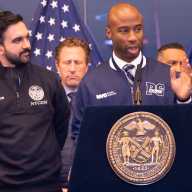
That’s the hope of State Senator James Skoufis and Bronx Assemblymember Landon Dais, who are set to introduce legislation to permanently move the state’s presidential primary to Super Tuesday — the high-stakes day when roughly one-third of delegates are awarded.
“For the past several cycles, despite our population’s size, economic and cultural importance, and deep diversity, New York’s role in picking our nation’s presidential nominees has been relegated to the sidelines by a primary date that arrives too late to matter,” said Skoufis, whose district is based in Orange County in the northern suburbs. “With this bill, our votes will count.”
The sponsors say the shift would draw major campaign investments and national media attention, forcing presidential contenders to meet New York voters and address local issues during the primary season rather than treating the state primarily as a fundraising stop.
Why now, and how fast do they need to move?
Skoufis told amNewYork on Thursday that the timing of the bill — two years ahead of the next presidential election —is deliberate, as the national parties are now setting the rules and framework for the 2028 presidential calendar. New York needs a statutory change in Albany to align with those decisions.
“The national parties… are putting together the rules and the framework now for the 2028 presidential calendar,” he said, adding that the legislature needs to act this session so New York can be “in sync with the DNC and the national parties.”
“It’s important for us this coming legislative session to, in parallel, make this statutory change and get us towards the front of the calendar,” Skoufis said.
He continued that the legislature’s upcoming session, which runs through June, is effectively a deadline for implementing the change in time to be considered for the early windows the DNC will set.
If the bill passes the legislature, Skoufis said he expects the governor would sign it. Gov. Kathy Hochul’s office did not comment on the proposal but said the governor will review the legislation if it passes both houses in Albany.
In the 24 hours since announcing the legislation, he said the bill had nearly 20 Democratic co-sponsors, roughly half of the chamber’s majority. Many more lawmakers who hadn’t formally co-sponsored were nevertheless supportive, according to Skoufis.
“I’m very happy to see the very early but strong support coalescing around the bill,” he said. “There is, there’s a lot of political will to do this. People understand this year that we don’t want our constituents, nor do we want ourselves as elected officials and leaders, to be taken for granted in the nominating process.”
For Skoufis, the bill is about reviving the Empire State’s influence in helping the nation choose the next commander-in-chief.
“We want presidential contenders to be visiting New York for reasons beyond just raising money,” Skoufis added. “During the primary season, we want these contenders to be meeting New York voters and speaking to our issues and not just taking us for granted, which we’ve been taking for granted for far too long.”
Mechanics and what wouldn’t change
The bill would only affect the presidential primary, according to Skoufis, who emphasized that the measure would not alter the scheduling of New York’s state and federal primaries, which “would remain separate.” He added that the state’s existing structure, with separate presidential and non-presidential primary dates in late June, would continue.
Several major states with large, diverse populations, including California, Texas, Massachusetts, North Carolina, Tennessee, and Virginia, already vote on Super Tuesday, the single busiest date in the presidential nominating calendar, when the greatest number of states and territories hold primaries or caucuses.
In 2024, Super Tuesday fell on March 5, with seventeen jurisdictions participating: Alabama; Alaska (Republican primary); American Samoa (Democratic caucus); Arkansas; California; Colorado; Iowa (Democratic primary); Maine; Massachusetts; Minnesota; North Carolina; Oklahoma; Tennessee; Texas; Utah; Vermont; and Virginia.
Last year, New Yorkers cast their ballots in the race over three weeks later, on March 30.
“By fixing our primary to one of the nation’s biggest election days, we can give every New Yorker the opportunity to help select the next president and ensure our communities count where it matters most,” Assembly Member Dais said in a statement.
Skoufis also explained how New York has historically traded its earlier influence for bonus delegates by moving itself toward the back of permitted windows — a strategy he said has produced little return in terms of real influence.
“New York has voluntarily… moved itself to the back of the window in an effort to get what are called bonus delegates,” he said, arguing the state should instead accept less in bonus delegate rules in exchange for greater influence on the candidates.
Skoufis stated that competitive presidential contests drive turnout, not the calendar itself, and argued that moving the primary earlier would result in more competitive, high-profile races in New York.
“If we have a highly competitive primary here… that is what is going to bring out a significant voter turnout,” he said.