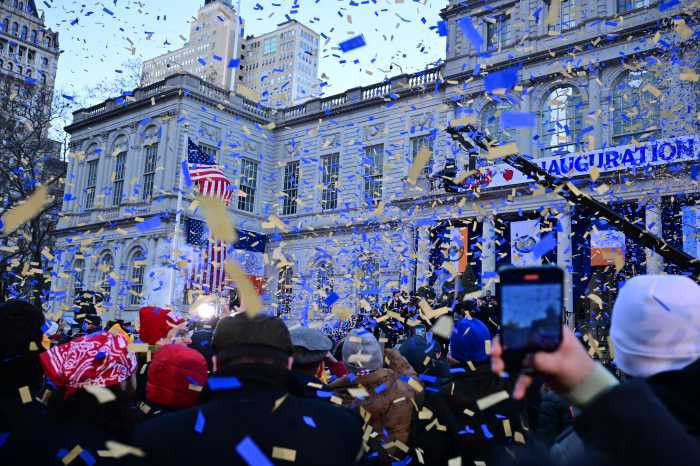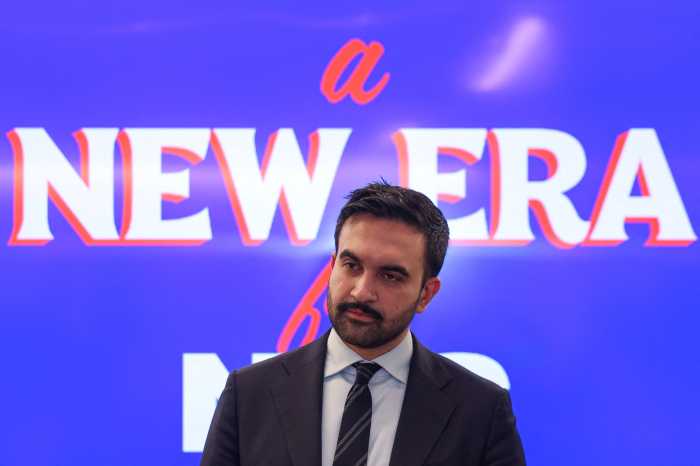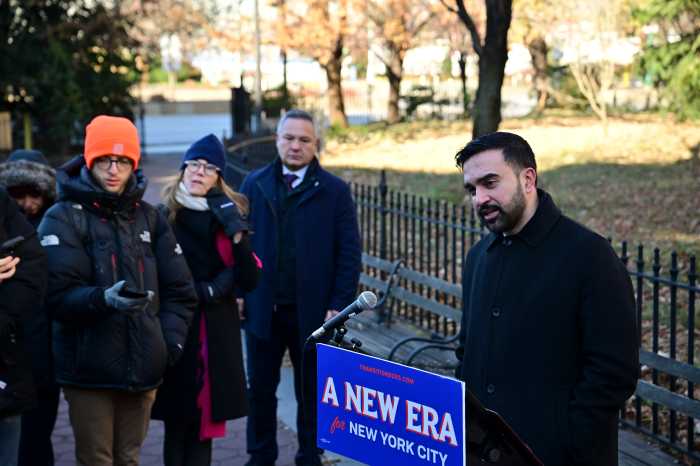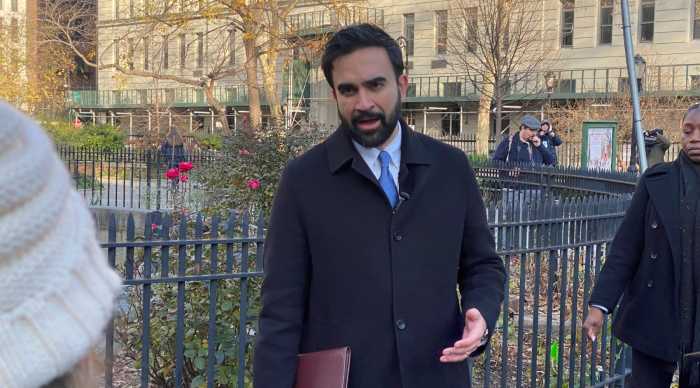



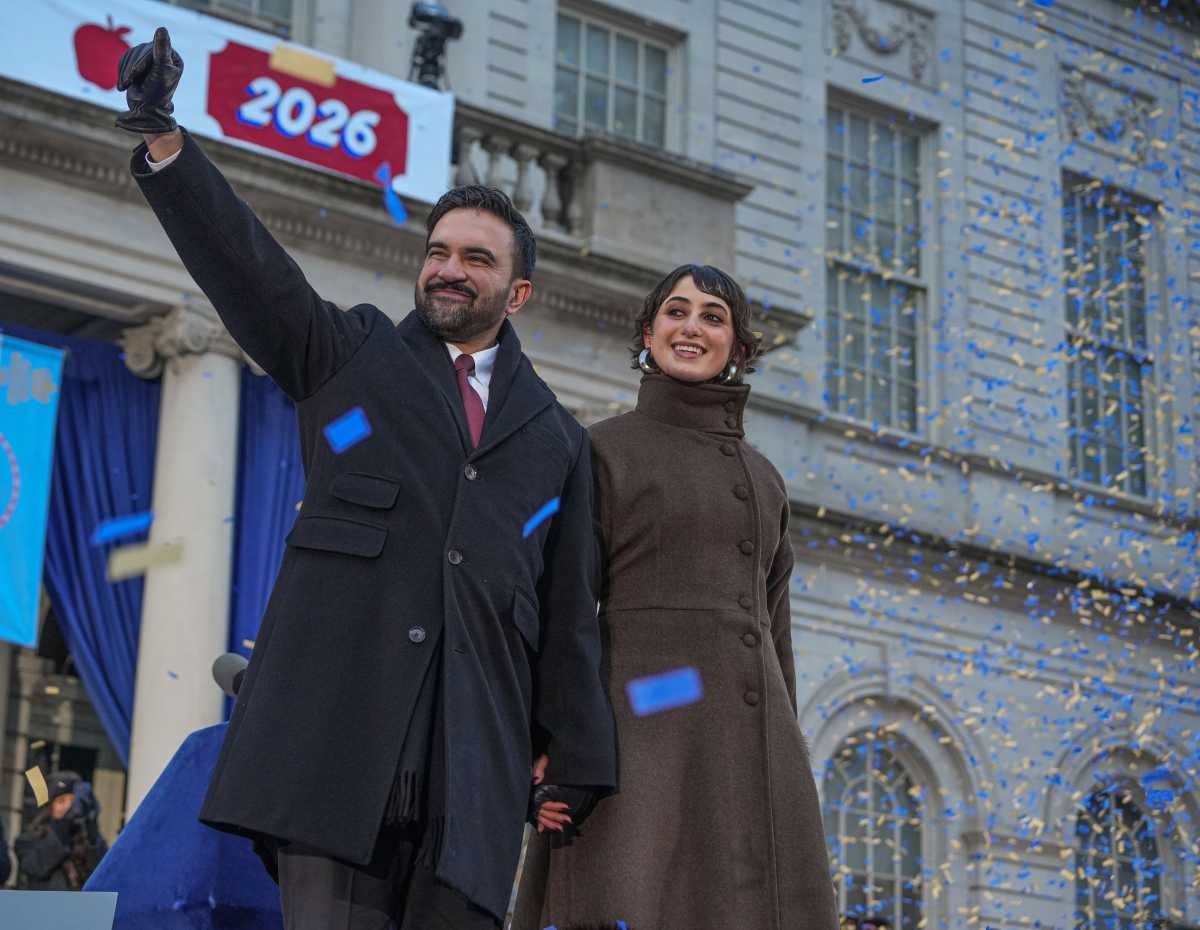
Mayor Zohran Mamdani opened his administration Thursday with an explicit pledge to govern the nation’s largest city as a democratic socialist, saying he would not soften his politics as he ushered in the “new era.”
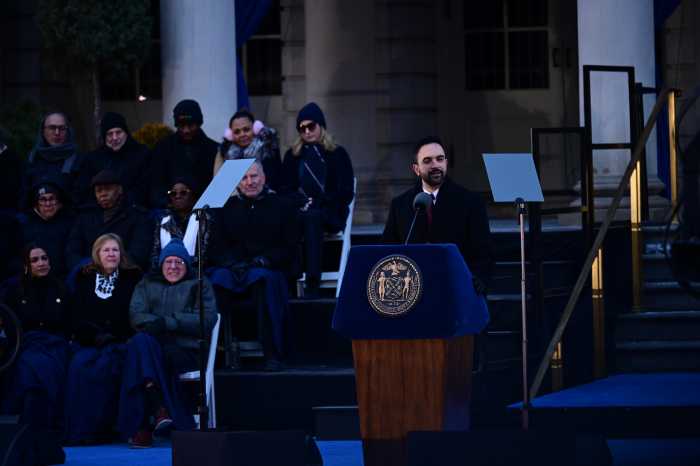
“I was elected as a democratic socialist, and I will govern as a democratic socialist,” Mamdani said in his inaugural address on New Year’s Day before a crowd of thousands gathered at City Hall and at a block party down the Canyon of Heroes.
The declaration, made on the steps of City Hall, set the tone for a speech that framed his mayoralty as a test of whether a left-wing government can deliver for working people while confronting corporate power and economic inequality.
“No longer will City Hall hesitate to use its power to improve New Yorkers’ lives,” he said, arguing that decades of deference to the private sector had eroded trust in government.
He rejected advice to lower expectations at the outset of his term. “The only expectation I seek to reset is that of small expectations,” Mamdani said. “Beginning today, we will govern expansively and audaciously.”
Mamdani publicly commits to his campaign promises as mayor
Throughout the address, Mamdani returned to the question of who the city’s government serves. “Who does New York belong to?” he asked, answering later: “New York belongs to all who live in it, together.”
He outlined priorities that he said reflect that commitment, including universal child care funded by taxing the wealthiest residents, freezing rents for tenants in rent-stabilized apartments, and making city buses “fast and free.” He said those policies were about expanding freedom in a city where, he argued, opportunity has too often depended on income.
“For too long in our city, freedom has belonged only to those who can afford to buy it,” Mamdani said.
The new mayor acknowledged skepticism from New Yorkers who opposed him, saying his administration would serve the entire city. “If you are a New Yorker, I am your mayor,” he said, adding that only action would change minds.
Mamdani framed the moment as one being closely watched beyond New York. “They want to know if the left can govern,” he said. “They want to know if it is right to hope again.”
He urged supporters to remain engaged beyond the election, saying governing would require sustained public pressure and participation. “City Hall will not be able to deliver on our own,” Mamdani said.
As he concluded, Mamdani cast the start of his term as the beginning of a longer struggle rather than a victory lap.
“The work continues,” he said. “The work endures. The work, my friends, has only just begun.”
‘Radical agenda’
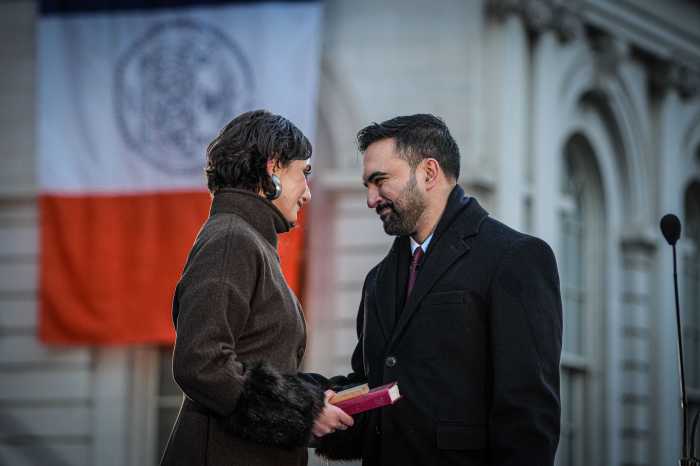
Vermont Sen. Bernie Sanders, who administered the oath of office, praised Mamdani’s election as a watershed moment for grassroots politics and working people, calling it “the biggest political upset in modern American history.”
Sanders thanked New Yorkers for what he described as a volunteer-driven campaign that challenged entrenched political and economic power.
“You took on the Democratic establishment, the Republican establishment, the President of the United States, and some enormously wealthy oligarchs,” Sanders said. “And you defeated them.”
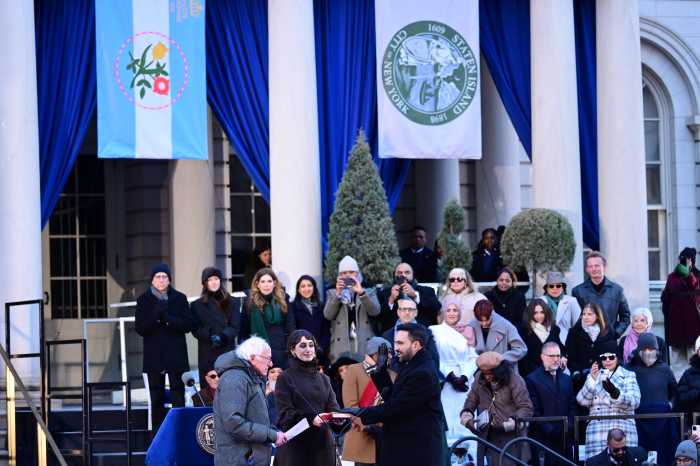
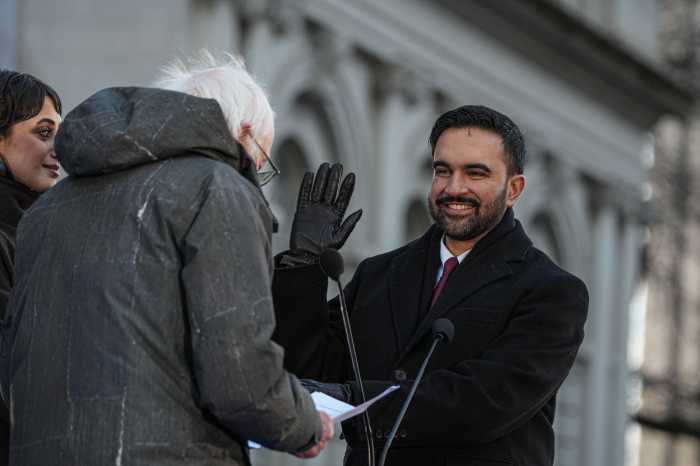
He framed the victory as a response to growing disillusionment with democracy in the United States and beyond. “At a moment when people in America — in fact, throughout the world — are losing faith in democracy,” Sanders said, Mamdani’s election showed that “when working people stand together, when we don’t let them divide us up, there is nothing we cannot accomplish.”
Sanders acknowledged that governing would be more difficult than campaigning, telling the crowd that while winning the election was hard, “governing a city of 8 million people with all of its complexities” would be harder still.
He urged supporters to remain engaged, saying that “grassroots democracy and people participating in the day-to-day struggles of this city will lead to good governance.”
Addressing criticism of Mamdani’s agenda, Sanders rejected claims that the policies were radical. Making housing affordable, providing free, high-quality child care, offering free public transportation, and ensuring access to affordable food, he said, were “not radical,” but “the right and decent thing to do.”
Sanders also called for higher taxes on the wealthy and large corporations, saying it was unacceptable that billionaires and major companies pay little in taxes while millions live paycheck to paycheck. “That has got to end,” he said.
Mayor for all
U.S. Rep. Alexandria Ocasio-Cortez opened the inauguration ceremony Thursday, framing the event as a collective moment for the city’s residents and calling for greater civic participation in the years ahead.
She described the ceremony as an inauguration for all New Yorkers, saying the city had chosen “historic, ambitious leadership in response to unprecedented times.”
“New York, we have chosen courage over fear,” she said. “We have chosen prosperity for the many over spoils for the few.”
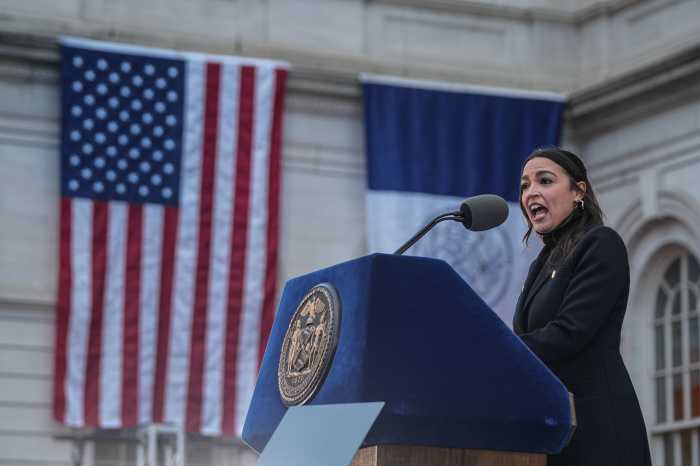
Ocasio-Cortez highlighted policy goals she said New Yorkers had embraced, including “the ambitious pursuit of universal child care, affordable rents and housing and clean and dignified public transit for all,” while rejecting “the distractions of bigotry and the barbarism of extreme income inequality.”
Calling the moment “an inauguration for all of us,” she urged residents to reengage in civic and community life, saying, “A city for all will require all of us to fill our streets, our schools, our houses of faith, our PTAs, and our block associations.”
She noted several historic firsts for the incoming mayor, saying he “will be the first Muslim mayor of our great city,” “our first immigrant mayor in over a century,” and “the youngest mayor of New York City in generations.”
“But most importantly,” she said, “Zohran will be a mayor for all of us.”