

When I traveled to Uzbekistan, I wasn’t just visiting a distant country. I was witnessing a powerful story of rebirth — one that reflects the values, diversity, and spirit of New York City. What I saw there deserves the attention of every New Yorker, because Uzbekistan is not just a nation halfway around the world; it is part of our city, part of our neighborhoods, and part of our future.
For many Americans, Uzbekistan has long been misunderstood. It was once a closed republic of the Soviet Union — isolated, constrained, and overshadowed by the legacy of communism. But the country I visited is something vastly different. Uzbekistan today is charting a bold new path: expanding its economy, protecting workers, empowering women, and embracing modernization without sacrificing cultural or religious identity.
One of the first things that struck me was this: Uzbekistan is a Muslim-majority nation without extremism. Its people practice their faith with peace, dignity, and pride. Under the leadership of President Shavkat Mirziyoyev, the country has ensured there is no division, no radicalism, and no suppression of other religions. Mosques, synagogues, and churches stand together — not as symbols of conflict, but as proof that coexistence is possible.
That message matters at a moment when too many people try to divide us based on faith. In Uzbekistan, I saw the opposite. I saw unity. I saw harmony. And as mayor of the most diverse city in the world, I felt right at home.
Uzbekistan is also committed to reforms that align with our values here in New York. Saida Mirziyoyeva, the President’s daughter, has played a leading role in major reforms, including the elimination of child labor in the cotton industry — a sector that once depended on it. Women are taking leadership positions in government, business, medicine, and education. Entrepreneurs are starting new enterprises. Foreign investment is rising. And the country is building partnerships with America that bring stability, opportunity, and mutual respect.
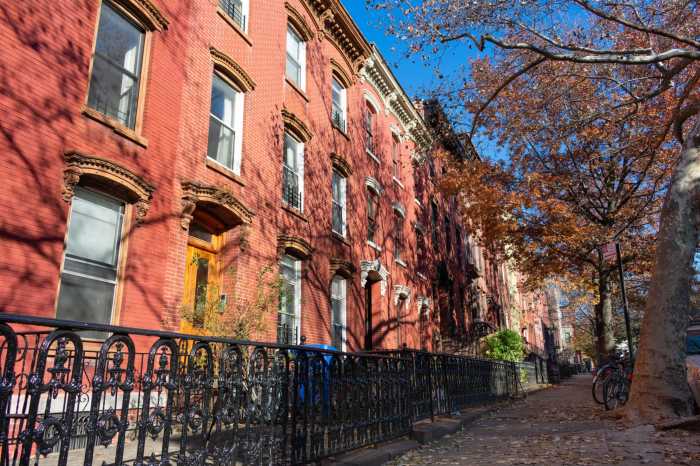
And just like earlier generations of immigrants from Italy, Ireland, the Caribbean, Latin America, and Asia — the Uzbek community has become an important part of New York City’s identity. Tens of thousands of Uzbek New Yorkers live in Brooklyn, Queens, and Staten Island. They own restaurants, supermarkets, pharmacies, transportation companies, tech start-ups, and construction businesses. They enrich our cultural life, fuel our economy, and help keep this city running every single day.
My visit was not just about diplomacy — it was about recognizing that Uzbekistan is already part of the New York story. When I met with leaders, business owners, and young people in Tashkent, Samarkand, and Bukhara, I saw the same determination, the same hope, and the same grit that built our city block by block.
Uzbekistan’s economic transformation opens doors for New York’s business community as well. Clean energy, agriculture, technology, logistics, and tourism are expanding rapidly. American companies, including firms based in our city, can be partners in this growth. Strengthening ties means jobs, trade, cultural exchanges, and new opportunities for New Yorkers.
But beyond economics, there is a deeper lesson. Uzbekistan is a country emerging from decades of control, choosing democracy over isolation, choosing empowerment over suppression, choosing unity over division. They are building a nation that reflects many of the same values we fight for in New York: fairness, opportunity, diversity, and respect.
As mayor, I say this clearly: No faith, no culture, and no community should ever be demonized. Uzbekistan proves that a Muslim-majority nation can be peaceful, progressive, and profoundly committed to human rights and economic freedom. And their growing community in New York shows that immigration continues to be one of our greatest strengths — not a weakness.
New York City has always been defined by its global connections. We are the city of Italians, Irish, Jews, Chinese, Russians, West Indians, Dominicans, Mexicans, Nigerians — and now, proudly, Uzbeks. Every wave of immigrants has contributed to our industries, our culture, our food, and our success. Uzbekistan’s community is no different. They are the newest chapter in the story of the greatest melting pot in the world.
My visit to Uzbekistan was not simply about looking outward — it was about looking inward, and recognizing who we are as a city. Uzbekistan’s story of reinvention after communism is a reminder that progress is possible anywhere. And their partnership with New York shows that no matter how far away a nation may be, its people can find a home right here.
And as I near the end of my mayoralty, moments like the near riot at Park East Synagogue remind us just how fragile unity can be — and why we must never give in to hate. The path forward for New York is the same lesson I saw in Uzbekistan: when people of different faiths and backgrounds choose peace over division, dignity over anger, and understanding over fear, a stronger, more compassionate society is possible.
New York City is strongest when we build bridges, not walls. Uzbekistan has a story worth telling — and New Yorkers deserve to hear it. Because our diversity is not an obstacle; it is our superpower. And Uzbekistan is now part of that powerful, unstoppable New York story.