

Mayor Zohran Mamdani’s pitch to potentially raise property taxes in his preliminary budget got the thumbs-down from numerous elected officials in New York City.
City Council Speaker Julie Menin and Finance Chair Linda Lee said the proposal begins a dialogue about protecting New Yorkers and the city’s fiscal future. Both will be leading the Council’s negotiations with Mamdani’s team in hammering out a final budget this June.
“At a time when New Yorkers are already grappling with an affordability crisis, dipping into Rainy Day reserves and proposing significant property tax increases should not be on the table,” they said.
The Council will release its own financial projections before budget hearings and review the administration’s numbers.
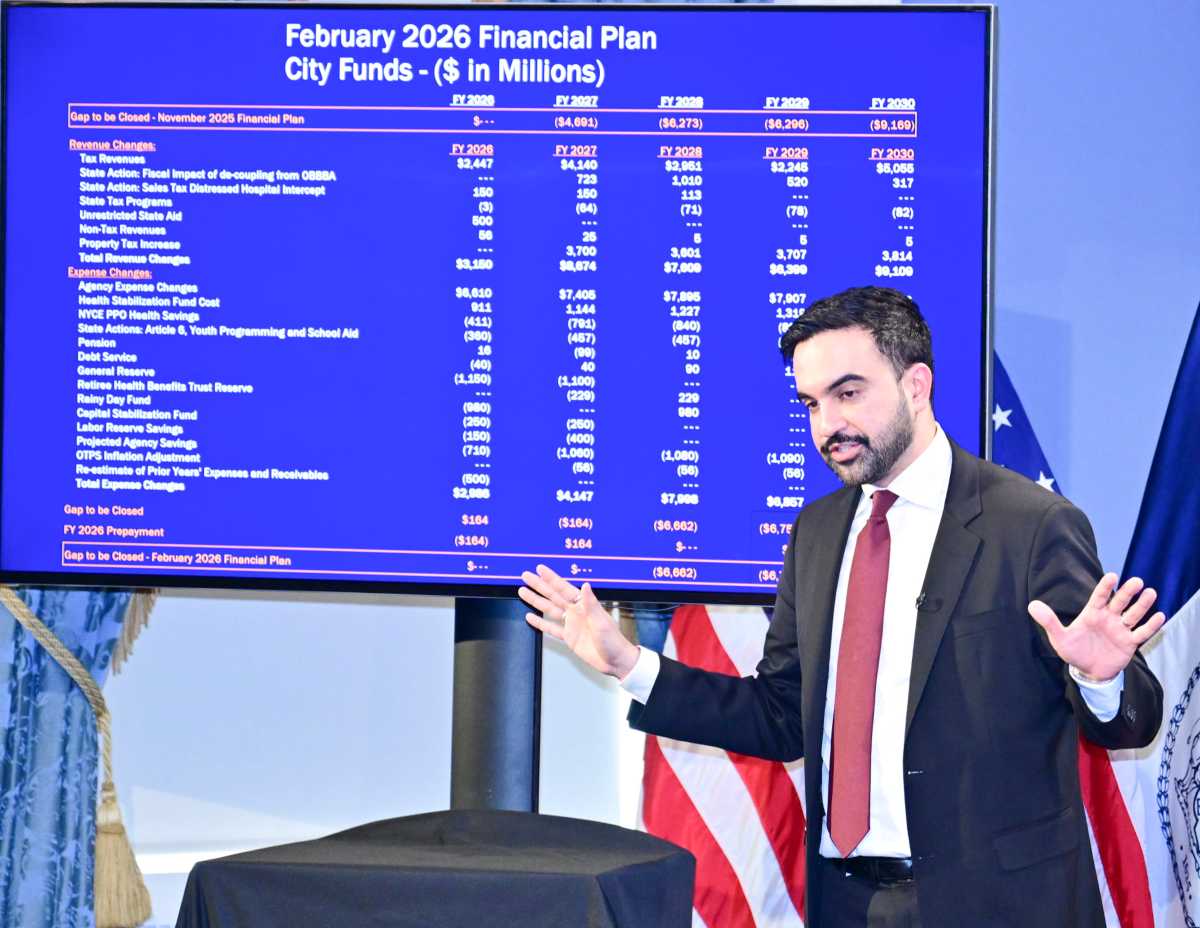
The property tax increases which Mamdani proposed Tuesday are, in his words, a “last resort” measure for the city to balance its budget should Gov. Kathy Hochul’s and state lawmakers refuse to adopt tax increases on the wealthy and corporations.
The last resort measure would increase property taxes by 9.5%, and force the city to dip into other savings to help close the gap by using $980 million from the Rainy Day Fund and another $229 million from the Retiree Health Benefits Trust.
Andrew Rein, president of the Citizens Budget Commission, said the mayor’s preliminary budget presents a false choice between the state raising personal income and business taxes or the city raising property taxes and drawing from reserves. Rein stated the city should eliminate wasteful spending and ensure efficient use of the $127 billion budget before seeking more from taxpayers.
Queens Borough President Donovan Richards Jr. called a 9.5% property tax hike a “nonstarter.”
“Under no circumstances should we consider balancing our budget on the backs of working-class New Yorkers, especially seniors on fixed incomes and public sector workers who keep our city running,” Richards said.
Richards urged Albany to work with the city to find sensible revenue solutions.
Jessica Walker, president and CEO of the Manhattan Chamber of Commerce, said New York has more of a spending velocity problem than a revenue problem, and the proposed budget accelerates that issue.
“We are equally concerned about what is being proposed to close the gap. ‘Property tax reform’ sounds reasonable until you understand how commercial leases actually work,” Walker said.
Walker said commercial property taxes do not burden wealthy developers as much as small business owners with leases that cannot be renegotiated. She explained that the vast majority of commercial leases contain triple-net or tax escalation clauses, meaning increases in commercial property taxes are passed directly to tenants.
“The City Council has the responsibility to scrutinize the budget with rigor, and we will be at the table with data, alternatives, and a clear-eyed view of what New York’s economy can sustain,” Walker said.
City Comptroller Mark Levine, the city’s official financial watchdog, said that Mamdani’s plan presents “no easy options” for the city, but cautioned that any property tax increases are untenable. For those reasons, he said the city needs greater help from Albany.
“We are left with no easy options. But to avoid the harm of increasing property taxes and drawing down reserves, we need to find greater efficiencies and savings across New York City government and reconfigure programs that are growing at an unsustainable rate. We also undoubtedly need greater assistance from Albany, to further rectify the years-long funding imbalance between the City and the State.
On the other hand, state Comptroller Thomas P. DiNapoli commended Mayor Mamdani for recognizing the fiscal risks ahead and urged caution in tracking revenue and making swift adjustments if needed.