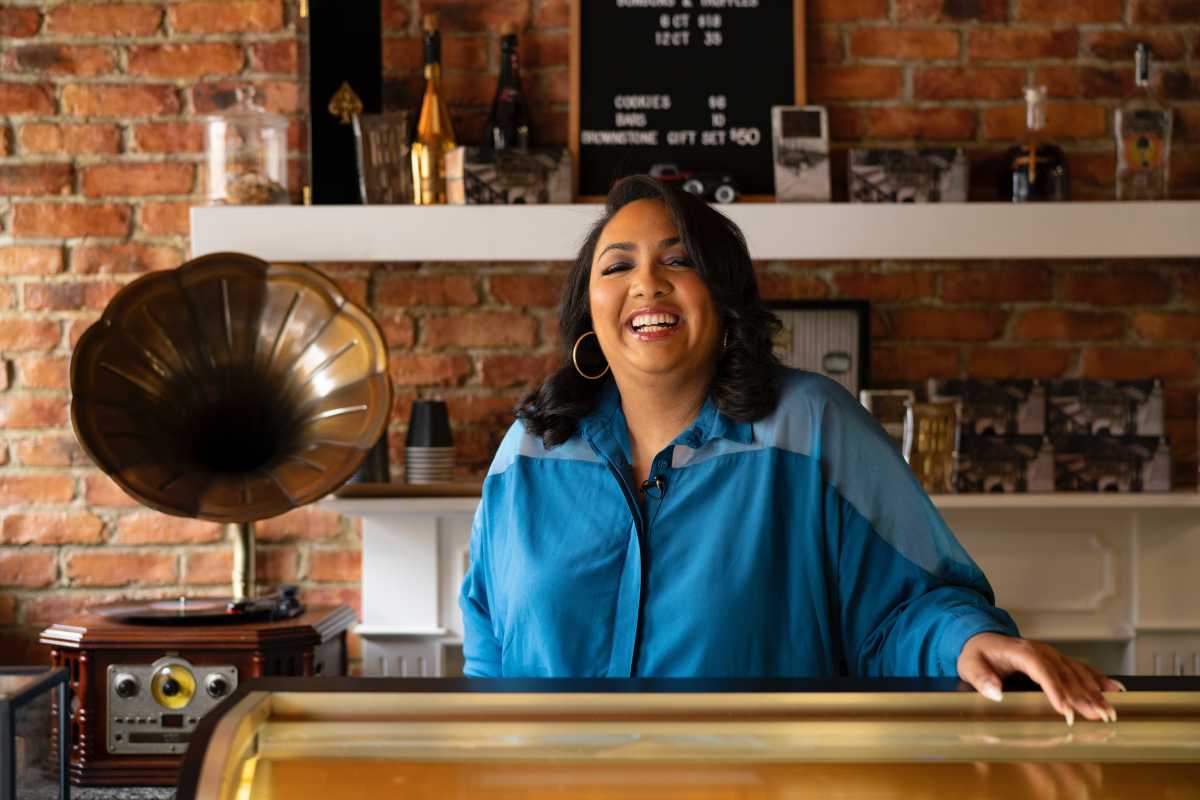


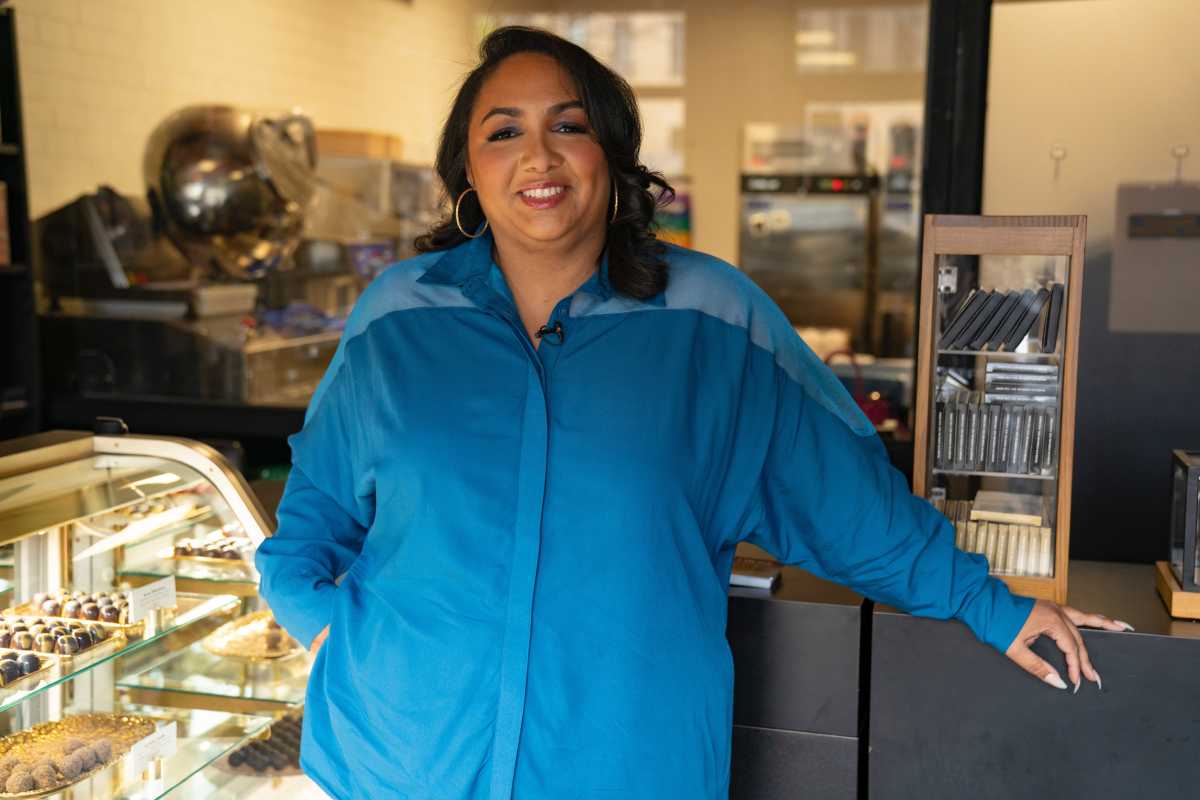
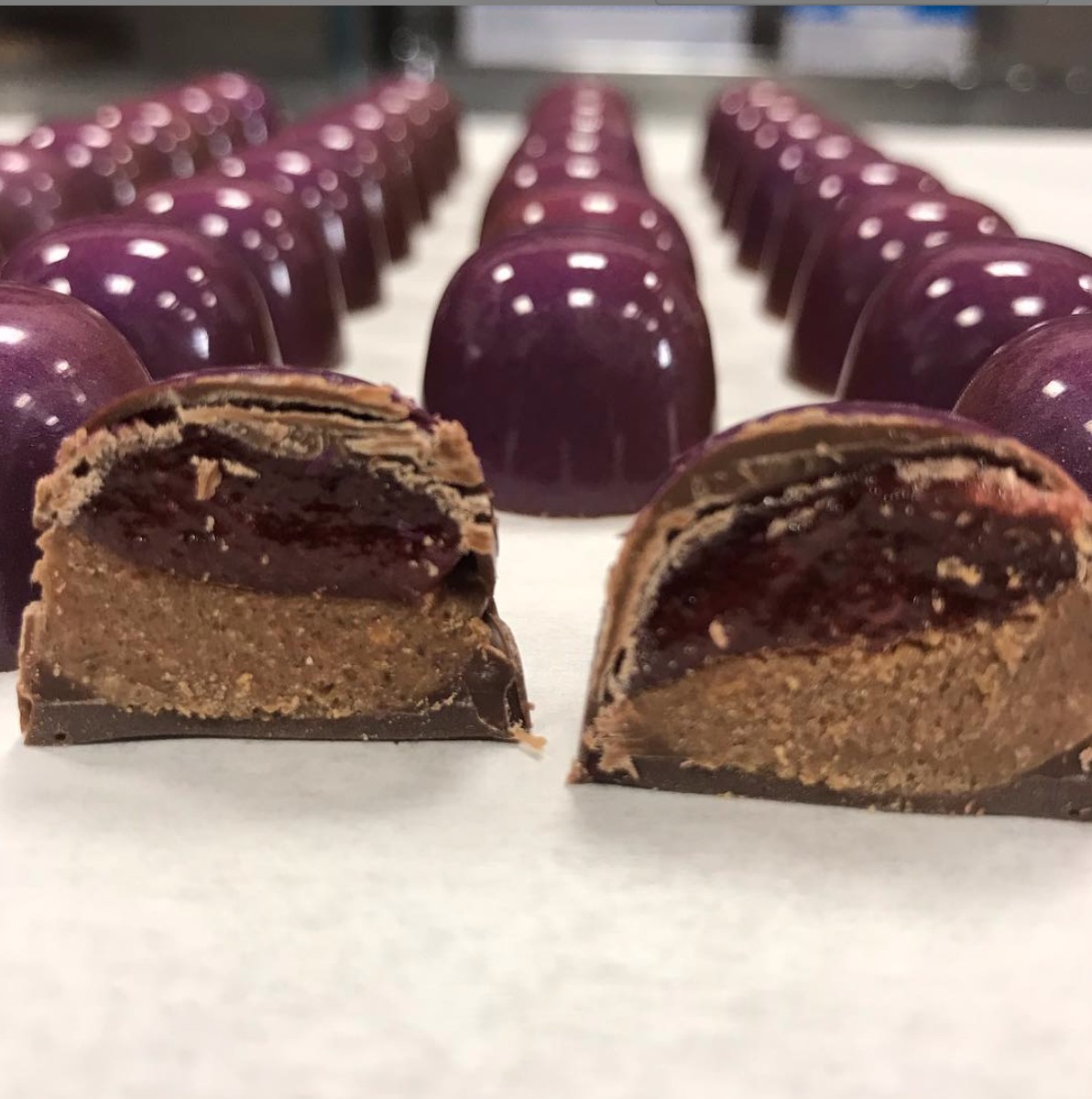
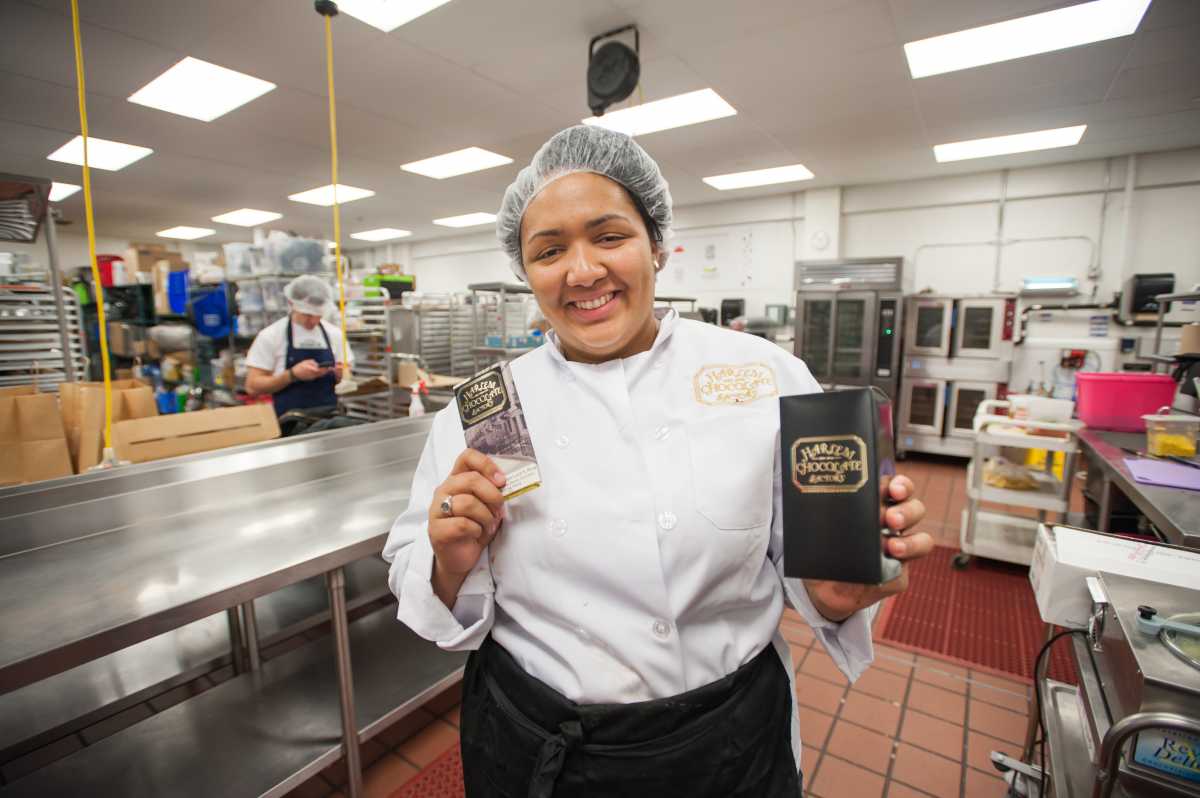
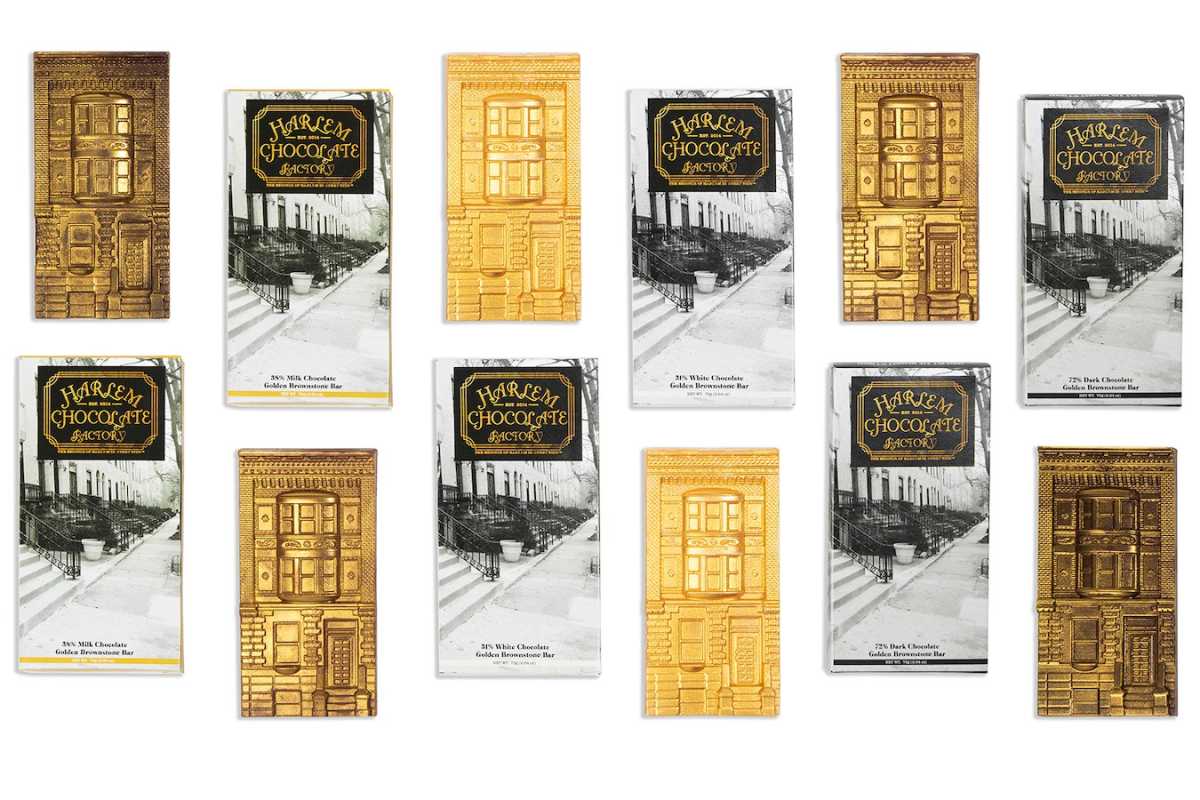
Harlem Chocolate Factory on Strivers Row, known for its iconic Golden Brownstone chocolate bars that once made Oprah’s Favorite Thing’s list, is currently facing financial pressure for operation.
The owner, Jessica Spaulding, closed the retail doors temporarily while actively trying to secure financing to keep her decade-old business alive. She launched a GoFundMe on February 1 to raise $50,000 for restructuring, staffing and debt clearing.
The shop produces chocolate for both wholesale corporate orders—the bulk of their revenue—and in-store purchases, all within a 200 square-foot space. That fact has placed them in a tough position.
“It’s too small,” said Spaulding. “ We could ramp up production tomorrow, but where would the product go?”
Spaulding says the goal is to ultimately move to a larger space. But first, they need to leverage the contracts that they have already secured with corporations to get investors.
“Going after these higher revenue opportunities allows us to show our capacity to anyone reviewing our financials,” she explained.
It was a big step for Spaulding to turn to the community for help, but since launching the fundraiser, she has been bombarded with love, messages and donations from the Harlem community.
“ I have spent 10 years not paying myself and that’s why we’ve survived this long,” she said. “Then seeing the community move around me lets me know this is bigger than myself, because it’s not just about chocolate.”
The widespread response to Harlem Chocolate Factory’s financial situation is due in part to The Best of Harlem (TBO), an Instagram page that spotlights local businesses, events, food and news. The founder, Tony Rahsaan, uses the platform to amplify and support business owners who may be struggling.
After Spaulding reached out, Rahsaan created and posted a reel asking for support for Harlem Chocolate Factory on February 8. Members of the community started reaching out to both of them immediately.
“ These are institutional businesses in Harlem,” said Rahsaan. “That’s also why the community shows up for them, because people know of them and they know the work that they do in the community.”
He says the response is also a testament to the business itself—customers don’t want to see the chocolate shop go.
“ I’m thankful that the community responded and showed up,” said Rahsaan. “But, you know, we got a little bit more work to do.”
With Harlem Chocolate Factory’s retail doors closed, Spaulding continued to post updates on social media about her search for funding. She flew to Los Angeles to pursue an opportunity recently.
“ We launched a bar for the NBA’s Foundation at All-Star Weekend,” said Spaulding. “And it was a very, very successful launch.”
It was a small but positive step in the right direction for Harlem Chocolate Factory. In the meantime, Spaulding is still exploring additional opportunities and working towards her goal. Her ultimate dream is to operate a tourable chocolate production space.
“This is what we had been working for since the beginning,” she said. “ We’re just gonna be expanding Harlem’s reach. When you come to New York City, there will not be a person who leaves here who won’t have a Harlem Chocolate Factory touchpoint.”
On Black business ownership in NYC
“ I think the thing that has been interesting in doing this as a Black woman has just been the amount of gaslighting,” said Spaulding.
She has faced a series of setbacks as a Black entrepreneur, from name-calling to death threats. She still looks back on leasing issues she faced from the NYC Economic Development Corporation. In 2016, she was transitioning from renting a table in Hot Bread Kitchen in East Harlem, to renting a stall. Two weeks before signing, though, and after eight months of preparation, she says she received an unsettling call from the EDC regarding her lease.
“I had already purchased my equipment and all the things. I got the funding. And the vice president is laughing, like, ‘You know, I just realized that the stall you want has already been rented,’” she recalled.
The incident sent her on a last-minute scramble, making calls and searching for a space for her equipment. The space that she found is where the Harlem Chocolate Factory is currently located.
“It was a very triggering experience,” she said. “ I needed to continue to look for just solely production space, and I didn’t do that because I couldn’t find it. There weren’t very many spaces that were just production-oriented.”
While she’s been able to make the space work for the past few years, it was never a long-term solution.
”We found the store and we made something beautiful out of it, but it’s time to transition and it’s going to require that front of the house be closed for a little while longer until it can be operated profitably,” she said.
For more information on Harlem Chocolate Factory, visit harlemchocolatefactory.com