


A federal judge on Friday dismissed the two death penalty-eligible counts against Luigi Mangione — taking capital punishment off the table for the man accused of shooting and killing UnitedHealthcare CEO Brian Thompson.
Earlier this month, U.S. District Judge Margaret Garnett heard extensive oral arguments as Mangione’s attorneys fought to nix the third and fourth charges in the 27-year-old’s indictment: murder through use of a firearm and a firearms offense related to carrying a gun equipped with a silencer.
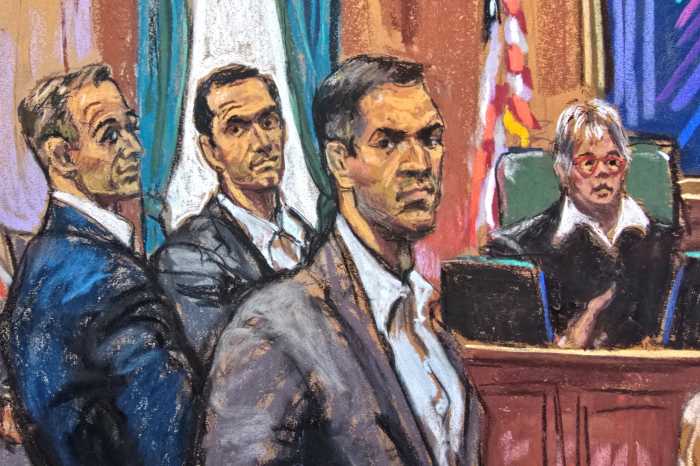
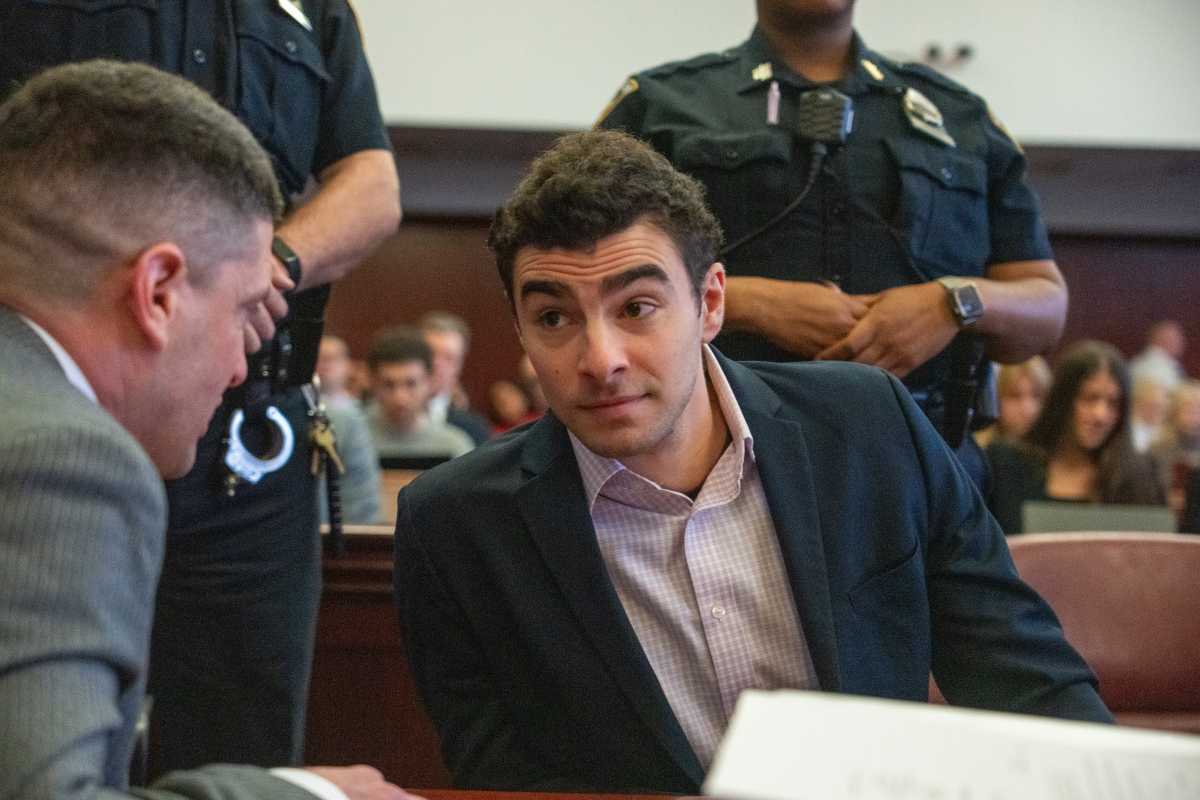
The announcement came as Mangione was back in Manhattan federal court on Friday for another pre-trial hearing. Members of Mangione’s defense team hugged and shook hands as they entered the courtroom for the hearing. Mangione, in his tan prison jumpsuit, maintained a steely composure for the extent of the hearing.
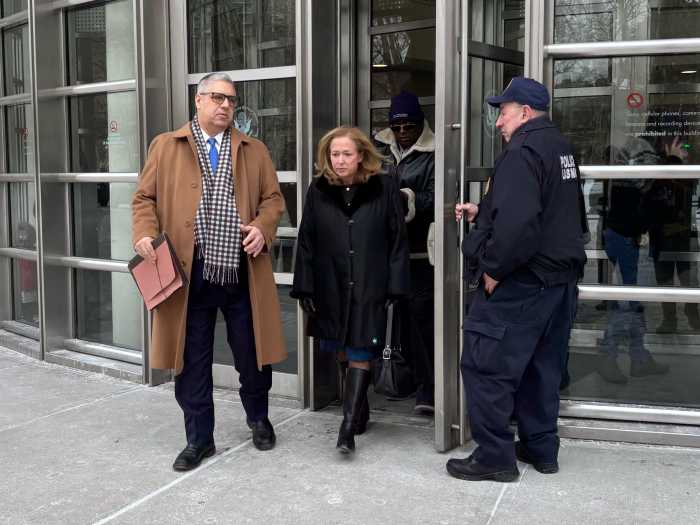
“We are all very relieved,” said Karen Friedman Agnifilo, of Agnifilo Intrater, addressing the press after the hearing.
When asked by the judge if the U.S. Attorney’s Office for the Southern District of New York whether or not it plans to appeal the decision, Assistant U.S. Attorney Dominic A. Gentile said the office has yet to make a determination. Federal prosecutors will have until Feb. 27 to decide.
The first two counts relate to interstate stalking and cyberstalking, while the latter two — which are death penalty-eligible — hinge on firearm use while committing a “crime of violence.” Mangione’s legal team argued that, as a matter of law, the stalking charges are not crimes of violence — and in turn, the murder and gun charges could not stand.
Garnett cited Supreme Court precedent in her 39-page opinion Friday, agreeing with the defense’s legal theory.
For one, the element of a stalking offense that the victim experiences a “reasonable fear” could be satisfied by reckless acts, rather than violent ones, the judge wrote. It doesn’t change the calculus if a death occurred.
“Because the resulting death can be caused accidentally, and certainly negligently or recklessly, the ‘death results’ element cannot supply the necessary use of force to convert the charged stalking offenses into ‘crimes of violence,'” Garnett wrote.
Furthermore, stalking offenses can be brought based on the threat of self-harm, rather than harm to another person.
“Examples are not hard to come by,” the judge said. She cited the 2024 Plunkett decision from the Eighth Circuit: “‘For instance, a woman’s estranged husband could travel in interstate commerce with the intent to harass her and, in the course of doing so, threaten to shoot himself if she refused to meet with him.'”
Noting that “family violence and intimate partner violence are complicated,” the judge said that “including threats of perpetrator self-harm is more consistent with the broadest protection for victims.”
Backpack evidence will come into play
Shortly before handing down the dismissal ruling Friday, Garnett ruled against Mangione’s Fourth Amendment bid to quash evidence from his backpack at the time of his December 2024 arrest at a McDonald’s in Altoona, PA.
While she honored the defense’s request to hold an evidence hearing over whether Altoona police followed its own protocol when it searched and inventoried the contents of Mangione’s backpack without a warrant — including reading the contents of his journal — the testimony did not sway her to block the evidence from coming into play at trial set to start in September.
“In sum, numerous exceptions to the warrant requirement (as well as the federal search warrant actually issued) preclude suppression of the backpack and its contents in this case, whether through the discovery of the loaded magazine during a pre-transport safety search, the recovery of the remaining items in the course of an inventory search a the police station, or the inevitable discovery of all the contents through the federal search warrant,” Garnett wrote in a separate, 43-page ruling.
“We’re prepared and have been prepared to fight this case,” Agnifilo said about the ruling.
During the hearing, Garnett also outlined what the jury process might look like given the extensive news coverage and devoted social media following that his case has garnered. Federal prosecutors had pressed for three months of jury selection to get ahead of potential obstacles. Garnett pushed back that allowing too much time can be counterproductive, but that she would find a balance with the court’s jury department.
“The district is no stranger to cases that have received a lot of attention and defendants who are well known,” she said.
The court expects to release a scheduling order, which will go into greater detail about the jury process, in the coming weeks,
The judge also addressed a letter in Mangione’s parallel state trial that the Manhattan District Attorney’s office has pushed to come before the federal trial’s Sept. 8 start date.
“That case is none of my concern,” she said, adding that she would not coordinate with state prosecutors unless they directly reached out to her.
With reporting by Max Parrott.