


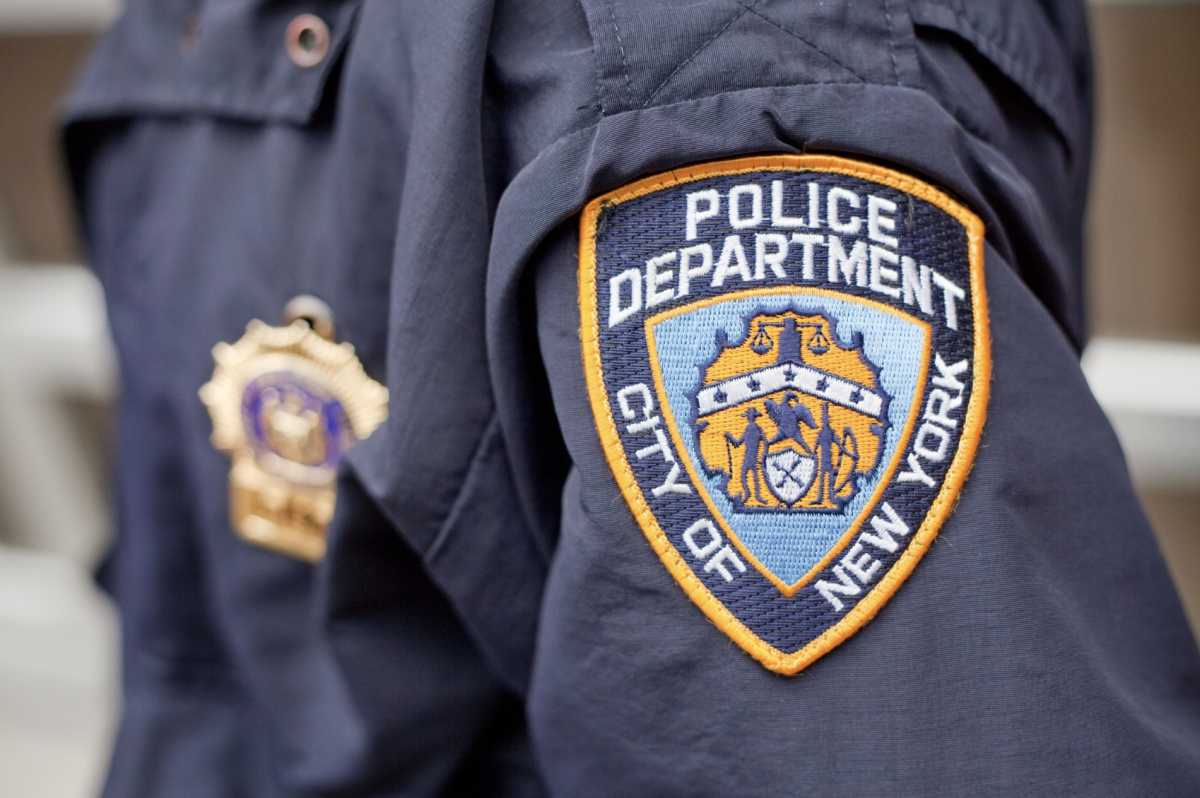
The New York Police Department is policing New Yorkers unconstitutionally, lacks meaningful accountability, carries out unlawful stops of city residents and underreports its usage of stop-and-frisk tactics, according to monitor Mylan Denerstein.
“After 12 years of monitor oversight, the NYPD has yet to reach substantial compliance with this court’s 2013 order requiring constitutional policing,” the monitor’s year-end report, released Wednesday, says. “I hope this serves as a wake-up call that the NYPD must comply with the Constitution. The residents of NYC deserve no less and there should not be a permanent monitor.”
Denerstein was court-appointed to oversee NYPD reform after a judge in the landmark lawsuit Floyd v. City of New York found the department’s stop-and-frisk practices to be unconstitutional. Her report paints a picture of a department lacking supervision and discipline that racially profiles New Yorkers and flaunts compliance protocols by misreporting stops as lawful when they aren’t, or simply not reporting unlawful stops.
In the first half of 2025, NYPD supervisors, such as sergeants and lieutenants, found 99% of all stops, 95% of frisks and 94% of searches compliant. During the same audit period, Denerstein’s team found “substantial non-compliance,” tagging only 89% of stops and 73% of frisks and searches as lawful. The monitor described the discrepancy as “concerning” and evidence that the department’s practice of simply assigning training to officers who’ve misreported stops doesn’t work.
“The NYPD needs to do more to hold supervisors and command executives accountable for the unlawfulness of NYPD stops, frisks, and searches,” Denerstein writes. “It is necessary to implement more robust corrective actions, including discipline, for supervisors and officers who repeatedly do not comply with legal requirements … Reliance solely on training without discipline has proven to be ineffective.”
What exacerbates the issue of unlawful stops, Denerstein writes, is police stopping people based purely on their own observations, rather than a call for service over a radio, information from a witness or other police work. These self-initiated stops — a frequent tactic of the NYPD’s specialized, self-directed Neighborhood Safety Teams, Public Safety Teams and Community Response Teams — are “far more likely” to be unlawful than others and account for roughly half of all reported stops.
“This problem is especially pronounced within specialized units, where most encounters are self-initiated,” Denerstein writes. “Audits consistently show that these units conduct stops, frisks, and searches at significantly lower constitutional rates than patrol officers, and that supervisors fail to identify or correct this behavior.”
On top of that, roughly 30% of the stops NYPD officers made in 2025 weren’t properly reported at all, Denerstein found.
“Officers continue to fail to document a substantial number of stops, even when documentation is legally required,” her report says. “When stops are not documented, unlawful conduct is harder to detect and correct … The NYPD needs to fix this.”
When asked for comment on the report, a spokesperson for Mayor Zohran Mamdani, Sam Raskin, said Mamdani takes the monitor’s findings seriously and is committed to ensuring the NYPD’s practices “fully meet constitutional standards.”
“Protecting the constitutional rights of every New Yorker is a fundamental responsibility of this administration,” Raskin said. “We will continue doing the work necessary to build a department that is accountable, transparent, and worthy of the trust of the people it serves.”
When reached for comment, the NYPD said it appreciated the monitor’s report and “remained focused on achieving compliance.”
“The NYPD is committed to upholding the constitutional rights of everyone we encounter, no matter the circumstance,” a department spokesperson said.
Patrick Hendry, the president of the union representing police officers, took a different note, criticizing the report and monitor’s scrutiny of officers’ policing as something “driving talented cops away,” a sentiment Vincent Vallelong, president of the union representing sergeants, echoed.
“Our members will continue to perform their duties with the utmost professionalism, despite the unending cascade of baseless criticism and second-guessing from those who have never walked a single day in our shoes,” Vallelong said.
Hendry added that he believed management policies, such as pressure on police officers to meet numerical performance goals, are what led to issues over the NYPD’s use of stop-and-frisk tactics. Therefore, he said, the monitor should shift the focus of her recommendations to altering management policies and procedures, rather than suggesting increased disciplinary penalties for officers.
Denerstein did identify a range of areas where the department was making progress towards constitutional policing: Last year, the department only reported 61% of times it stopped New Yorkers (compared to this year’s 71%) and command-level executives “showed improvements” in identifying unlawful stops, frisk and searches compared to first-line supervisors. The monitor suggested the department build on this by having those higher ranking officers help others “do their jobs better.”
Additionally, the monitor identified the department’s accountability initiative, called ComplianceStat, as something that “shows promise for improving compliance.” She noted in an earlier report that it was “the first department initiative in which command and borough supervisors are facing meaningful consequences” — something the NYPD has latched onto as evidence it’s moving in the right direction.
However, Denerstein emphasized that it “can only be effective with sustained, focused efforts targeting officers who fail to engage in lawful encounters and supervisors who fail to identify such encounters in the first instance.”
“Every supervisor and command must be convinced that they will face negative consequences for failure to demonstrate improvement,” the monitor writes.
Denerstein’s analysis appears to be at odds with the department spokesperson’s message that the NYPD is “truly committed” to upholding New Yorkers’ constitutional rights, as she writes that, “none of this is surprising or new” when referring to unconstitutional stops in her report.
“The department’s failure to achieve substantial compliance is not due to a lack of guidance,
information, or opportunity,” Denerstein said. “The department needs to send a clear message that constitutional policing is expected … The issues identified are longstanding, well-documented, and have been repeatedly communicated to the city and department leadership.