

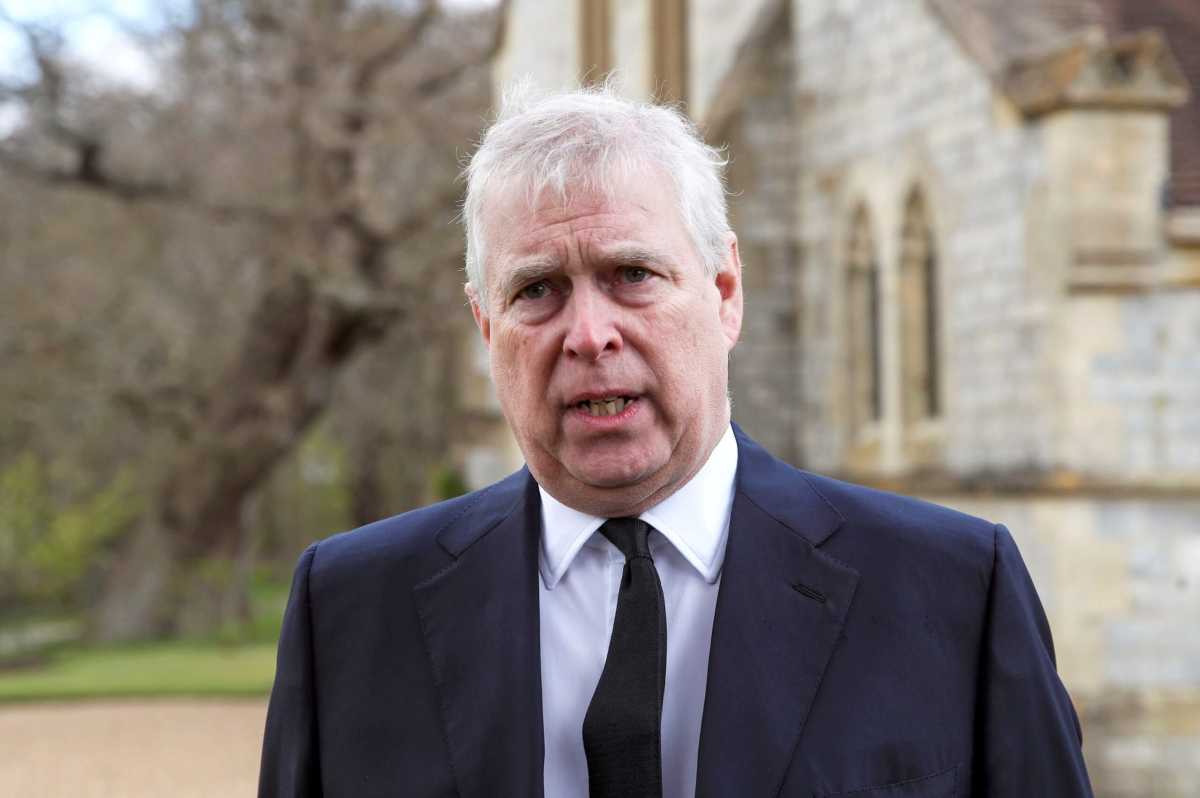
On the morning of his 66th birthday, Andrew Mountbatten-Windsor, the man formerly known as Prince Andrew, was arrested by police in the United Kingdom. The arrest came on the heels of the release of 3 million pages of Epstein files, which have reignited scrutiny of Andrew’s long-documented ties to convicted sex offender Jeffrey Epstein.
The files paint a horrifying picture — young women and girls exploited, trafficked, and silenced for decades. For the survivors who have waited years for accountability, the question is urgent and deeply personal: Could the United States actually extradite Prince Andrew and try him for his alleged crimes on U.S. soil?
One Republican senator, Rick Scott of Florida, has already called for Andrew to stand trial in the United States. But Andrew is no ordinary Briton — he is the King’s brother and eighth in line to the British throne. Is it even possible for him to be extradited?
The short answer is yes. Although diplomats and heads of state enjoy broad immunity from criminal prosecution, King Charles stripped Andrew of all his royal titles in October. Whatever protections his royal position once afforded him, they no longer apply. Even the U.K.’s Prime Minister has called for him to testify before the U.S. Congress about his ties to Epstein.
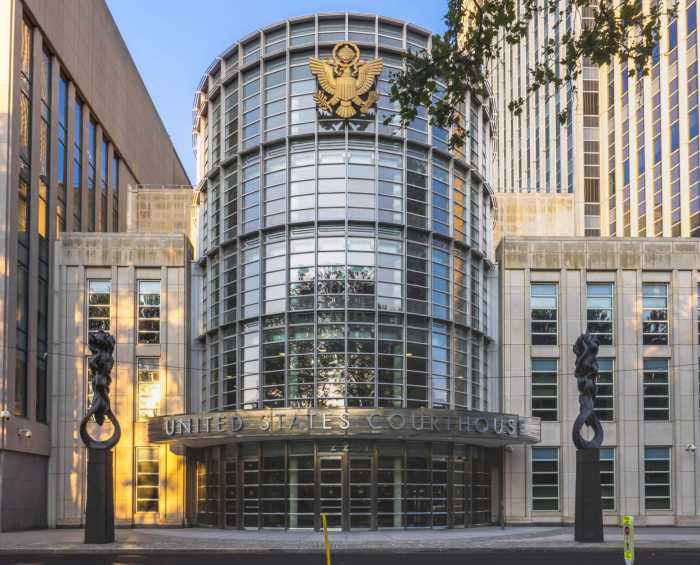
So what hurdles remain? First, and most importantly, Andrew has not yet been charged with any crime. The lawsuit brought against Andrew by Virginia Giuffre, which settled in 2022, was civil, not criminal. But there are 93 U.S. Attorney’s offices across the country, and any of them could be looking into Andrew right now—particularly the office in the Southern District of New York, where Andrew visited Epstein’s mansion, or the office in the U.S. Virgin Islands, where Giuffre alleges she met with Andrew on Epstein’s Island, Little St. James. (Andrew denies seeing Giuffre on the island, although he admits he visited Epstein there.)
How would extradition work in practice? If U.S. prosecutors were to charge Andrew, an initial request to begin extradition proceedings would land before a federal magistrate judge. That judge does not decide whether Andrew is guilty. The judge asks only a handful of narrow questions: Is there a treaty between the two countries? Does the alleged crime fit within it? Is there enough evidence to suggest Andrew committed a crime? Andrew’s lawyers would be entitled at that hearing to legal arguments saying he was protected by a provision in the treaty, but the bar for extradition to proceed at that stage is low.
If the U.S. judge approves extradition, the final call on whether to make a request to the U.K. to begin extradition belongs not to a court, but to Secretary of State Marco Rubio. This is where diplomatic concerns come into the equation. The Trump Administration may decide not to risk demanding that America’s closest ally hand over the King’s brother.
If Rubio makes a formal extradition request, that does not guarantee that the person will be extradited. Andrew could fight his extradition through British Courts, all the way up to the U.K.’s interior minister, known as the Home Secretary. That process can take years and is ultimately a political question the British government must decide.
Along the way, Andrew could raise several legal issues, including the requirement in the U.S.-U.K. treaty of “dual criminality,” which means that the alleged crime must be a crime in both countries. To establish dual criminality, both countries do not need to have identical laws: just laws that cover the same basic conduct. If prosecutors charged Andrew under America’s sex trafficking statute, Britain’s own laws against sexual exploitation would almost certainly satisfy this test.
Andrew might benefit from a recent change in U.K. law. Earlier last year, the U.K. Supreme Court ruled in a case called El-Khouri that Britain can refuse to extradite someone to the United States when the alleged crime happened entirely on British soil. If much of what Andrew is accused of happened in the United Kingdom, rather than in the United States, his lawyers would almost certainly use this ruling to fight any US extradition request.
Time is also a potential hurdle for prosecutors. Giuffre said she was sexually abused around 2001, when she was a teenager. Most crimes have a deadline for prosecution which is called a statute of limitations. But under U.S. law, when the victim of sex trafficking is a child, there is no statute of limitations. That means prosecutors could bring charges against Andrew today for conduct that allegedly occurred in 2001. Andrew might argue that the alleged conduct occurred too long ago to support extradition, but under the U.S.-U.K. treaty, the relevant question is the statute of limitations in the requesting country, so prosecutors should prevail on that point.
The last hurdle would be the U.K. government itself. Although King Charles said this week that “the law must take its course,” extradition would only go forward if the British government agreed to extradite the King’s brother. If that happened, the special relationship between the U.S. and Britain would face a challenge unlike anything it has ever seen.
Jonathan Baum and Joy Holden are lawyers at the Washington, D.C. law firm Harris Wiltshire & Grannis LLP. Baum was a member of the trial team that successfully defended Autonomy founder Mike Lynch after his extradition to the United States from the United Kingdom. Holden formerly served as a Trial Attorney at United States Department of Justice, Civil Rights Division.