

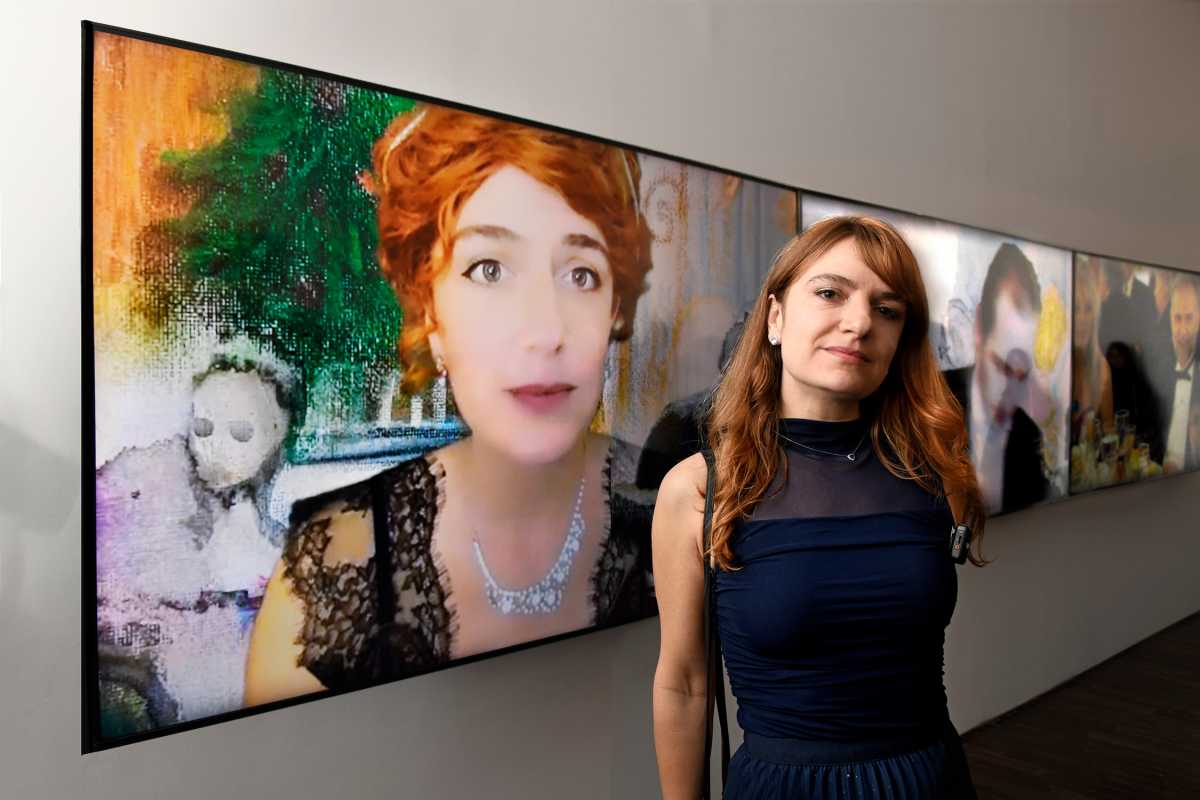
You think James Cameron’s “Titanic” was epic? Sure, it had a star-studded cast, cost $200 million to produce, featured an iconic Celine Dion love song, and took two years to complete — but multi-disciplinary artist Claudia Bitrán has, in her own way, gone a step further with her own shot-by-shot remake.
Titled “Titanic, A Deep Emotion,” Bitrán’s opus has taken 12 years to complete, with a cast and crew that added up to around 1,600 people. The budget, however, was somewhat modest in comparison: about $285,000, funded with a mix of grants and her own money.
The idea came to her during a lull at work one day, when she was a waitress at a Mexican restaurant.
“I was thinking, um, I really want to do something big. And something that I can make without much money, that I can make with my friends and that I can do in the city,” Bitrán recalls. “I had already remade all of Britney Spears’ video,s and I had done a bunch of animations and films that I really liked. That’s when I thought about ‘Titanic’ because it’s the only thing that I love as much as Britney.”
The filming was accomplished with a variety of gear, giving some truth to the old saying that “the best camera is the one you have with you.”
“I’ve used many different cameras,” she tells us. “A lot of iPhone, a Canon 7D, two kinds of GoPros, a Nikon 3700, and then all of the cameras that other people brought, like some big, beautiful Sonys.”
“I had a set of rules,” Bitrán explains of her working parameters.
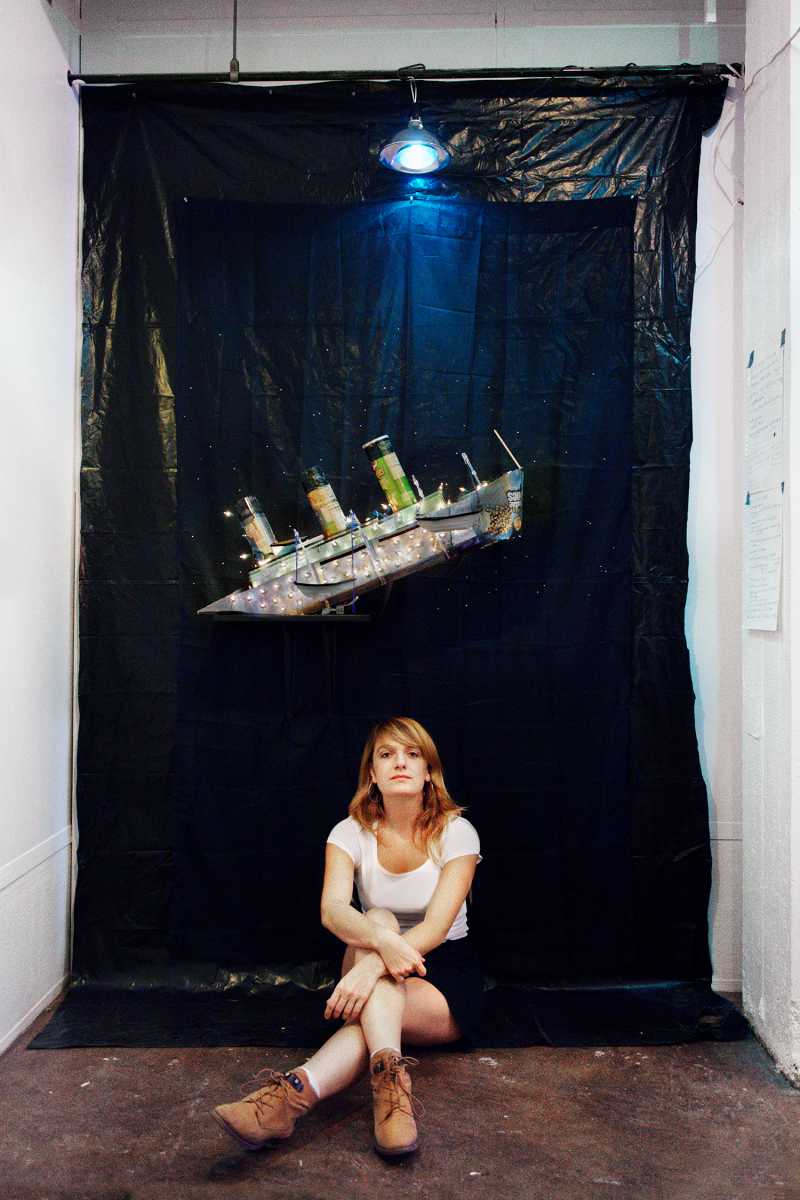
“I would always play Rose. I would work with no budget. I would work with recycled materials and make all the special effects by hand. All of the cast would change, all the time, so I would be able to film it in Chile and the United States,” she recalls.
Having grown up in Chile and now settled in New York, Bitrán mined the talents of family and friends to play the roles, with the character of Jack being portrayed by a multitude of actors. Her family, in particular, was well represented.
“Oh, my father, brother, sister, all my cousins, my grandfather, my great great uncle,” Bitrán rattles off. “My mom, grandmother, my other cousins from the other side, and all my other second-line uncles too. And all my nephews and younger cousins!”
We wondered what the family thought about the project when Bitrán first informed them of her plan.
“My family is pretty humorous,” she says. “They love playing. They like impersonating and making fun of things, so at first, it was very funny to them. But then I think they got a little worried after three or four years in. They were wondering when I would finish this because it was kind of becoming this overarching theme of my life.”
But, she continues, “I think now, after 12 years, they’re so involved in the project and invested in it that they, and I, started to understand that it was more than a project that needed to be finished, but more of an interest of life, you know?”
Musician Raimundo Atal, who has been friends with Bitrán since high school, muses that “the Titanic is just an excuse in a sense to to connect to people, to do, you know, magic in the world. It’s a lot about those connections, the human connections that happens through her work.”
In addition to film and video creation, Bitrán is a painter, dancer, and animation artist whose work explores diverse subjects but overlaps in interesting ways, with themes of vulnerability and failure linking much of her work.
“I’m dealing with failing in the greatest way,” she muses. “I like the idea of imperfection. It is kind of an impossible mission to remake something that grandiose, to remake something so perfect.”
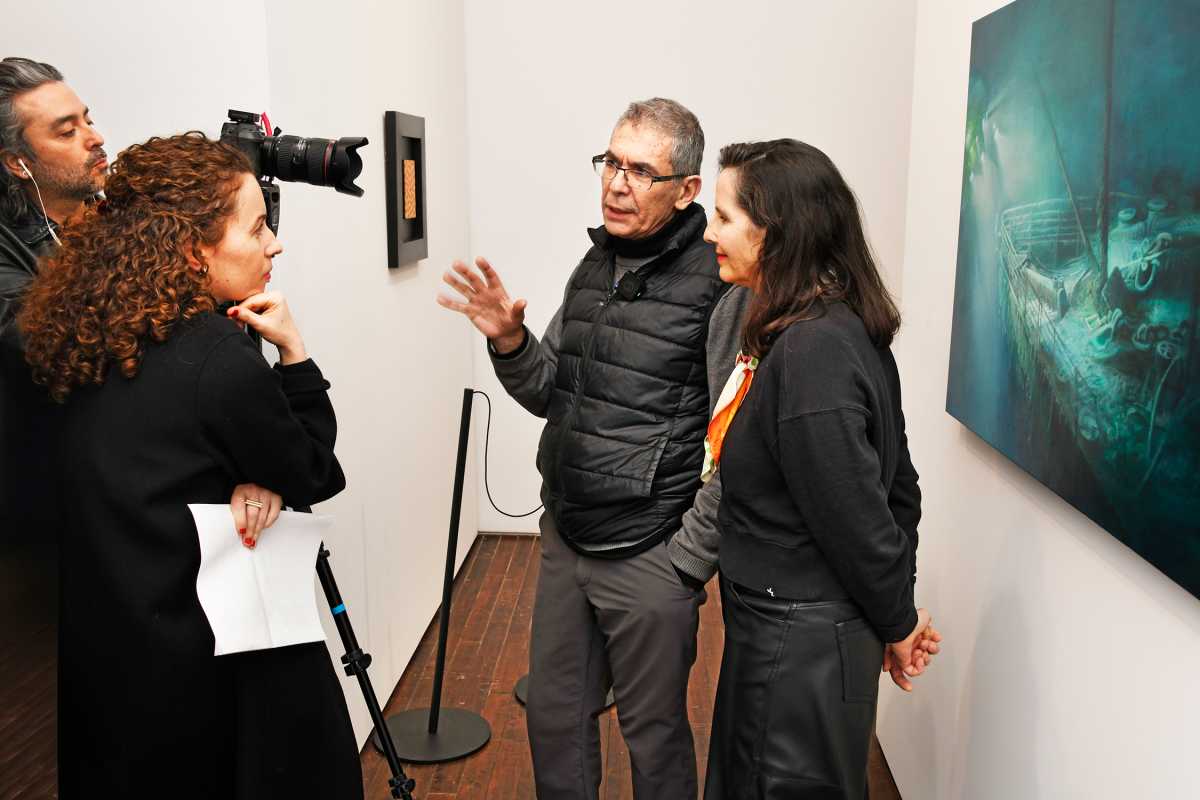
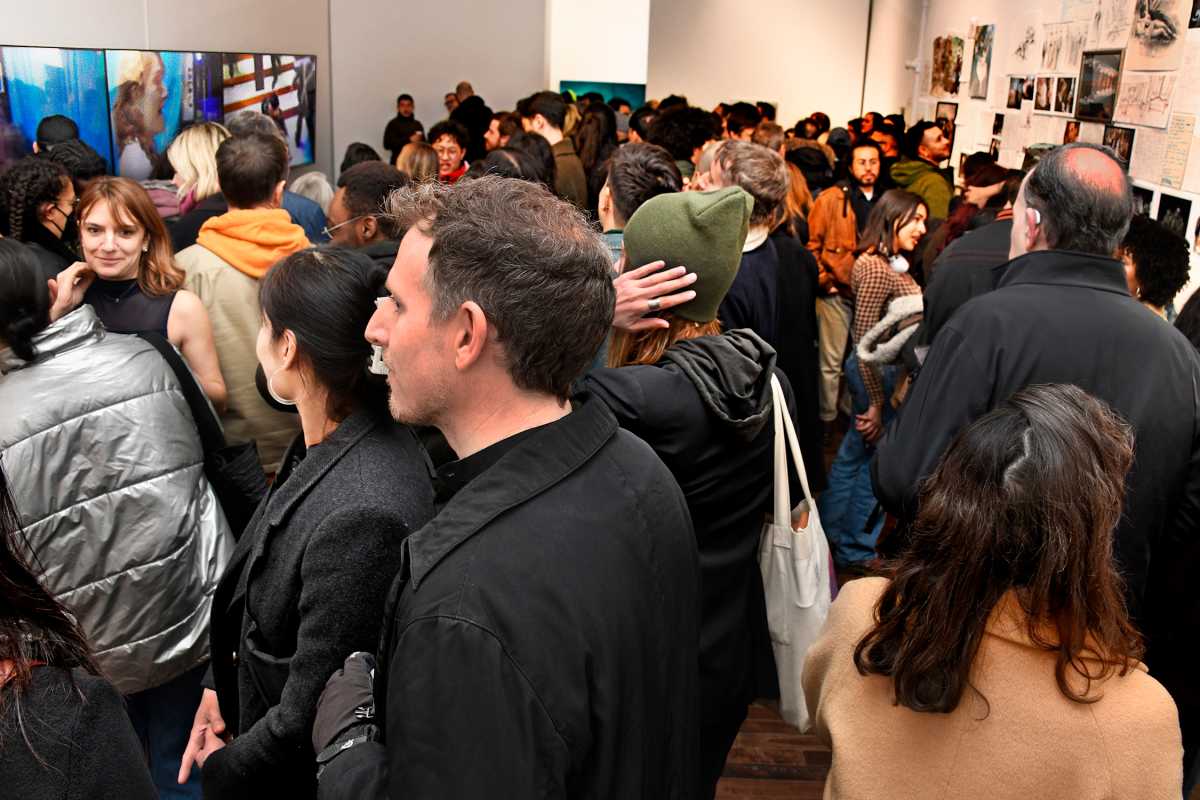
Candace Moeller is the director of the Cristin Tierney Gallery, where Bitrán’s film is currently being screened alongside paintings, a collage of props, backdrops and storyboards that were part of the process. She says that she “first learned of Claudia’s project, ‘Titanic, A Deep Emotion” in May 2015 and was immediately obsessed.”
Moeller adds that “what is remarkable about Claudia’s artwork is that it manages to give new life to that story while being wholly unique, and it invites that same level of fandom. I’m betting that 30 years from now, I will remember clearly the first time I got to screen it.”

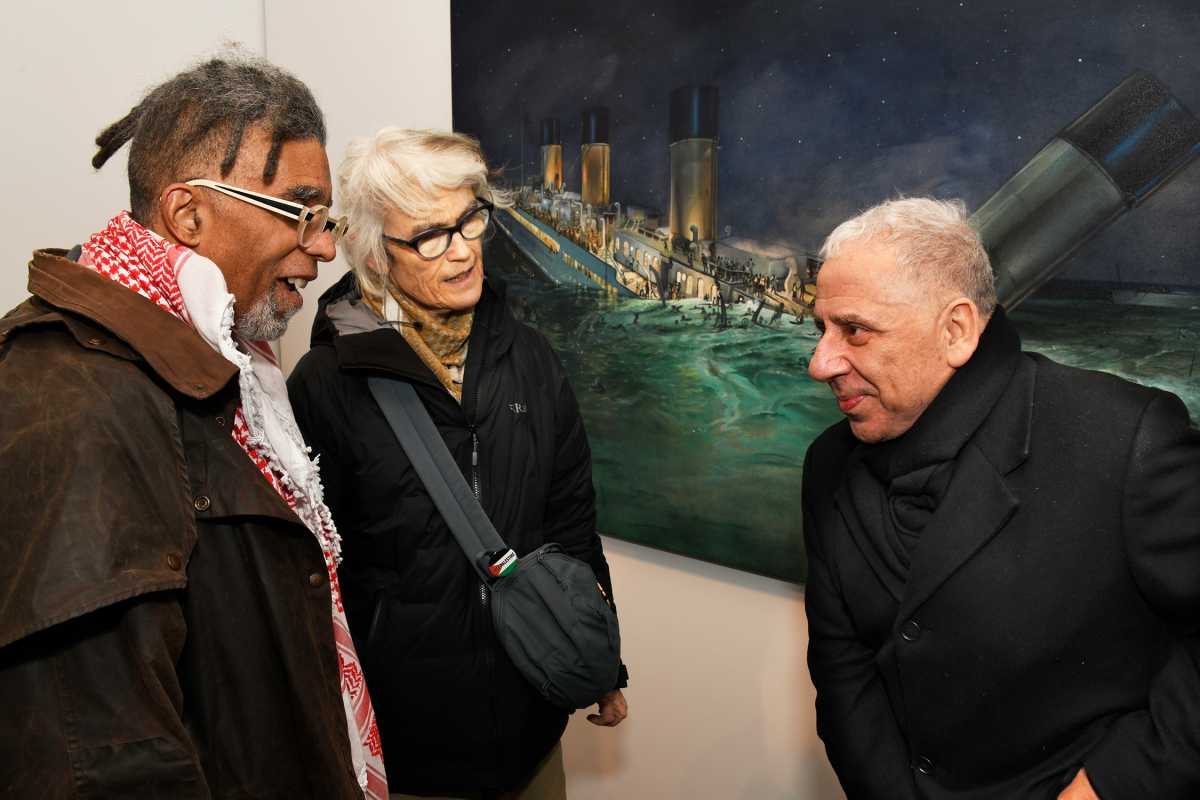
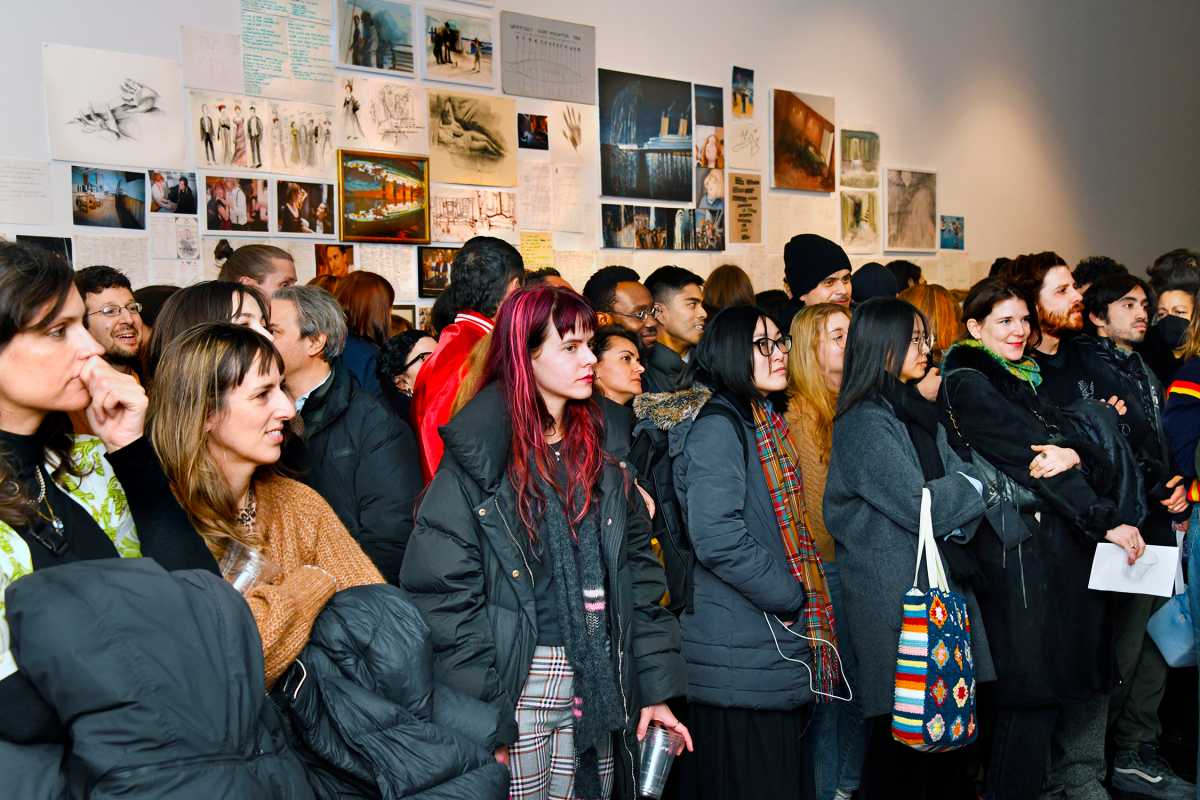
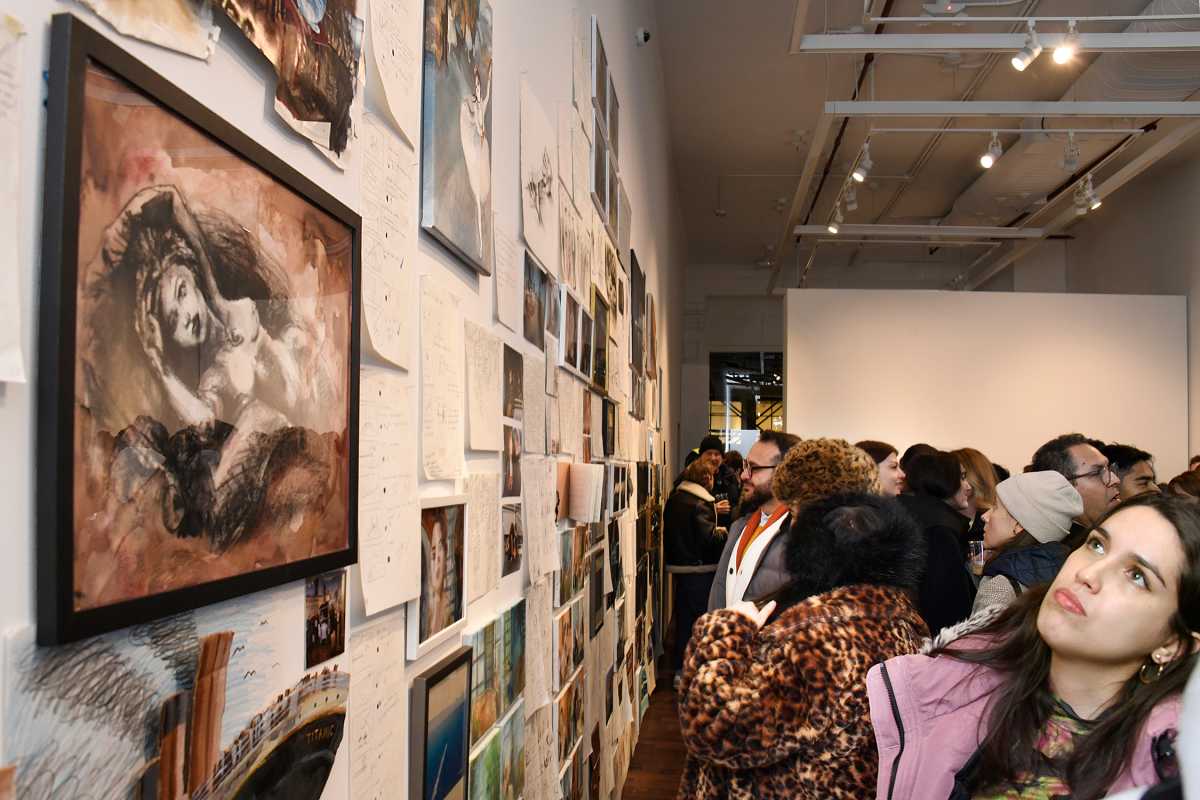
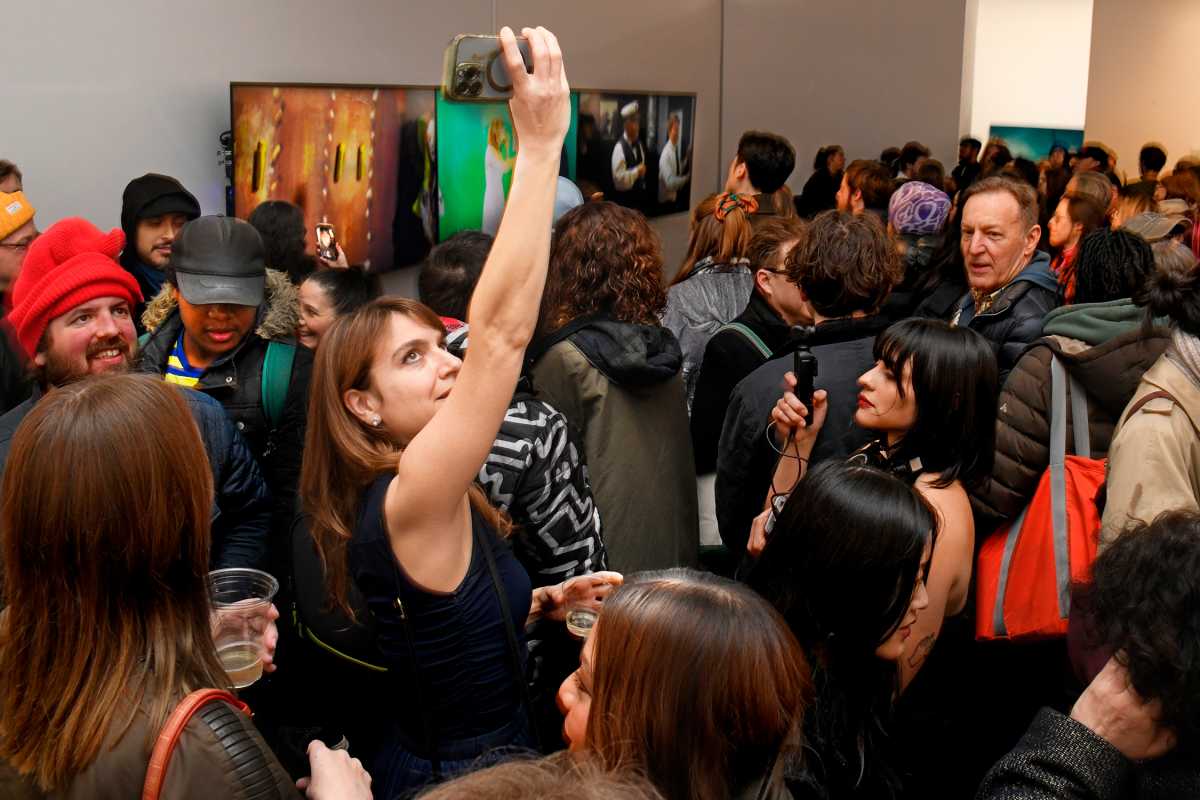
Bitrán filmed half of the movie in Chile and half in the US, shooting everywhere from tabletops to backyard swimming pools to a takeover of a disco in Santiago, Chile.
“We basically made trompe l’oeil paintings inside the entire Club Ambar to transform it to make it look like the grand staircase of the Titanic,” she recalls.
At the Bemis Center for Contemporary Arts in Omaha, she built giant icebergs out of styrofoam as well as a sliding cardboard ship filled with lights.
Rachel Slakter, a creative director and one of the editors at GUTMAG, was thrilled to be part of the film. Pointing to a storyboard image of a falling chimney, she proudly proclaimed, “That was me — I played the chimney! It was so much fun, it was the role of a lifetime!”
It’s possible, though, that nobody had a better time working on the movie than Bitrán.
“I really enjoy doing all of the parts of the film,” she says. “I so much love drawing and doing the shot lists, as you can see in the show. I love making the props. I love making the costumes. I love emailing friends and putting groups together and asking them what they want to do and stuff like that. And then I also really enjoy the part of film directing and being there on site with people and having a blast. And then I really enjoy the sort of sitting down and looking at the footage and the editing part. And then I love to install the work!”
This may be why Atal remarked that “it will never be finished!”
Bitrán actually concurs, noting that this is one version but there may be others as she envisions filming new scenes and creating alternates.
“This version is finished,” she says, “but I think I’m gonna keep filming forever and just keep adding to it.”
Claudia Bitrán’s website is claudiabitran.com; a new book about the project will be available there soon. You can also check her out on Instagram @claudiabitran.
Information about the show can be found at cristintierney.com. Also in the works is a documentary about the making of the film, which is currently seeking contributions.