

Travelers already pay a growing stack of mandatory fees just to get to New York and New Jersey airports. The Port Authority’s latest vote will push them closer to the breaking point. Just in time for the holidays, the Port Authority has approved a new hit to travelers’ wallets — doubling the airport access fees passengers already pay to take an Uber, Lyft, or car service to and from John F. Kennedy International Airport, LaGuardia Airport, and Newark Liberty International Airport. For many New Yorkers and suburban travelers, this is not a discretionary charge or a policy abstraction. It is another unavoidable fee added to trips that are already expensive, complicated, and difficult to avoid.
Under the plan, for-hire vehicle (FHV) airport access fees would increase from $2.50 to $3.50 for both pick-ups and drop-offs beginning March 15, 2026, with an additional $1 increase in March 2027; and another 50 cents in March 2028. Ultimately this will turn what was once a marginal charge into a mandatory $10 round-trip fee for anyone who relies on a car service to reach the airport. That $10 does not exist in a vacuum. It comes on top of congestion pricing charges, MTA surcharges, tolls, and other required add-ons that have steadily piled onto airport trips. For families, workers, and travelers already stretching to afford air travel, the Port Authority’s plan represents yet another push toward an affordability tipping point.
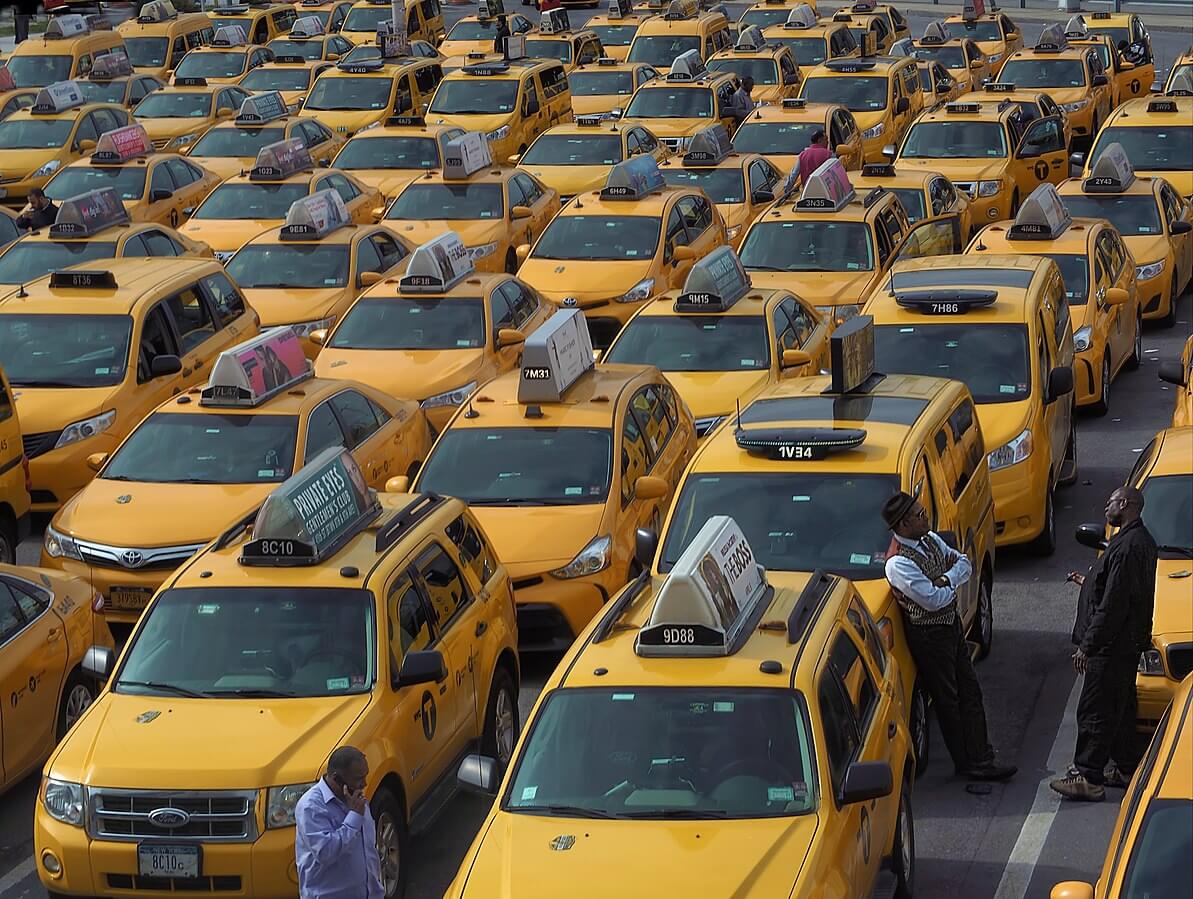
Yellow taxis, by contrast, will continue to pay no fee for airport drop-offs. Their pick-up fee will rise modestly, from $1.75 to $2.00, with two additional 25-cent increases scheduled for 2027 and 2028. The result is a two-tier system for travelers — those with easy access to plentiful taxis face little or no added cost, while everyone else absorbs the full impact of the fee hike. This disparity matters because transportation choices are not evenly distributed. Manhattan riders often have multiple options, including yellow taxis and direct transit connections. Travelers from the outer boroughs and suburbs frequently do not. They rely on FHVs because they have no practical alternative — and, under this proposal, they will pay more simply because of where they live.
Many industry advocates and trade organizations warn that the Port Authority’s approach shifts the burden onto working- and middle-class travelers while offering no clear explanation for why some riders are favored over others. Furthermore, a lack of transparency raises even more questions about fairness. The University Transportation Research Center, a federally-funded research consortium at City College of New York, has urged the Port Authority to pause the increase until more data is made public. According to the center, airport access fees should be tied to actual usage, congestion impacts, and operational costs. Without that data, travelers are being asked to pay more without a clear understanding of why.
Compounding the problem is the persistence of illegal, unlicensed airport operators who pay no airport fees. These operators continue to solicit airport trips and advertise online while carrying no commercial insurance and paying nothing to the Port Authority. As fees for legitimate services rise, more cost-conscious travelers may be pushed toward unregulated alternatives, putting public safety at risk and undermining airport revenue.
So, who ultimately pays for the Port Authority’s proposal?
- Not travelers who can easily hail a yellow cab.
- Not illegal operators who avoid fees entirely.
- Not the Port Authority itself, which continues to advance its capital plans.
The cost will fall on travelers with the fewest alternatives — those in the outer boroughs and surrounding suburbs who already face higher transportation costs and longer travel times. For them, this is not just another line item on a receipt. It is another step toward making airport travel unaffordable. Airport access fees should be fair, data-driven, and transparent. Without that, the Port Authority risks turning routine travel into a luxury — and giving travelers coal in their stockings this holiday season.
Matthew Daus is the transportation technology chair for the University Transportation Research Center, Region 2 (NY/NJ) at the City University of New York