


A crackling intensity radiates from Aboudia’s canvases, announcing an artist who refuses to dilute the world he has inherited or the world he envisions.
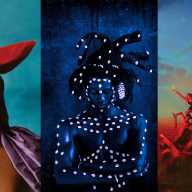
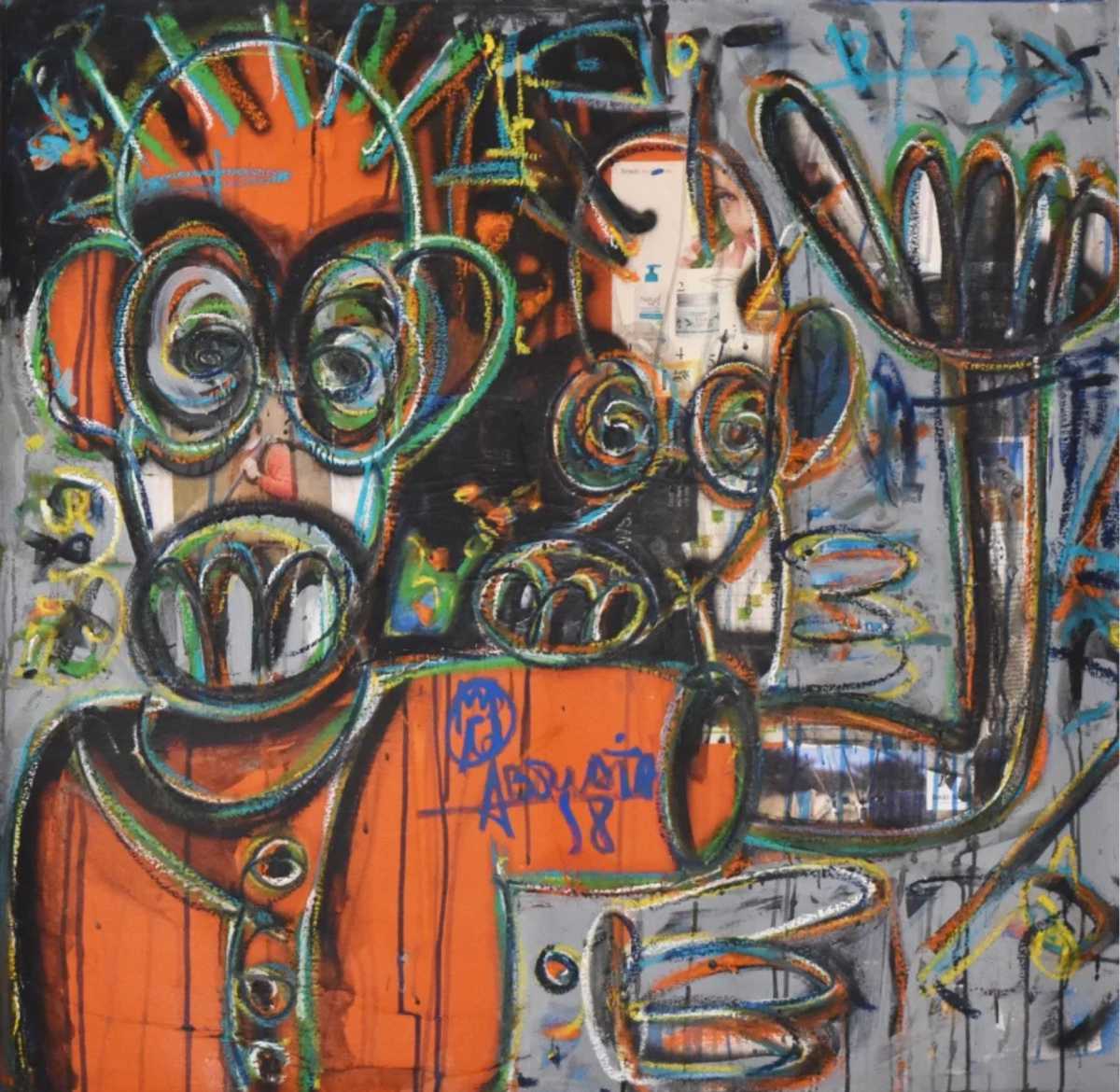
His work carries the unmistakable heat of lived experience—urgent, unvarnished, and electrified by a cultural consciousness that rarely grants the luxury of distance. Aboudia does not depict his environment from afar. He inhabits it, metabolizes it, and returns it to the viewer with a fervor that feels inarguably intimate and oddly incendiary. His 2021 painting Nouchi Graffiti en Verte (36 x 36 in.) demonstrates this force with astonishing clarity, functioning less as a static image and more as a volatile field of vision where memory, conflict, humor, and exuberance continuously collide.
Aboudia constructs his compositions through layers that operate like emotional strata. Each surface thrums with simultaneity. Soldiers, skulls, talismans, children, street relics, and fractured gestures surge forward only to be overtaken by new forms and interruptions. This perpetual motion refuses the comfort of a single narrative, because the world from which these images emerge refuses simplicity. What stops a viewer in their tracks is the strange, exhilarating harmony that arises from such disorder. The paintings remain overwhelming not because they lack focus, but because they insist that focus itself must remain mobile. They feel alive, volatile, and fiercely sincere.
The material components heighten this effect. Aboudia incorporates comic strips, diaspora advertisements, newsprint, and media residue with an exactness that transforms cultural debris into critical infrastructure. These fragments behave like visual fissures, revealing the pressures of globalization, the seduction of Western mass media, and the unyielding presence of local identity.
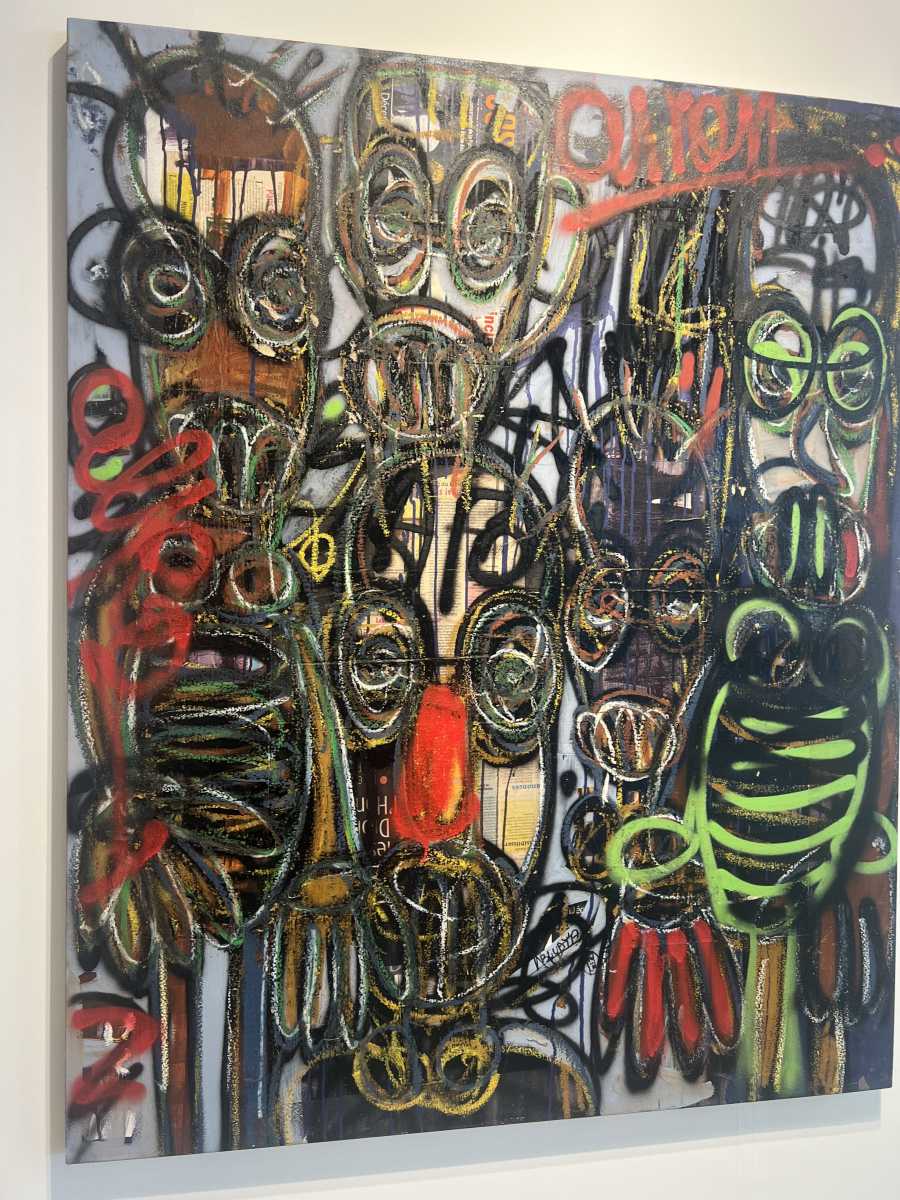
This technique evokes the iconographic density of Basquiat and the conceptual daring of postcolonial African modernism, yet Aboudia escapes imitation through the emotional truth that anchors his decisions. Curiously, each fragment carries its own psychic vibration. The collaged edges do not merely disrupt the viewer; they redirect consciousness.
Color becomes the work’s atmospheric accelerant. Aboudia deploys neon greens, volcanic reds, corrosive yellows, and dense blacks with the instinct of someone who understands that color is a temperature, not an ornament. These hues radiate urgency, abrasion, exhilaration, and revelation. Viewers feel the color before they interpret it. The message lands in the body first. This sequence is intentional. Aboudia insists that emotional truth deserves primacy over theoretical distance.
The humanity within these works is what ultimately charges them with such staying power. Aboudia paints children with a tenderness that counters the brutality of their surroundings. Their faces flicker between vulnerability and knowing, embodying the precarious equilibrium between innocence and survival that defines so much of the global South’s contemporary reality.
These children are never symbolic placeholders. They serve as the emotional counterpoints to the canvas. Their presence becomes a quiet, stubborn act of defiance. Their insistence on remaining visible becomes the work’s most unexpected source of warmth.
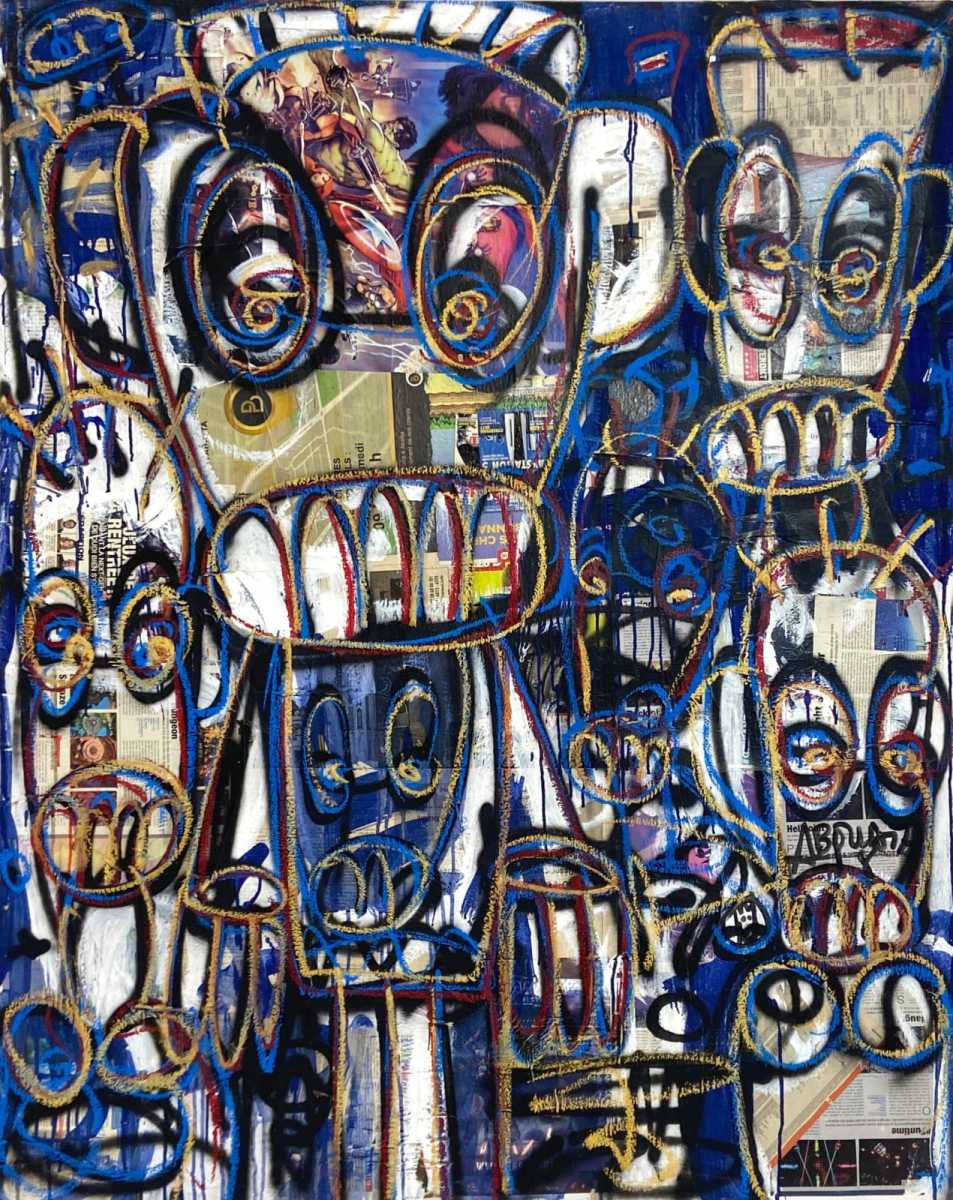
Nouchi Graffiti en Verte crystallizes these characteristics with remarkable precision. The canvas behaves like a threshold between the psychological and the sociopolitical. Personal memory merges with collective trauma. Street culture intersects with ancestral ritual. Humor shares oxygen with existential threat. The painting captures the rhythm of a society that evolves through improvisation and resilience rather than stability. The viewer is not granted the luxury of passive observation. The painting asks for participation, for emotional engagement, for a willingness to inhabit complexity.
As if a magician, Aboudia’s greatest achievement lies in his ability to transform volatile cultural turbulence into coherent form without extinguishing its emotional fire. His compositions do not sanitize chaos. They reveal its architecture. The paintings embody the reality that beauty, pain, and vitality are not adversaries. They are interdependent forces, each heightened by the presence of the others. This recognition allows Aboudia to convert trauma into rhythm, fragmentation into narrative energy, and volatility into aesthetic vitality.
Hope appears throughout the work in a manner that feels oddly understated and unexpectedly potent. It does not arrive as sentiment. It arrives as endurance. It arrives through children who refuse erasure, symbols that refuse obsolescence, colors that refuse quiet. Hope becomes the sustaining hum beneath the canvas, a quiet force that insists on renewal despite the conditions that threaten it.
Aboudia’s paintings occupy a rare space in contemporary art: they function as documentation, prophecy, and emotional testimony all at once. They articulate the political and psychological stakes of modern Africa while illuminating the generative power that emerges from its contradictions. His vision is not a chronicle of collapse. It is a chronicle of survival, imagination, and cultural tenacity.
Now on display at Ethan Cohen Gallery.