


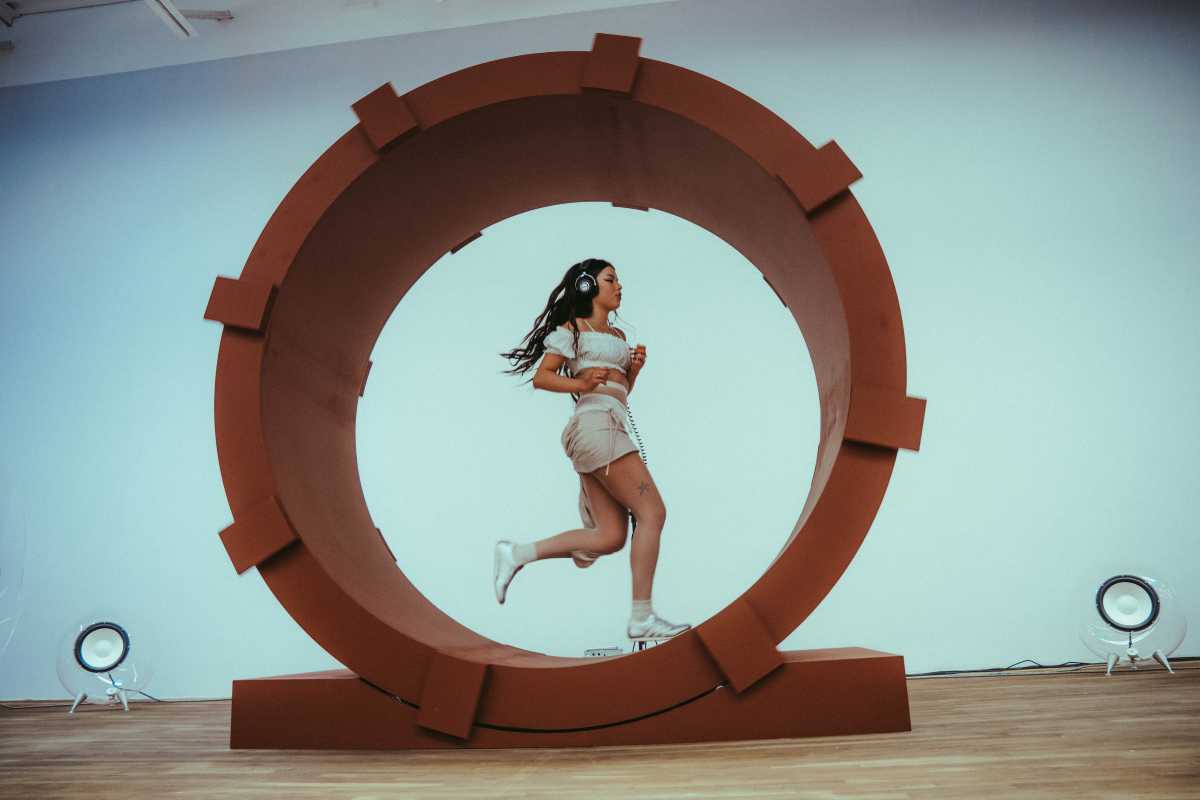
There is something very Old New York about a young woman putting herself on the line—literally—and daring the city to keep up. Not the nostalgic, sepia-toned New York of postcards and penthouses, but the one with bite: downtown after dark, sweat and bravado, art that doesn’t ask permission and music that doesn’t wait its turn. That is where Lexa Gates lives right now, and Her on the Wheel—the durational performance staged at Jeffrey Deitch—felt like a perfectly tuned provocation to a city that still understands nerve.
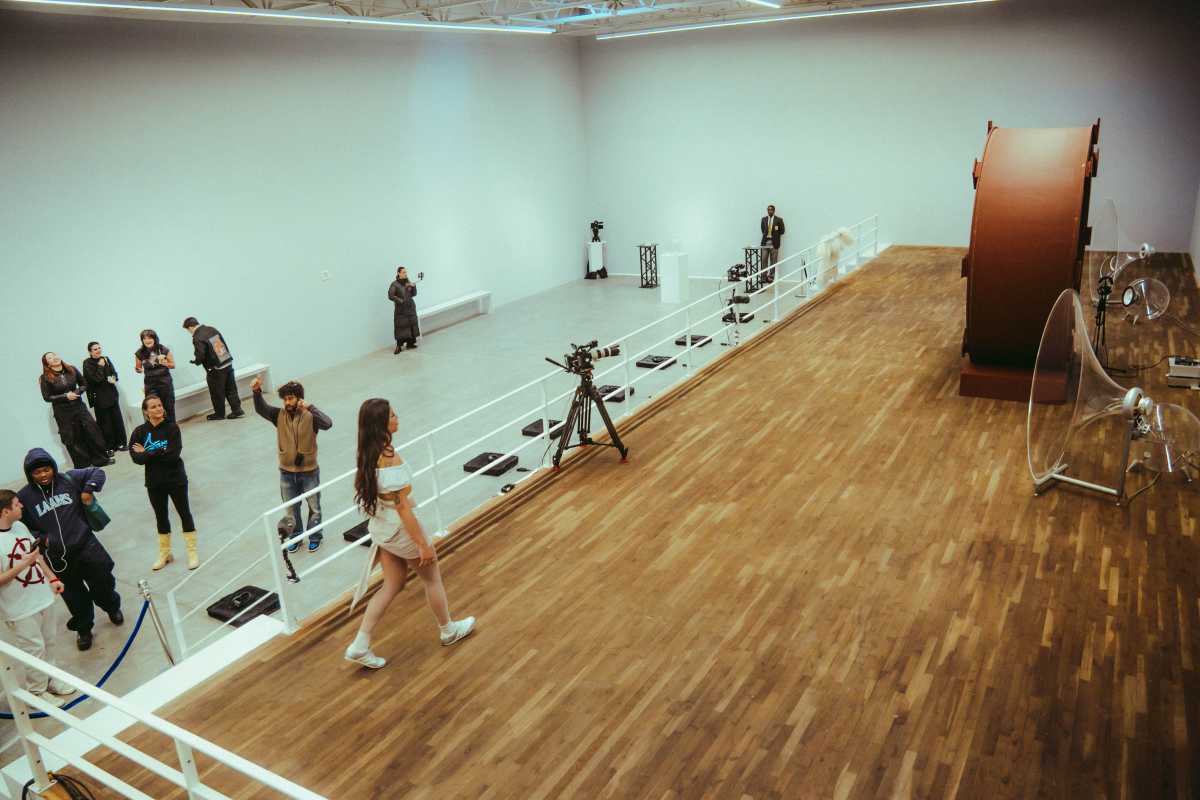
The premise was disarmingly simple and quietly brutal. For ten hours, from afternoon into midnight, Gates remained in motion on The Wheel, a custom-built, human-scale installation designed for endurance rather than spectacle. No gimmicks. No exits. Just repetition, time, and the slow exposure that happens when the body outlasts the performance and becomes the work itself. The piece unfolded ahead of the release of her sophomore album *I Am**, and functioned less as promotion than embodiment.
Gates has always understood that presence is her sharpest instrument. Critics have struggled to pin her down, resorting instead to admiring comparisons—tart, infidelity-obsessed ’90s R&B, lo-fi soul-leaning hip-hop, a trace of mid-century whimsy—yet none of that quite captures the thing she does best. She makes confidence look casual. The New York Times called it offhand. Billboard called it refreshing. Office Magazine called it undeniable. All true. None sufficient.
The Wheel made that clarity unavoidable. Watching Gates move through hours of repetition, the performance slipped somewhere between ritual and rehearsal, between art installation and lived metaphor. Cycles never really end. Careers do not progress in straight lines. Identity is not revealed all at once. The body learns before the mind catches up. What could have felt precious instead felt grounded, stubborn, and strangely generous. The audience came and went. Gates stayed.
That insistence runs directly through I Am, an album that plays with autobiography without indulging in self-mythology. Named for her legal name, Ivanna Alexandra Martinez, the record reads like a diary written with restraint rather than confession. Tracks like “I Don’t Even Know,” “Estranged,” and “Nothing to Worry About” move through love, ambition, solitude, and momentum with a conversational flow that never begs for sympathy. Gates raps and sings the way New Yorkers talk when they trust you—measured, cutting, occasionally funny, always precise.
Her ascent has been anything but accidental. A Colombian–Puerto Rican artist raised in Queens, Gates left school at fifteen and taught herself how to record at home, building a career with the kind of stubborn independence the city respects. Her debut album Elite Vessel charted, her first headline tour sold out, and her performances—especially the earlier durational piece Alone (In The Box)—racked up hundreds of millions of views without flattening her into a viral curiosity. Even the co-signs, from SZA to Aminé, feel earned rather than engineered.
What makes Her on the Wheel resonate is how seamlessly Gates collapses categories. Music becomes performance art. Performance art becomes autobiography. Autobiography becomes discipline. This is not the kind of conceptualism that hides behind theory. It is physical, legible, and quietly confrontational. You feel it in your knees after standing too long. You feel it in the hours slipping by. You feel it in the realization that endurance itself can be expressive.
That synthesis feels especially New York right now. A city once known for sharpening artists through friction has spent years sanding down its edges. Gates resists that smoothing. She restores a sense of risk, humor, and refusal that recalls an earlier downtown lineage—one where artists showed up, stayed too long, and trusted the work to speak.
By the time The Wheel finally stopped, the point had already landed. Lexa Gates is not interested in disappearing behind mystique or shouting for attention. She keeps moving. The city watches. The cycle continues.
@LEXAGATES
@JEFFREYDEITCHGALLERY