


Half a century in the oven, still a bit underbaked
It has taken nearly 50 years for “The Baker’s Wife,” Stephen Schwartz and Joseph Stein’s notoriously troubled 1976 musical, to receive a full professional New York staging. When Classic Stage Company first announced the Off-Broadway production, it generated mild curiosity among musical-theater diehards. But it became genuinely newsworthy only later, when Oscar winner Ariana DeBose and Scott Bakula signed on, suddenly giving this long-struggling show the kind of spotlight it has never enjoyed.
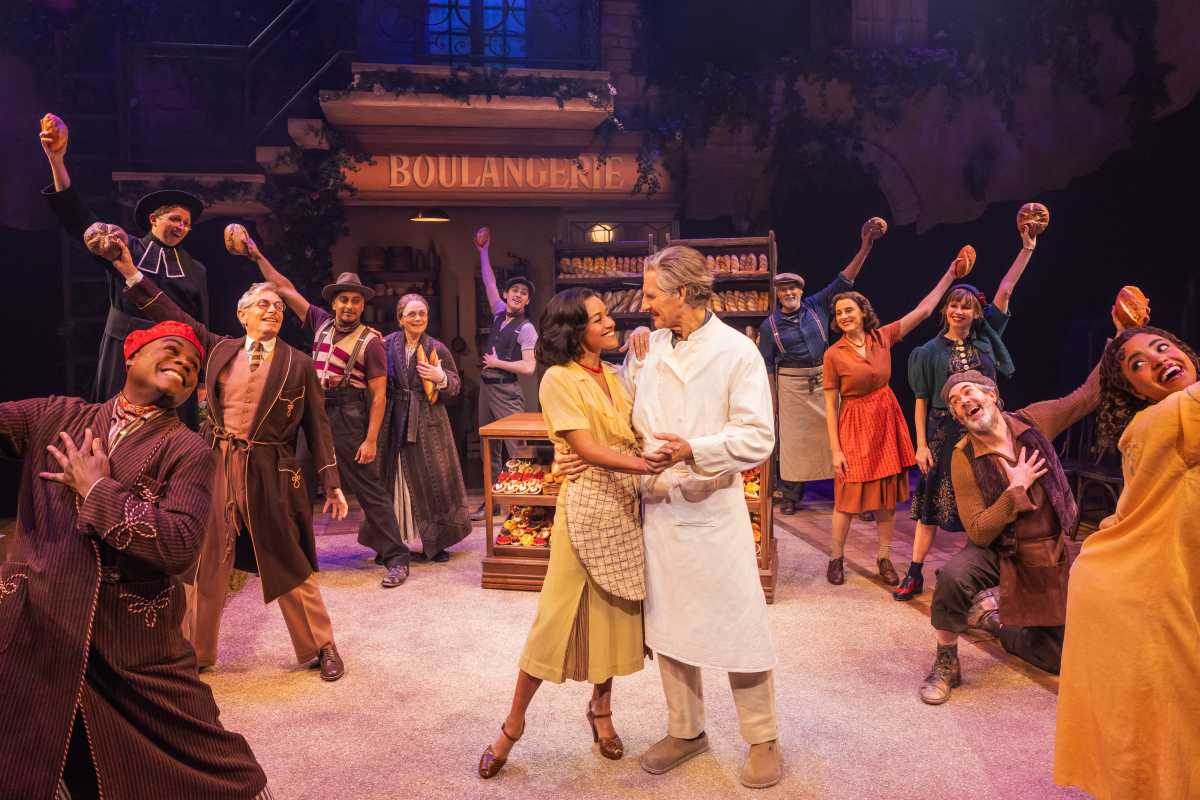
Experiencing the musical at CSC, on a stage transformed into a lovingly crafted village square, one quickly grasps both its charms and its chronic limitations. Before the performance officially begins, villagers already populate the space — gossiping, smoking, playing games — a touch that reflects director Gordon Greenberg’s long relationship with the musical, which he has shepherded through multiple revisions over two decades. He clearly believes it benefits from intimacy and atmosphere, and CSC’s theater-in-the-round configuration, ringed by balconies, stonework, and café tables, proves an ideal canvas.
The plot, adapted from Marcel Pagnol’s 1938 film “La Femme du Boulanger,” is straightforward. After weeks without a baker, the quarrelsome residents of Concorde are thrilled when Aimable Castagnet (Bakula) arrives with Geneviève (DeBose), his much younger wife. Their marriage instantly becomes a subject of fascination. When Geneviève yields to the attentions of Dominique, a young and handsome driver (Kevin William Paul), she runs off with him, leaving Aimable too broken to bake. Deprived of their daily bread, the villagers must finally unite to bring her home.
At the center of this fable lies a small, tender musical about longing, insecurity, and forgiveness. But “The Baker’s Wife” repeatedly diverts itself with broad comic business involving thinly sketched villagers. Even with CSC’s impressively strong ensemble, these sections feel padded, and the songs for the townspeople rarely match the emotional depth of those written for the leads. A celebratory number about rediscovering fresh bread, performed with such ecstatic abandon that it resembles a collective erotic awakening, goes so far over the top that it disrupts the show’s already fragile tonal consistency.
The actors playing the various villagers work hard to give their characters dimension and distinctive identity. Judy Kuhn brings warmth and weary wit to Denise, the café owner who opens the show with the lovely folk-style solo “Chanson.” Robert Cuccioli and Manu Narayan create sharply etched portraits of domineering husbands, and Sally Murphy traces a quietly powerful arc as Hortense, using silence more effectively than most performers use monologues. But despite their best efforts, the material simply doesn’t support the weight they’re trying to give it, and the villagers’ scenes never add meaningful dramatic momentum — a problem that has dogged the show since its inception.
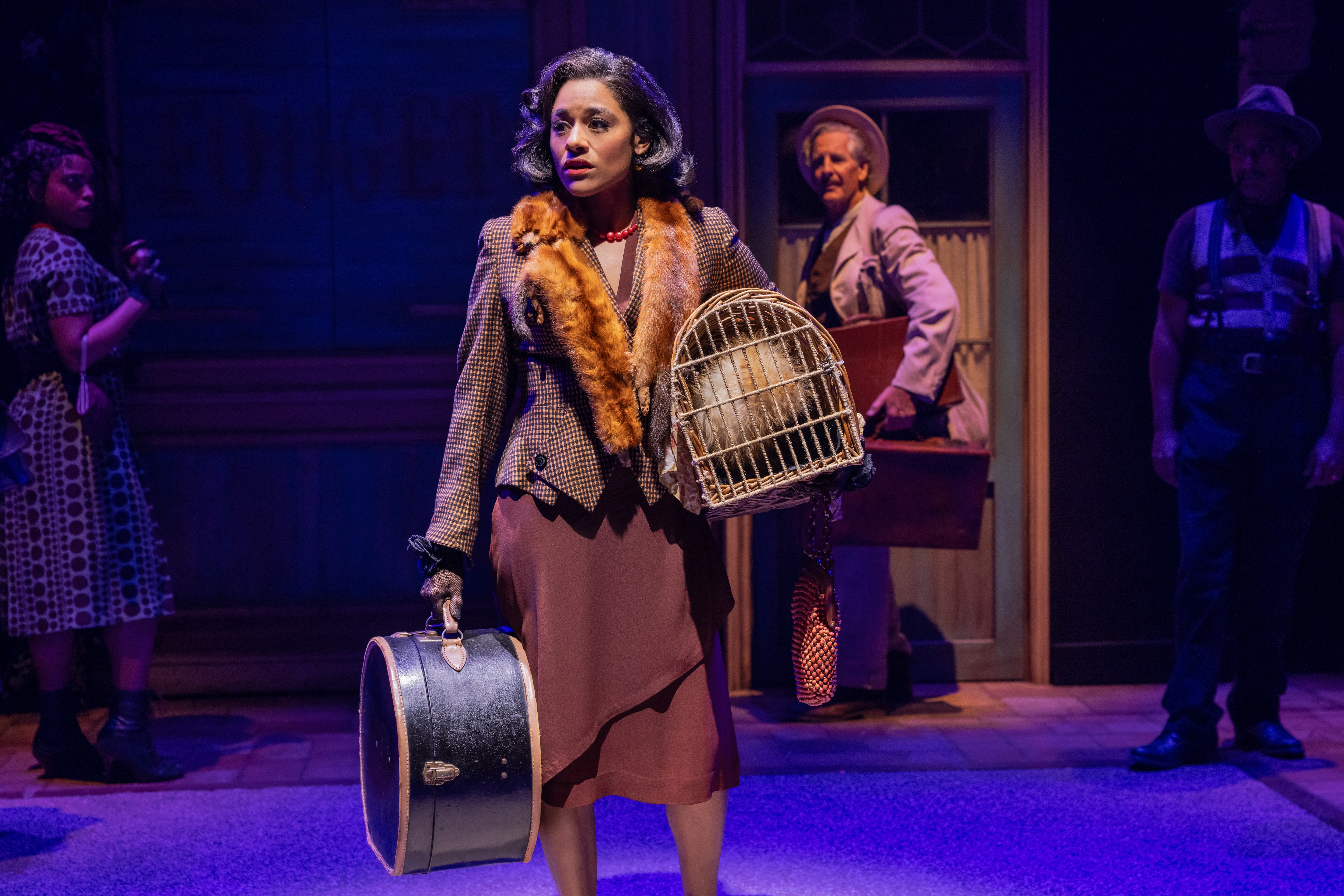
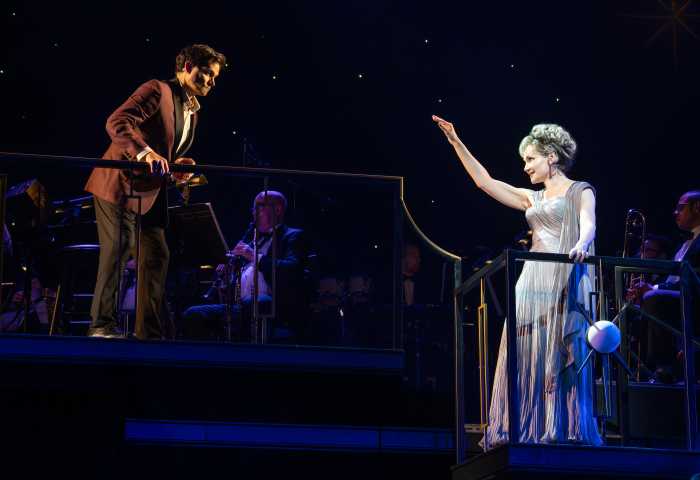
The production gains focus whenever it returns to the triangle of Geneviève, Aimable, and Dominique. Schwartz placed his most affecting writing here, especially in “Meadowlark,” the ballad that long ago escaped the musical to become a cabaret standard. In the song, Geneviève retells a childhood fable about a meadowlark tempted by a sun god — a metaphor for her own conflict between stability and passion. The number clarifies her emotional turmoil with a sweep and release the surrounding book scenes never quite achieve. DeBose delivers it with restrained clarity, treating it as a moment of reckoning rather than pure vocal display.
Bakula brings gentle dignity to Aimable, a man whose late-in-life romantic optimism makes him vulnerable in ways he barely understands. His physical vigor shifts the expected dynamic — a robust baker instead of a bumbling figure — yet his emotional transparency still grounds the role. Paul’s Dominique reads less as a cad and more as an impulsive young man swept up in his own desires.
Yet even after decades of rewrites, “The Baker’s Wife” still wavers between ensemble fable and intimate domestic drama. The result is a musical with an undeniably beating heart but an uncertain frame. A Broadway transfer seems unlikely, but a cast album from this company could finally give the show a durable identity and offer a firmer foundation for future professional and amateur productions.
At CSC, “The Baker’s Wife” emerges as a beautifully crusted loaf with an inconsistent center: intermittently lovely, intermittently strained, and most affecting when it allows its central characters to guide the story. And in those brief moments — Geneviève singing to an imagined bird, Aimable reaching toward forgiveness — the musical becomes the tender adult romance it has always aspired to be.
Classic Stage Company at Lynn F. Angelson Theater, 136 East 13th Street, classicstage.org. Through Dec. 21.