

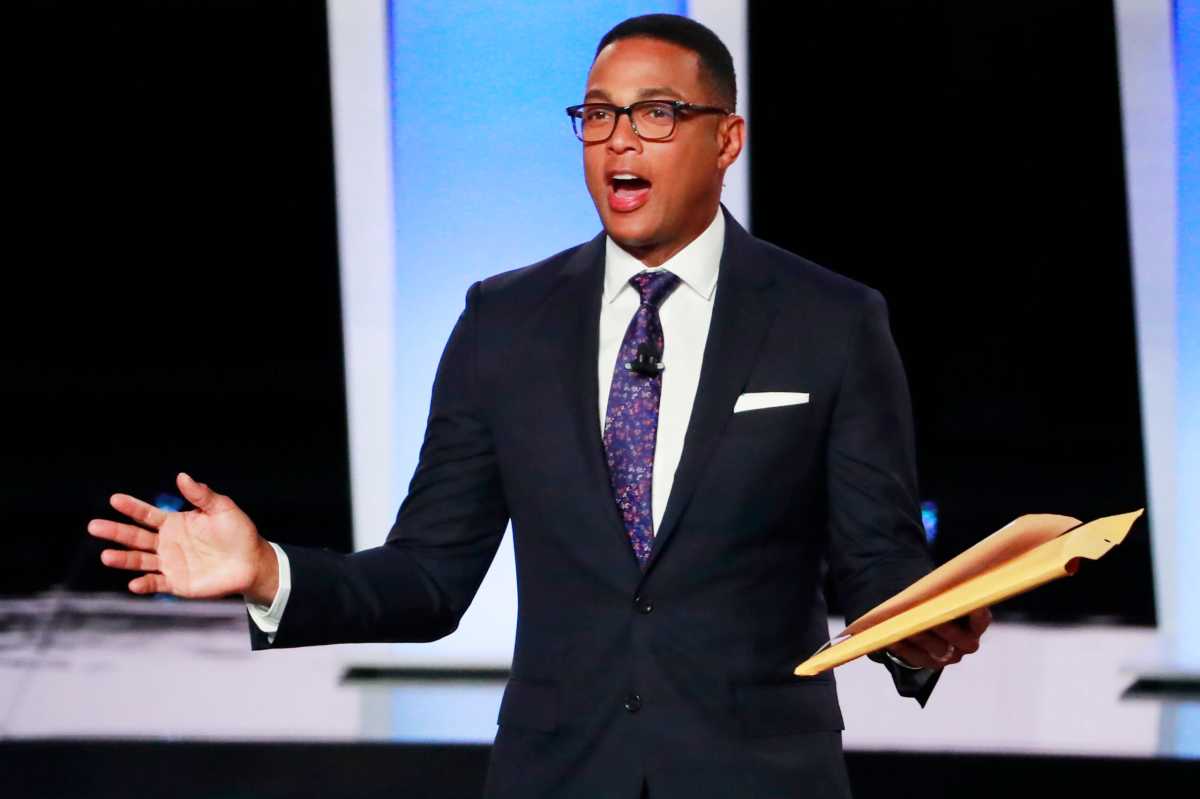
I watched the news of former CNN anchor Don Lemon’s arrest with a sinking sense of familiarity. While his alleged offense was simply asking questions inside a Minneapolis church while covering an anti-ICE protest, his arrest came days later in the form of an unnecessary predawn raid at his hotel in Los Angeles.
Watching it, I felt the specific anguish that comes with such performative cruelty. I know that moment, because I have lived it. Lemon and Georgia Fort, a local journalist, were among nine people who were charged after a federal grand jury indicted them for essentially interfering with the church gathering.
I do not argue against the merits of the charges themselves. However, it is telling that three judges initially refused the FBI’s request to arrest Lemon and his co-defendants. To circumvent this judicial rejection, the Justice Department secured an indictment to force the arrests anyway. This was not an isolated overreach.
In January, the FBI executed a similar predawn search at the home of Washington Post reporter Hannah Natanson. Whether the search of Natanson’s home was legitimate or the charges against Lemon were valid is beside the point. My concern is the tactical chilling effect of invading a private home to enforce the law.
What is the purpose of an early morning arrest or search? Fear and intimidation.
After 50 years in the criminal justice system, I have learned that for many in law enforcement, a high-profile raid provides a rush expressed by Robert Duvall’s character in “Apocalypse Now”: “I love the smell of napalm in the morning. Smells like victory.” They revel in the moment of degradation — the handcuffs, the “perp walk” past neighbors, colleagues and cameras. The more media coverage the arrest generates, the more it smells like victory.
I recall the first time I saw this thirst for spectacle firsthand.
It was the late 1970s, and I was a prosecutor. I had secured an indictment against Jimmy “Nap” Napoli, a known Mafia figure, and his associate, Joseph Tuseo. Our in-house investigators had barely touched the case — I had built it with an outside agency — yet they were eager to claim the collar.
The night before the arrest, I met with the office brass: Special Prosecutor John Keenan, his chief of staff, and Chief Investigator Richard Condon. When Keenan asked how I wanted to handle the surrender, I didn’t hesitate.
“Let me call Napoli and Tuseo,” I said. “I’ll tell them to surrender in the morning. They aren’t going to run.” Keenan pulled me aside. “You’ve got to let the investigators have their moment,” he told me. “They want to hit the homes at 5 a.m.” I responded, “Napoli has a wife and a small child, and there is no need to create such anxiety.” I was overruled, and a dozen of our investigators swarmed Napoli and Tuseo’s homes before dawn. What did it accomplish? Nothing. I have never forgotten that moment.
In 2008, the tables turned. I was arrested in my own office, alongside a 27-year-old associate attorney. Nearly a dozen Drug Enforcement Agency and Department of Justice agents swarmed the suite, ordered my staff out, and forced us to sit in handcuffs while they effectively vandalized the place. They stripped the office of every piece of electronics, computers, and even the internal components of the copy machine. They intentionally paralyzed my law practice.
Had they provided me with an order or subpoena to produce my computers and phones for examination, I would have complied. Instead, we were paraded —handcuffed — through the lobby of the building so that all present could see us in our humiliation.
Turning back to Don Lemon, one must ask: Was Lemon a flight risk? Would a recognizable journalist have fled the country if asked to surrender or produce devices as a result of their reporting? Of course not. Nor would a Washington Post reporter or a local news reporter from Minnesota.
The cruelty of these predawn raids was political. It was a flagrant attempt to intimidate the press, a tactic that chills First Amendment rights. Inflicting such performative harm is a hallmark of authoritarian regimes seeking absolute control. It has no place in our justice system.
I am not solely singling out the present administration, its Justice Department, and Homeland Security, though all have demonstrated a vindictive streak in punishing perceived “enemies.” No, this is a systemic failing of law enforcement that fosters a culture that prioritizes shock value over justice, with no regard to consequences.
We eventually stopped using napalm in war because we realized the lasting devastation outweighed any tactical gain. It is time we applied that same lesson to our own justice system. Performative, predawn raids must end.
Robert Simels is a former attorney who now hosts the podcast “Injustice for All”