

It looks like there may be some clouds in Starbucks coffee.
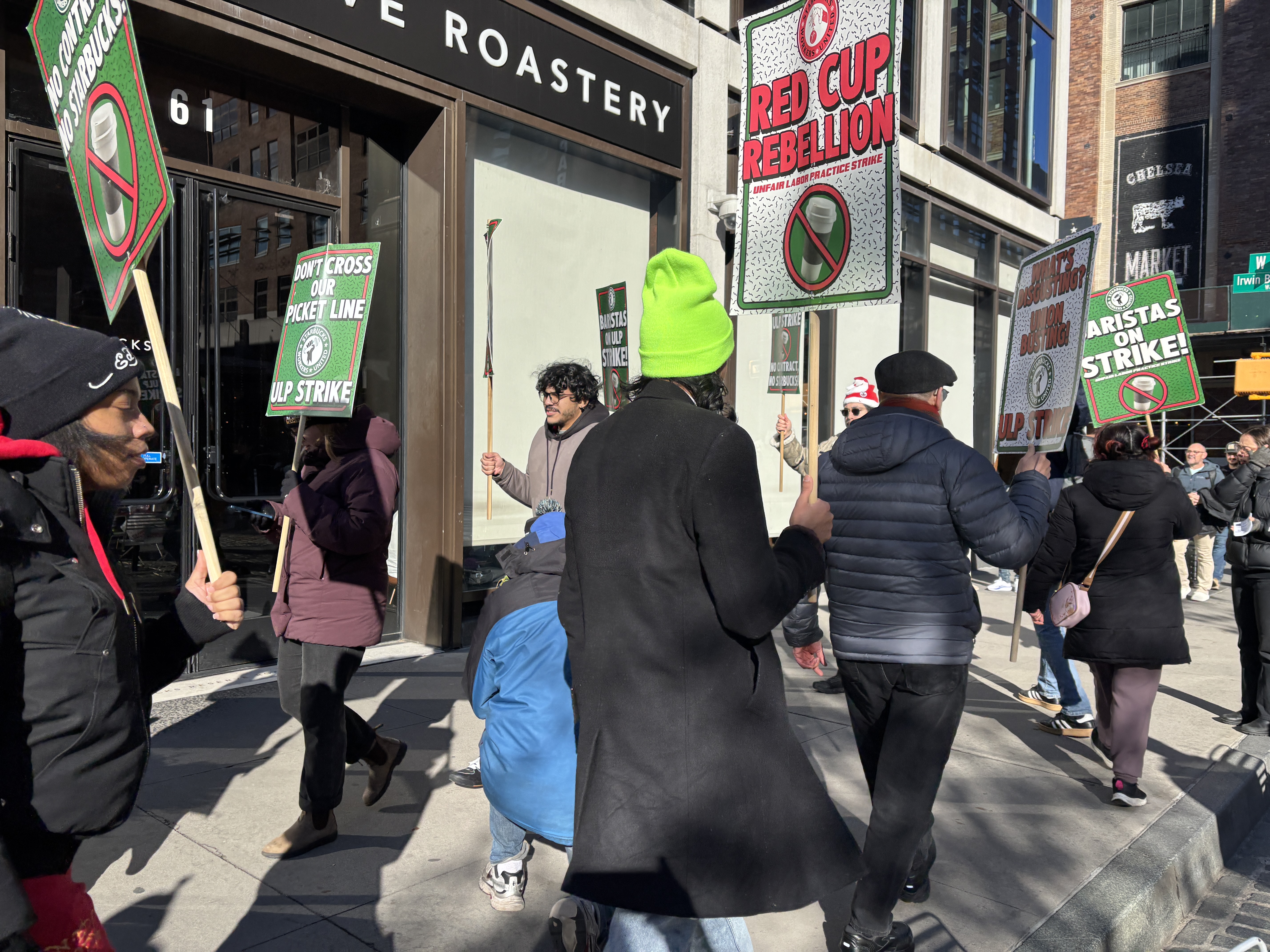
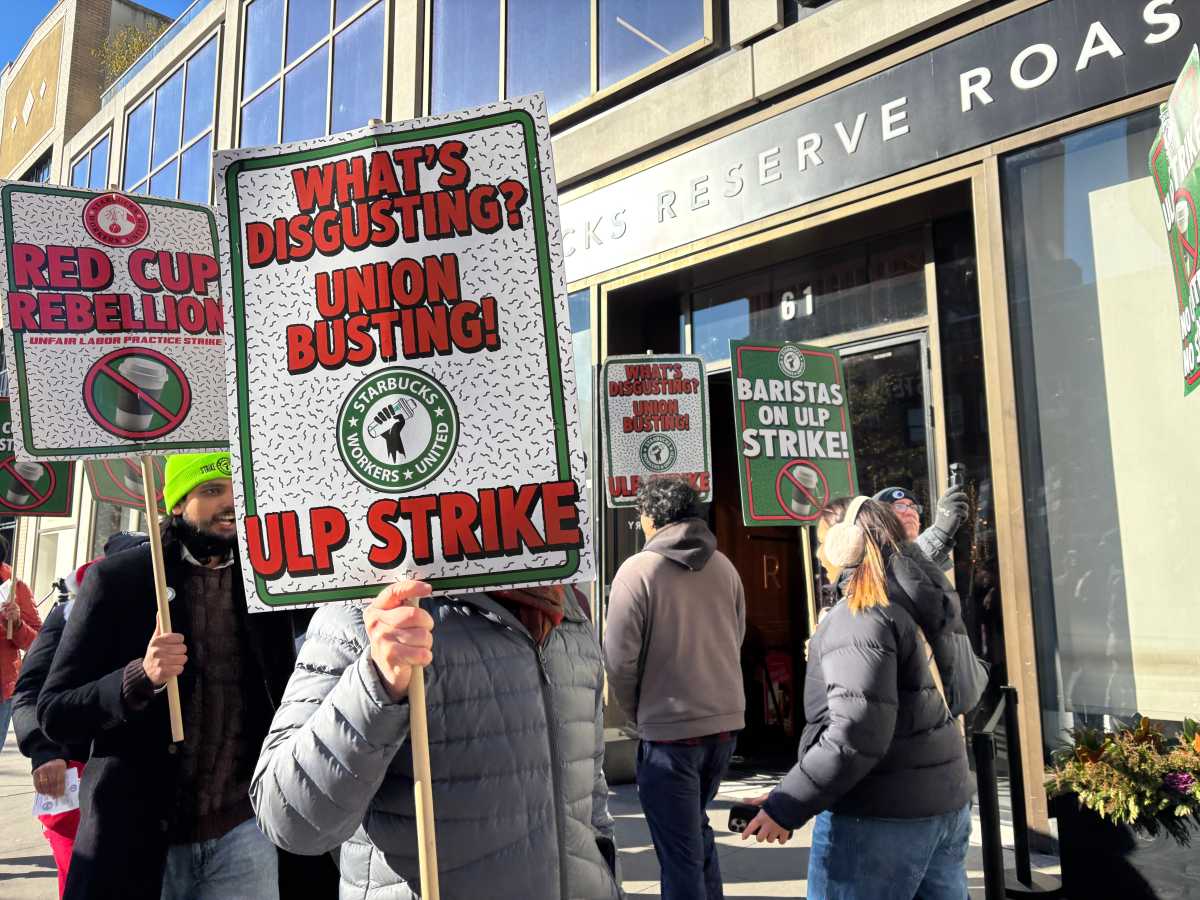
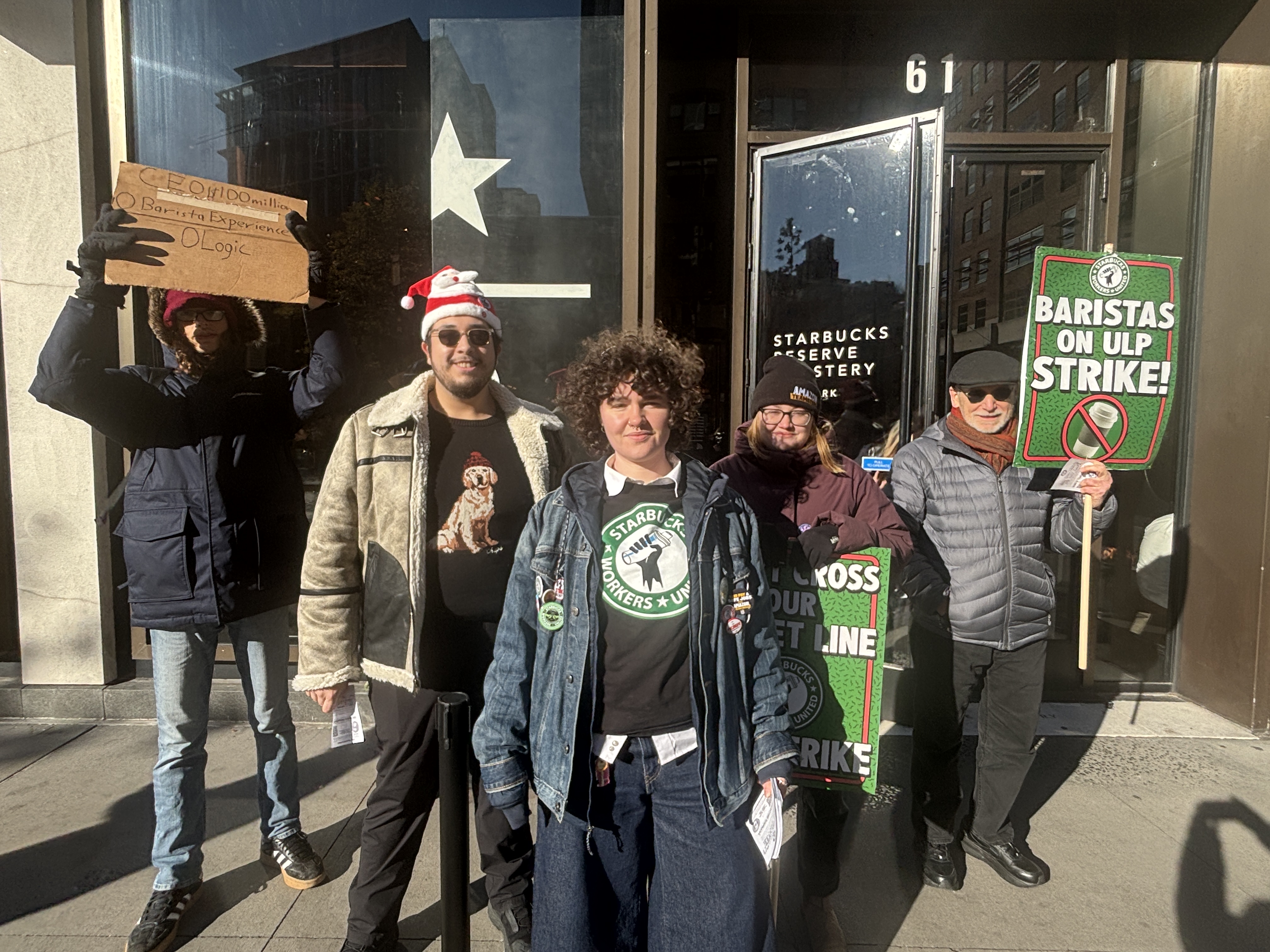
More than a month after unionized Starbucks workers went on strike calling for a contract, seeking more pay and better conditions, workers and supporters rallied on Christmas Eve outside a downtown Manhattan unionized store.
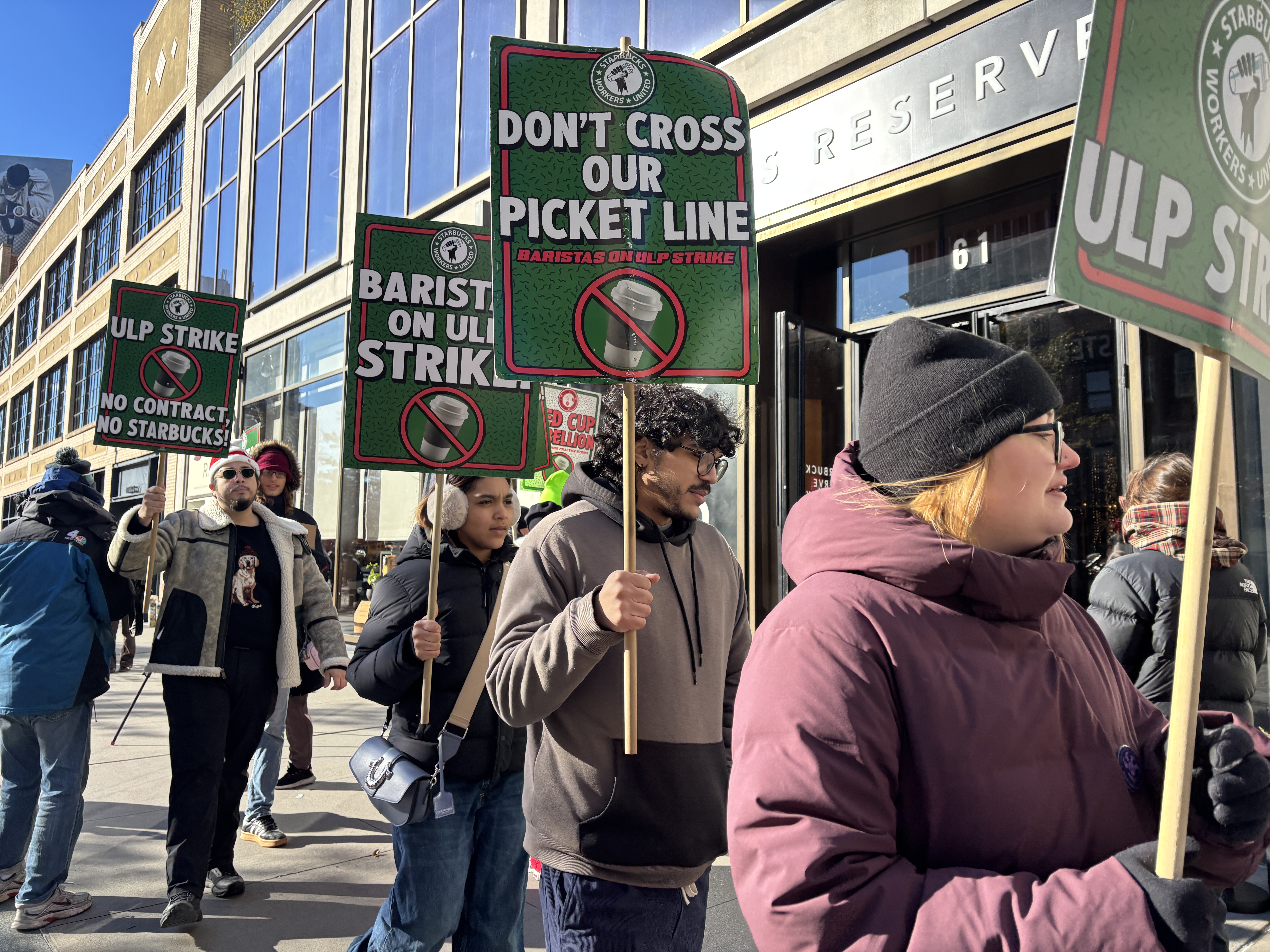
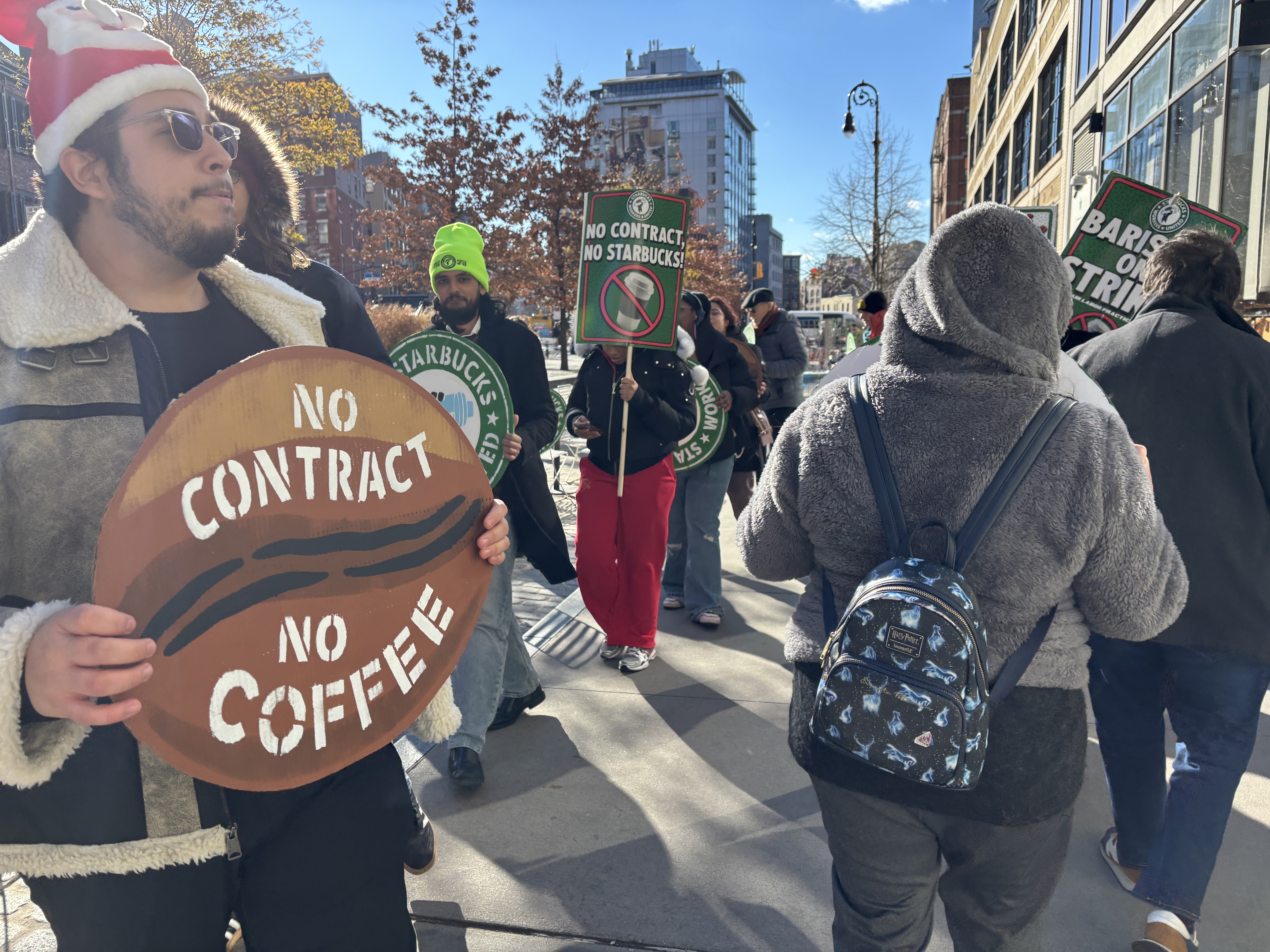
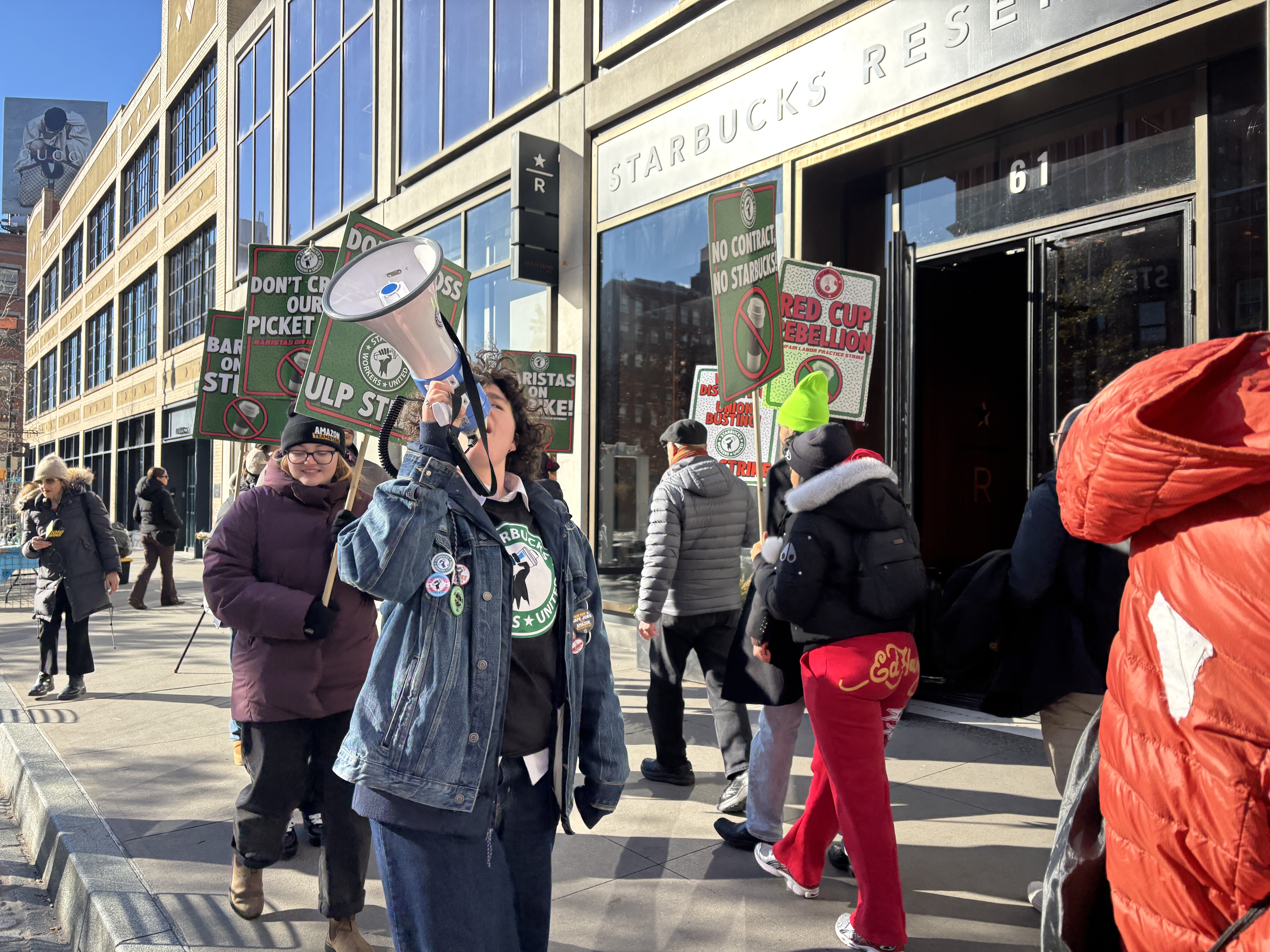
As holiday music played inside and customers sipped coffee at the Starbucks Reserve Roastery at 61 Ninth Ave., striking workers picketed outside, chanting and carrying signs saying, “No contract, no coffee,” “They make billions. We make beans,” and “What’s outrageous? Starbucks wages.”
The baristas, whom Starbucks calls “partners,” sought to attract attention to an ongoing strike that started nearly 40 days ago.
Recent rallies were held outside other New York City stores and nationwide, including the same day at Starbucks’ Seattle headquarters.
“They are operating with borrowed partners,” Morgan Pagan, a Bronx resident and striking shift supervisor who has worked for Starbucks for seven years, said of some stores. “That means they are essentially sourcing partners from other stores in the district to fill the coverage of baristas on strike.”
Kai Fritz, a barista at 8973 Bay Parkway in South Brooklyn, said her store is operating with workers and managers from other stores. “My entire team is on strike. Our staff is completely on strike,” Fritz said.” Because workers are on strike, we’re asking people not to buy Starbucks.”
State of the Union
Starbucks Workers United, an affiliate of the Service Employees International Union, said more than 1,000 workers are on strike in an “unfair labor practice” (ULP_ strike that started Nov. 13 in what they call the “Red Cup Rebellion.”
There are more than 170 unresolved labor complaints before the National Labor Relations Board.
The union said they are protesting “Starbucks’ historic union busting and failure to finalize a fair union contract,” including six months without new proposals to address “better staffing, higher pay, and resolution for hundreds of unfair labor practice charges.”
Starbucks Workers United, which represents over 11,000 baristas at more than 550 stores, said they are calling for “better hours to improve staffing.”
“Too many baristas still aren’t getting enough hours to pay the bills or meet the threshold for benefits,” the union said.
“We’re asking customers not to buy Starbucks, which has an impact,” Fritz said. “We’re asking for a fair union contract.”
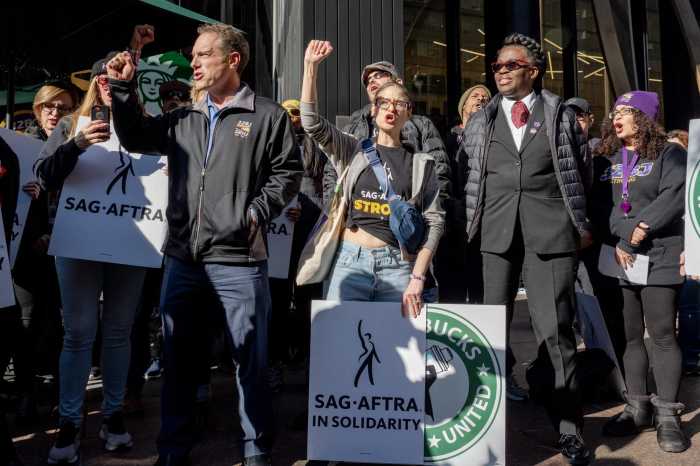
The union said more than 100 U.S. Senators, 180 state and local elected officials, various unions and more than 225,000 people signed a “No Contract No Coffee” pledge not to buy Starbucks coffee until union baristas “secure a fair contract.”
“I’ve had to choose between medications or rent,” Pagan said of what she and the union call insufficient wages.
Starbucks’ side
CEO and Chairman Brian Niccol said he is implementing his “Back to Starbucks” plan to improve efficiency, sales and conditions, using algorithms to sequence orders, offering more free refills, writing customer names on cups and instituting worker-friendly changes.
He said they “have provided additional coverage hours in over 3,000 stores,” “doubled paid parental leave for our U.S. retail teams” up to 18 weeks, and are committed to “promote internally for 90% of retail leadership roles in three years. “
The company said they made a $500 million investment in additional hours and expanded rosters so that “there are more partners working during our busiest shifts.”
Chief Partner Officer Sara Kelly said, “85% of partners get the hours they prefer, and shifts are more consistent than ever.”
Starbucks, however, in December reached a $38.9 million settlement for violating New York City’s Fair Workweek law in what the City called “the largest worker protection settlement in New York City history.”
The New York City Department of Consumer and Worker Protection found that Starbucks committed more than half a million violations of the law since 2021, impacting thousands of workers across more than 300 locations regarding scheduling and hours.
New York City Department of Consumer and Worker Protection Commissioner Vilda Vera Mayuga said it’s important for the City to step in “when a multi-billion-dollar company like Starbucks chooses to systematically violate their employees’ rights.”
A working wage
Starbucks’ salary remains a sticking point with the median hourly pay for a Starbucks barista at $14.73 in 2025, including 10 percent at $10.83 and 90 percent at $17.38, according to Payscale.com.
Starbucks Calorie Calc said as of early 2025, the national average hourly wage at Starbucks was $15.23 to $15.55, translating to $31,000-$32,000 annually for full-time workers, with New York at $17-$20 an hour on average.
Kelly, however, said hourly pay and benefits average more than $30 for hourly employees, including healthcare, paid parental leave, mental health benefits, Bean Stock and a bachelor’s degree.
The union, however, said the “average barista doesn’t make a livable wage” with starting wages of $15.25 in 33 states “and too many aren’t getting the full hours they request.”
Niccol’s $95 million compensation in 2024, thousands of times that of the average barista, riled union members seeking higher wages.
“I don’t think any CEO who has workers struggling like that should be making money like that,” Pagan said. “Some baristas have to work two or three jobs just to make living wages.”
Pagan said baristas often enjoy the work and coffee culture as well as Starbucks’ global sourcing policies, but need and deserve higher pay and better benefits.
“I fell in love with the dream, the work they we’re doing with farms, the agricultural scene behind the scenes,” Pagan said. “We’re not fighting because we don’t like the company. We believe in the company, but they need to do better.”
Many tourists went into the store unaware of the details or demands bringing protestors to the picket line, while others said they support the picketers.
“They’re making noise,” said Brian Roman, a tourist from Montpellier, France. “They are right. They are heard.”
A passerby, who asked not to be identified, said he supported the strikers. “All I can say is that I sympathize,” he said. “I don’t think unions should be busted up.”
Kelly said the union informed them partners at 166 of the 215 coffeehouses on their strike list would like to “unconditionally return to work.”
Jaci Anderson, a Starbucks spokesperson, said they have more than 30 tentative agreements in place.
“More than 99% of our 17,000 U.S. coffeehouses stayed open and continued welcoming customers,” she said. “Fewer than 1% were ever affected, and more than half of the locations on the strike list never closed or reopened quickly.”
The union said it’s difficult for workers to sustain an open-ended strike, so some are returning to the job, but they do no wish to see the status quo.
“Recently, there was a shift change on the strike line,” striking barista Christi Gomoljak said. “Some baristas who were previously on strike have returned to work to organize their stores, secure their livelihoods, and continue improving their workplace.”
Starbucks last September closed hundreds of what Niccol called underperforming stores, including 34 in New York City and 26 in Manhattan, laying off 900, saying union status was not a factor.
More than 250 baristas won union elections at 13 stores since the strike began and 19 stores filed for union elections on December 23, representing over 300 baristas in 15 states.
“People are switching jobs a lot. People are struggling here in a lot of ways,” Fritz said of a constantly changing workforce. “The workers that have organized know it’s a good investment of your time.”