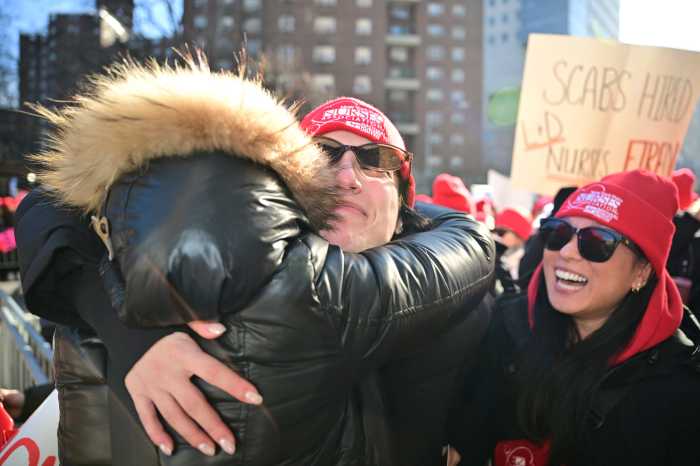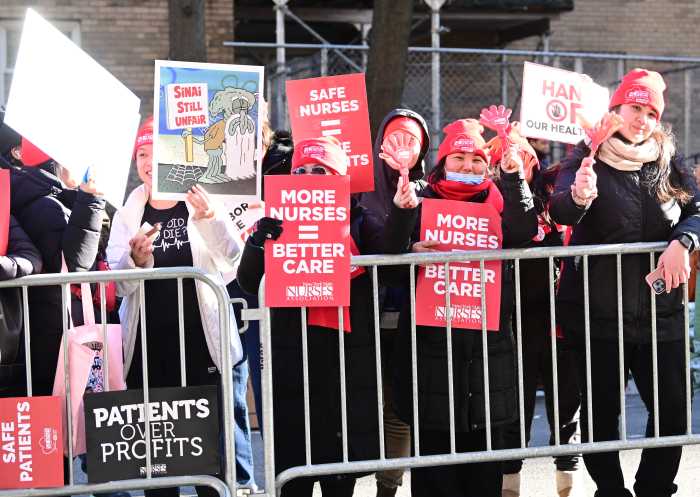



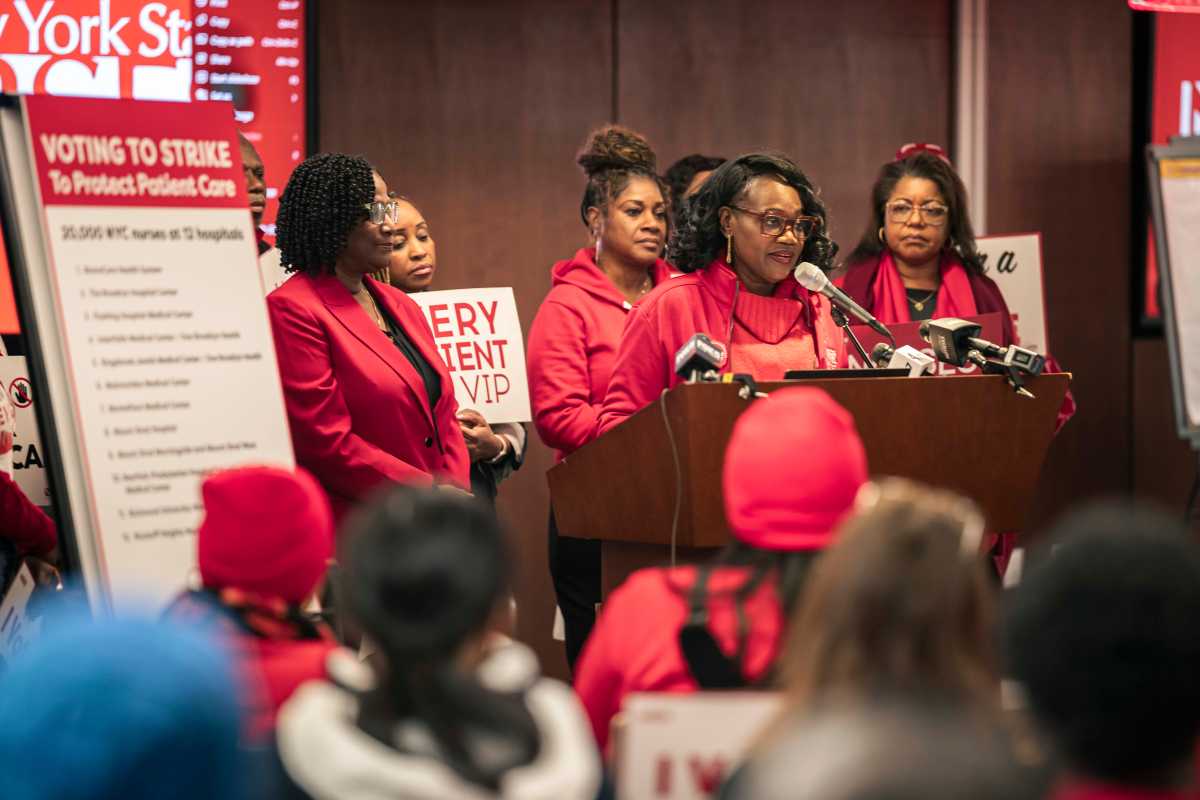
The New York State Nurses Association (NYSNA) voted overwhelmingly on Monday to authorize a strike for 20,000 nurses in NYC — a move made just two weeks before their contract expires.
The nurses, all from private hospitals throughout the five boroughs, cited staffing issues, safety concerns, fair wages and other reasons for considering a strike. The union’s vote on Dec. 22 now gives its bargaining committees the authority to call a strike if a contract that protects safe patient care is not settled by the end of the year.
The nurses are from hospitals including BronxCare Health System, the Brooklyn Hospital Center, Flushing Hospital Medical Center, Interfaith Medical Center / One Brooklyn Health, Kingsbrook Jewish Medical Center / One Brooklyn Health, Maimonides Medical Center, Montefiore Medical Center, Mount Sinai Hospitals, NewYork-Presbyterian Hospital Columbia University Medical Center, Richmond University Medical Center, and Wyckoff Heights Medical Center.
The nurses, during a rally in Midtown, said hospitals so far responded to their demands with “avoidance and delays.” They said employers have yet to make economic counterproposals; some have also refused to guarantee healthcare benefits for nurses, they said, which “jeopardizes healthcare for the healthcare providers” in NYC.
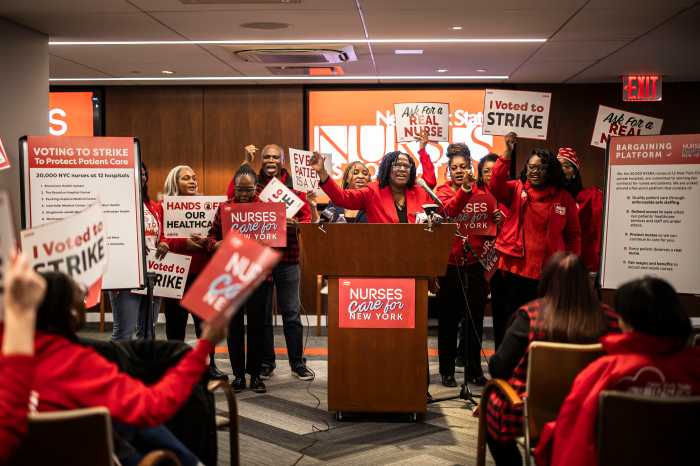
“We became nurses because we care about our patients deeply and do not take striking lightly. It is always a last resort,” Nancy Hagans, RN, and NYSNA president, said. “But it’s shameful that instead of trying to protect care and settle a fair contract, hospitals are dragging their feet and making proposals that would seriously erode care in this city.”
What does hospital management say?
amNewYork contacted several hospitals that would be impacted by a strike.
Joe Solmonese, senior vice president for strategic communications at Montefiore Einstein, said demands from the nurses total $1.2 billion for the hospital. This amount would represent a 50% increase over the current contract, with wage increases of 30% over a three-year period.
The hospital is expecting a long-lasting strike, Solmonese said.
“As well as demands that will clearly impact patient safety, like nurses not being terminated if found to be compromised by drugs or alcohol while on the job, and taking issue with our effort to roll out panic buttons for frontline staff in the emergency department,” he explained. “NYSNA’s vote to authorize a strike is accelerating our preparations for what we anticipate could be a multi-week job action.”
Representatives at another hospital, Mount Sinai, stated that NYSNA is demanding hospitals increase the average nurse salary from $110,000 to $272,000 per year.
“Instead of bargaining and working together to reach an agreement, union leaders are politicizing the negotiations as they have made clear they are prepared to strike once again, dividing employees from employers and encouraging nurses to abandon their patients,” a spokesperson for Mount Sinai said.
Like Montefiore, Mount Sinai is preparing for a strike, something both hospitals are all too familiar with. Nurses at the two medical centers went on strike for three days before winning a historic contract in 2023.
“We are taking steps to prepare for a strike, and have already begun bringing together clinical leaders to run staffing disruption drills, integrating outside nurses into our daily operations, and are coordinating with other systems to manage capacity to ensure our campuses are prepared to maintain high-quality patient care in the event of a staffing disruption,” the rep said. “These preparations all are expensive, which takes away resources that could be invested in nurses or other members of our care teams.”
Meanwhile, Brendan Griffith, president of the NYC Central Labor Council for the AFL-CIO, said the city’s labor movement stands with the nurses’ fight to ensure safe patient care.
“By voting to authorize a strike, NYSNA nurses are making clear that safe patient care can’t be delayed, negotiated away or treated as optional,” he said. “When hospitals drag out negotiations, fail to address workplace safety, or refuse to invest in staffing, it’s working people and their families who pay the price.”