

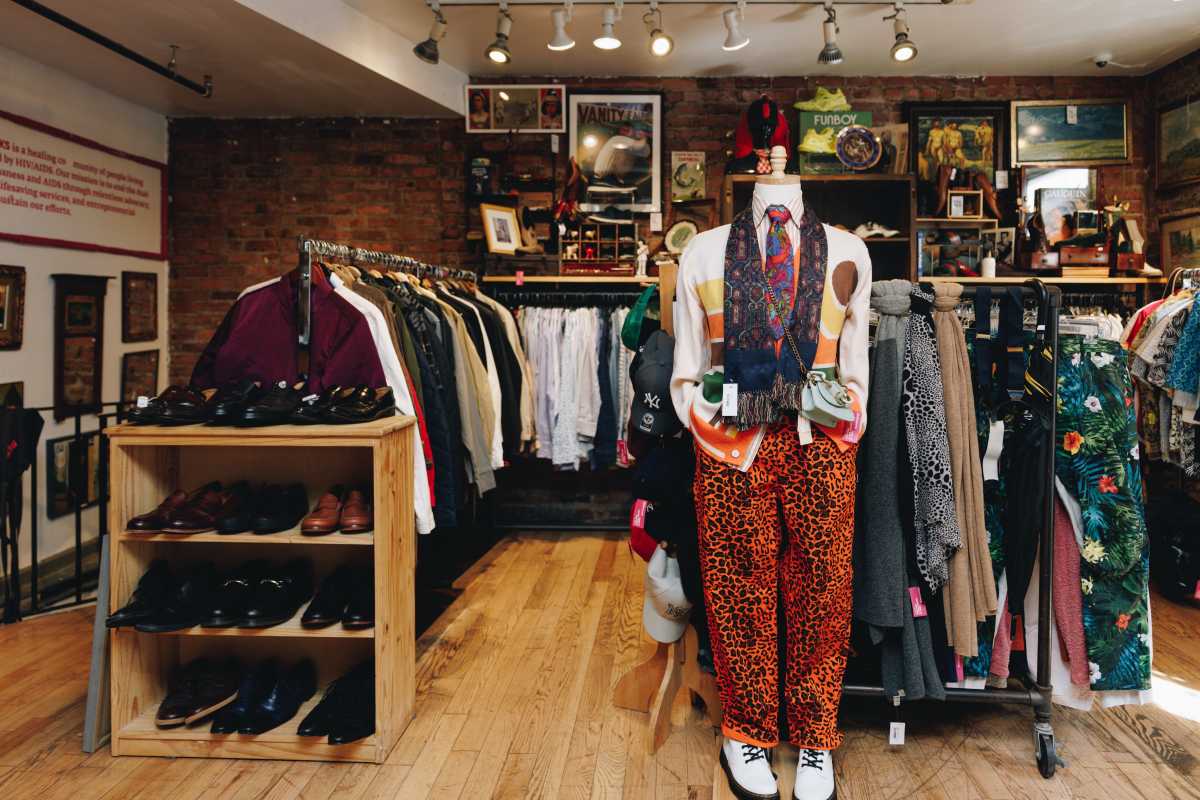
Those who love thrifting, donating or buying old and sometimes vintage clothes are about to get some good news in Downtown Manhattan.
Goodwill Industries of Greater New York and Northern New Jersey is replacing its existing 14th Street store with a newer, larger one offering a bigger selection on the sales floor.
They sell clothing, accessories and small items such as lamps, but not furniture such as chairs or couches. The new super thrift is set to open in a few weeks, joining an already large assortment of thrift stores (even super stores) in New York City as nonprofits turn to retail as one way to raise money.
“We have lots of inventory. The new store will give us more space,” said Helen Murphy, senior vice president of communications and marketing for Goodwill of New York and New Jersey. “It will be massive, big and bright and half a block from Union Square. Our regular shoppers will be very excited.”
The new, bigger, better Goodwill store is just the latest sign of a booming thrift store “business” that amounts to a perfect storm for charities from the Salvation Army to Housing Works, collecting and selling clothing – and other items.
While companies are also fueling and feeding on a thrift boom, the nonprofits also offer tax benefits to donors and use sales to help support their missions.
“I think anecdotally we get a lot of unloading of items as new items come in,” Murphy added. “Sales and donations are up over last year. We hear people coming in, talking about tariffs.”
‘Tis the time to be thrifty
A combination of inflation and new tax laws may be turning from a big thing to a bigger thing. A small mountain of donated clothes were piled up inside an Upper West Side Housing Works shop recently.
“There has been an uptick in the number of people realizing the joys of thrifting, including lower prices, the thrill of the hunt and benefits to the environment,” said Melissa Weinstein, spokeswoman for the Salvation Army’s Great New York Division, at 120 W. 14th St. “More donations and more shoppers allow us to do more good.”
She said the Salvation Army, which operates rehabilitation centers at locations such as 48th Street in Manhattan, was busy at year end “in terms of the service we provide as well as the gifts we receive.”
“Everybody got new clothes for Christmas,” added Kenneth Cerini, managing partner at Cerini and Associates, an accounting firm specializing in nonprofits. “They donate their old clothes. It’s not like you’re laying money out. You give away clothing you don’t need anymore.”
Tariffs, tax deductions, and inflation have also been increasing apparel prices, fueling the thrift machine. “Thrift shops have always had an in vogue aspect,” Cerini added. “I know a lot of people who go thrifting.”
People donate for economic, emotional, fashionable and environmental reasons, to keep used clothes from piling up in dumps.
“Thrift shops are for everyone. They’re for bargain hunters looking for a good deal. Treasure hunters looking for that unique item, that vintage piece,” Murphy said. “We get people shopping because they care about the environment. They know shopping sustainably at a thrift stores is one of the best things you can do for the environment.”
The federal government’s gift to nonprofits
Tax benefits fuel year-end giving, but this year, 2026, has a gift for charities and donors, in terms of a more generous deduction policy for donations.
Tax laws changed in the Big, Beautiful Bill, starting in 2026, offering itemized tax deductions up to $1,000 for individuals and $2,000 for married couples for donations to charity on top of the standard deductions.
“It’s good for the nonprofit sector as a whole any time you have an incentive to make a donation,” Cerini said. “It’s a way people can take advantage. They can help others and help themselves at the same time.”
People working out sometimes end up donating after losing weight, as well as those who gain.
“They don’t want to buy a whole new wardrobe,” Murphy said. “I had a shopper say they come to Goodwill, because the jeans are more comfortable. They’re worn a little bit.”
And it’s getting easier to give, as well as receive. Donors drop off at Salvation Army thrift stores and it sends trucks to people who call at 800-SA-TRUCK or visit SATRUCK. Org.
Goodwill is also announcing a new partnership with Uber, which, for a fee, will pick up donations and deliver them to Goodwill.
“It’s not for free, but it’s easier than lugging things,” Murphy said. “Especially if you have a large number of items.”
Different strokes
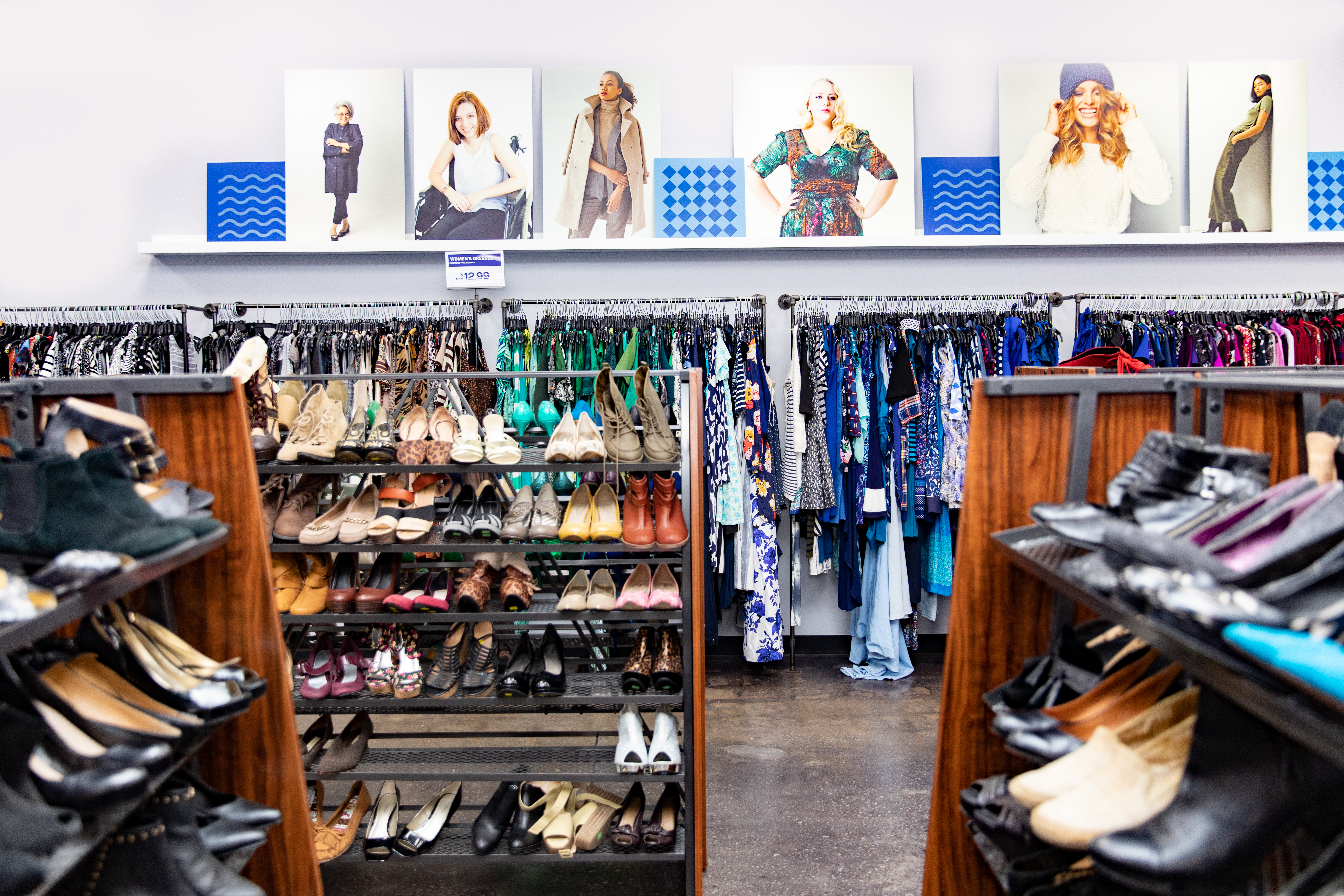
Different nonprofits operate different numbers of stores. Goodwill of New York and New Jersey. part of Goodwill International, operates 21 stores from Albany to the northern 10 counties of New Jersey, including New York City. It also operates two outlets, in Queens and Hackensack NJ.
“Goodwill thrift stores are a double impact. Reuse is the highest and best use,” Murphy said. “Revenues from our thrift stores go to fund our mission programs, our social service arm with programs in New York City, Newark, NJ, and surrounding areas.”
The Salvation Army has big fans, although some criticize it at its big Midtown shop for three flights of steep steps and no changing room, while praising a large selection of often cheaply priced apparel and other items such as furniture, appliances, and housewares.
“I ended up buying five nice shirts for under $14. What a bargain!” one poster wrote about the Salvation Army midtown thrift shop “You do have to comb through many clothes to find the quality and like new items. I always support recycling clothes and you can save a lot.”
The City Opera Thrift Shop, at 513 W 26th St. in Manhattan and cityoperaathriftshop.org, raises money to support New York City Opera.
“Our loyal followers rely on us for the finest upscale home furnishings and fashion, presented in our beautiful shop run by our welcoming and knowledgeable staff,” according to the shop, which says it touts “curated collections” including fashion, art, antiques, vintage, world, seasonal, and cooking/kitchen.
City Opera Thrift Shop offers free furniture, home decor and clothing pickups and taxi reimbursement up to $25 for clothing and home decor donations that are dropped off.
“Technically, it’s still a thrift shop, but it is a very high-end thrift shore,” one poster said of City Opera Thrift Shop, while another said, “The clothing is overpriced for used items, but its stylish and in good condition, plus goes for a good cause.”
Retail recognition
Nonprofits successful with thrift shops sometimes become known as retailers, even more than for their core work.
“It’s a double-edged sword,” Murphy said. “We have great brand recognition for the stores. “What the stores fuel, those social service programs, aren’t as known as they should be”.
Goodwill runs programs that remove the barriers to employment for people facing significant barriers, training and providing or finding work.
“A lot of shoppers shopping at Goodwill don’t understand aside from making a good sustainable decision they’re supporting programs that get people to work,” Murphy continued.
Goodwill helps unemployed or under-employed people, often receiving benefits such as food stamps, find work. “We help upskill and train them,” Murphy said. “And we have employer partners looking for talent. We help make that match.”