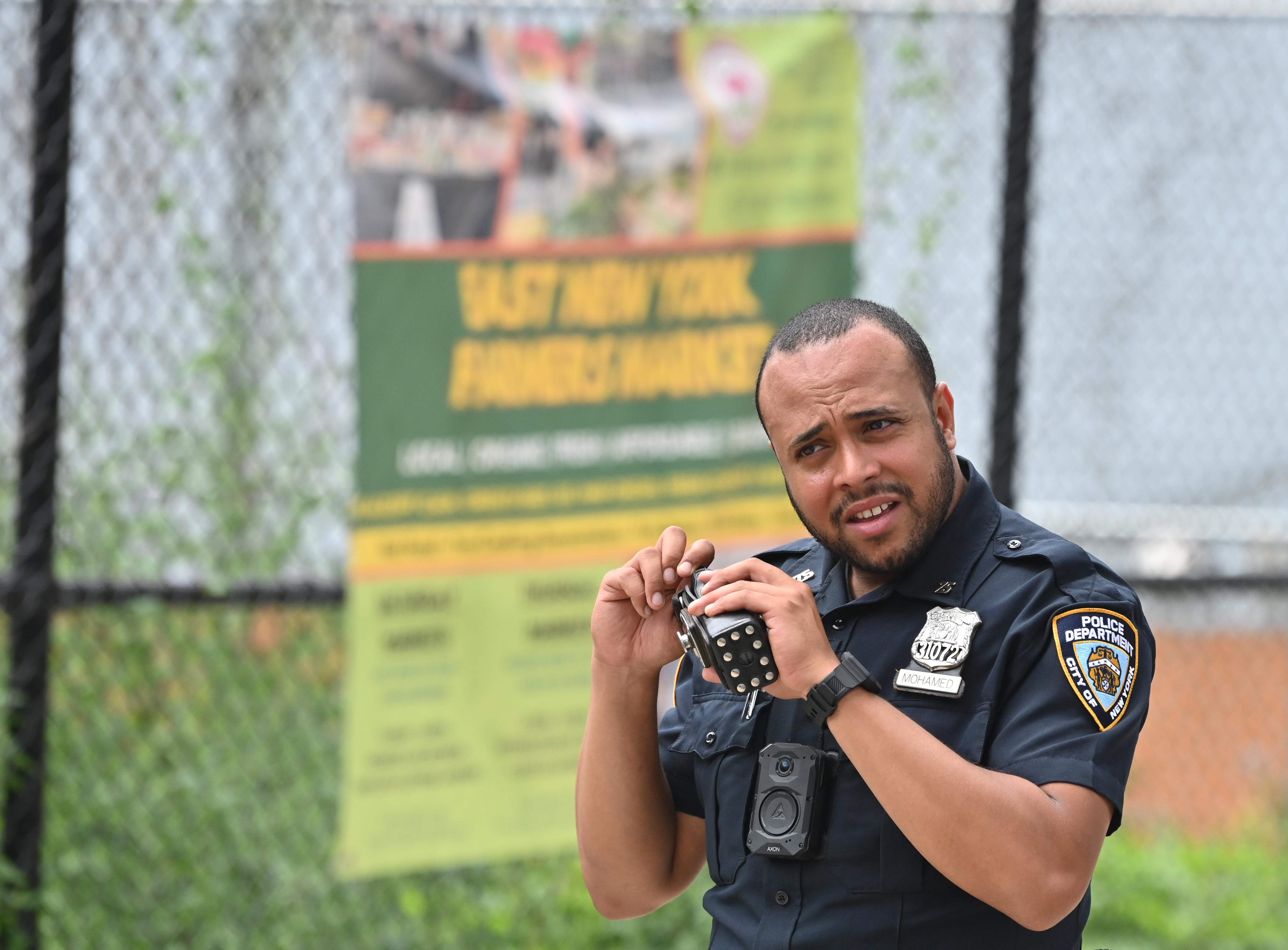


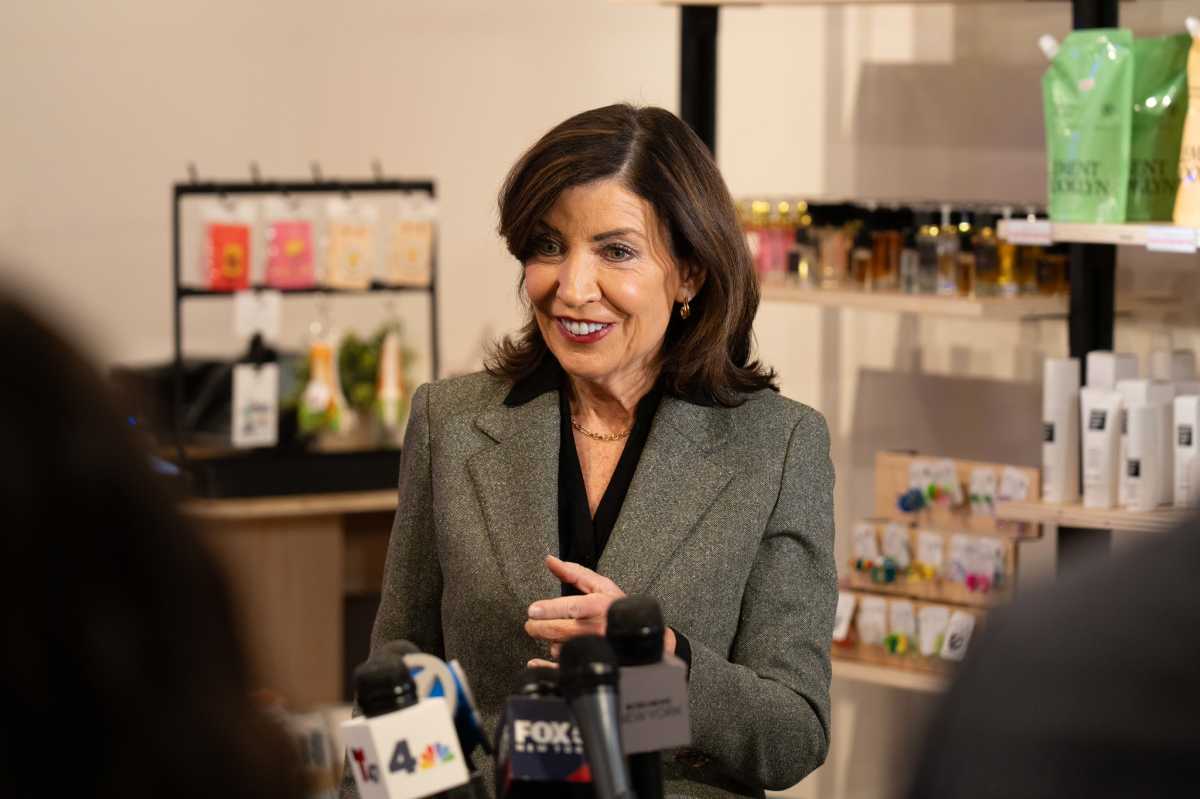
Gov. Kathy Hochul vetoed a bill on Friday night that would’ve given credentialed news organizations access to encrypted police radios to provide the public with real-time breaking news state-wide.
In a rejection memo, the governor remarked the bill to provide credentialed media with encrypted radio access, “while a worthy goal for transparency, may not be technologically feasible.”
The veto came a day after the City Council approved a more detailed bill (Int. 1460-2025,) that instructs the NYPD to provide encrypted radio access to credentialed media. The vote was 41-7 in favor. That bill awaits a decision by Mayor Eric Adams on whether to approve or veto the local law.
Councilwoman Gale Brewer (D-Manhattan) vowed to seek an override or to reintroduce the bill in the next session should the mayor veto in his last days and then bring it to the new mayor, Zohran Mamdani, whom they believe is more likely to sign the bill.
Bruce Cotler, president of the NY Press Photographers Association, whose members depend on police radio transmissions, said he is optimistic that a more modest proposal might win over the governor.
“We are thinking about reintroducing something different that may be palatable with the governor and law enforcement,” said Cotler. “There are options that we are exploring that could still maintain some transparency while preserving privacy and safety for officers – an important measure for all. We look forward to trying something different.”
In her veto memo, the governor cited various technical problems that make providing access to the press that merit “caution against a state-wide mandate.”
“Local emergency services agencies utilize different technologies that could significantly impact the ability of local government to implement the law ina. way that would not jeopardize public safety,” the memo claims. “For example, the bill would require local emergency services agencies to screen “sensitive information,” a task that may not be technologically feasible. Further, the overly-narrow definition of ‘sensitive information’ excludes information that if indiscriminately broadcast in an unsecure manner, could lead loss of life or operational failure.”
The governor also cited “growing threats of extremist violence” by disclosing real-time movements to “bloggers and paparazzi” in addition to traditional journalists. She also claims the bill would reveal real-time undercover operations that might undermine investigations and the right of the accused to a fair trial, and reveal confidential sources, despite most private communications of information being transmitted by department-issued cell phones.
She concluded that the bill would also cost the state “tens of millions of dollars” in infrastructure within “90 days without having budgeted for it.”
The bill had passed both houses of the legislature, the Senate bill, (S.416), led by Senate Deputy Majority Leader Michael Gianaris (D-Queens) and the Assembly bill, (A.3516), sponsored by Assembly Member Karines Reyes, (D-Bronx). Despite the bill passing both democratically led conferences, Hochul could not support the bill.
Reyes said “we had a feeling it would be vetoed when we didn’t hear anything by Thursday.”
“I think it is unfortunate that the bill was vetoed – we were committed to crafting something that would make law enforcement comfortable and uphold transparency for public and media,” Reyes said. “We are in a time where the public is becoming less and less trusting of government and law enforcement and this bill would actually help with the trust.”
Hochul concluded her memo saying, “While transparency is laudable, it should not come at the expense of public safety. Municipalities remain free to make their own decisions as to whether to prohibit police forces from encrypting radio transmissions.”
Leaders from the New York Media Consortium, made up of 14 press organizations in New York State and nationally, were undeterred as they are considering modification to the bill that may be palatable to the governor for future support to maintain transparency and checks and balances of law enforcement.
In the meantime, most say they are happy that a bill passed in New York City, where only one city-wide channel provides information, along with non-encrypted transit radio that cannot be encrypted because it doesn’t work well in the subway system.
Mickey Osterreicher, general counsel for the National Press Photographers Association, suggested there may be alternatives.
“The City Council’s passage of Int. 1460 demonstrates that transparency and public safety are not mutually exclusive, even as the Governor’s veto of the statewide bill was a disappointing setback,” he said. “That veto makes clear that any future state legislation may need to take a more incremental approach. Requiring every county to maintain at least one unencrypted channel for the real-time dissemination of major public safety incidents would restore a baseline level of transparency, allow journalists and the public to stay informed using affordable equipment, and address many of the concerns raised about sensitive information. While such an approach would not replace the fuller access journalists historically relied upon, it would be a meaningful step toward accountability, transparency, and protecting the public’s right to know.”
Lloyd Mitchell, a freelance photographer covering the streets of NYC, was saddened by the veto, but held up hope that something else may be done.
“It is paramount that journalists have access to at least one an important frequency that gives us important information for every police organization,” Mitchell said. “It will help us tell stories in a timely manner from Buffalo, Albany to the NYPD. It is critical that we work hand and hand with law enforcement and that they don’t have full control of the narrative.”