


Tuesday, Jan. 13, marks the 13th day of Zohran Mamdani’s term as mayor. amNewYork is following Mamdani around his first 100 days in office as we closely track his progress on fulfilling campaign promises, appointing key leaders to government posts, and managing the city’s finances. Here’s a summary of what the mayor did today.
Mayor Zohran Mamdani on Tuesday vowed to defend the city’s sanctuary policies after President Donald Trump announced that, starting Feb. 1, the federal government will stop sending payments to states and cities with laws that set limits on how local authorities cooperate with federal immigration enforcement.
“Our values and our laws are not bargaining chips,” Mamdani said in a post on X. “We will always defend New Yorkers, even in the face of federal threats to withhold funding.”
Speaking to reporters later on Tuesday evening, Hizzoner said he had reached out to President Trump directly to express “sharp opposition,” but he had yet to hear back.
“There are many threats that are made to New York City on a regular basis, and I am confident in our city’s ability to fight those threats back. And we’ve also seen, whether it be in the courts or whether it be beyond that, our ability to win those threats,” the mayor said.
In Detroit earlier in the day, President Trump railed against sanctuary jurisdictions, claiming they “do everything possible to protect criminals at the expense of American citizens — and it breeds fraud and crime and all of the other problems that come.”
The announcement applies to states and cities with sanctuary policies, including New York, and is part of the administration’s broader effort to tie federal funding to cooperation with federal immigration enforcement, though no further information on the cuts has been shared by the White House.
The city is already facing a federal lawsuit filed by the Trump administration in July 2025, challenging its sanctuary laws. The case is ongoing.
Under the city’s sanctuary policies, the NYPD and city agencies are restricted on when they can honor ICE detainer requests, generally allowing them only in cases involving serious crimes or valid judicial warrants. The rules do not prevent federal agents from making arrests on their own, nor do they shield immigrants from local criminal prosecution.
The policies, which date back to the Ed Koch era in the late 1980s, are designed to let immigrants access city services and report crimes without fear of automatic federal immigration action.
Last year, the Department of Justice released a list of 11 jurisdictions it considers sanctuary jurisdictions, saying their policies or practices impede federal immigration enforcement. The list includes states, counties and cities that limit cooperation with federal immigration authorities, refuse certain ICE detainer requests, or restrict the sharing of information with federal officials. New York State and New York City are among the jurisdictions named.
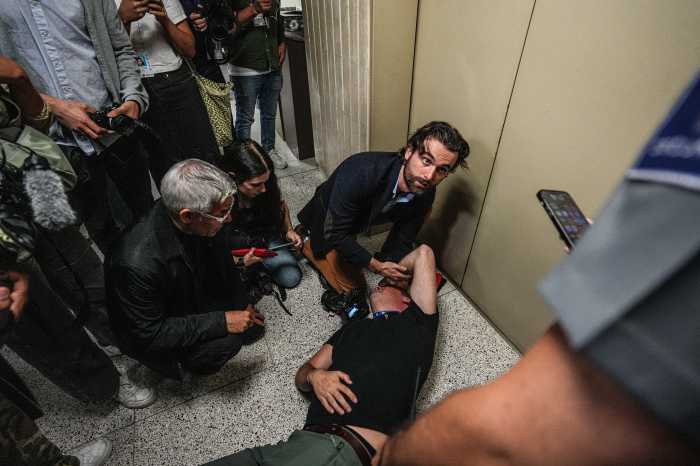
Meanwhile, Trump’s latest directive follows a series of high‑profile events, including ICE’s detention of a City Council staffer during what was expected to be a routine hearing on Long Island on Monday, and a large protest in Midtown Manhattan on Sunday, where thousands marched in opposition to federal ICE operations and in response to the fatal shooting of Renee Good by an ICE agent in Minneapolis last week.
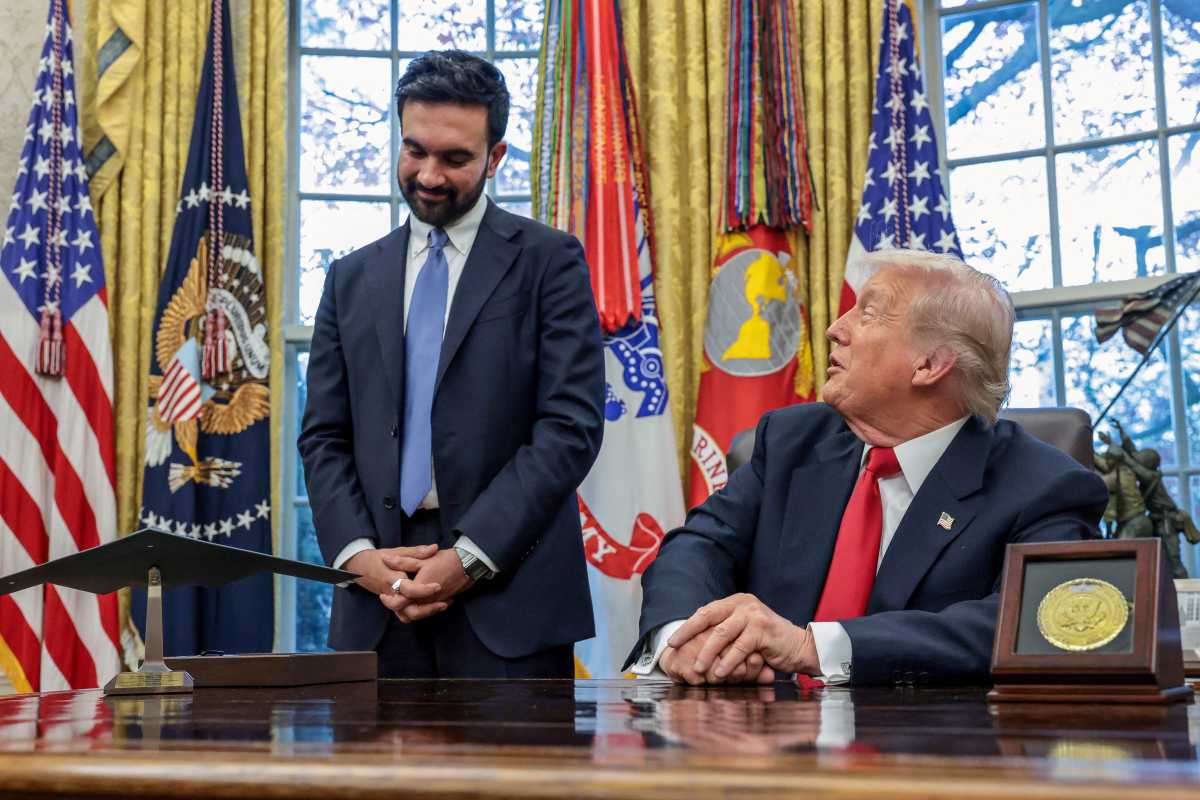
Amid those ongoing tensions over immigration enforcement, Mayor Mamdani and President Trump have maintained frequent communication since their November meeting at the White House, reportedly exchanging text messages at least twice a week, according to reports. Asked about their relationship on Tuesday evening, Mamdani downplayed his connection to the President, saying the pair have only exchanged “a handful of texts” since the Oval Office meeting.
“Those texts, the conversations that we’ve had, they always come back to New York City and the importance of delivering for the people who call this city home,” he said.
At an unrelated Monday press briefing, Mamdani was asked whether the city would cooperate with the Department of Homeland Security on issues like gang or terrorist activity, and whether he believed the Department of Homeland Security’s actions over the past year had improved safety in New York City.
“My guiding principle is to follow the law,” Mamdani said. “New York City’s sanctuary policies prohibit coordination with ICE agents on city property without a judicial warrant. But the laws do allow coordination with federal authorities on roughly 170 crimes if someone has been convicted. That’s where cooperation is permitted.”
He went on to criticize ICE enforcement for targeting immigrants whose only “crime” is living in the city. “These raids are cruel and inhumane and do not serve public safety,” Mamdani said, adding that such actions create anxiety for many New Yorkers rather than improving security.
Appointment: Shifting gears for taxi and for-hire drivers
At a bustling LaGuardia Airport on Tuesday night, Mayor Mamdani announced the nomination of transportation policy veteran Midori Valdivia as the next Chair and Commissioner of the New York City Taxi and Limousine Commission (TLC), signaling a potential turning point for drivers and the city’s for-hire transportation industry, as well as a bumpy road ahead for autonomous vehicles in NYC.
Valdivia previously served as Deputy Commissioner of the TLC, where she oversaw the creation of the largest wheelchair-accessible taxi fleet in the country at the time. She has also served as Chief of Staff to the MTA Chair & CEO, Senior Advisor at the Port Authority of New York and New Jersey, and is currently Chief Operating Officer of the Coro New York Leadership Center, the city’s premier civic leadership training organization.
“She knows this city’s transit system inside and out, and she’s fought for the workers who keep it moving every single day,” Mamdani said. “From City Hall, we will deliver meaningful change in the lives of the working people too often forgotten by our politics, and in the day-to-day existences of the taxi drivers who deserve a forceful champion at the TLC. That champion is Midori Valdivia, who I am so proud to nominate today to be the Commissioner and Chair of the TLC.”
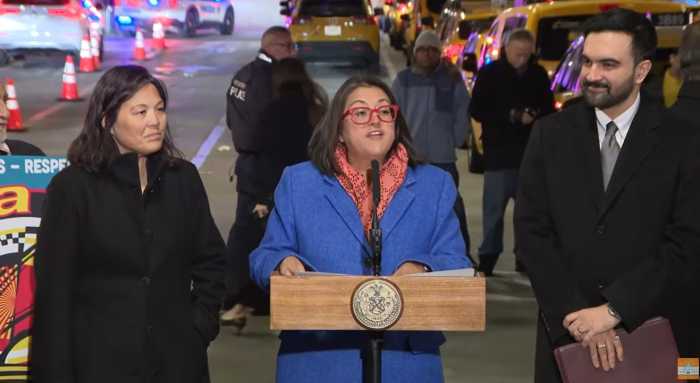
The nomination comes amid a long history of challenges for New York’s taxi and for-hire drivers, from crushing medallion debt to grueling, high-risk work. As an Assemblymember in 2021, Mamdani joined a 15-day hunger strike in solidarity with drivers, who were negotiating with the city and private asset managers for debt relief after more than a month of protests calling on former Mayor Bill de Blasio to act.
Adding to these struggles, drivers fought for nearly two decades for basic due process protections. The TLC changed its post-arrest license suspension process after courts found it unconstitutional in 2019. In March 2025, approximately 20,000 TLC drivers reached a landmark $140 million class-action settlement over the commission’s practice of suspending licenses based on arrests without fair hearings.
At the forefront of advocating for fair pay, worker protections, and due process has been the New York Taxi Workers Alliance (NYTWA), the city’s lead organizing force for TLC drivers. Now, the Alliance sees Valdivia’s nomination as a chance to finally cement those victories into lasting change at City Hall. Bhairavi Desai, Executive Director of the NYTWA, framed nomination as a signal that the new administration is ready to put drivers’ rights at the center of policy during Tuesday night’s press conference.
“Our brother, Mayor Mamdani, promised to stand with drivers in our fight for humane and just working conditions. For years, he fought alongside us in the trenches long before City Hall became his new office,” she said. “Today, he delivers on that promise by nominating a public servant who has done the grind for years to work in transportation and, along that path, has been a champion of workers.”
“We are a workforce without whom this city does not move. A strong TLC, one that champions its licensees, regulates to protect this workforce, stands up to corporate greed and even competing political pressures between and from the city and the state, can ensure labor with dignity and rights, which the drivers so justly deserve,” Desai continued.
If confirmed, Valdivia will replace David Do, nominated by former mayor Eric Adams in 2022. Both Mamdani and representatives from the Taxi Workers Alliance emphasized that her leadership will prioritize worker protections, enforcement of regulations on companies, and equitable treatment in the face of app-based corporate power.
For Valdivia, the nomination is both a professional and personal achievement. “I started my career at airports and the Port Authority, seeing firsthand the dedication of drivers who get millions of New Yorkers where they need to go safely every day,” she said. Her nomination now moves to the City Council for confirmation.
“If confirmed, I commit to an agenda that works to provide a for-hire economy that serves all New Yorkers. Putting people first must be at the top of our agenda, whether they are drivers, passengers, or small business owners, and I will dedicate myself to those who upheld the iconic cultural institutions in New York City during a time of great change,” Valdivia said.
The next challenge for the industry comes from the rise of autonomous vehicles.
Waymo, the self-driving car company, received the city’s first-ever test permit under Adams and has been testing autonomous vehicles on city streets, with trained safety drivers behind the wheel, since September 2025, including in Manhattan and Downtown Brooklyn.
Adding to the policy landscape, Gov. Kathy Hochul said Tuesday during her State of the State that she plans to introduce legislation to expand the state’s autonomous vehicle pilot program, allowing for the limited deployment of commercial for-hire autonomous passenger vehicles outside NYC. According to Hochul’s office, companies seeking to operate must demonstrate local support for AV deployment and “adhere to the highest safety standards.”
Mayor Mamdani declined to comment on Hochul’s plans and did not say whether any further testing permits would be issued under his administration, only that he takes the arrival of autonomous vehicles “very seriously,” and that driver protections will remain central.
“[I] will always make sure that our policy and our decision-making is focused on the drivers who are here alongside me, in front of me, behind me, to keep our city moving,” he said.
Like the NYTWA, the Independent Drivers Guild (IDG) and the Transport Workers Union have raised serious concerns about the rapid advance of autonomous vehicle technology, citing both safety risks and the potential loss of thousands of driving jobs.
Brendan Sexton, president of the IDG, wrote in amNY on Monday that the push for fully autonomous for-hire vehicles could displace tens of thousands of drivers who provide essential transportation to millions of New Yorkers every day. He warned that the “driverless future” should not come at the expense of the city’s working families, many of whom are immigrants relying on flexible incomes to support households.