


Venezuela President Nicolás Maduro and his wife, Cilia Flores, pleaded not guilty to narcotics trafficking and machine gun possession charges at his Monday arraignment in New York, with Maduro telling a federal judge that he was “kidnapped” by U.S. military forces.
“I am innocent. I am not guilty of anything mentioned here,” Maduro said. “I am a decent man.”
Maduro took notes during U.S. District Court Judge Alvin Hellerstein’s summary of his indictment, which Maduro said he had not read in advance of the hearing. He also said he wasn’t read his rights during his arrest on Saturday, when U.S. forces invaded Venezuela and seized him and his wife, a move that shocked the international community and raised questions over President Donald Trump’s legal authority to carry out the operation without Congressional approval. Attorneys specializing in international law told PBS they believed the move — as well as Trump’s claim that the U.S. will now “run” Venezuela — is illegal.
Neither Maduro nor Flores, who spoke via a translator and listened to translated proceedings through headphones, made a bail application at their arraignment. Hellerstein told the defendants, “It is my firm policy that whenever and as often as you think is appropriate, you’ll do that.”
Barry Pollack of the Washington, D.C.-based firm Harris St. Laurent & Wechsler represented Maduro and indicated that he intends to argue that, as the head of a sovereignty state, Maduro is entitled to immunity, among other defenses.
“There are question about the legality of his military abduction,” said Pollack, who previously represented WikiLeaks founder Julian Assange.
U.S. prosecutors say that, since at least 1999, Maduro has partnered with drug traffickers and the Revolutionary Armed Forces of Colombia, or the FARC, to “use cocaine as a weapon against America.”
Maduro was publicly named as a defendant in 2020 in an indictment in a drug trafficking case that’s been pending in the Southern District of New York for roughly 15 years. Prosecutors filed a superseding indictment in December that was made public on Saturday. In it, Maduro, Flores, and high-ranking Venezuelan officials face four charges: narcoterrorism conspiracy, cocaine importation conspiracy, and conspiracy to possess and possession of machine guns and destructive devices.
The indicted Venezuelan officials “abused their positions of public trust and corrupted once legitimate institutions to import [thousands of] tons of cocaine into the United States,” charging papers say, calling Maduro’s authority over the country “illegally obtained” and his government “illegitimate” and serving to enrich the country’s political and military elite.
Maduro’s son, Nicolás Ernesto Maduro Guerra, is indicted as well and remains free. He has said his father and Flores were kidnapped — a claim Maduro himself echoed Monday.
“I am here kidnapped … I was captured at my home in Caracas,” Maduro said, maintaining that he is Venezuela’s legitimate president, before Hellerstein cut him off.
“Let me interfere,” the judge said. “There will be a time and place to go into all of this.”
Flores’ attorney Mark Donnelly, of the Houston-based firm Parker Sanchez and Donnelly, said his client, whose face appeared to be bandaged, had sustained multiple, serious physical injuries during her capture, including potential fracture or severe bruising on her ribs.
The couple is due to return to court in March. Assistant U.S. Attorney Kyle Wirshba said he expects voluminous discovery in the legally and politically complex criminal case.
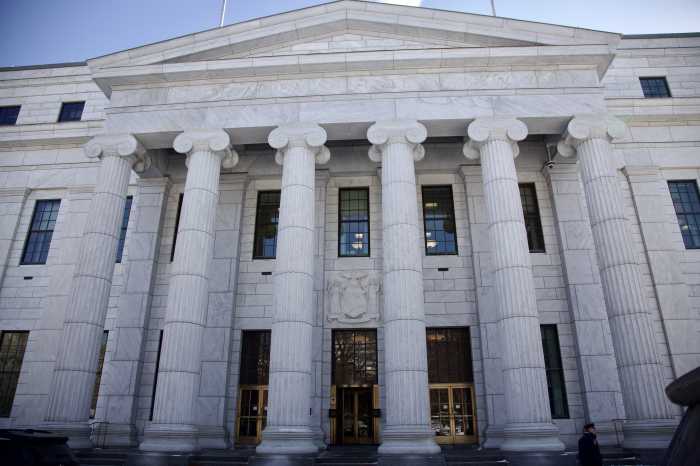
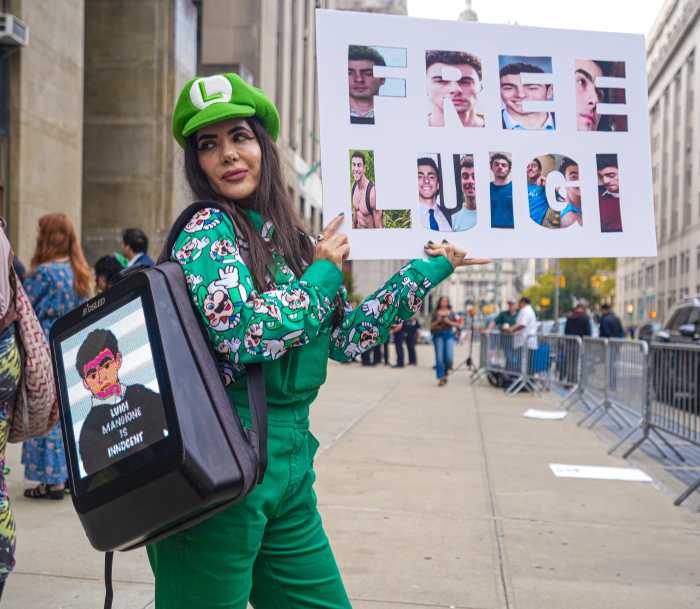
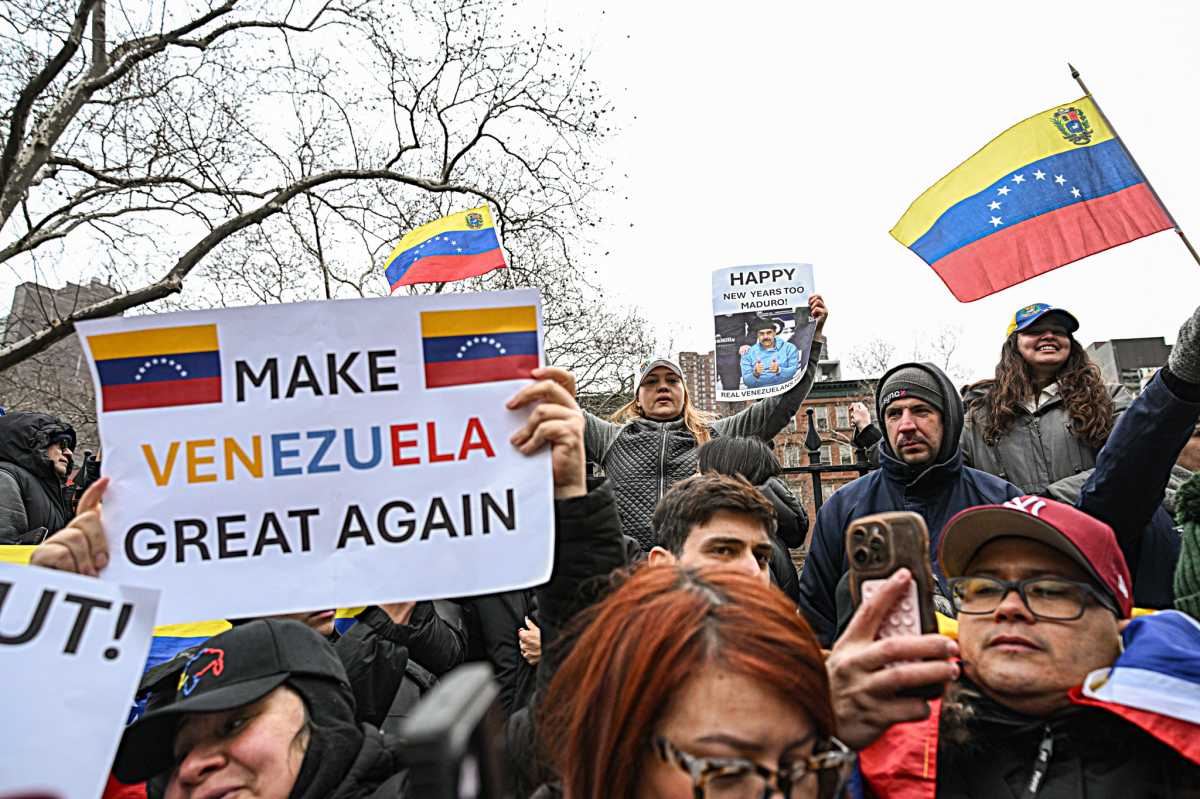
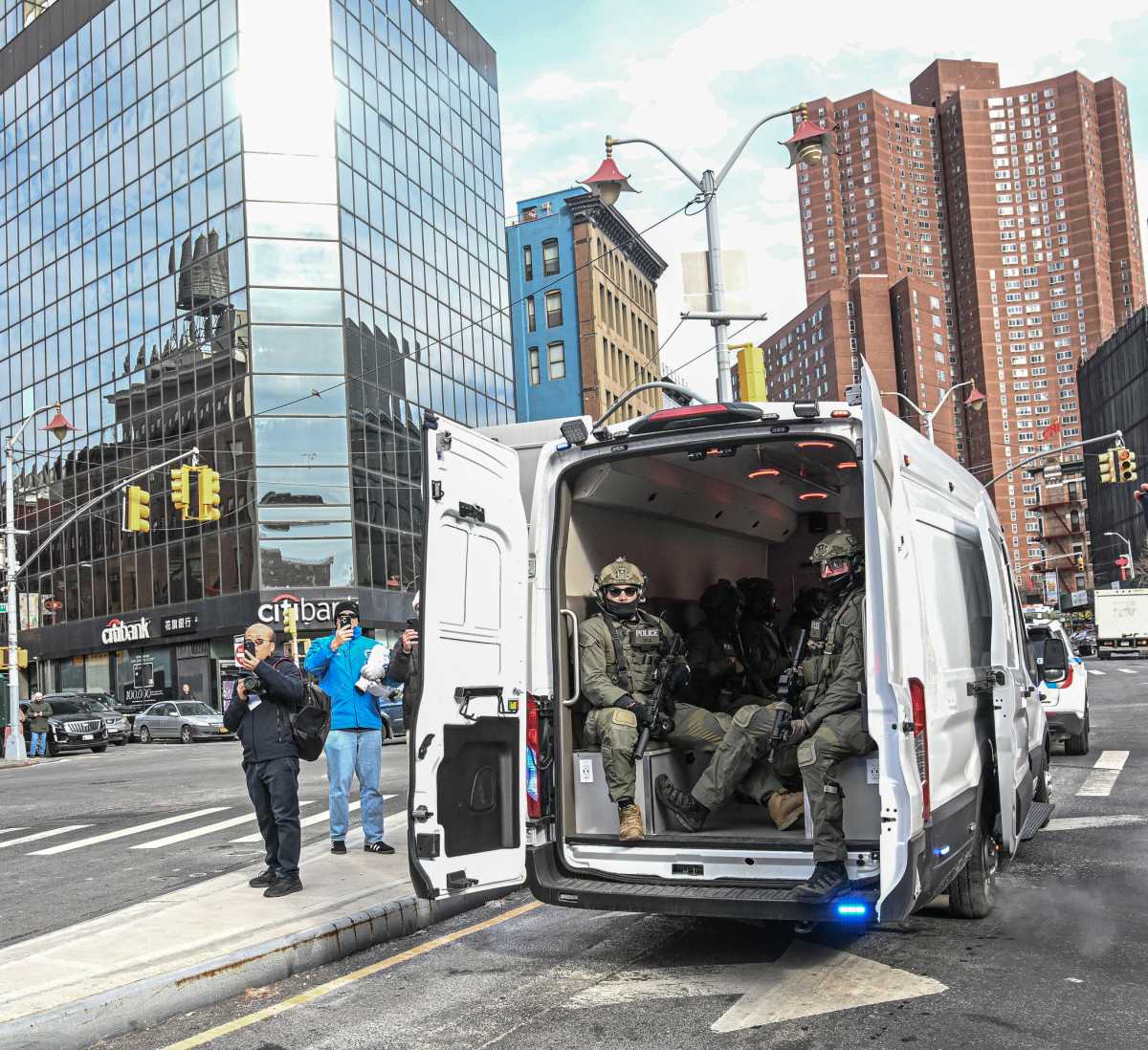
Outside the Manhattan federal courthouse, hundreds of protesters rallying against Trump’s capture of Maduro squared off against those celebrating the Venezuelan leader’s seizure and trial in U.S. court — chanting and flying Venezuelan flags on both sides — as the NYPD’s presence mounted.
One person in support of Maduro’s capture waved a large flag reading “Trump for King,” on the same flagpole as a Venezuelan flag. Those protesting the Trump administration’s intervention in the country carried signs reading “No U.S. war!” and “Will we ever learn?”
Several vendors in the crowd were selling Venezuelan flags. One man, who charged $5 per flag, said he did not support Maduro but declined to comment further.
Enhanced security inside the courthouse included dozens of DEA agents, state police and NYPD officers.
Law enforcement rationale
The Trump administration has characterized Maduro’s capture to try him in U.S. court as one of law enforcement, not a military action, claiming that provides justification for the unilateral executive action, though Trump has referred to the situation as a war multiple times since Maduro’s capture. The administration has also claimed drug trafficking is equivalent to armed conflict that requires the use of military force, a rationale U.S. presidents have never before used.
High ranking members of the Trump administration have emphasized the law enforcement nature of the operation, with Vice President JD Vance writing, “You don’t get to avoid justice for drug trafficking in the United States because you live in a palace in Caracas,” on X and Attorney General Pam Bondi saying Maduro would, “face the full wrath of American justice on American soil in American courts.”
However, Trump has also repeatedly publicly suggested that his motivation for capturing Maduro is to have control over Venezuela’s oil industry. On Saturday, Trump told Fox News that the U.S. was “in the oil business,” and would sell large amounts of Venezuela’s oil to many countries. He also claimed that Venezuela’s oil was actually U.S. oil and was “stolen,” when the country’s oil industry nationalized in the 1970s.
“We’re going to have our very large United States oil companies, the biggest anywhere in the world, go in, spend billions of dollars, fix the badly broken infrastructure, the oil infrastructure, and start making money for the country,” Trump told reporters after Maduro’s capture.
Maduro has led Venezuela since 2013 and served in the country’s government since 2000. He is widely considered to be an illegitimate dictator, who, most recently, declared victory over opposition candidate Edmundo González in the 2024 election, even though reports show González likely won by millions of votes. The U.S. and at least 50 other countries do not recognize Maduro as the country’s legitimate leader, with the U.S. recognizing González instead.
It’s unclear who will lead Venezuela in the long term, or what Trump’s plans are to “run” the nation. Delcy Rodriguez, the country’s vice president, was confirmed as Venezuela’s leader by the country’s highest court, but said on Saturday, “There is only one president in Venezuela, and his name is Nicolás Maduro Moros.”
Local response
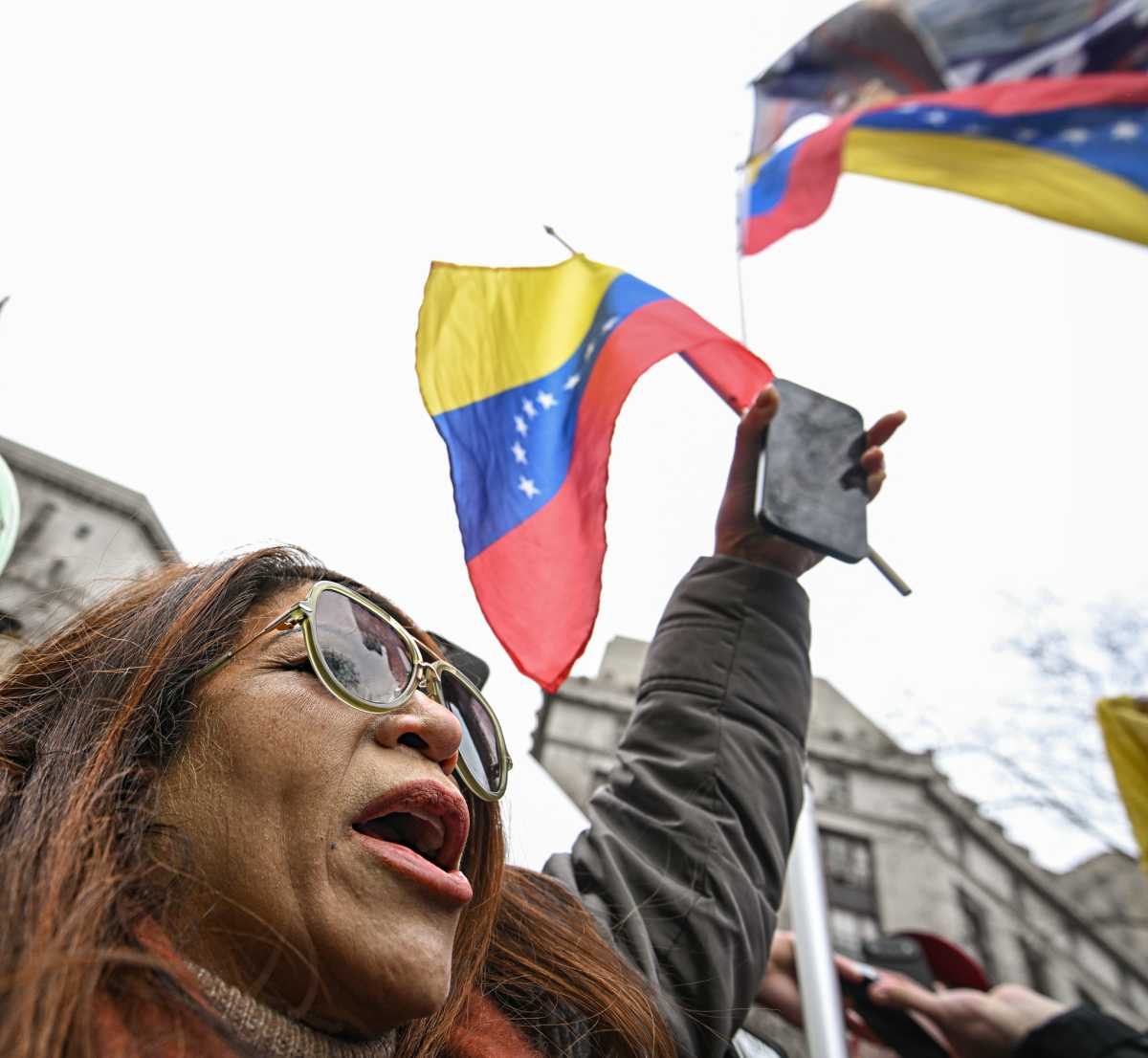
Venezuelans in New York have had mixed feelings about Maduro’s capture and removal from power. As amNewYork reported, some condemn Trump’s action as illegal while others said they’re glad the leader they believe to be illegitimate is removed from office. However, many of those who celebrated Maduro’s seizure and U.S. trial express anxiety and uncertainty about what will come next, saying problems run deeper than Maduro.
“We’ve been waiting for this for so many years and I want to feel relief, but mostly, I feel very anxious because he wasn’t just the only person responsible for all the problems and all the suffering that Venezuelan people have suffered,” Maria Jose Novoa-Rivero, a Venezuelan and American citizen told amNewYork on Saturday. “He was one single piece of this whole problem.”
“I don’t believe that he was something that was good for my people as much as much I would like to be relieved,” Novoa-Rivero said, explaining that she doesn’t trust Trump’s actions due to the history of U.S. interventions and Trump’s harsh treatment of immigrants and the history of U.S. intervention. “He did it in an illegal way.”