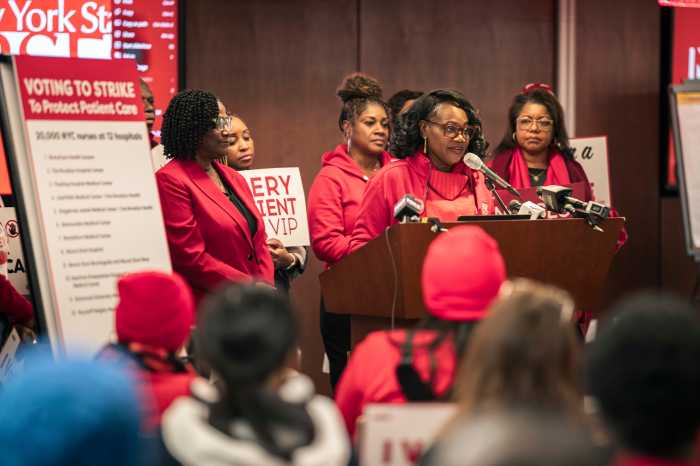



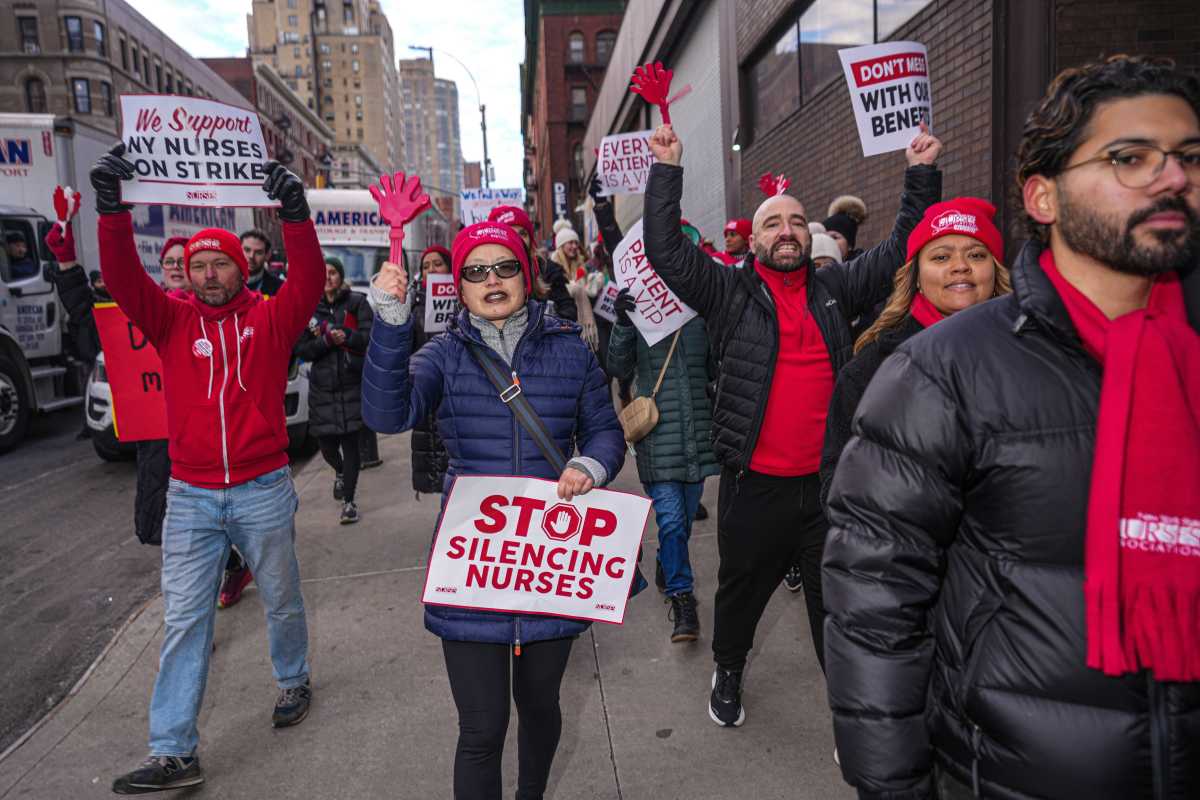
NYC’s massive nurses strike entered a fourth day on Thursday as nearly 15,000 caretakers at major hospitals remained off the job and on the picket line.
The New York State Nurses Association (NYSA), the union representing the nurses, and management at the affected hospital, are in it for the long haul, as both seem prepared for a long strike after negotiations stalled before the nurses’ contract expired on Dec. 31, 2025.
In a glimmer of hope, NewYork-Presbyterian, one of the three hospitals involved in the strike, arranged a meeting with the union to discuss how to fairly get the nurses back to work. The meeting is planned for Thursday evening.
“We are committed to keep negotiating for a fair and reasonable contract that reflects our deep respect for our nurses and the critical role they play, and also recognizes the challenging realities of today’s healthcare environment,” the hospital said in a statement to amNewYork.
A rep for the hospital said its nurses are “among the highest paid” in the city, with an average annual compensation of $163,000, and an average total compensation of around $233,000, including fringe benefits.
“We have offered significant wage increases,” the statement read.
Meanwhile, at Mount Sinai, nurses offered a raise in average nurse pay to nearly $250,000 before factoring in benefits, a hospital spokesperson said. That salary at Montefiore would be $220,000 by 2028, per a hospital spokesperson.
The nurses are striking for better pay, more staff, and improved workplace protections. Each hospital is negotiating independently with the nurses.
“Montefiore, Mount Sinai and NewYork-Presbyterian need to get serious about meeting our demands for safety,” Nancy Hagans, president of NYSNA, said. “If struggling safety-net hospitals can figure out how to fund our health benefits, safely staff our hospitals and protect nurses from workplace violence, then the richest hospitals can figure it out, too. Instead of investing millions in fighting their own nurses, hospital executives need to do the right thing and work with us to improve safety.”
Neither the union nor management has spoken since before the strike began on Jan. 12. At press time, talks are not planned at Mount Sinai or Montefiore. All three hospitals are open and providing care with support from temp nurses and the NYS Department of Health.
Meanwhile, about 23% of nurses at Mount Sinai crossed the picket line and returned to work this week. Brendan Carr, MD, CEO of Mount Sinai, sent a video message to returning nurses who have allegedly faced harassment for leaving the strike.
“It should go without saying that you do not deserve to be targeted for coming to work. We are professional caregivers. Our lives are spent healing others, and we know that taking care of others takes a toll on each of us,” he said. “Bullying, intimidating, and threatening devalues nurses, undermines our culture, and is not consistent with our values at Mount Sinai.”
amNewYork contacted NYSNA about allegations of harassment and is awaiting a response.