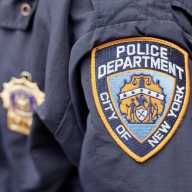



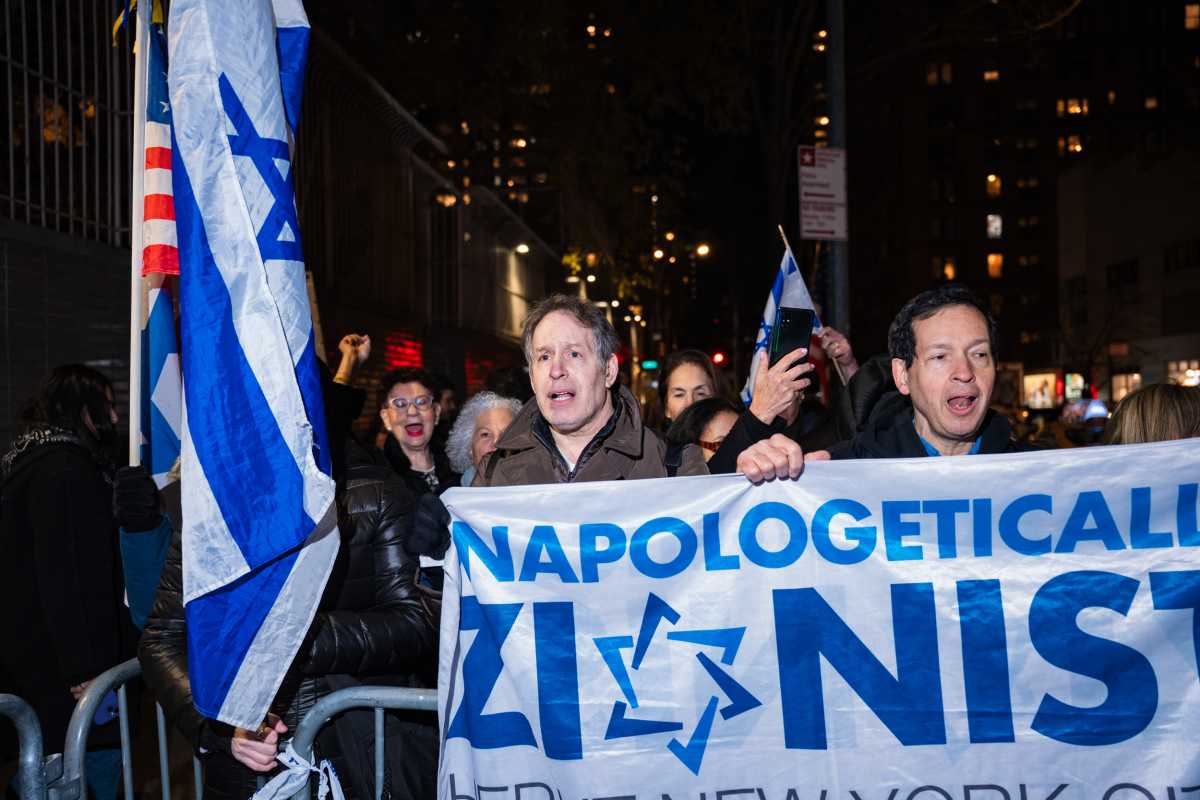
A prominent NYC rabbi expressed cautious optimism after Mayor Zohran Mamdani quietly reinstated an Adams-era executive order that he previously revoked: One that directed the NYPD to better regulate protests outside houses of worship, including synagogues.
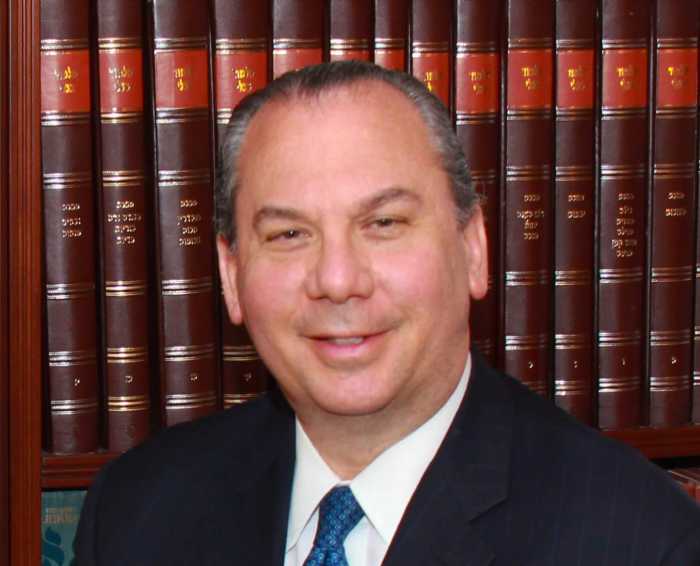
Rabbi Marc Schneier, president of the Foundation for Ethnic Understanding, applauded the mayor’s newly implemented Executive Order No. 2, which echoes the direction of an order that former Mayor Eric Adams had issued in December, but which Mamdani had revoked on his first day in office, Jan. 1.
“Establishment of zones where protest activities would be prohibited or regulated within an area of at least 15 feet and up to 60 feet from the entrance to a house of worship, or zones outside of houses of worship where protest activities are allowed,” Mamdani Executive Order 2, in part, states.
Per the order, the NYPD will also review its patrol guide to provide guidance on how officers must protect people entering a house of worship or exercising their right to free speech.
Schneier had suggested the idea to regulate demonstrations near religious institutions during a phone conversation with the mayor shortly after he was elected on Nov. 4, 2025. A demonstration outside the Park East Synagogue, run by Schneier’s father, Arthur, in November, prompted the phone conversation.
Schneier called the new executive order a “welcomed” move from the new administration.
Revocation of other Adams’ orders ‘troublesome’
Even though Mamdani implemented the new protections, he revoked others on Jan. 1 that centered around the official definition of antisemitism and city investments in Israel—both of which were put in place by the mayor’s immediate predecessor, Eric Adams.
Schneier does not agree with the revocation of the two orders as they hurt protections for Jewish New Yorkers and do not support recognizing Israel as a Jewish state.
“That’s troublesome,” he said. “Those two orders deal with the state of Israel.”
In June 2025, Adams signed a historic executive order to recognize the International Holocaust Remembrance Alliance’s working definition of antisemitism, which some have said can include criticism of Israel’s government as antisemitic.
Later, on Dec. 2, Adams’ order No. 60 was established to prohibit city officials and appointees who handle contracts from discriminating against Israel, Israelis or those connected to the Middle Eastern country in their purchasing decisions.
Mamdani used his authority as mayor to scrub the protections, as well as a list of other executive orders established by Adams after his Sept. 26, 2024, federal indictment for bribery, campaign finance and conspiracy offenses.
Although the charges were ultimately dismissed on April 2, 2025, Mamdani said upon taking office that he wanted a “fresh start” for his administration.
“Today marks the first step in building an administration that works for all New Yorkers,” Mamdani said on Jan. 1. “We’ve established the foundations of it, and now it’s time to deliver on our affordability agenda, tackle the challenges facing New Yorkers, and usher in a new era for New York City — one that proves that government can deliver for working people.
Responding to ‘pro-Hamas’ language at protests
Meanwhile, a protest against land sales in the Middle East’s West Bank took place at a Yeshiva of Central Queens synagogue on Jan. 7, just a week after Mamdani took office.
During the demonstration, protestors chanted messages such as, “Say it loud, say it clear, we support Hamas here,” prompting swift responses from area politicians, but a slow one from the mayor. His next-day statement said, in part, “that we saw in Kew Gardens Hills last night are wrong and have no place in our city.”
Schneier applauded the mayor’s response but was appalled at how late it was announced.
“He had a belated response. He did not react the way that Gov. Hochul did or [Council Speaker] Julie Menin did,” Schneier said. “But you have to give him credit, he did condemn the protestors for their chant.”
Mamdani continues to raise concerns among many New Yorkers as his refusal to recognize Israel as a Jewish state remains steadfast. To Schneier and others, any demonization of Israel will “only lead to physical attacks on Jews” in NYC.
“He has yet to publicly recognize or acknowledge the existence of the state of Israel as a Jewish state. That continues to be problematic,” the rabbi said.
Still, Schneier, ever the optimist, remains hopeful that the Mamdani administration will improve its relations with Jewish New Yorkers.
“I’m looking at the cup half full, not half empty,” he said. “It’s a process.”