

It’s an open secret that federal and state prosecutors often fight to work “the big case” — and there’s none bigger today than the shooting death of Renee Good in Minneapolis.
Prosecutors are inherently political animals, and fights between them are often driven by the competing desire for publicity. On Sunday, the Trump Justice Department launched a criminal investigation into whether public statements made by Minnesota Gov. Tim Walz and Minneapolis Mayor Jacob Frey, alleging that they conspired to impede federal immigration agents.
But with the Good case, the feds snatched the investigation, closed it and then bullied the mayor and the governor. Minnesota’s prosecutors have been strangely silent and have done nothing. Are they intimidated by the prospect of a Justice Department probe? Or are they simply looking to avoid the hard work that comes from a tough case? Their silence is deafening.
Following the shooting, the FBI quickly moved in and took control of the crime scene, processing physical evidence and interviewing witnesses. A joint investigation involving state and federal law enforcement was promised.
But soon thereafter, Vice President JD Vance said Good’s actions were acts of “classic terrorism”. So it was no surprise when the DOJ froze Minnesota out of the investigation. Nor was it a surprise when on, Deputy U.S. Attorney General Todd Blanche, told The Hill that “there is currently no basis for a criminal civil rights investigation,” effectively bringing down the curtain on the federal investigation of the shooting. Instead, according to The New York Times, the Justice Department has focused its inquiry on Good’s possible ties to “activist organizations”.
Reaction was swift. Frey said the federal government simply did not want an impartial investigation and called the domestic terrorism narrative “bullshit.” Walz accused the FBI of blocking access to evidence necessary to conduct the investigation.
As the federal government ramps up its investigation, Hennepin County Attorney Mary Moriarity and Minnesota Attorney General Keith Ellison need not stand still or wring their hands. They are far from powerless. The United States Supreme Court’s Dual Sovereignty Doctrine paves the way for them to act swiftly if they care to. It allows state and federal authorities to conduct their own independent investigations of the same criminal transaction. The Hennepin County prosecutor has jurisdiction and can move forward independently. Also, the Minnesota Attorney General’s Office, at the request of the governor or local prosecutor, can initiate its own investigation, but neither Walz nor Moriarity have done so.
What’s going on in Minnesota? Local officials claim that they have been blocked by the feds but that’s not fully accurate. They have both license to move forward and ample evidence to promptly open a grand jury inquiry and do so without access to evidence held by the FBI.
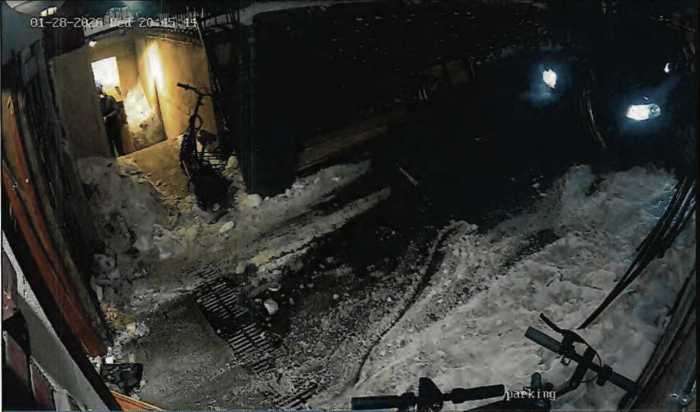
For example, there is: (i) security footage and cell phone video depicting events that took place before, during and after the shooting and from many different perspectives; (ii) the “shooter”, ICE Agent Jonathan’s Ross’s body camera footage was obtained by the news media is now in the public domain (and may provide his perspective); (iii) witnesses identified by both mainstream and social media, such as The Guardian, People and ABC News provide eyewitness accounts; (iv) fire department and ambulance personnel were amongst the earliest on the scene and have provided descriptions of both the crime scene and the injuries and are available to testify; (v) 911 recordings of witnesses who saw and heard the unfortunate events may also be offered as admissible evidence and (vi) the Hennepin County medical examiner, who conducted the autopsy, can provide evidence of cause of death.
The passage of time and delay are both the prosecutor’s worst enemy and a defendant’s best friend: evidence gets lost, memories fade and witnesses move away — or they can face intimidation. Clearly, time is of the essence. If they wanted to, state and local law enforcement in Minnesota could conduct their own independent investigation of Good’s death and the burning question is: why haven’t they done so?
Prosecutors on the local, state and federal levels, and lawyers from various government agencies, naturally collaborate and cooperate on the vast majority of cases.
But the fact of the matter is that, when it comes to headline-grabbing cases, these offices often compete with each other to gain jurisdiction, or even just an edge.
New York provides a number of examples of interagency conflict over major prosecutions.
Following the 1964 heist at the American Museum of Natural History — in which thieves lifted the Star of India, the world’s largest star sapphire, and other priceless gems — Manhattan District Attorney Frank Hogan and U.S. Attorney Robert Morgenthau of the Southern District of New York launched parallel investigations into the alleged perpetrators, and the two offices competed to bring charges first.
As both offices worked to secure indictments, the Manhattan DA gamely positioned his investigators outside the U.S. Attorney’s grand jury room; each time witnesses left proceedings, Hogan’s investigators scooped them up and ushered them across the street to testify in front of the state grand jury.
Ultimately, Hogan and his team beat the feds to the punch — his office both recovered the gems and prosecuted the thieves.
In the 1970s, the Southern District U.S. Attorney’s office and a New York State-appointed special prosecutor went toe-to-toe over investigations into police corruption, fighting in federal court over access to a key witness, corrupt detective Robert Leuci, the renowned subject of Sidney Lumet’s legendary tale of New York City police corruption, “The Prince of the City.”
Investigations into the death of Yankel Rosenbaum during the 1991 Crown Heights riots in Brooklyn put local and federal prosecutors’ offices at odds.
In a 2016 case involving the shooting death of man by Troy Police Department officer, then-New York Attorney General Eric Schneiderman accused Rensselaer County District Attorney Joel Abelove of violating an executive order requiring him to turn over all evidence gathered in the case.
Abelove ignored the order and presented a case to the grand jury in what was clearly a biased effort to clear the cop. Schneiderman, in turn, convened his own grand jury and indicted Abelove for perjury and official misconduct.
While the AG’s indictment against Abelove was later dismissed, the case shows that prosecutors rarely back down from one another, particularly if they suspect their peers are derelict in their duty.
Minnesota prosecutors now have a rare opportunity to undertake an independent investigation and reclaim the initiative.
Yes, the path would not be easy — witness accounts conflict. Federal agents who are subpoenaed will undoubtedly move to quash and resist appearing.
If Ross is indicted by local prosecutors, his attorneys will likely claim both some form of immunity (provided by federal law) for actions taken in the lawful execution of his duties and seek to remove the matter to federal court where the prosecution would end up in the hands of a U.S. attorney appointed by President Donald Trump, who was made no secret of his own opinions.
Minnesota is a deeply divided “purple” state and perhaps officials feel that this case presents too much of a political hot potato. Perhaps they have been intimidated by the Justice Department’s pursuit of the governor and the mayor. Or more likely perhaps they believe that since the matter will ultimately end up in federal court, pursuing Ross is destined to meet quixotic failure.
So where does this go? There is no excuse for avoiding movement on this.
This columnist was a homicide prosecutor in Brooklyn in the 1980s and 1990s. Homicide grand jury investigations were routinely initiated, even when accounts conflicted, racism was apparent and the city was deeply divided by racial or ethnic faults— consider the 1990 murder of Yusef Hawkins at the hands of a gang of white thugs in Bensonhurst as one example.
Minnesota’s prosecutors need to take the bull by the horns, convene a grand jury and let the chips fall where they may — win, lose or draw, both politically and in the courtroom. If that means local prosecutors must bring a tough case and have an ugly public battle with the feds, then so be it.
Douglas M. Nadjari, a former New York state prosecutor, is a partner at Ruskin Moscou Faltischek P.C. and a member of the firm’s health law, white collar crime and crisis management departments. He serves as co-chair of the Professional Discipline Committee of the New York State Bar Association’s Health Care Section and is an instructor at the Criminal Law Bootcamp at Tulane Law School