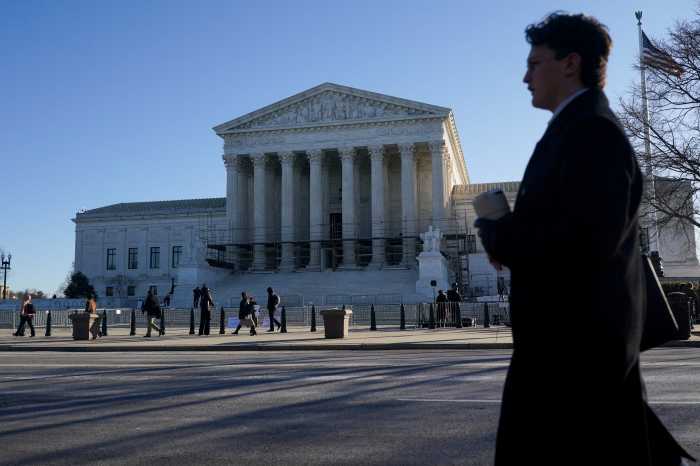


On February 25, Judge Brian Murphy, a federal judge in Boston, invalidated the Trump administration’s policy to send undocumented immigrants to countries of its choice, not their home countries.
At the outset of the decision, Murphy made his conclusions (in an 81-page decision) crystal clear:
“This case is about whether the government may, without notice, deport a person to the wrong country, or a country where he is likely to be persecuted, or tortured, thereby depriving that person of the opportunity to seek protections to which he would be undisputedly entitled. The Department of Homeland Security has adopted a policy whereby it may take people and drop them off in parts unknown—in so-called ‘third countries’—and, ‘as long as the Department doesn’t already know that there’s someone standing there waiting to shoot . . . that’s fine.’
“It is not fine nor legal. Congress made it “the policy of the United States not to expel, extradite, or otherwise effect the involuntary return of any person to a country” where that “person would be in danger of being subjected to torture.” Congress decided that the government ‘may not remove’ someone to a country where her ‘life or freedom would be threatened’ on account of her ‘race, religion, nationality, membership in a particular social group, or political opinion.’
“These are our laws, and it is with profound gratitude for the unbelievable luck of being born in the United States of America that this Court affirms these and our nation’s bedrock principle: that no ‘person’ in this country may be ‘deprived of life, liberty, or property, without due process of law.'”
Will the stern language in Murphy’s decision make a difference? The evidence to date is that the current administration is unmoved by these decisions and frequently ignores federal judges’ rulings. The Washington Post reports that the administration ignores more than a third of court decisions rejecting the Department of Justice’s actions. Indeed, since August, judges in immigration matters have threatened to hold the DOJ in contempt for failing to follow their directions.
Some may suggest that this lack of respect for the rule of law is acceptable. The administration is not even apologetic for its disregard of these directives, accusing the judges of being politically motivated (even if the administration nominated the judges). Before one can dismiss that thinking, we have to recognize that those in the DOJ believe in what they are saying, right or wrong. The president makes that argument almost daily-that he overwhelmingly won the election and that he is simply fulfilling his promises to the public in ridding the Country of “miscreants.”
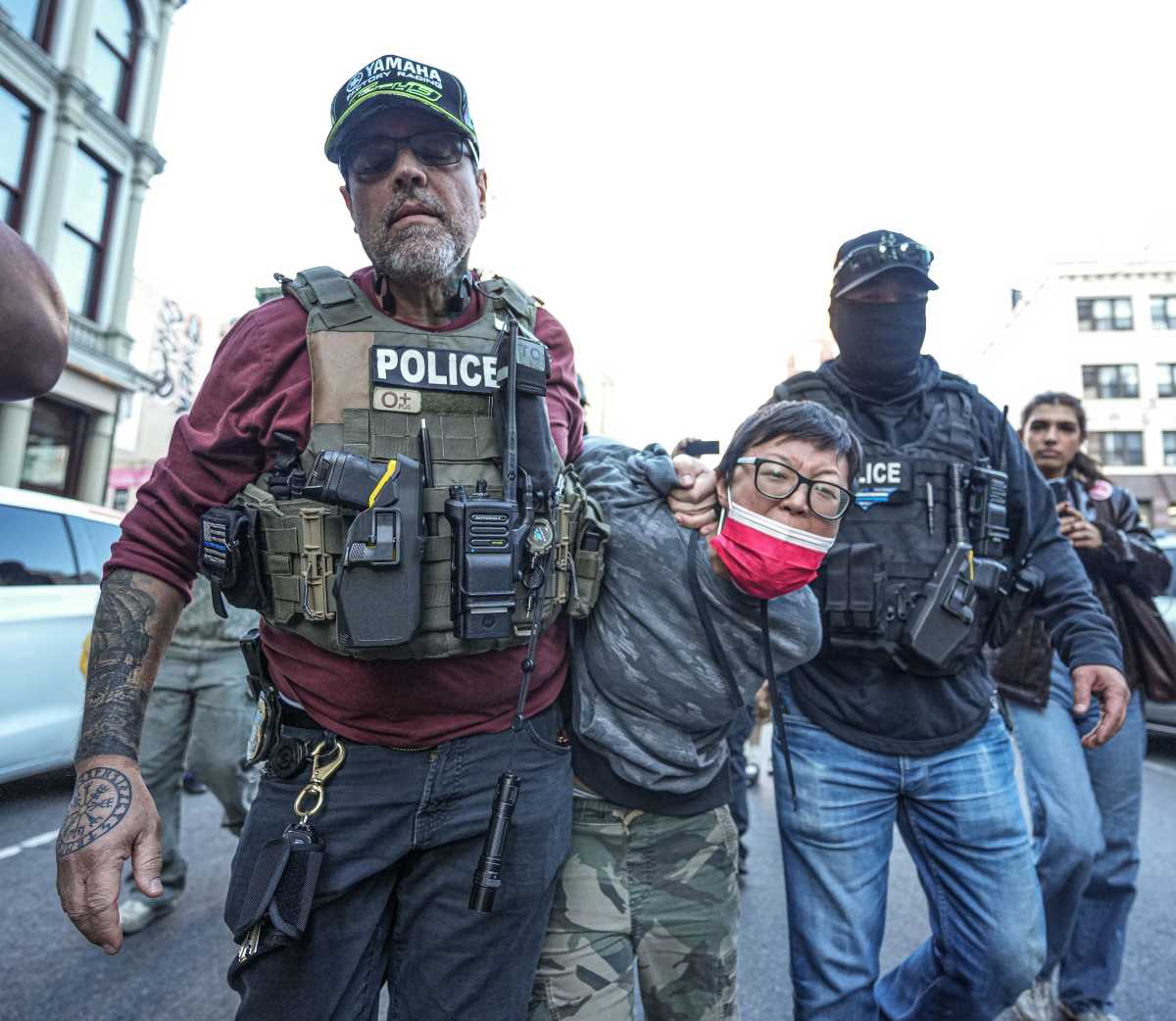
It seems as if the decision to stretch the limits of executive power has no limitations. There are no apologies for the stormtrooper approach of Immigration and Customs Enforcement agents roaming the streets of America, grabbing infants and their mothers and fathers, separating them, or deporting them without following the law. And what of the killings by ICE agents, who the government contends are beyond the rule of law? There is mounting evidence that ICE agents have caused other shootings or deaths beyond those of Renee Good and Alex Pretti in Minneapolis.
What can we do to oppose such disregard for the Constitution or the decisions of judges whose job it is to enforce the laws? Can we protest in the streets? We can, but to what end? There are protests across America every weekend, but those demonstrations are often met with opposing demonstrations in favor of the administration. Where ICE agents roam the streets, many are now afraid to protest or video record the actions of ICE as they have seen the consequences: ICE agents throwing people to the street, beating them, grabbing their phones that were recording the events, and in some instances killing them. The object of the ICE agents, acting under a belief that they are immune to their actions, is to dissuade anyone from protesting, fearing that they will be the next victim.
The administration sends the same message every day: we are going to do what we want, and no one can stop us. Those who do not share our position are stupid or corrupt.
When push comes to shove, as the expression goes, what will those in law enforcement do? Will they obey the decisions of our judges? The administration is now threatening to take charge of elections. Will they use ICE agents and others to intimidate the election process and control the narrative? Every member of the judicial system takes an oath to the Constitution. In a courtroom, one side or the other prevails.
For decades, as a prosecutor and then a defense attorney, I zealously fought on every client’s behalf, but when a judge ruled against us, we followed that ruling. No one likes losing, but we know we must abide by those decisions. The system permits litigants to seek to change the outcome by pursuing relief in the appellate courts. One can only hope that Murphy’s decision and those of his colleagues who are holding the government to task will be followed unless an appellate court says otherwise.
Every week on my podcast, I speak to the flaws in our judicial system, and there are many — but flaws can be addressed. While our system is far from perfect, it is the envy of the world, and we must defend it and our judges’ decisions. That’s the American way!
Robert Simels hosts a podcast, “Injustice for All.” He is no longer practicing law.