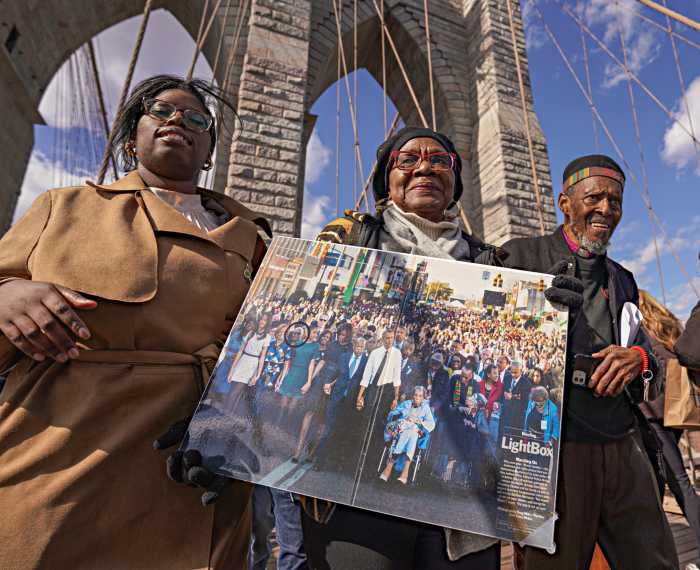



In March 1968, just weeks before his assassination, Dr. Martin Luther King Jr. addressed the Rabbinical Assembly in New York. What made this so special is that it took place in this special city, a melting pot for all religions, races, and cultures, emphasizing the beauty and meaning of who he was.
His words were unequivocal: “Peace for Israel means security, and we must stand with all of our might to protect its right to exist, its territorial integrity.” He went on to describe Israel as “one of the great outposts of democracy in the world.”
But King’s support for Israel was not political posturing. It flowed directly from his understanding of oppression and liberation. He recognized what it meant for a people to be denied sovereignty, safety, and dignity. He saw in the Jewish people’s return to Israel a moral parallel to the Black struggle and pursuit for equality.
King also warned against moral double standards. He understood how political language can be used to deny a people’s legitimacy while claiming the mantle of justice. Just as he confronted coded racism directed at Black Americans, he profoundly recognized the danger of rhetoric that singled out Jews by denying their collective right to self-determination.
“The whole world must see that Israel must exist and has a right to exist and is one of the great outposts of democracy in the world.”
These are the words of Dr. King, a towering voice for moral clarity and a staunch advocate for the Jewish state. At a time when many are attempting to divide Israel from the Jewish faith, let us recall how this iconic Civil Rights leader championed the Jewish people’s right to self-determination.
For this year’s Martin Luther King Jr. Day, it is worth commemorating not only his dream of racial equality in America, but also his take on the disease that is antisemitism.
“When people criticize Zionists, they mean Jews,” he said. “You’re talking antisemitism.”
Today, the orchestration from the far-left and the far-right to bifurcate Israel from the Jewish people would be a contradiction to Dr. King’s message of peace and love for all, which includes the Jewish nation.
As I recently explained in a discussion with our newly elected Mayor Zohran Mamdani, anti-Zionism is antisemitism. The demonization of the State of Israel, a country that has restored safety and dignity for the Jewish people, leads to physical attacks on Jews across the world. In 2025 alone, the NYPD reported 330 antisemitic incidents out of 576 total suspected hate crimes citywide, a reality that demands attention and action.
Zionism is a social justice movement that began in pursuit of a safe haven for Jews from global antisemitic pogroms and persecutions after 2,000-plus years of oppression. Israel is a manifestation of the Jewish people’s collective self-determination.
King profoundly believed in peace for both Israelis and Palestinians. He supported a political solution that would allow both peoples to live with dignity and security. But he never suggested that peace required the dismantling of the Jewish state. Peace, in King’s vision, was built on mutual recognition.
Calls to deny Israel’s legitimacy as a Jewish democracy are framed as progressive. King would have recognized this for what it is: a moral contradiction.
Judaism is not merely a body of faith. It is a peoplehood rooted in its ancestral land of Israel for thousands of years. To bifurcate Israel from the Jewish religion is to deny the Jewish identity itself.
King believed justice is indivisible. You cannot fight racism while tolerating antisemitism. You cannot be a champion of liberation while denying Jews the same right.
The question is not what Martin Luther King Jr. would say today. He already told us. The question is whether we are prepared to listen.
Rabbi Marc Schneier is the president of the New-York based Foundation for Ethnic Understanding and is the Foundation. He is the author of “Shared Dreams: Martin Luther King Jr. & the Jewish Community.”