

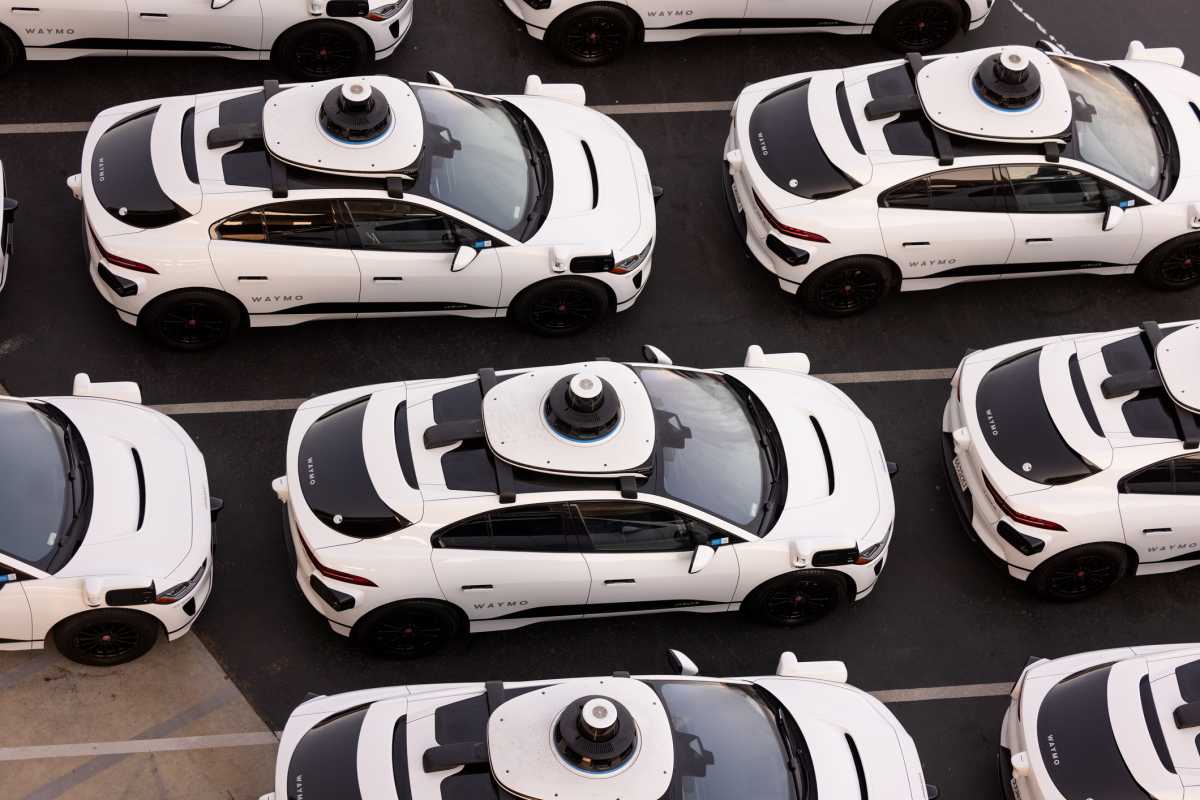
As Gov. Kathy Hochul prepares to unveil her state budget, Silicon Valley is quietly lobbying to turn New York City’s streets into a live experiment for unproven, unaccountable driverless cars.
Beneath the language of “innovation” and “the future,” companies like Waymo are pressing lawmakers to change New York law to allow fully autonomous vehicles to operate as for-hire cars.
If that happens, it will not be because New Yorkers demanded it. It will be because a sweeping policy decision slipped through without public debate and without regard for the working people who keep this city moving.
For decades, New York has built a for-hire vehicle system grounded in safety and accountability. Licensed drivers. Regulated vehicles. Clear rules. Clear responsibility when something goes wrong. That framework reflects a basic belief that transportation is a public trust, not a tech experiment.
It also reflects another reality. Behind every ride is a worker.
More than 140,000 New Yorkers make their living as Uber or Lyft drivers, including more than 80,000 in New York City alone. The vast majority are immigrants. They are parents raising families, caregivers supporting relatives, and small business operators trying to stay afloat in an expensive city. Their earnings support a broad ecosystem of local businesses, including mechanics, gas stations, car washes, insurance brokers, and restaurants across the five boroughs and beyond. This is not a niche workforce. It is a pillar of New York’s economy.
Take, for example, Pedro Acosta, a Brooklyn-based Uber driver originally from the Dominican Republic. Acosta has transported thousands of New Yorkers and raised six children on his earnings as a New York City rideshare driver, including a wheelchair-bound child with serious health needs. Being a for-hire vehicle driver was the only career available to him with the flexibility he needed to get his son to frequent medical appointments. What happens to families like Pedro’s if this career is replaced by Silicon Valley robotaxis?
Waymo and other autonomous vehicle companies want New York to dismantle this system. They promise that driverless cars will be safer, cheaper, and more efficient. But their record elsewhere tells a different story.
Across the country, autonomous vehicles have killed and injured pedestrians and cyclists, stalled in the middle of streets, blocked emergency responders, and driven into active police scenes. During a recent power outage in San Francisco, dozens of Waymo robotaxis froze at once, clogging roads at the moment the city needed mobility most. Autonomous vehicles also struggle significantly in winter weather, which is why Waymo has to this point focused its growth on warm-weather cities.
If autonomous vehicles struggle in cities with wider streets and simpler traffic patterns, it is fair to ask how they would perform in New York. What happens on Canal Street at rush hour, on Flatbush Avenue during a snowstorm, or outside a public school at dismissal time? There is no DMV road safety test yet for robotaxis. No vision test. New York City streets are dense, unpredictable, and human. They require judgment and accountability in real time. No software system can replace that.
Then there is affordability. Waymo claims driverless cars will lower costs, but studies show that’s just not true. Today, robotaxi rides are often more expensive than Uber or Lyft – and looking to the future, their prices are only expected to soar higher. Tech companies are burning through billions in investor dollars in a race to undercut human drivers and dominate the robo-taxi market.
Once a robotaxi company gains significant market share, they will inevitably raise prices to pay off investors and any promised savings for consumers will vanish. The real consequence for New York will be the mass elimination of jobs, diverting billions of dollars out of our communities and shifting costs onto taxpayers, public agencies, and displaced workers.
New York’s existing for-hire vehicle system already spreads costs responsibly. It ensures that workers are protected, riders are covered, and taxpayers are not left paying for private failures. Autonomous vehicle companies want access to our streets without contributing to that system. They do not support worker protections, industry stability, or the communities they would disrupt.
Accountability remains an open question as well. When a licensed driver makes a mistake, there is a clear chain of responsibility. When a regulated vehicle causes harm, regulators know exactly where to look. With driverless vehicles, that clarity disappears. Who is responsible when a driverless car blocks a fire truck? Who answers when software makes the wrong decision in a crowded crosswalk?
So far, the answers have been vague. Promises about safety culture and remote monitoring are no substitute for clear, enforceable rules and human responsibility.
That is why this moment matters. Allowing driverless for-hire vehicles through budget language or quiet statutory changes would lock New York into a risky experiment with no easy way back. New Yorkers deserve a full and transparent debate about whether this technology belongs on our streets.
New York is not anti-innovation. But we are pro-safety, pro-affordability, and pro-workers.
Our streets are not a test track. Our communities are not lab experiments. And our laws should reflect the people who actually make this city run.
Brendan Sexton is president of the Independent Drivers Guild.