



The New York City Council held its first hearing on Wednesday regarding a package of legislation aimed at protecting houses of worship and schools and combating antisemitism, Islamophobia, and anti-Christian hate in the city.
The legislation is part of City Council Speaker Julie Menin’s Five-Point Action Plan to Combat Antisemitism, which she introduced in January in response to a rise in reported antisemitic incidents in New York City and across the country. It includes bills that would require the NYPD to “develop and publish a response plan for when there are credible concerns of injury, intimidation, or restriction of movement that prevent access” to houses of worship and schools.
In an interview with amNewYork, Menin said the Council “looks forward to reviewing the testimony” and “moving forward with this important package as soon as possible.”
Hundreds of civil rights advocates, faith leaders, administration officials, and members of the public testified at Wednesday’s hearing, with many raising concerns about the rise of antisemitic and Islamophobic incidents in New York City since Hamas’ Oct. 7 attack on Israel and the onset of Israel’s war in Gaza.
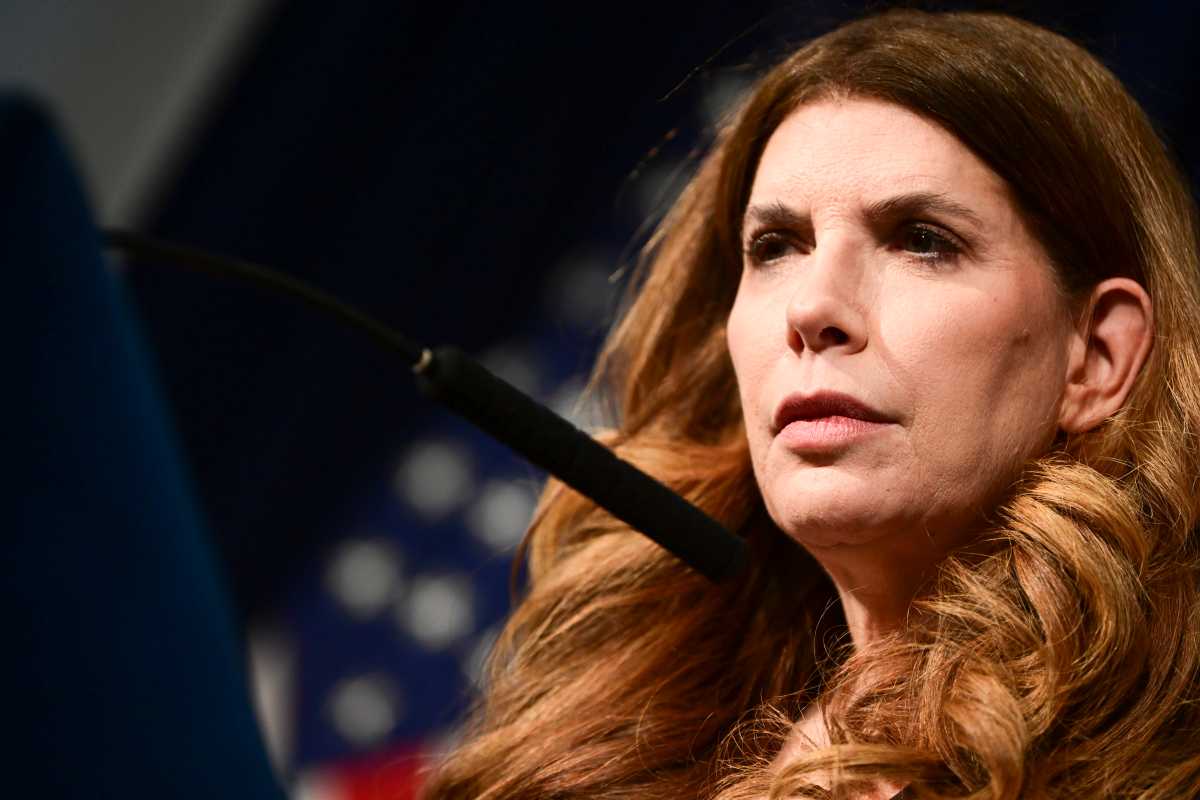
NYPD raises concerns over scope, authority
At the hearing, NYPD Deputy Commissioner of Legal Matters Michael Gerber raised some concerns with the scope of some of the legislation and potential threats to the NYPD’s authority over protest jurisdiction.
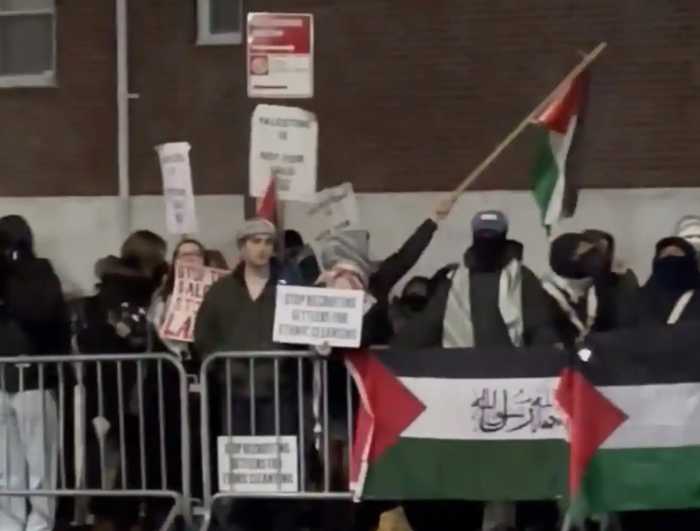
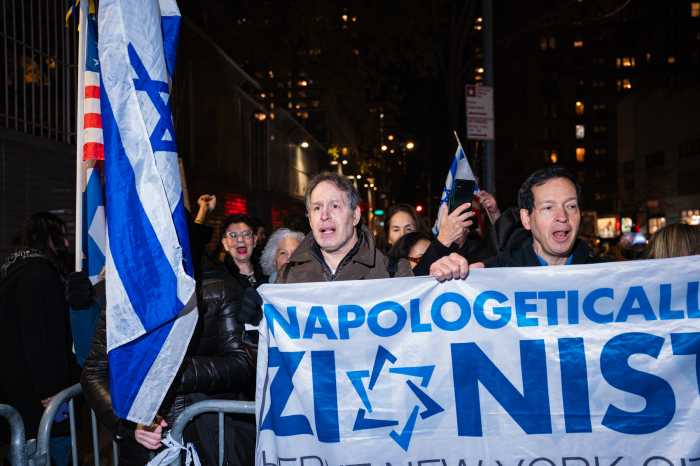
A November protest outside an Upper East Side synagogue against Nefesh B’Nefesh, an organization that assists Jewish immigration to Israel, set off criticism across the city, with many elected officials describing the protest as antisemitic. Since the protest, officials ramped up efforts to prevent protests near houses of worship and schools.
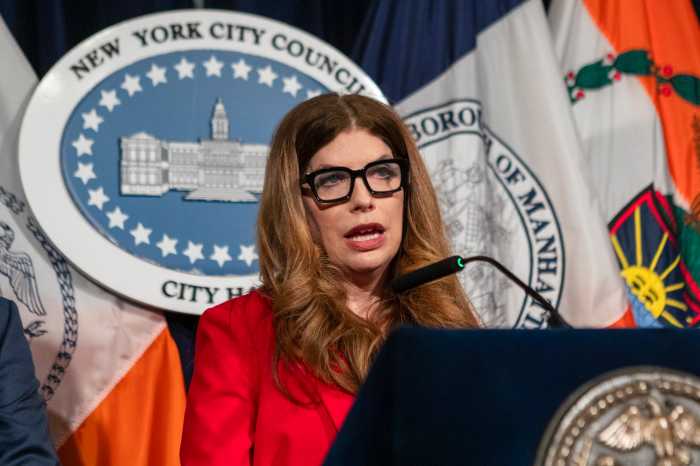
“These bills are grounded in a simple but urgent principle: every New Yorker should feel safe entering their house of worship or their school,” Menin said at a Wednesday rally ahead of the hearing. “This legislative package strengthens transparency, improves coordination, and ensures safe access while fully safeguarding First Amendment rights.”
Menin is sponsoring the primary bill related to houses of worship, while Council Member Eric Dinowitz (D-Bronx) is sponsoring a nearly identical bill for schools. Wednesday’s hearing was held by the Committee to Combat Hate, chaired by Council Member Yusef Salaam (D-Manhattan).
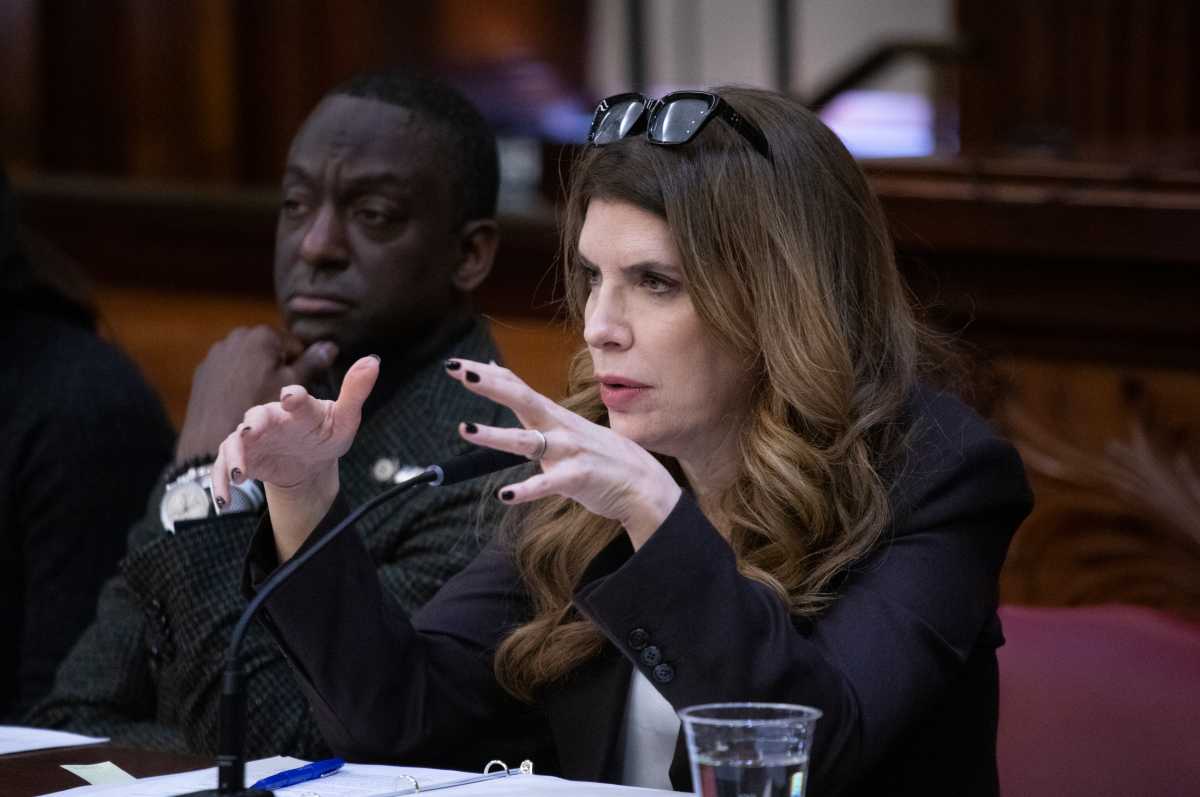
Testimony follows last-minute changes to core bills
On Feb. 24, the City Council altered Menin’s bill and Dinowitz’s bill, dropping a previously planned rule that would have established a strict security perimeter of up to 100 feet outside houses of worship and schools. The legislation would have required police tape or barricades to enforce.
The new versions of the bills remove the 100-foot specification, eliminate the barrier mandate, and no longer require fixed perimeters at each entrance and exit.
Menin said that the changes came after her conversations with Police Commissioner Jessica Tisch.
“The Commissioner wanted to ensure some additional flexibility around the size of the perimeter, because, certainly, in some instances, you need very significant perimeters around houses of worship and schools, and sometimes the perimeters are smaller,” Menin told amNewYork. “We provided that additional flexibility in determining the size of the perimeter.”
Mayor Zohran Mamdani said at a Wednesday news conference in Morningside Heights that the new version of the legislation requires the New York City Law Department and the NYPD to “respond within 45 days with a plan to both the speaker and myself on how we can both protect the right to prayer as well as the right to free speech.”
“This is a distinct shift from the original legislation, which proposed a specific policy that I know our police department as well as a number of legal scholars had expressed concerns about,” Mamdani said. “So I look forward to seeing the hearing today and to see whatever the final version is of that legislation.”
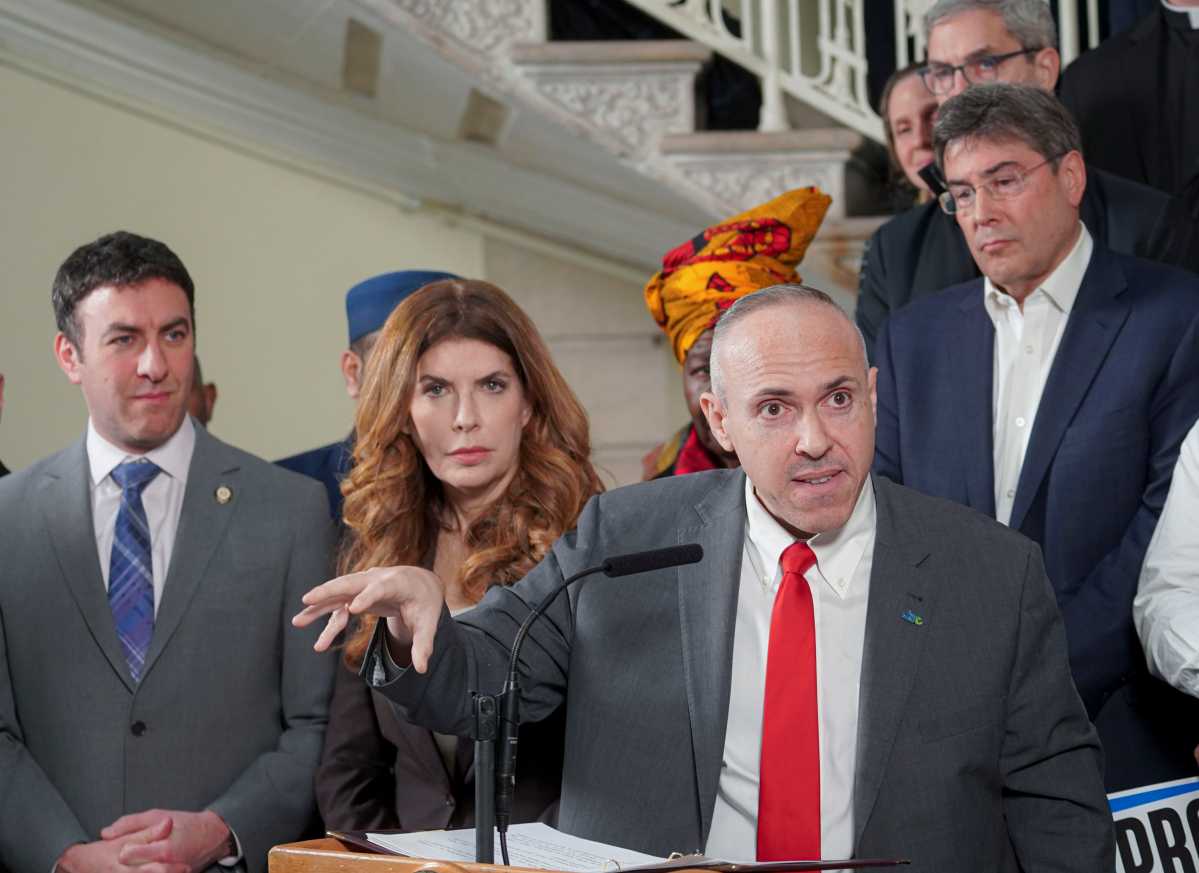
Gerber said that the NYPD supports Menin’s bill protecting houses of worship, Introduction 1-A, and clarified that “the policy will not alter our practices but rather will articulate and describe what we are already doing” regarding the NYPD’s protest response procedures.
The NYPD, Gerber said, looks to allow protests within “sight and sound” of the intended protest site while protecting those who may be present at that site.
“It goes without saying that this can be gut-wrenching, infuriating, and deeply disturbing, particularly when this is happening outside a community’s spiritual home,” Gerber said, explaining the NYPD’s enforcement process. “But the First Amendment protects the rights of protesters even when their speech is hateful, and the NYPD is obligated to ensure the rights of protesters without regard to the content of protected speech.”
Regarding Dinowitz’s bill related to schools, Introduction 175-A, Gerber said that while the NYPD is broadly in support of the bill, the department has concerns about the legislation’s scope, as the new rule “would apply to police activity on both public property and private property.”
“These are distinct issues, both legally and operationally, and we look forward to addressing that
distinction in discussions with the Council,” Gerber said.
Gerber thanked the City Council for its amendment of the legislation.
Menin, City Council looks to move quickly as hearings continue
Menin told amNewYork that the Council will “be having more conversations with the NYPD” as the legislative process moves forward about ensuring that enforcement on both public and private property is consistent with First Amendment protections.
City Council Majority Leader Shaun Abreu (D-Manhattan) is sponsoring a bill, Introduction 22, that would require the New York City Department of Education to “distribute materials to students about the risks of social media and online hate.”
Dinowitz is sponsoring a second bill in the package, Introduction 165, requiring the NYPD to “report on the status of hate crime cases to improve transparency and accountability.”
Gerber raised concerns about Intro. 165, arguing that the NYPD does not have access to the kind of data that Dinowitz’s bill suggests. Rather, Gerber said, aggregate data regarding the “prosecutorial outcomes, bail determinations, and ultimate court dispositions in every case in which someone has been arrested or indicted for a hate crime” is maintained by prosecutors and the Office of Court Administration.
“The Council should not direct the NYPD to report data that it does not have,” Gerber said, noting that the NYPD already reports some aggregate data related to hate crimes.
Council Member Virginia Maloney (D-Manhattan) is sponsoring a bill, Introduction 297, that would require emergency planning between the NYPD and the Office of Emergency Management for “religious institutions.”
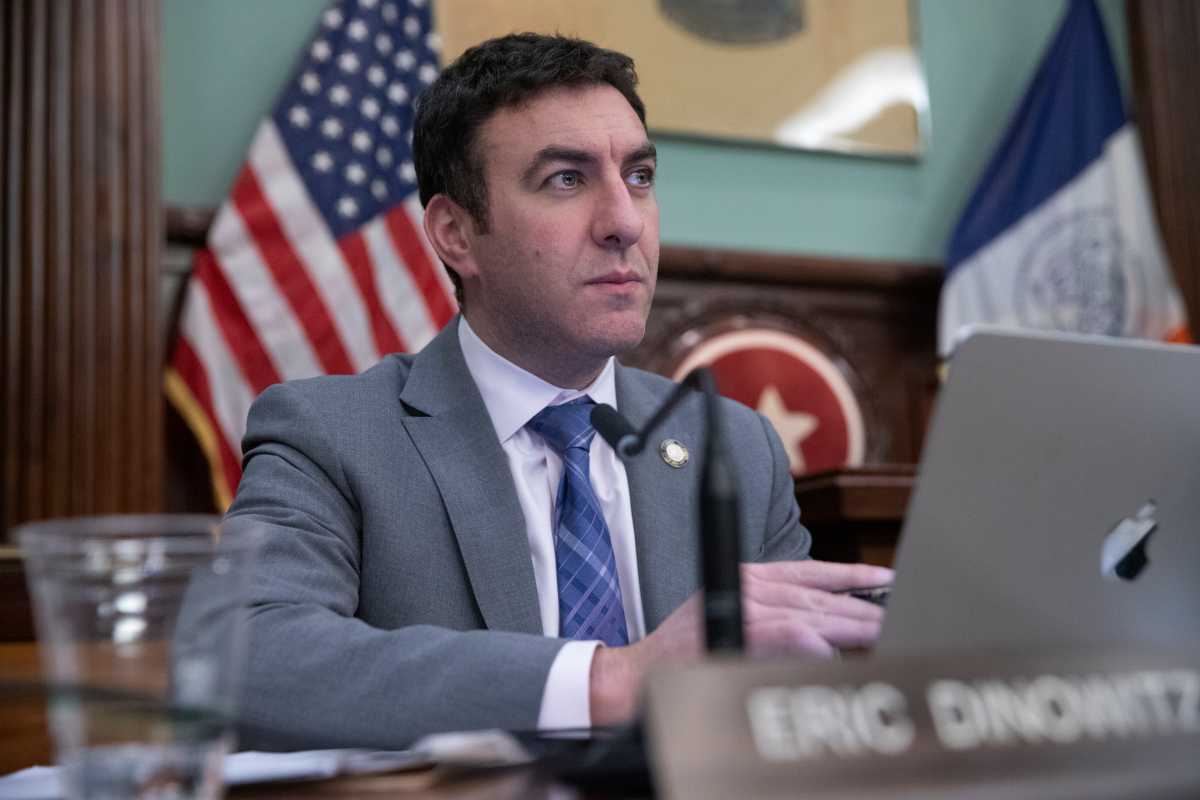
Regarding Intro. 297, Gerber said the NYPD “strongly” objects to having another agency, “whether OEM or otherwise,” provide guidance on the matter. He said the NYPD is opposed to the bill in its current form.
“The NYPD has the appropriate expertise and experience in these matters; other city agencies do not,” Gerber said of Intro. 297. Having a city agency offer guidance on security plans that may conflict with the guidance from the NYPD is a recipe for confusion. It will not enhance security, and risks undermining security.”
Another bill, Intro. 327, sponsored by Council Member Mercedes Narcisse (D-Brooklyn) would reimburse private and charter schools for the cost of video surveillance cameras. Still another proposed piece of legislation from Council Member Lincoln Restler (D-Brooklyn), Introduction 388, would establish a hotline and “detailed reporting system” for antisemitism and other hate- and bias-related incidents.
New York Attorney General Letitia James commended the legislative package in a Wednesday statement, saying in a news release that New York “will never allow fear or prejudice to divide us.”
“I commend Speaker Menin and the City Council for working to protect people of every faith in our city,” James said. “My office will continue to protect the rights and dignity of New Yorkers and take action whenever hate or bias threatens them.”
Scott Richman, Anti-Defamation League regional director for New York and New Jersey, also testified at Wednesday’s hearing, identifying the spike in antisemitic incidents as a “threat to religious freedom and safety … necessitating legislative intervention.”