

Wednesday, Jan. 28, marked the 28th day of Zohran Mamdani’s term as mayor. amNewYork is following Mamdani around his first 100 days in office as we closely track his progress on fulfilling campaign promises, appointing key leaders to government posts, and managing the city’s finances. Here’s a summary of what the mayor did today.
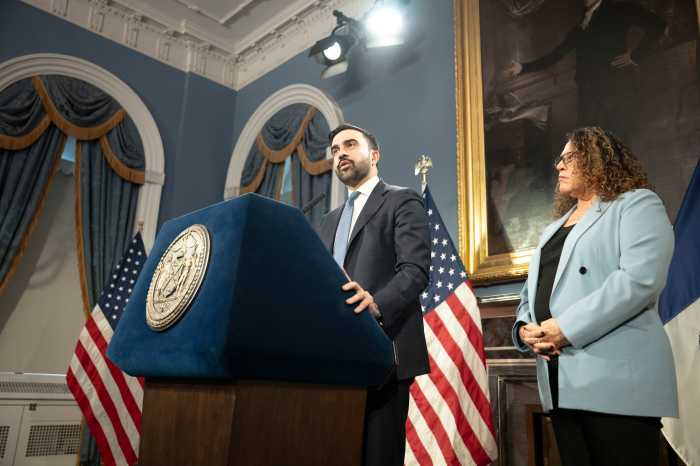
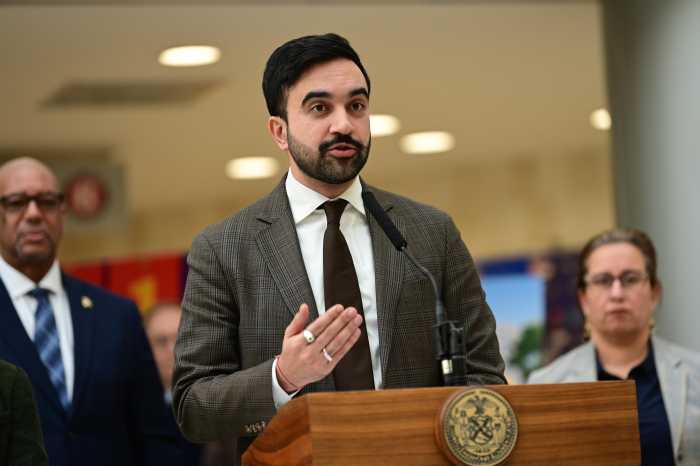
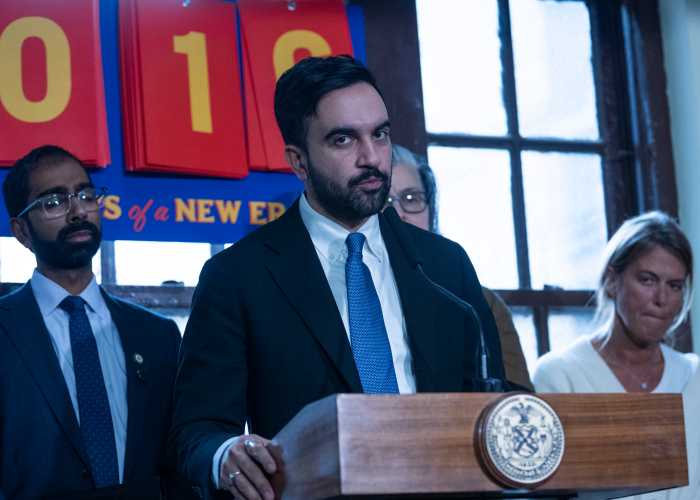
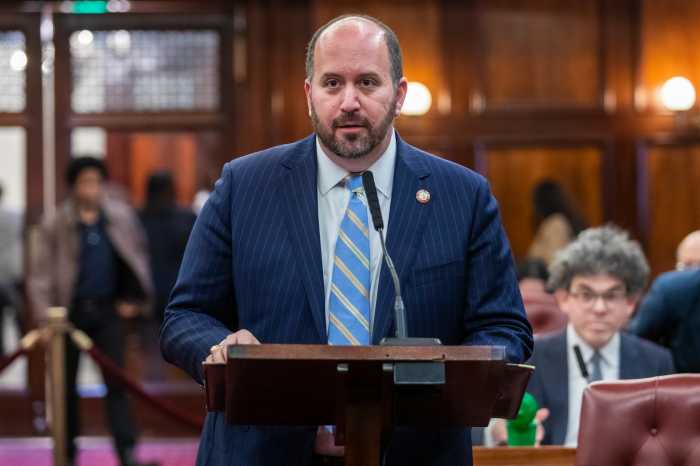
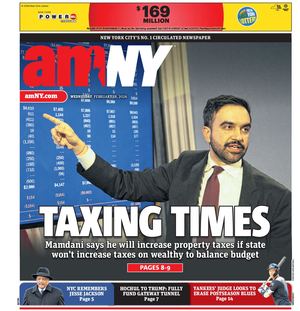
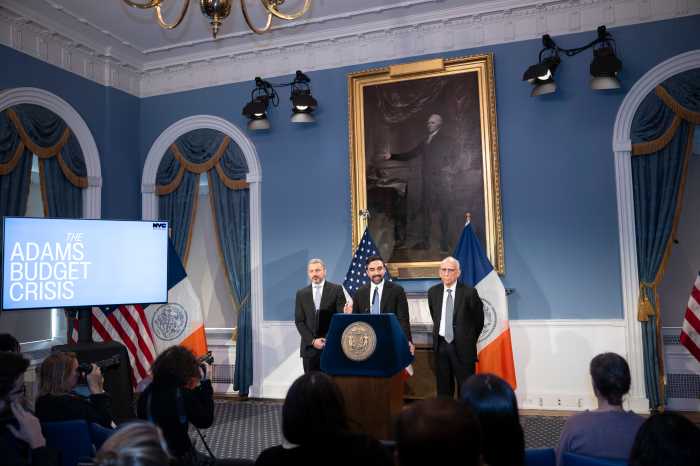
Mayor Zohran Mamdani opened his first budget season Wednesday by accusing his predecessor of fiscal “negligence” that blew a $12 billion hole in city finances — but stopped short of saying which services, contracts, or agencies could be on the chopping block in the weeks ahead.
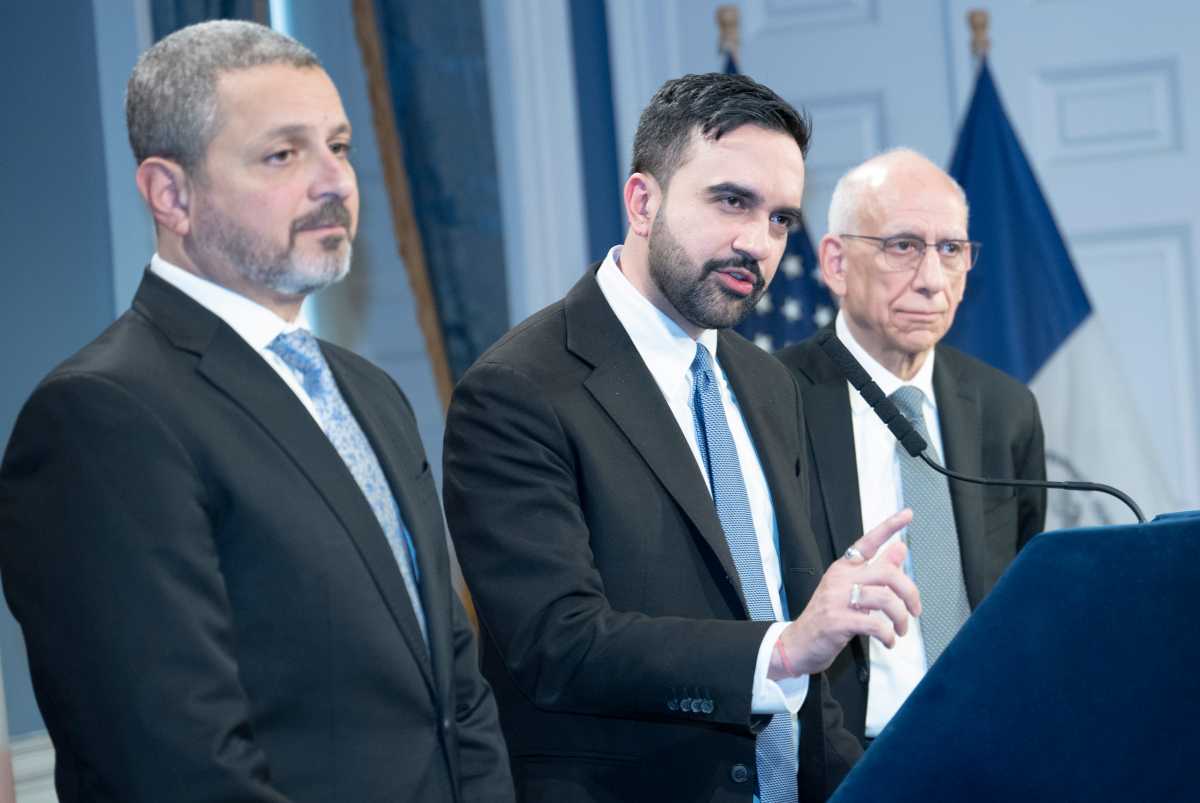
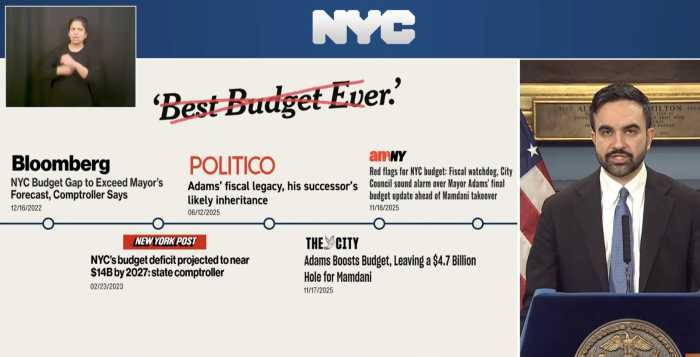
Speaking at a press conference, Mamdani said the scale of the city’s budget gap is far larger than previously disclosed and blamed former Mayor Eric Adams for deliberately underbudgeting recurring costs to make his final financial plans appear balanced.
The mayor’s remarks followed a recent analysis by City Comptroller Mark Levine, who warned that the city faces multibillion-dollar gaps in the coming fiscal years, driven largely by expenses that were never fully funded in prior budgets.
“This crisis has a name,” Mamdani said, calling it the “Adams budget crisis,” and accusing the former mayor of choosing “political self-preservation over fiscal responsibility.” He argued that Adams knowingly understated expenses so he could claim fiscal year 2026 was balanced, leaving behind what Mamdani described as a $3 billion hole in that year alone.
While the comptroller’s report laid out the numbers in technical terms, Mamdani used the opening of the press conference to place them in a broader political and historical context. He said his administration’s early internal review aligns with the comptroller’s findings, showing projected budget gaps roughly double those the Adams administration had published year after year. Mamdani repeatedly emphasized that the deficits now facing the city are larger than those seen during the Great Recession and more than 300% higher than the average gaps in the decade before the pandemic.
For example, Mamdani said the prior administration budgeted $860 million for cash assistance this fiscal year, while current estimates are closer to $1.6 billion. Shelter spending was budgeted at $1.47 billion, he said, but now appears to be at least $500 million higher. He also cited chronic underfunding of rental assistance and special education, calling those services “critical responsibilities of city government, not optional programs.”
Mamdani lays blame at Cuomo’s feet, too
Mamdani also widened his critique beyond City Hall, blaming a long-running fiscal imbalance between the city and the state that he said dates back largely to former Gov. Andrew Cuomo’s tenure. According to the mayor, New York City generates roughly 54.5% of state revenue but receives about 40% of state spending, amounting to an estimated $8 billion annual shortfall.
“In fiscal year 2022 alone, the city sent $68.8 billion to Albany and got back $47.6 billion,” Mamdani said, describing the difference as a “$21 billion chasm” that has left the city struggling to fund schools, parks, and social services.
Despite repeatedly describing the situation as a fiscal emergency, Mamdani declined to outline specific cuts his administration is considering as it prepares a legally required balanced preliminary budget, due Feb. 17.
Adams pushed back against Mamdani’s claims of fiscal mismanagement in a post on X, defending his administration’s budgeting record and accusing Mamdani of replacing “math” with “slogans.”
He noted that all budgets passed during his tenure were approved by the City Council, including “Mamdani’s comrades,” and said his administration navigated the COVID-19 recovery and a $9 billion migrant crisis without raising taxes, cutting jobs, or damaging the city’s credit.
“And here’s the part socialists hate saying out loud: ‘Free’ is a lie. Every so-called free program comes with a price tag, and someone always pays for it,” Adams posted.
Rich Azzopardi, spokesperson for Cuomo, suggested that Mamdani lacked “a basic command of the facts,” noting that the former governor had increased state aid to the city’s public schools 68%, and that the state “absorbed billions in New York City Medicaid cost increases.”
“Zohran Mamdani needs to learn that being an executive is more than cosplaying in a custom designer made windbreaker,” Azzopardi said. “Andrew Cuomo inherited an $11 billion deficit when he first took office and managed to close it through hard work and fiscal discipline – words that just aren’t in Mamdani’s vocabulary. He also hasn’t been governor for the last five years, the exact amount of time that Mamdani, as a state legislator, was in a position to correct any perceived inequalities.”
No specifics yet
Pressed by reporters on whether agency-wide cuts, hiring freezes, or vacancy sweeps were on the table, Mamdani rejected those approaches, drawing a distinction between finding efficiencies and imposing austerity.
“A $12 billion fiscal deficit cannot be resolved through efficiencies and savings alone,” he said, adding that his administration would not balance the budget “on the backs of working New Yorkers.”
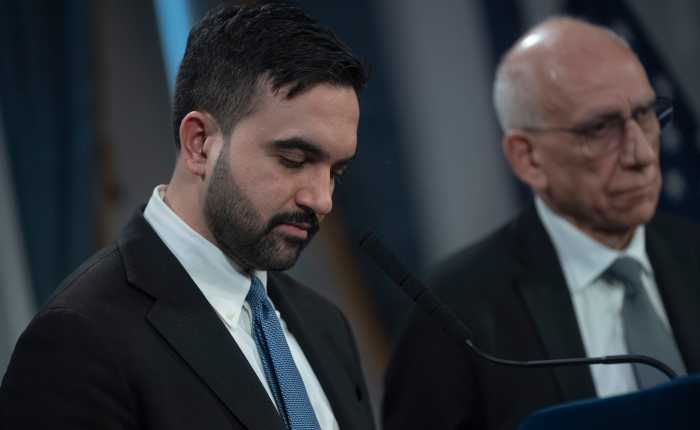
Mamdani said his team is reviewing “every single dollar that the city spends,” citing as one small example a $500,000 chatbot launched under the prior administration that he described as largely unusable. After the launch of the MyCity chatbot, it was found to be giving business owners incorrect answers or advice that would potentially break the law, according to reports.
Mamdani acknowledged that eliminating such expenses would not close the gap but said they point to broader patterns of mismanagement.
When asked about stronger-than-expected Wall Street bonuses and income tax receipts, Mamdani said he was encouraged by the reports but cautioned they would not materially change the city’s fiscal outlook.
“The scale of this deficit is such that it will not be covered no matter what the news is,” he said, adding that structural solutions would still be required.
Those solutions, Mamdani said, include raising income taxes on the city’s wealthiest residents and increasing taxes on the most profitable corporations — proposals that would require approval from state lawmakers and Gov. Kathy Hochul, who has previously expressed resistance to tax hikes.
Mamdani said he has had “encouraging” conversations with Hochul and legislative leaders, but acknowledged that securing Albany’s support will be critical.
“We’re not going to play budget games,” he said. “We’re going to be honest with New Yorkers about the true cost of city services — and what it will take to protect them.”
Gov. Hochul’s office did not respond to requests for comment on Mayor Mamdani’s tax push, but the governor downplayed the idea while speaking with reporters on Wednesday, according to NY1. Hochul said she remains opposed to raising taxes, arguing that the state does not need additional revenue and pointing to stronger-than-expected collections, including from Wall Street bonuses.
State Comptroller Thomas DiNapoli commended Mayor Mamdani “for speaking plainly about these stark fiscal realities,” but warned that even as revenues are projected to come in above plan this year, spending is likely to exceed revenues for the fourth consecutive year — a trend DiNapoli called “troubling” and one that underscores the need for careful, defensive fiscal planning, particualry in the face of uncertainties in federal funding.
He highlighted areas where gaps could emerge if costs are not fully accounted for, including rental and public assistance, non-asylum homeless shelter costs, childcare vouchers, and foster care programs.
Education-related expenses, such as due-process cases, class-size mandates, and school cleaning, as well as citywide operational costs, including overtime, MTA subsidies, and health insurance, pose significant risks, his office says.
“As federal and state budgets take shape, the city must fully budget for the fiscal risks, present contingency scenarios, identify cost efficiencies, and grow reserves as it finalizes its budget,” DiNapoli said.
Meanwhile, Andrew Rein, president of the Citizens Budget Commission, acknowledged that the city faces a significant budget gap next year — possibly up to about $8 billion, somewhat lower than the mayor’s figure but still a serious shortfall that “does not disappear on its own.”
In a statement, Rein argued that while the prior administration underbudgeted, obscuring the size of the gap, the underlying issue was that the city added and expanded programs it ultimately could not afford without making tough choices to trim or eliminate low-impact spending.
Rein also pushed back on calls for more revenue before ensuring the city’s existing funds are spent efficiently. He welcomed Mayor Mamdani’s focus on efficiency and “investigating every dollar,” but noted that the administration has yet to lay out a systematic cross-agency savings plan.
Rein said the city should focus on spending the current roughly $120 billion budget on the “right programs” before asking New Yorkers for more money, cautioning that higher taxes could make it harder for the city to attract and keep businesses and residents.
The CBC’s own research underscores the risks of layering new revenue on top of already high taxes, with a report published Wednesday finding that New York businesses face some of the highest combined state and city tax rates in the country, which the report warns can erode competitiveness and discourage business investment and job growth.
He also urged Mamdani to work with Albany to secure relief from costly state mandates, such as the class-size requirement, which he said could cost the city more than $1 billion.
Response: Cold-weather deaths and snow removal
Mamdani said there have been no additional outdoor deaths since his last update on Monday, and that of the 10 recent fatalities, preliminary findings suggest hypothermia played a role in about seven cases. Six of those individuals were known to the Department of Homeless Services.
He emphasized that the final causes of death will be determined by the medical examiner, a process that can take five to seven days after autopsy and testing.
The five boroughs saw between 8 and 15 inches of snow during Sunday’s winter storm. While the Department of Sanitation plowed and salted every city highway, street, and protected bike lane multiple times, piled snow at curbs and crosswalks — from both street plowing and sidewalk shoveling — left many streetscapes hazardous for pedestrians.
When asked whether the administration is exploring new approaches to snow clearing, Mamdani acknowledged the challenges and said the city is continuing to evaluate all options to improve service and safety.
He cited recent statistics showing that as of 7:10 a.m. On Wednesday, the Department of Transportation had cleared 3,227 bus stop shelters, approximately 95% of the 3,400 for which the city is responsible. Property owners are responsible for the remainder, which includes thousands of additional sites.
Mamdani also noted that the unusually cold temperatures — the coldest in the city in at least eight years — complicated snow removal efforts.
The Department of Sanitation said workers on Wednesday were hauling piled snow to five locations across the city, one in each borough, and using industrial snow-melting machines capable of melting up to 240,000 pounds of snow per hour to send the runoff into the city’s sewer system.
Policing: Mayor in active discussions to dismantle NYPD’s SRG
Mayor Mamdani also reaffirmed his support for disbanding the NYPD’s Strategic Response Group (SRG), adding that he is “currently in conversations with the police commissioner on the ways in which we can do so operationally.”
He stressed that the decision is not driven by fiscal concerns, but by the need to separate counterterrorism responsibilities from protest policing.
“We should do so not on the basis of any fiscal need, but frankly, on the counterterrorism responsibilities within the department, from police response to First Amendment exercise,” Mamdani said.
When asked whether a replacement unit would take over protest policing, Mamdani said, “We don’t believe that there should be a unit that has both counterterrorism responsibilities and responsibilities to responding to protests. The conflation of the two is part of this issue.”
He emphasized that the NYPD will continue to respond to protests as part of its normal duties, and that all responses must respect New Yorkers exercising their constitutional rights.
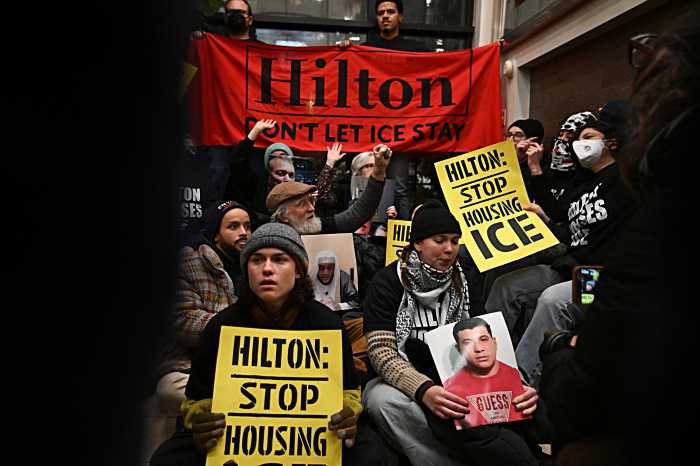
Mamdani’s comments came a day after police arrested 65 demonstrators who had staged a protest at the Hilton Garden Inn in Tribeca, where protesters occupied the lobby to decry violent ICE operations in Minnesota and beyond.
Protesters, who numbered more than 100, removed their coats to reveal shirts reading “Abolish ICE” and “Hilton Houses ICE,” saying they sought to hold the Hilton chain accountable for allowing ICE agents from outside Minnesota to stay at its properties.
At the press conference, Mamdani commended both the protesters for exercising their constitutional rights and the NYPD for its nonviolent response. He said any operational alternative to the SRG would focus on counterterrorism responsibilities and would not include protest policing, emphasizing that the city is working to separate these duties.
As a mayoral candidate, Mamdani pledged to nix the NYPD’s SRG due to what he described as its heavy-handed tactics in policing protests. which responds to terror incidents and handles protests,
The SRG has been fiercely criticized by left-leaning pols, government watchdogs, and police reform advocates who say it is not properly trained and needlessly escalates tensions when responding to protests.
Mamdani previously said he would replace the SRG with another unit designed to respond specifically to emergencies, not protests.