

Originally known for his breakthrough book and exhibition Kip Fulbeck: Part Asian, 100% Hapa (2006), Fulbeck is once again on display, celebrating 25 Years of the Hapa Project at the Museum of Chinese in America (MOCA), right in the heart of New York City’s Chinatown.
In 2001, American artist Lawrence Keith “Kip” Fulbeck founded the Hapa Project to raise awareness and recognition of multiracial people in the United States, giving individuals a voice to promote a positive mixed identity and challenge common racial assumptions. Fulbeck began traveling the world photographing multiracial individuals of all ages and backgrounds. After capturing portraits of over 1,200 people, Fulbeck compiled the photos into one of his best-known works, Kip Fulbeck: Part Asian, 100% Hapa.
The word “hapa” comes from the Hawaiian word for “half,” and over time, it has become a word of pride for multiracial individuals of Asian or Pacific Islander descent. However, historically, the term was used to address the mixed offspring of Native Hawaiians and white settlers, resulting in the phrase “hapa haole,” which means part white or foreigner. In the modern era, there has been some debate over who can identify as “hapa.” Some believe the term can refer to anyone of mixed race, while others argue that it can only apply to those who are part Hawaiian, half Japanese and half white, or even as an acronym for “Half Asian Pacific American.” Fulbeck’s own mixed heritage – English, Welsh, Irish and Cantonese – has deeply influenced his passion for promoting a positive identity surrounding the term.
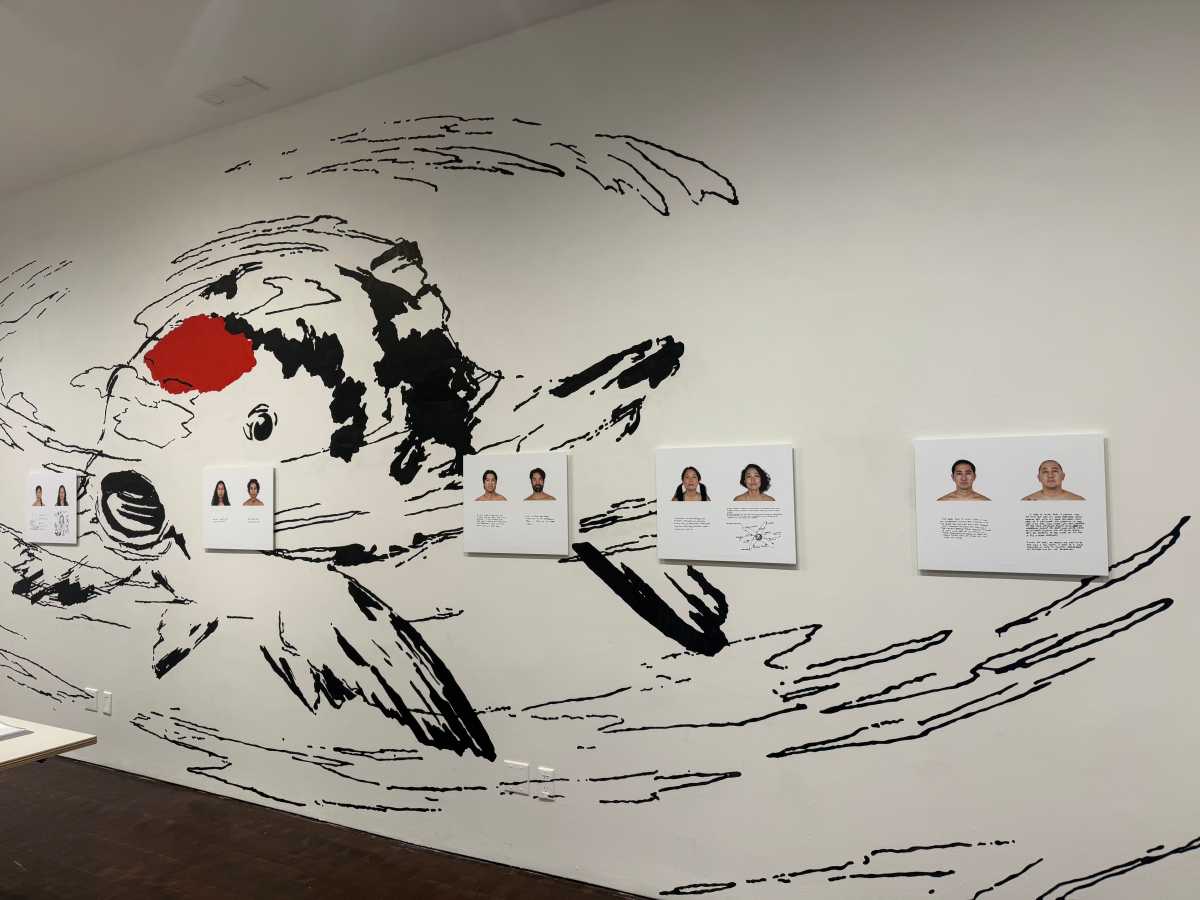
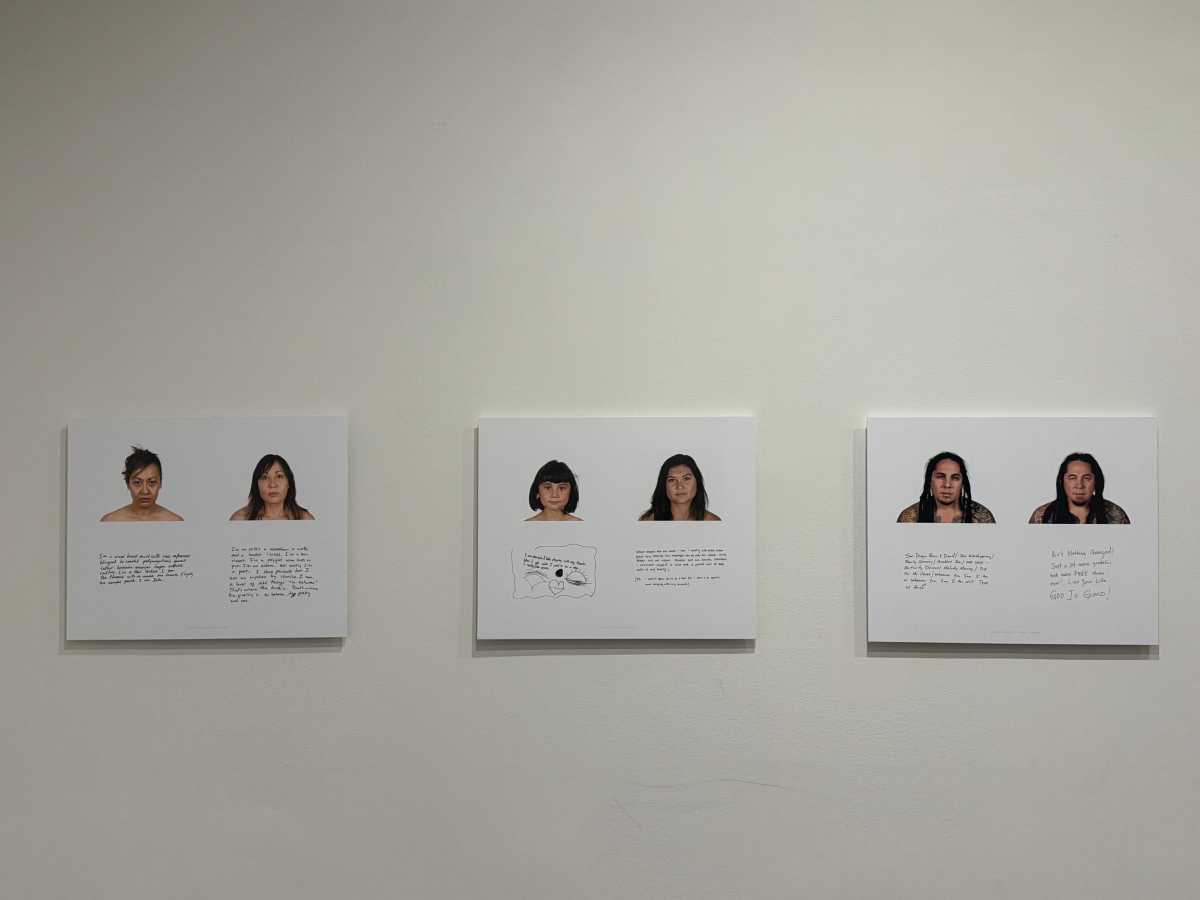
Now, 25 years later, Fulbeck has revisited more than 30 of the individuals he originally photographed for Kip Fulbeck: Part Asian, 100% Hapa, rephotographing them along with collecting a new written response to reflect where they are today. This exhibition originated at the Japanese American National Museum in Los Angeles, California, before making its way to New York.
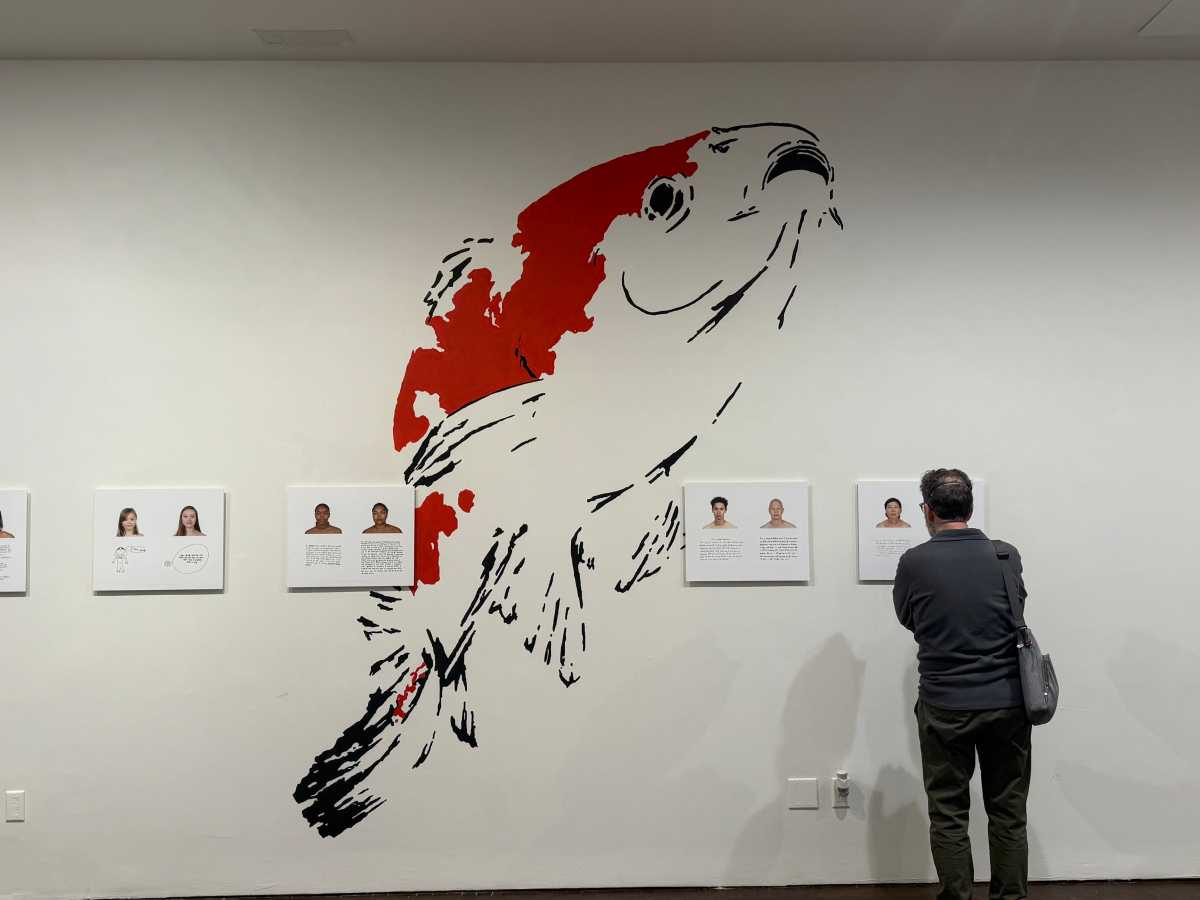
The temporary exhibit occupies a small, white room tucked in the corner of the museum. Upon entering, visitors are met with over 30 side-by-side portraits of hapa individuals, taken 25 years apart. Each photograph is cropped from the chest up and made as neutral as possible – no clothes, accessories, or backgrounds – to limit prior assumptions or judgements. The portraits are only of the individuals themselves with a blank expression and a white background. Beneath each pair of images are the subjects’ original handwritten responses from 25 years ago, answering the habitually asked question for multiracial people: What are you? These are placed side-by-side with their more recent responses on how the past two decades have shaped their identities. It’s only then that most notice the small grey text at the bottom of each plaque listing the individuals’ full ancestries, some with two backgrounds, while others have as many as ten.
For some participants, the transformation is quite clear. Childlike scribbles and drawings are shown beneath an image of them as toddlers, and just inches to the right, visitors see them as adults, with a brand new response that can sometimes directly reference their original comments. However, for others, little has changed beyond their physical appearance, remaining fully confident in their hapa identity as they were decades earlier. The responses vary largely, with some featuring a single word while others write a paragraph, each one exploring their heritage, identities and perspectives.
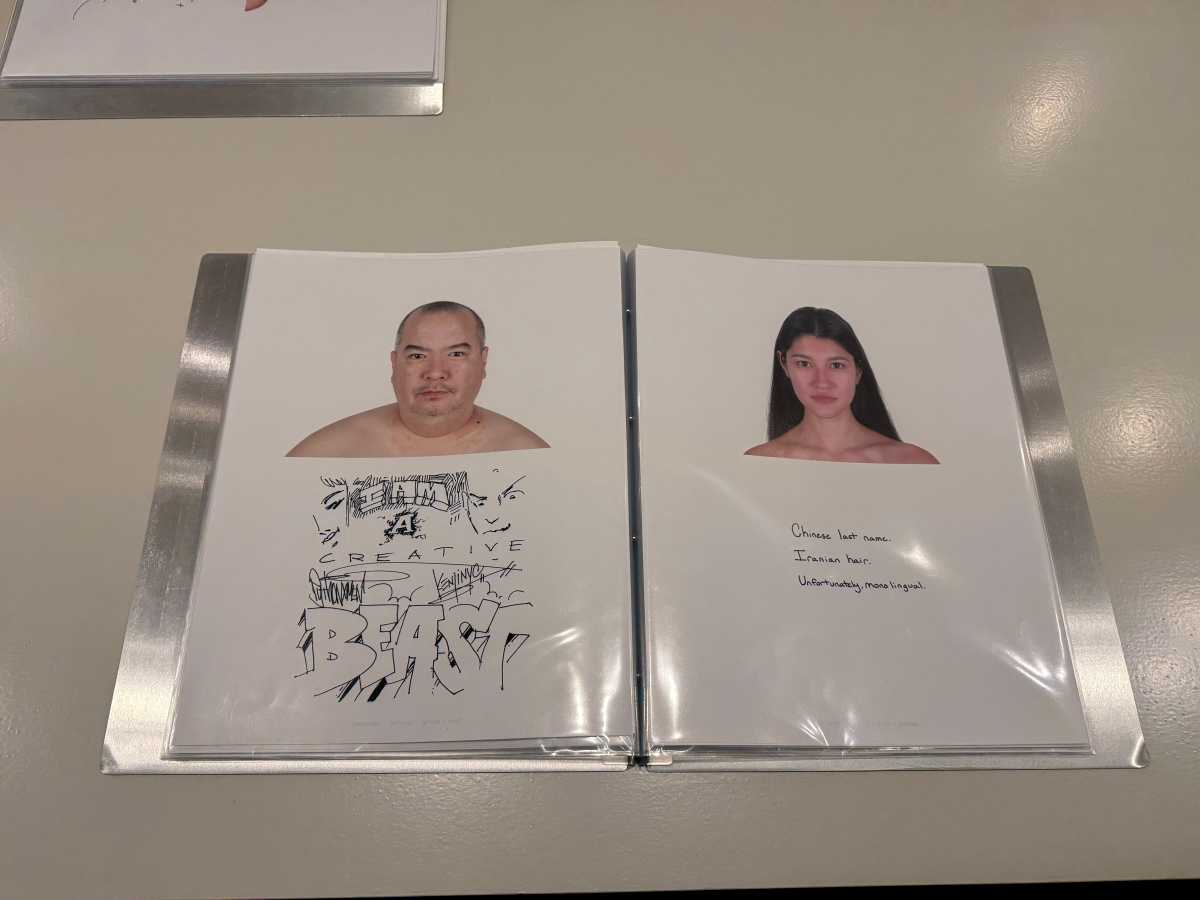
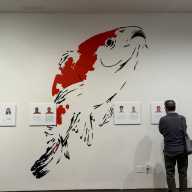
Outside of the plaques surrounding the room are two beautifully painted koi fish on the opposite side of each wall, adding just a small pop of red and black in the otherwise blank space. At the center of the room stand two white folding tables featuring an array of books with even more hapa individuals Fulbeck has documented in his years of work. Perhaps one day, these individuals, too, will have the opportunity to reflect on how their identities have changed over time.
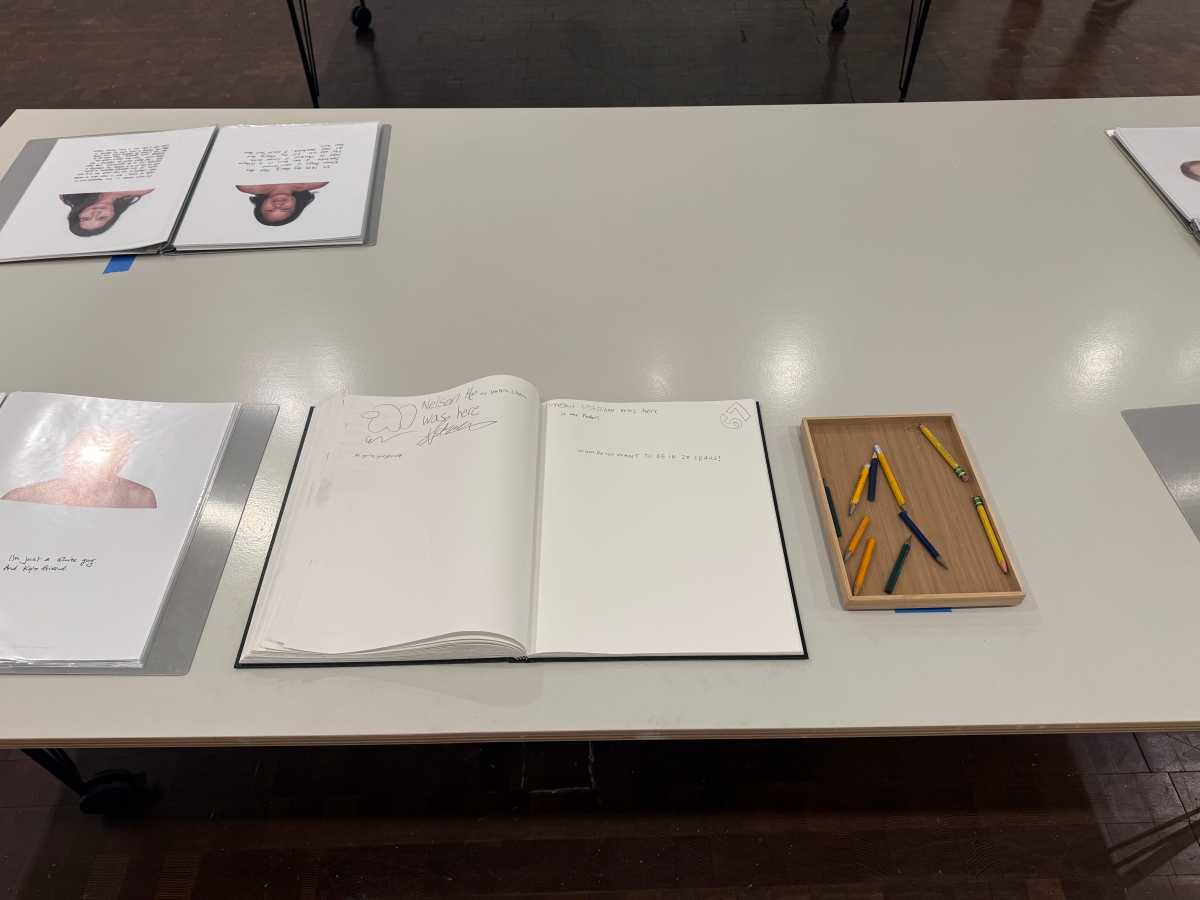
While flipping through these books, visitors eventually come across an empty book with mostly blank pages, sitting next to a tray of pencils. Here, visitors are invited to share their own identities – whether they identify as hapa, mixed race, or something else entirely.
25 Years of the Hapa Project encourages visitors to take a look at their own identity and personal growth, prompting questions surrounding their ancestry, self-understanding and how they choose to define themselves. Fulbeck’s Hapa Project has given not only his participants, but also viewers, readers and listeners a platform to express both the challenges and confidence that come with being who they are.
The exhibit is available for viewing through March 29 at the Museum of Chinese in America, 215 Centre Street, New York, New York, 10013.