


There are mornings in New York when the rain feels biblical and Lexington glistens like a freshly lacquered stage, taxis hissing, umbrellas colliding, ambition steaming off the pavement. On one such gray overture, I slipped into a limestone doorway on East 61st Street and into a different register of time.
The contrast was immediate. Almost theatrical.
Outside: wet wool, honking horns, espresso-fueled velocity.
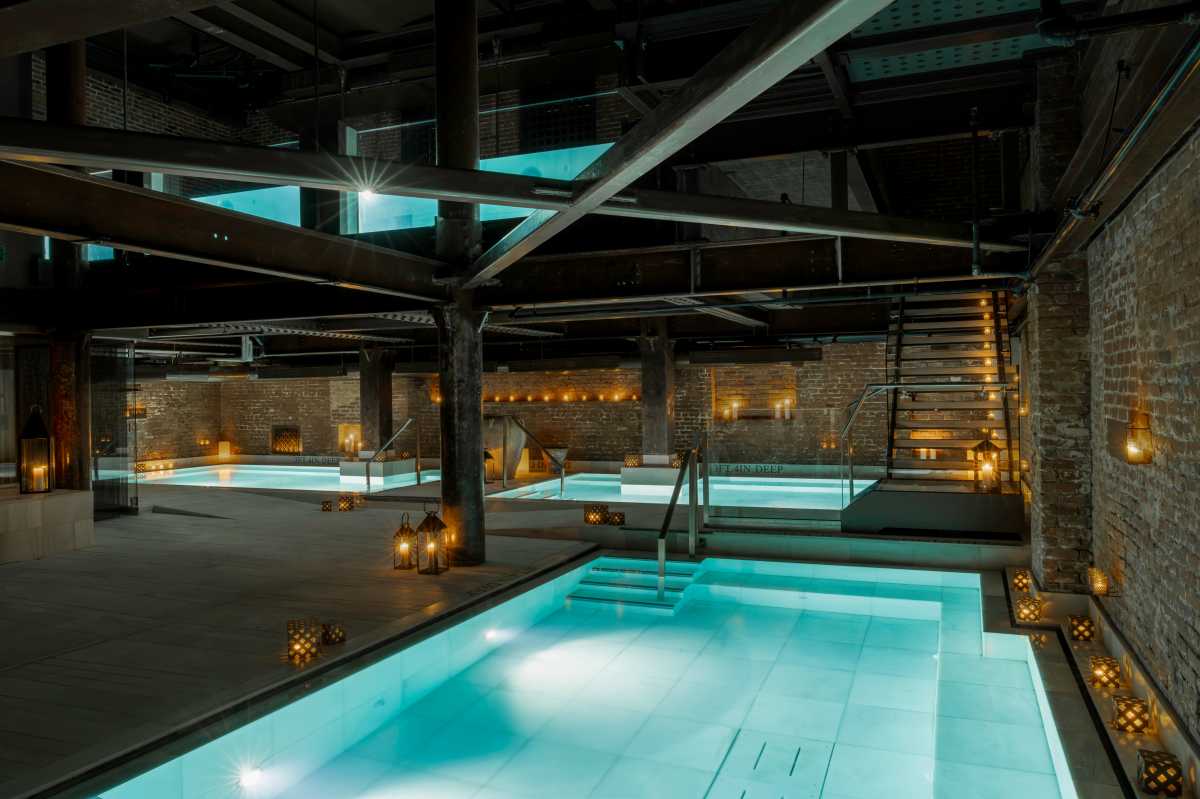
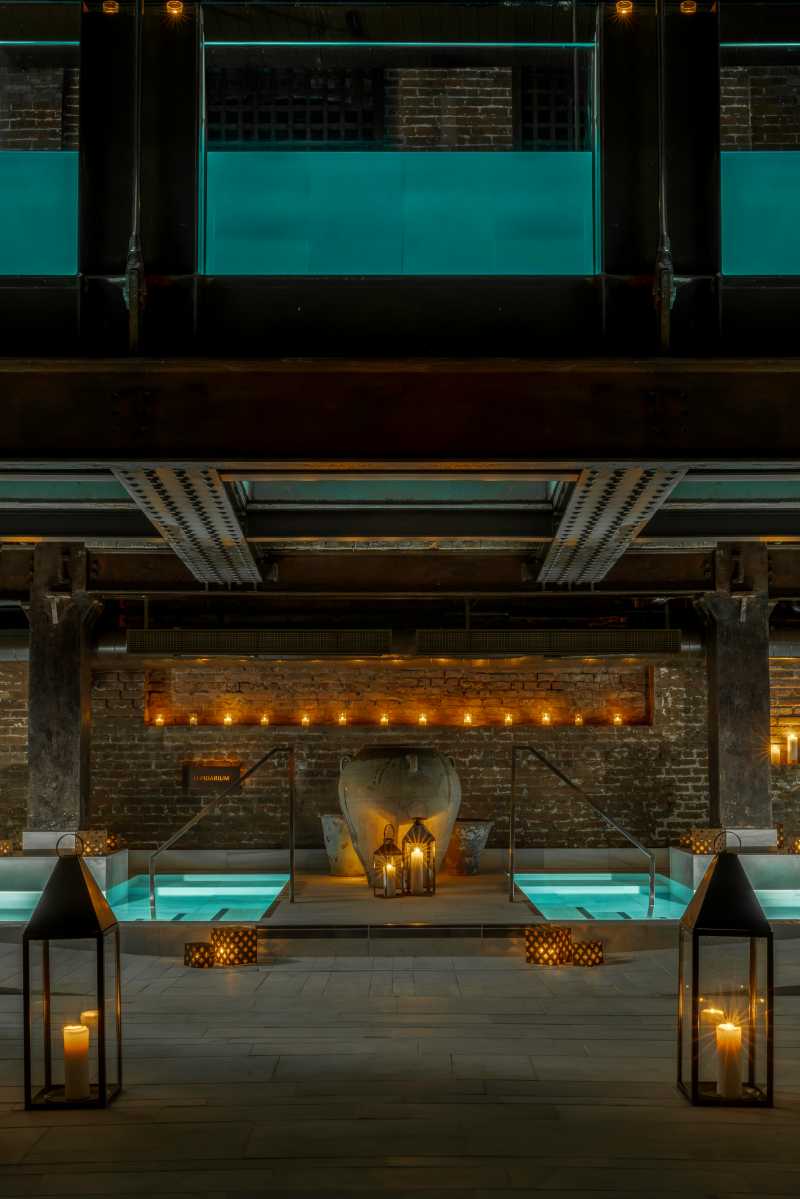
Inside: vaulted ceilings, exposed brick, original beams from 1900—breathing quietly above pools of candlelight.
This address once safeguarded treasure. Built at the turn of the century, the building was used by wealthy New Yorkers—and at one point even by the Museum of Modern Art—to store rare antiques and works of art. Crates that once held canvases and carved relics now give way to marble basins and saltwater. The bones of the structure remain intact, meticulously preserved, so that the past is not erased but distilled. One feels it in the walls. The gravity of what has been protected here before.
New York has always been a city of bathers.
Long before wellness became a luxury commodity, there were subterranean sanctuaries scattered downtown—dim, humid, charged with anonymity and communion. They were less about skincare and more about secrecy, ritual, and release. The mythology of those spaces lingers in the city’s DNA, though today the candles burn cleaner and the lighting is kinder. This new chapter is polished, curated, impeccably discreet. The sensuality remains; the edges have been softened.
For me, entering AIRE Ancient Baths felt ancestral. My Greek blood stirred as though summoned. I imagined stepping not into a spa, but into a myth—an empress lowering herself into milk and honey beneath marble colonnades. The brand’s inspiration draws from Roman, Greek, and Ottoman bathing traditions, yet here, on the Upper East Side, that lineage converses with Gilded Age New York. Empire meeting empire.
Six baths compose the ritual: the Caldarium at a decadent 104 degrees, Tepidarium pools warm and languid, the Frigidarium sharp at 50, the Balneum whispering with jets. The mint-infused steam room felt celestial, clearing the senses with herbal authority. The cold plunge was a jolt of clarity so pure it bordered on spiritual discipline.
Then, the marvel: the suspended Flotarium.
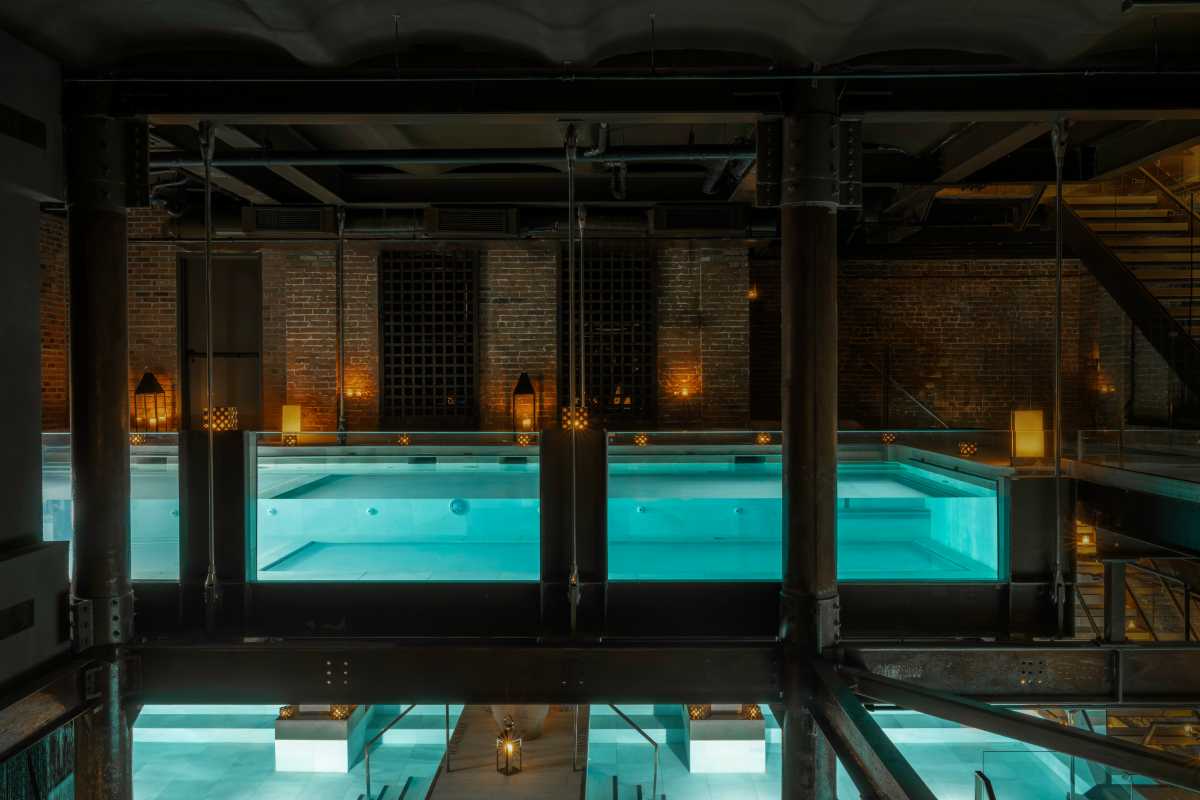
A salt bath encased in translucent glass, appearing to hover between two floors like an installation piece. Its blue glow radiates upward and downward simultaneously, a living sculpture of water and light. Floating there, ears submerged, music threading beneath the surface, I felt suspended not only in salt but in narrative—between past and present, art and body, city and self. It is not merely a pool; it is architecture performing meditation.
Candles—hundreds of them—flicker against brick once entrusted with masterpieces. The air carries the brand’s Orange Garden fragrance, citrus drifting like a memory of Seville. Guests move quietly, almost reverently, as though aware they are inhabiting a former vault of cultural wealth now transformed into a sanctuary of physical restoration.
Even the new Signature Monet Experience nods to artistic inheritance, inspired by Claude Monet’s Water Lilies. A full-body exfoliation and wrap unfold like brushstrokes—an immersion into atmosphere rather than mere treatment. It feels fitting that in a building once tied to art storage, the body itself becomes the canvas.
In a city that hoards momentum, this space practices restraint. Only sixteen guests per hour are permitted, preserving intimacy within its 9,600 square feet. Marble exfoliation beds gleam softly. Treatment rooms hum in low tones. Time loosens its grip.
When I finally emerged—skin impossibly supple, limbs softened into surrender—I felt like butter. Clarified. Golden. The rain had lifted. The city resumed its roar.
Yet something ancient clung to me.
Perhaps it was the architecture remembering its past lives. Perhaps it was salt tracing my collarbone like a relic. Or perhaps New York, in its endless reinvention, is simply returning to what it has always known: that beneath the commerce, beneath the noise, beneath the relentless performance, there must be a chamber where the body is treated like art and silence is allowed to reign.
More information and reservations available at www.beaire.com.