


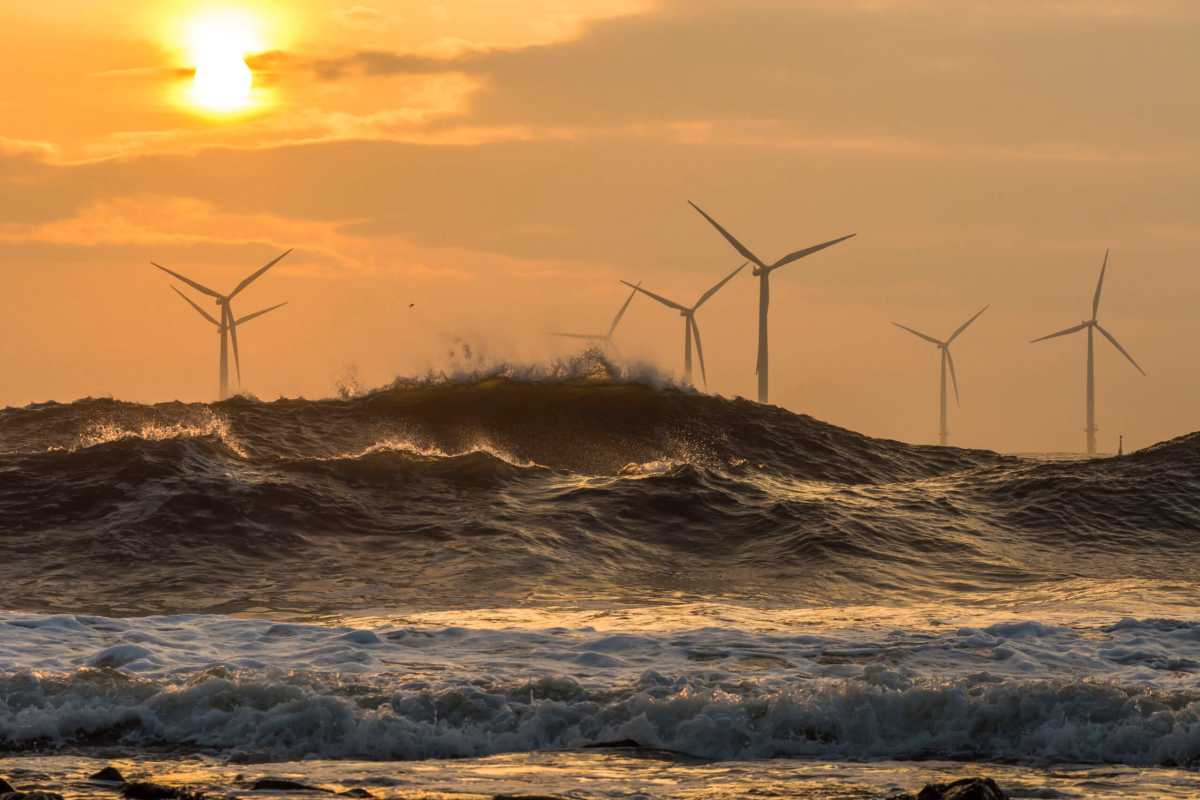
By law, 70% of the power generated for New York state residents and businesses must come from renewable energy sources. Yet four years away from that deadline, not only is the Empire State 15 gigawatts (GW) shy of its goal — but also investments in renewable energy are dipping.
On Dec. 19, 2025, Gov. Kathy Hochul signed the Public Renewables Transparency Act, sponsored by Assembly Member Sarahana Shrestha (D-Ulster County), to open up the New York Power Authority’s (NYPA) conferral process after receiving backlash from a recent decision to cut back investments in renewable energy by 1.5 GW.
As of Dec. 9, however, NYPA has only planned for a third of the 15 GW needed to reach the 2030 goal established in the state’s Climate Act — leading to public outcry and a new bill dedicated to shifting the organization’s leadership.
View this post on Instagram
.
“NYPA backsliding and cutting 1.5 GW of public renewables from its updated strategic plan will eliminate 2,500 green union jobs, deprive thousands of New Yorkers of lower utility bills, and delay progress on shutting down the fossil fuel plants that are poisoning our communities,” said a representative of Public Power NY, a green energy advocacy organization. “All over the state people are struggling to pay their energy bills. New York must deal with the energy affordability crisis and the only way to meet the state’s climate goals and lower bills is to build 15 GW of public renewables.”
The bill Hochul signed last month requires the NYPA to post its conferral report online, provide stakeholders with an option to submit comments remotely, and incorporate feedback from such sessions and written comments into the final draft of the strategic plan. NYPA will also join the state energy planning board.
Advocates such as Public Power NY applauded Hochul’s move but insist more must be done for New York to reach net-zero status by 2040, and even demanded that she contribute another $200 million from next year’s budget to NYPA to build renewables, which she did for 2025. However, as of Jan. 20, Hochul’s $260 billion budget proposal for the next year did not re-up on the NYPA investment.
“Hochul’s budget is a reflection of her anti-affordability energy plan, which doubles down on expensive fracked gas and nuclear power. New Yorkers are struggling to pay their energy bills, and building public renewables is the only solution to provide clean, low-cost energy,” said Alex Patterson, campaign coordinator for NY Public Power. “New Yorkers need $200 million for public renewables and a commitment to build 15GW of them–not more pollution and even higher bills.”
Outrage over power goal shortage from Mamdani and others
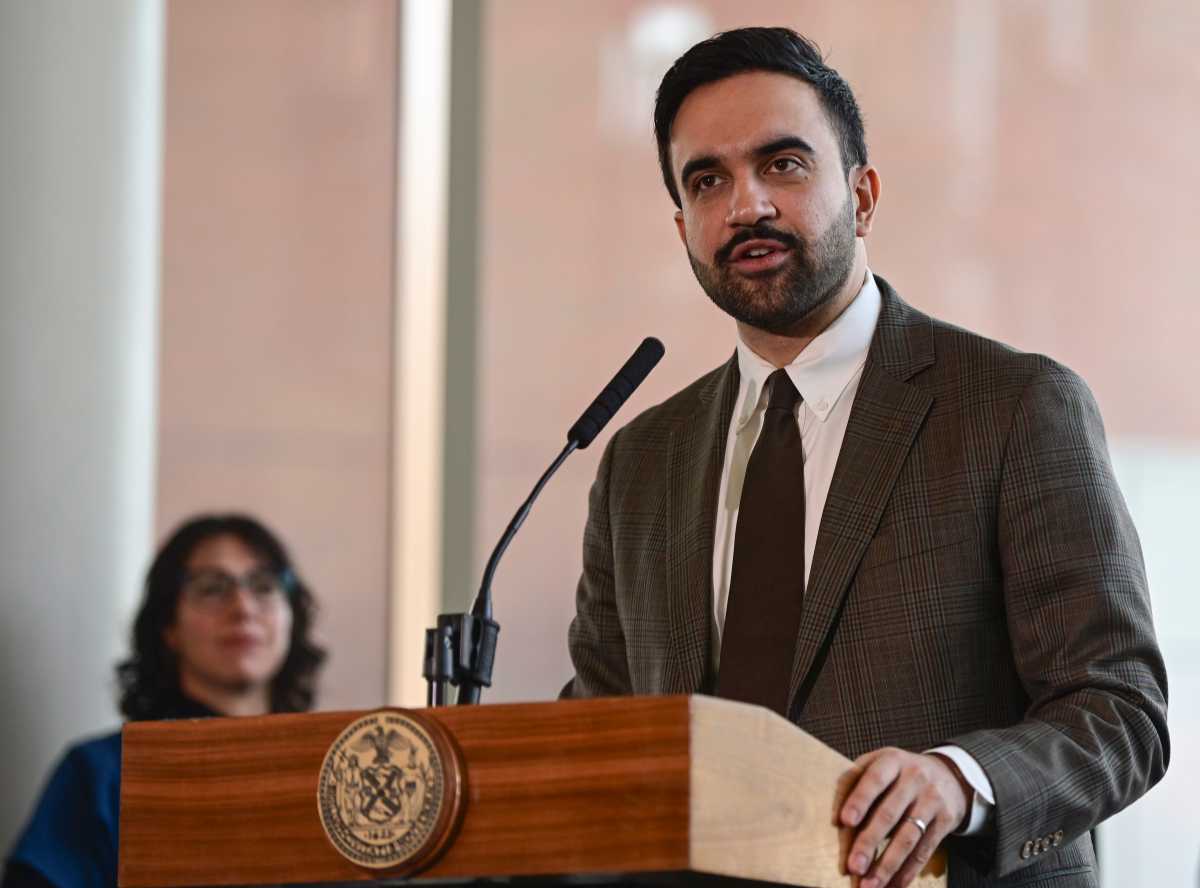
The criticism of the NYPA began in the summer when news broke that it had allotted only 3.3 GW of renewable energy in its strategic plan. The public submitted over 10,000 comments throughout the year on the matter, including one from the then soon-to-be-elected Mayor Zohran Mamdani.
“In 2023, we won the Build Public Renewables Act (BPRA) — a groundbreaking law empowering NYS to speed up the clean energy transition and lower your bills with publicly-owned power,” Mamdani wrote on X on Sept. 12. “Today is the deadline to tell [the NYPA] we need a plan for 15 GW by 2030.”
In 2023, we won the Build Public Renewables Act — a groundbreaking law empowering NYS to speed up the clean energy transition and lower your bills with publicly-owned power.
Today is the deadline to tell @NYPAenergy we need a plan for 15 GW by 2030. Take urgent action below. pic.twitter.com/EpYaK9IIQ2
— Zohran Kwame Mamdani (@ZohranKMamdani) September 12, 2025
Though the standalone BPRA was never passed, many key points of the it were enacted as part of the 2023-24 state budget, such as expanding NYPA’s powers and allowing the authority to build renewables and battery storage to help New York reach its climate goals. However, there are notable differences in language between the original and enacted legislation.
The enacted BPRA, within the budget, requires that NYPA help provide renewable energy by 2030, but does not require NYPA to be the sole entity to fully cover the current 15 GW deficit. Nor does it require NYPA to ONLY invest in renewable energy. The stipulation would have excluded the prospect of nuclear power, for which it is actively searching for the site of a new plant, and interfered with the operation of several natural gas power plants it utilizes as a fallback during peak demand, which will be fazed out by 2030.
Public Power NY, which heavily advocated for the legislation, and other advocates have put pressure on the authority to cover the entire shortfall.
According to a NYPA spokesperson, the biennial strategic plan fluctuates depending on which projects can get approval after the lengthy process of public comments and the NYISO grid interconnection review process.
While public backlash towards the earlier version seemed to sway NYPA, other factors contributed more to the increase and eventual decrease in dedicated watts. Many private developers are not keen to give up 51% majority ownership of the project to the authority, as required by the BPRA, and the suspension of federal tax credits for renewable energy projects has further complicated matters.
In fact, nearly 2,000 projects, totaling 13.5 GW, were scrapped from NYISO’s interconnection queue in New York alone.
“Despite federal headwinds and challenging market conditions, NYPA is aggressively pursuing the development of renewable energy in New York State,” said the NYPA spokesperson. “The updated renewables plan, backed by $200 million allocated by Governor Hochul from the State budget, builds on the Power Authority’s ongoing efforts to strengthen New York’s grid with affordable, diversified generation resources.”
Con Edison, New York’s investor-owned energy company, did not specify if it would start any new renewable energy projects to help cover the gap.
“Con Edison supports New York State’s efforts to comprehensively plan for the future of its energy system,” said a Con Edison spokesperson. “The State Energy Plan emphasizes grid reliability, energy affordability, and resource adequacy in a managed transition to a cleaner energy system. We welcome the opportunity to engage with stakeholders and are committed to working with the State towards these policy goals.”
On the same day as NYPA’s 1.5 GW cut announcement, Brooklyn/Queens/Manhattan state Sen. Kristen Gonzalez and Shrestha introduced a new bill, the Public Power Democracy Act, which would expand the board of trustees to 17 members, with an additional five appointees from both the Senate and the Assembly.
Under the proposed law, each appointee must be from a qualifying stakeholder such as labor unions, environmental justice advocates, consumer advocates and public finance experts as an attempt to balance out the board, which advocates blame for the lack of renewable follow-through.