


The Trump administration will have to temporarily resume funding the Gateway tunnel rail project for two weeks, following a stay from a Manhattan federal judge on Friday, allowing construction that was set to halt on Feb. 6 to continue.
U.S. District Judge Jeannette A. Vargas’s decision came five hours after a Friday afternoon hearing in a suit brought by New York Attorney General Letitia James and her New Jersey counterpart, Jennifer Davenport, earlier this week.
The states argue the feds are illegally withholding the funds because the move was for political reasons rather than based on any legal merits — citing Trump’s Truth Social posts framing the freeze as political retribution against Congressional Democrats.
Vargas’s decision said she believed the states would “suffer irreparable harm” if she didn’t force the U.S. Department of Transportation (USDOT) to temporarily unfreeze funding to the project. She requested the parties meet and confer over next steps in the case by Feb. 11.
The USDOT froze federal funding for the $16 billion project, amounting to $11 billion in grants and $4 billion in loans, on the basis that it needed to review compliance with new rules around contracting with minority-and-women-owned businesses. Court filings state that the entity overseeing the project the Gateway Development Commission (GDC), has provided the federal government with the information it requested.
In a statement, James said she was grateful the court acted quickly to block the funding freeze, calling it a “critical victory for workers and commuters.”
“The Hudson Tunnel Project is one of the most important infrastructure projects in the nation, and we will keep fighting to ensure construction can continue without unnecessary federal interference,” James said.
The GDC announced Friday that construction work would stop at 5 p.m. if the feds did not release $205 million in reimbursements by then. The commission warned 1,000 construction workers would immediately lose their jobs and that a prolonged pause would put tens of thousands more, along with the nearly $20 billion in economic activity the effort is expected to spur, at risk.
After Vargas’s ruling, GDC said they hoped federal disbursements resumed “soon” so they could get workers back on the job, as they had already stopped work earlier that evening.
Attorneys for the New Jersey Attorney General’s office, Shankar Duraiswamy and Jeremy Feigenbaum, argued Friday that both states will experience “irreparable harm” if funding for the project remains frozen. They said that’s both because the states will be forced to foot the bill to safely maintain the active construction sites (money they say they’d never be able to recover) and because the states have vested nonmonetary interests in the project’s success, including that of safe, reliable rail travel in the region, and the time and resources they’d already poured into it.
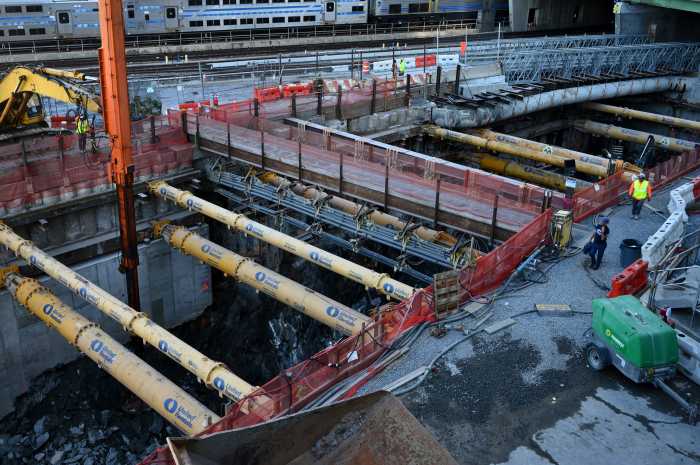
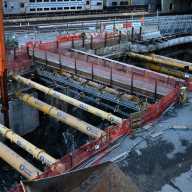
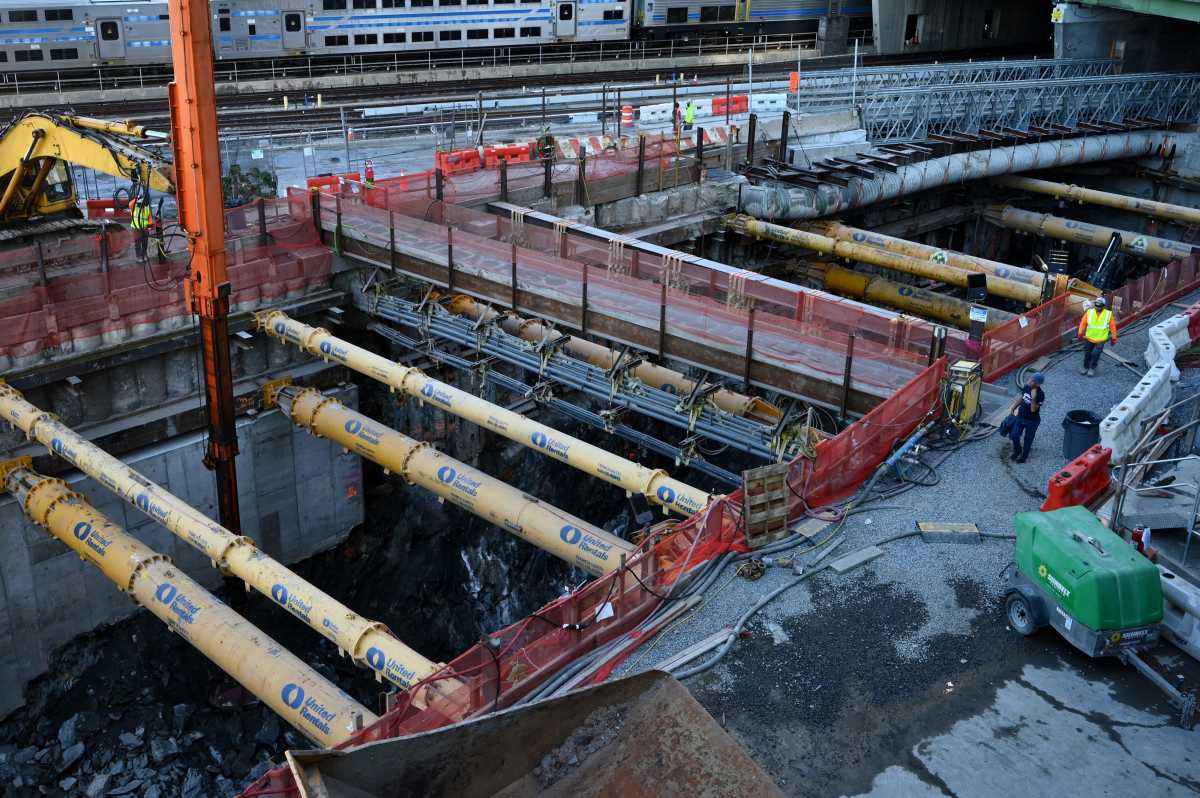
“There is literally a massive hole in the ground in North Bergen, New Jersey,” Duraiswamy said, referring to one of the project’s five active construction sites. He also cited a 1,600-pound tunnel boring machine and another active construction site in the Hudson River, both of which he said could not “simply be left abandoned” without incurring significant health and safety risks to the surrounding areas.
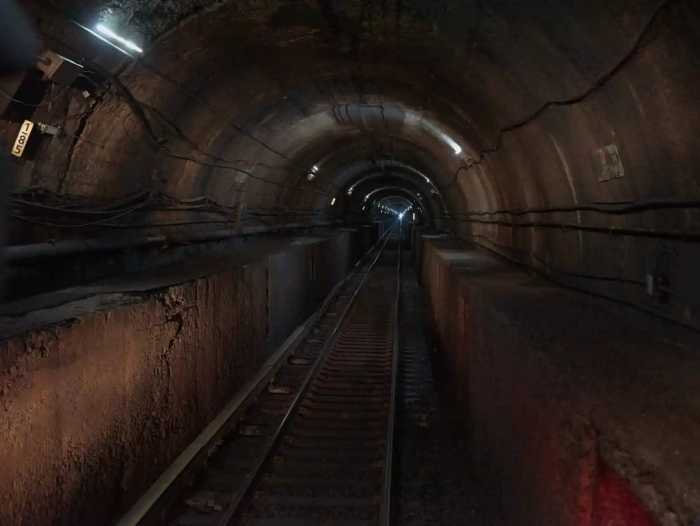
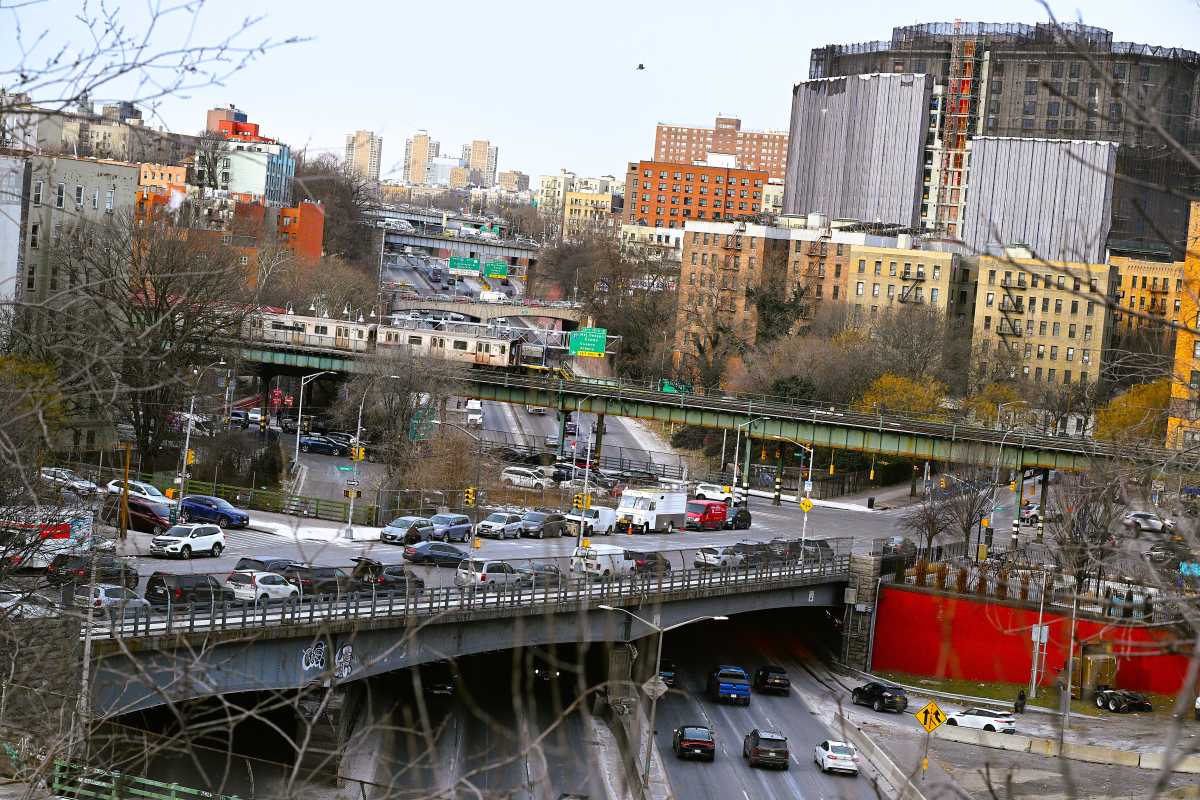
If completed, the Gateway project will replace a two-tube rail tunnel running between New York and New Jersey underneath the Hudson River, known as the North River Tunnel, that is falling apart after 116 years of wear-and-tear as well as storm damage from Hurricane Sandy in 2012. The tunnel facilitates the movement of hundreds of Amtrak and New Jersey Transit trains carrying a couple hundred thousand passengers each weekday to and from Penn Station.
Duraiswamy and Feigenbaum argued that even a few days’ delay on the project could have a significant impact on its timeline, as the construction crews would have to be demobilized and remobilized and design planning would have to pause, adding costly weeks or months to the work.
Furthermore, the GDC has raised alarms that a prolonged work stoppage could permanently derail the project, increasing the likelihood that the current tunnel could shut down. The closure of such a major transit artery has the potential to significantly harm the regional and national economies, officials have warned.
Prior to Vargas’ ruling, Tara Schwartz, an attorney for the USDOT, argued the court shouldn’t force the federal government to temporarily resume funding for the project for a few reasons: because this court didn’t have the proper jurisdiction to do that, a separate lawsuit brought by the Gateway Development Commission earlier this week would be enough to provide any relief necessary and the states weren’t contesting a policy choice, but a simple decision by USDOT not to fund a project anymore.
“Plaintiffs are not challenging a policy or directive; they literally just want the government to act differently,” Schwartz said. She also suggested that because the GDC had enough funds for a few more weeks, the states weren’t at risk of imminent monetary harms incurred by footing the bill for construction site maintenance, so an immediate temporary order wasn’t necessary.
Duraiswamy and Feigenbaum argued the states had their own separate and distinct harms from the commission — including nonmonetary interests of preventing further disrepair and degradation of the country’s busiest rail tunnel — and that there was no guarantee the commission’s suit would be able to recover money on the state’s behalf, or that it would even win the suit at all.
“It’s not enough to say Gateway Development Commission’s suit may recover monetary damages for the states,” Duraiswamy said, calling that a thorny legal question at best. “Even if that’s true, it doesn’t recover damages to [our interest injuries].”
As it stands, work will continue on the project for the next 14 days — the length of the temporary stay — before facing the same funding block again.